Hindu faith targeted after Christian social media influencer calls Lord Ram as "demonic entity"
 Edmonton, Alberta, Canada
  5 August, 2025
Case Summary
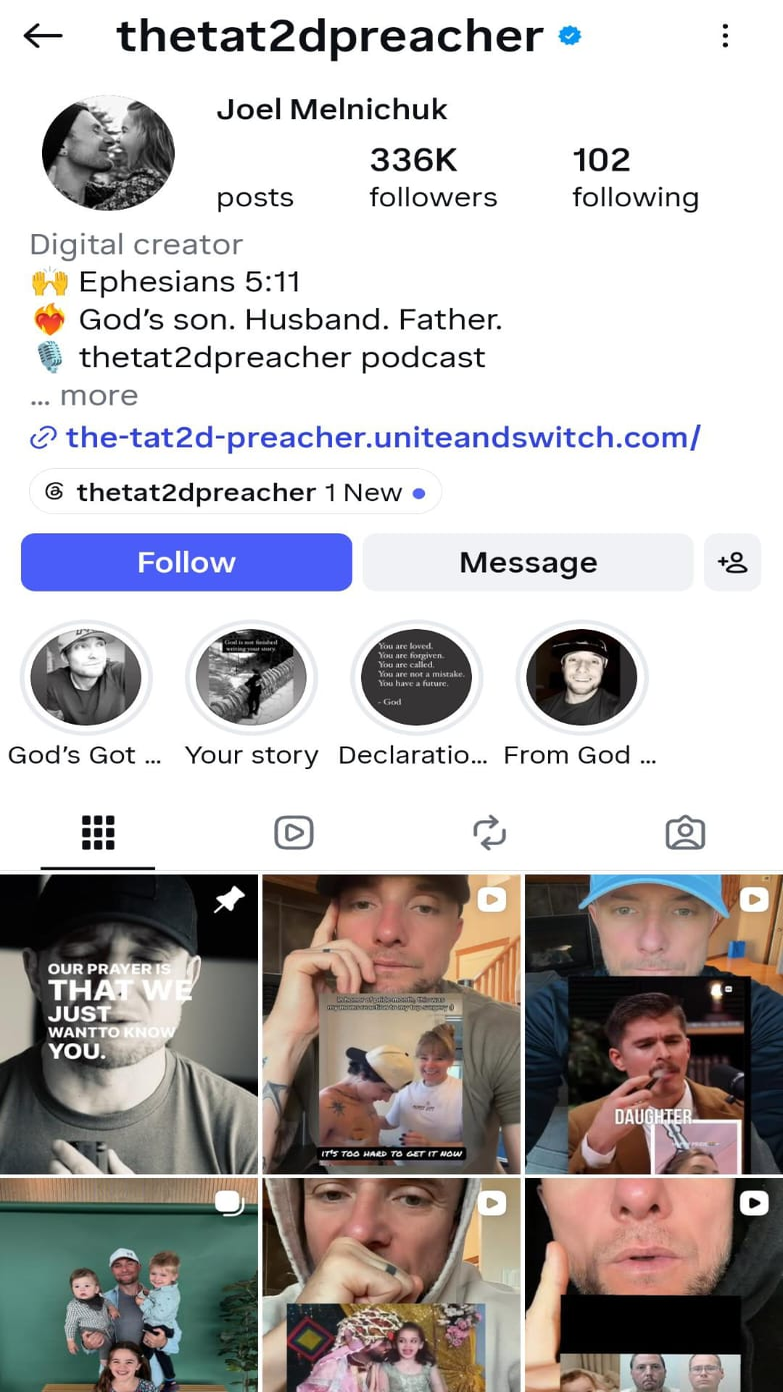
Hindu religious sentiments were outraged after Christian social media preacher and digital creator Joel Melnichuk, who operates under the Instagram handle "thetat2dpreacher", posted a video of an erected statue of Lord Ram in Canada, describing the revered Hindu deity as a "demonic entity". Melnichuk, who identifies himself as a Christian preacher and podcast host, had a significant online following of more than 336,000 Instagram followers. He prominently references the Bible in his social media profile through the verse "Ephesians 5:11" and regularly shares Christian religious content. He posted a video of the statue of Lord Ram on social media on 6 August 2025, displaying the on-screen text, "The demonic entity known as Lord Ram", while the accompanying caption read, "Literally just minutes from where I live, this giant statue has been raised. As God struck down Dagon in the Bible, I pray he strikes down this demonic entity." The post was further accompanied by derogatory hashtags including "#hindugods", "#spiritualwarfare", "#supernatural", and "#faith", framing the Hindu deity within a narrative of spiritual warfare. The video attracted widespread attention on social media and sparked significant controversy, with many Hindus condemning it as a deeply offensive and derogatory attack on their religious beliefs and sentiments.
Case Images
Why it is Hate Crime ?
This incident has been added to the tracker under- Hate speech against Hindus. Under this, the subcategory selected is- Anti-Hindu slurs, mocking faith. Anti-Hindu slurs and the deliberate mocking of the Hindu faith owing to religious animosity involve the usage of derogatory terms, stereotypes, or offensive references to religious practices, symbols, or figures. One of the common anti-Hindu slurs used against Hindus is “cow-worshipper” and “cow piss drinker”. The intention of using this term is to demean and mock Hindus as a group and their religious beliefs since Hindus consider the cow holy. Additionally, some symbols and the slurs attached to them have a historical context that exacerbates the insult, hate, stereotyping, dehumanisation and oppression against Hindus. Cow worship has been used for centuries to denigrate Hindus, insult their faith and oppress Hindus specifically as a religious group. There has been overwhelming documentation about how cow slaughter has been used to persecute Hindus with cow meat being thrown in temples and places of worship. There has also been overwhelming documentation where cow meat (beef) has been force-fed to Hindus to either forcefully convert them to Islam or denigrate their faith. Apart from cow worship, the Swastika – which holds deep religious significance for the Hindus – has also been misinterpreted and distorted to use as a slur against Hindus. Similarly, the worship of the Shivling has been used by supremacist ideologies and religions to denigrate Hindus owing to religious animosity. Such slurs and denigration stem out of inherent animosity and hate towards Hindus and their faith, therefore, it is categorised as hate speech targeted at Hindus specifically owing to their religious identity. This case has been added to the tracker because it involved the public denigration of one of Hinduism's most revered deities by portraying Lord Ram as a "demonic entity". In Hinduism, Lord Ram is not merely a historical or mythological figure but is worshipped as a central deity and an embodiment of righteousness, virtue, and dharma. Referring to such a revered religious figure as demonic constitutes an attack on an object of worship that is sacred to millions of Hindus. The accompanying caption further intensified this message by invoking the biblical account of God striking down Dagon and expressing a prayer that the same fate would befall what the creator described as the "demonic entity". Rather than expressing disagreement with Hindu beliefs or engaging in theological comparison, Joel Melnichuk characterised a central Hindu deity as an embodiment of evil and invoked divine destruction against that deity. Such language went beyond religious critique and amounted to the denigration of a sacred figure central to Hindu belief and identity. The framing of the post through terms such as "spiritual warfare" further reinforced the depiction of Hindu worship as something demonic that should be opposed and defeated. Presenting Hindu deities, or pagan deities, as demonic forces is a recurring form of religious denigration in Christian religious discourse and has the effect of portraying the religious beliefs and symbols of Hindus as spiritually corrupt or inherently evil. Such portrayals contributes to prejudice against Hindus and their faith by reducing their objects of worship to symbols of malevolence rather than recognising them as legitimate expressions of religious belief. Given that the content directly targeted a revered Hindu deity and invited viewers to view that deity through the lens of demonic evil, the post directly targeted and insulted Hinduism and its deities. Furthermore, the statement, "As God struck down Dagon in the Bible, I pray he strikes down this demonic entity", carried particular significance because it drew a direct parallel between Lord Ram and Dagon, the Philistine deity described in the Bible as a false god whose idol was humiliated and overthrown before the Ark of the Covenant. By invoking this biblical episode and expressing a prayer that God would similarly "strike down" the statute of Lord Ram, Melnichuk did not merely reject Hindu beliefs from a theological standpoint. Instead, he equated a central Hindu deity with a false and demonic idol and expressed a desire for God's judgement to befall that deity. This comparison portrayed Lord Ram as an embodiment of evil deserving divine destruction, rather than as a sacred figure revered by millions of Hindus. Such messaging reinforced the demeaning portrayal of Hindu religious beliefs and conveyed that a central object of Hindu worship should be viewed as spiritually illegitimate and subject to divine condemnation. Additionally, the reach and influence of the content were further amplified by the profile of its creator. Joel Melnichuk was a Christian preacher, podcast host, and digital creator whose content centres on biblical teaching, Christian apologetics, and themes of spiritual warfare. With an Instagram audience exceeding 336,000 followers and an established presence across multiple social media platforms, his posts are capable of reaching a substantial audience. His profile prominently references the biblical verse Ephesians 5:11 and consistently promotes Christian religious messages, giving his content an overtly faith-based character. Consequently, statements portraying Lord Ram as a "demonic entity" were not made in a private or isolated setting but were disseminated by a religious influencer with a significant online following. The combination of his religious authority, social media reach, and the unequivocal characterisation of a revered Hindu deity as demonic increased the visibility and potential impact of the message, contributing to the widespread controversy and offence it generated among Hindus. Taken together, the post did not merely express a personal theological preference or disagreement with Hindu beliefs. It publicly singled out one of Hinduism's most revered deities for denigration by portraying Lord Ram as a demonic entity, invoking biblical imagery to pray for his destruction, and framing Hindu worship within a narrative of spiritual warfare. Disseminated by a Christian religious influencer with a substantial online following, the content had the potential to normalise hostile portrayals of Hindu religious symbols among a wide audience. For these reasons, the incident has been included in the tracker as an instance of public hate speech targeting Hindu religious beliefs and sacred figures.


Case Status
Unknown


Perpetrators Details
Perpetrators
Christian Extremists
Perpetrators Range
One Person
Perpetrators Gender
male
 Sources




