Hindu sentiments outraged after Indian politician mocks Lord Ram and questions his divinity and ability to protect devotees
 Ayodhya, Uttar Pradesh, India
  23 June, 2026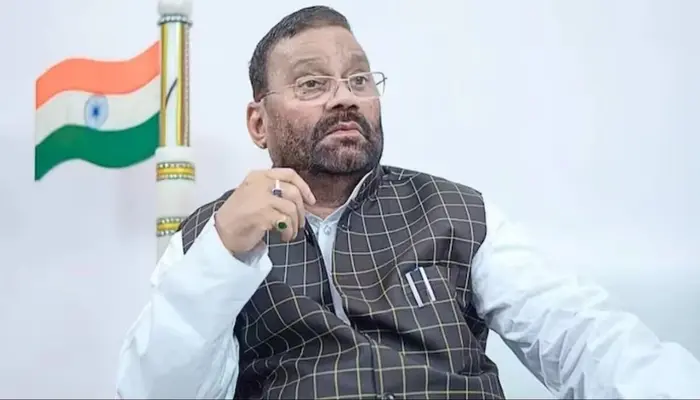
Case Summary
In Ayodhya, Uttar Pradesh, Hindu religious sentiments were outraged after former Uttar Pradesh cabinet minister and Janata Party chief Swami Prasad Maurya made controversial remarks mocking Lord Ram while commenting on reports of thefts involving offerings at the Ram Temple. Referring to the reported theft of cash, gold, and silver from the temple, Maurya said that crores of rupees had been looted from Lord Ram's temple and court. He questioned Lord Ram's divinity by claiming that if Lord Ram could not punish those responsible for the thefts or protect his own temple, then he could not protect anyone else either. His remarks were widely circulated on social media and sparked outrage among Hindu devotees and religious leaders, who called them insulting and derogatory towards Lord Ram and Hindu religious beliefs. The remarks triggered strong reactions from Hindu saints and seers in Ayodhya. Saint Vishnu Das Maharaj condemned Maurya's comments, describing him as an opponent of Sanatan Dharma and Hindu culture. He further said that the Ram Temple belonged to Lord Ram's devotees and that Maurya was not a devotee but an enemy of Sanatan Dharma and Indian culture. The controversy also revived attention to Maurya's earlier statements against Hindu beliefs, including his criticism of the *Ramcharitmanas* in 2023 as anti-Dalit, anti-women, and anti-backward classes, as well as his previous remarks describing Hinduism as a fraud and opposing demands for a Hindu nation, which had previously led to protests and multiple FIRs.
Why it is Hate Crime ?
This case has been added to the tracker under the primary category of - Hate speech against Hindus. Within it, the sub-category selected is - Anti-Hindu slurs, mocking faith. Anti-Hindu slurs and the deliberate mocking of the Hindu faith owing to religious animosity involve the usage of derogatory terms, stereotypes, or offensive references to religious practices, symbols, or figures. One of the common anti-Hindu slurs used against Hindus is “cow-worshipper” and “cow piss drinker”. The intention of using this term is to demean and mock Hindus as a group and their religious beliefs since Hindus consider the cow holy. Additionally, some symbols and the slurs attached to them have a historical context that exacerbates the insult, hate, stereotyping, dehumanisation and oppression against Hindus. Cow worship has been used for centuries to denigrate Hindus, insult their faith and oppress Hindus specifically as a religious group. There has been overwhelming documentation about how cow slaughter has been used to persecute Hindus with cow meat being thrown in temples and places of worship. There has also been overwhelming documentation where cow meat (beef) has been force-fed to Hindus to either forcefully convert them to Islam or denigrate their faith. Apart from cow worship, the Swastika – which holds deep religious significance for the Hindus – has also been misinterpreted and distorted to use as a slur against Hindus. Similarly, the worship of the Shivling has been used by supremacist ideologies and religions to denigrate Hindus owing to religious animosity. Such slurs and denigration stem out of inherent animosity and hate towards Hindus and their faith, therefore, it is categorised as hate speech targeted at Hindus specifically owing to their religious identity. This case has been classified as a hate crime targeting Hindus because it involved derogatory remarks directed at one of Hinduism's most revered deities, Lord Ram, in a manner that mocked and questioned core religious beliefs. Swami Prasad Maurya's statements did not merely comment on reports of theft at the Ram Temple; he used the incident to ridicule the divine status and protective powers of Lord Ram, claiming that if Lord Ram could not safeguard his own temple or punish thieves, he could not protect his devotees. This statement reduced a deeply revered religious figure to the subject of mockery and invited the public to ridicule a core tenet of Hindu belief, the faith that Lord Ram is a divine being worthy of devotion and reverence. By portraying the deity's inability to intervene in a worldly crime as evidence against his divinity, the remarks sought to demean and discredit beliefs that are central to the Hindu faith rather than engaging in legitimate criticism of institutional management or governance. For practicing Hindus, Lord Ram is not merely a historical or mythological figure but an object of worship, whose life and teachings hold profound spiritual, cultural, and religious significance. Publicly mocking such a central deity strikes at the heart of Hindu religious identity because it ridicules the object of devotion itself rather than discussing issues surrounding the administration of a religious institution. Remarks of this nature deeply offend devotees by portraying their sincerely held beliefs as irrational or worthy of contempt. Unlike criticism directed at the functioning of the temple or those responsible for its management, the comments explicitly questioned the worth and power of the deity, thereby shifting the target from human conduct to the religion itself. Such statements also contribute to the normalisation of mocking and deriding Hindu religious beliefs in public discourse. When influential public figures openly ridicule Hindu deities, it creates an environment where insults directed at Hinduism become increasingly acceptable and socially legitimised. Over time, this normalisation encourages further instances of ridicule, reinforces prejudicial attitudes towards Hindu beliefs, and contributes to an atmosphere where insults against Hindu religious icons are dismissed as acceptable political or social commentary rather than recognised as speech capable of causing genuine offence to a religious community. The incident also formed part of a broader pattern of remarks made by Maurya concerning Hinduism and its religious traditions. His previous public statements describing Hinduism as a "fraud", criticising the *Ramcharitmanas* as anti-Dalit, anti-women, and anti-backwards classes, and opposing the idea of a Hindu nation had already generated significant controversy and multiple criminal complaints. Therefore, in this context, his latest remarks reinforced a recurring pattern of public statements disparaging Hindu beliefs, scriptures, and revered figures. Consequently, this incident qualifies under the category of Hate speech against Hindus, as it involved the denigration of a central Hindu deity in a manner that was capable of outraging the religious sentiments of the Hindu community and fostering hostility towards their faith. Disclaimer: The Hinduphobia Tracker records incidents based on when an event occurred or when the victim's ordeal began. It is important to clarify that none of the media sources covering this case has specified the exact date when Swami Prasad Maurya made those statements. Therefore, for documentation purposes, we have recorded the date as the date the incident was reported in the media, 24 June 2026.


Case Status
Unknown


Perpetrators Details
Perpetrators
Others
Perpetrators Range
One Person
Perpetrators Gender
male
 Sources




