Prime Video series 'Raakh' distorts Ranga Billa case by erasing Hindu heroes and misrepresenting Sikh perpetrators as Hindu
 India
India  11 June, 2026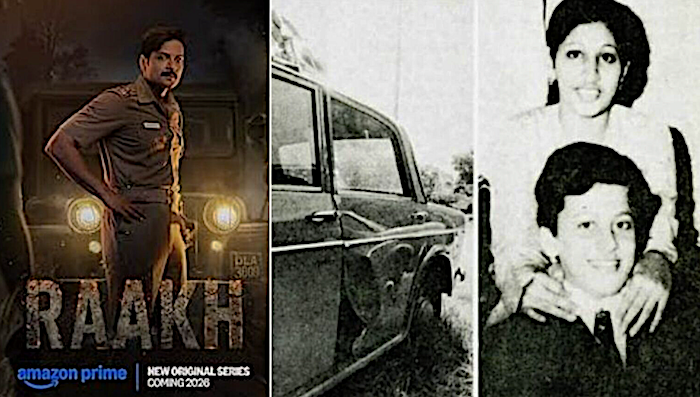
Case Summary
Amazon Prime Video's crime thriller series Raakh, released on 12 June 2026, has sparked controversy after critics accused the makers of selectively rewriting the historical record of the infamous 1978 Ranga Billa case by replacing documented Hindu individuals, assigning positive roles to fictional non-Hindu characters, and portraying Hindus in a disproportionately negative light. The series is marketed as being inspired by the kidnapping and murder of Hindu siblings Geeta Chopra and Sanjay Chopra, one of independent India's most widely reported criminal cases. In the original case, the two Hindu children were abducted on 26 August 1978 while travelling to All India Radio in Delhi and were later found murdered. The investigation identified the perpetrators as Sikh men Kuljit Singh, known as Ranga, and Jasbir Singh, known as Billa. The controversy surrounding Raakh centres not solely on its fictional elements but on how the identities of several documented individuals associated with the case were altered. The series replaces Hindu journalist Prabha Dutt, whose reporting played a pivotal role in bringing national attention to the murders, with a fictional Muslim journalist named Nisar. Similarly, Hindu civilian Babulal, who became known for attempting to help the kidnapped children and assisting the police investigation, is replaced by a fictional Muslim character named Salim. The adaptation also changes the identities of the investigating officers. While the real investigation was conducted by Delhi Police officers Inspector V.P. Gupta, Sub Inspector Ram Chander, and later supervised by Police Commissioner J.N. Chaturvedi, the series introduces fictional investigators, including Dalit police officer Jayprakash Jatav and Muslim police officer Javed Murtaza. At the same time, it portrays a Brahmin police constable as lazy and incompetent while introducing themes of caste discrimination and institutional bias that critics argue were not part of the documented investigation. The most contentious change concerns the portrayal of the perpetrators. Although the real offenders were Sikh men, the principal antagonists in the series are given Hindu names, Babu and Rajjo. Critics argue that this alters the religious identity of those responsible for the crime while simultaneously replacing several documented Hindu individuals who played positive roles in the real events. The series has generated widespread criticism from viewers, commentators, and social media users, who argue that these changes go beyond creative adaptation and amount to a selective rewriting of history. They contend that while positive contributions made by documented Hindu individuals have been reassigned to fictional non-Hindu characters, Hindu characters have been disproportionately associated with negative portrayals. Critics have further expressed concern that because Raakh is promoted as being inspired by real events, viewers unfamiliar with the Ranga Billa case may mistake these fictional portrayals for the historical record. The controversy has renewed concerns about the portrayal of Hindus in mainstream entertainment and has sparked debate over whether historical adaptations should substantially alter the religious identities of real individuals connected to documented events.
Why it is Hate Crime ?
This case has been added to the tracker under the prime category of - Hate speech against Hindus. Under this, the sub-category selected is - Anti-Hindu subversion and prejudice. Within this, the tertiary category selected is - Mislabelling/Misrepresentation of perpetrator's religion as Hindu. Hate speech is defined as any speech, gesture, conduct, writing, or display that is prejudicial against a specific individual and/or group of people, which is leading to or may lead to violence, prejudicial action or hate against that individual and/or group. Media plays a specific and overarching reach in perpetuating prejudicial attitudes towards a community owing to unfair, untrue coverage and/or misrepresentation/misinterpretation, selective coverage and/or omission of facts of/pertaining to issues affecting a specific religious group. This type of bias can dehumanise the victim group, making it easier for others to justify harmful actions against them, which aligns with the objectives of hate speech laws aimed at preventing such harm. It is often observed that the media takes a prejudicial stand against the Hindu community driven by their need to shield the aggressor community which happens to be a numeric minority, however, is the one perpetrating violence against Hindus. For example, the media is often quick to contextualise religiously motivated crimes against Hindus, omit or misrepresent facts that point towards religiously motivated hate crimes, justify and/or downplay religiously motivated hate crimes or simply present fake news to stereotype Hindus. Such media bias leads to the denial of persecution and is often used to dehumanise Hindus, leading to justification for violence against them. For example, the media covered several fake allegations of Hindus targeting Muslims and forcing them to chant Jai Shree Ram. Most of these cases were proved false and fabricated after police investigation. These fake news reports were subsequently never retracted or clarified. Such fake news led to the justification of violence and dehumanisation of Hindus based on the argument that since Hindus targeted Muslims and forced them to chant Jai Shree Ram, the dehumanisation of Hindus and violence against them was par for the course and merely a retaliation. Such media bias leads to prejudicial portrayal of Hindus and offers a justification for violence against them and therefore, is considered hate speech under this category. This case has been categorised as a hate incident because it involves the misrepresentation of the religious identities of individuals connected to a real and widely documented criminal case in a manner that creates a distorted and prejudicial portrayal of Hindus. The controversy is not simply about fictionalisation. It concerns a pattern of changes in which the religious identity of the real perpetrators is altered, documented Hindu individuals are erased or replaced, and fictional Hindu characters are assigned roles that reinforce negative perceptions of the community. A particularly significant aspect of the controversy is the portrayal of the perpetrators. The actual perpetrators of the 1978 kidnapping and murder of Geeta Chopra and Sanjay Chopra were Sikh men, Kuljit Singh (Ranga) and Jasbir Singh (Billa). In Raakh, however, the principal antagonists are given Hindu names. By replacing the documented identities of the real perpetrators with Hindu identities, the series attributes one of India's most infamous crimes to Hindu characters, creating a false association between the crime and the Hindu community. Such a change is not a minor creative liberty but a fundamental alteration of the historical record that has the effect of mislabelling the perpetrators' religion. The prejudice is further reinforced by the treatment of other real individuals connected to the case. Hindu journalist Prabha Dutt, whose reporting kept national attention focused on the murders, is replaced with a fictional Muslim journalist. Hindu civilian Babulal, remembered for attempting to help the kidnapped children, is similarly replaced with a fictional Muslim character. At the same time, the series introduces a negatively portrayed Brahmin police constable and incorporates caste-based themes that were not part of the documented investigation. Viewed collectively, these changes remove documented Hindu contributions, transfer positive roles to fictional non-Hindu characters, and simultaneously associate Hindu identities with criminality and incompetence. The cumulative effect of these alterations is a selective rewriting of history that changes how viewers may understand both the crime and the individuals associated with it. Because the series is explicitly marketed as inspired by a real case, many viewers are likely to assume that these portrayals closely resemble historical events. Misrepresenting the religion of the perpetrators while replacing real Hindu figures with fictional non-Hindu characters risks creating false impressions about who committed the crime and who contributed to its investigation. The media plays a powerful role in shaping public perception. When adaptations of real events selectively alter religious identities in a manner that consistently disadvantages one community, they reinforce prejudice rather than merely exercising creative freedom. By replacing the real perpetrators with Hindu characters while simultaneously erasing or diminishing the role of documented Hindus, the series presents a version of history that is prejudicial to Hindus and capable of reinforcing negative stereotypes about the community. For these reasons, this incident has been documented as a case of anti-Hindu prejudice in media representation. The misrepresentation of the perpetrators' religion, coupled with the systematic replacement and distortion of documented Hindu figures, contributes to a false and adverse portrayal of Hindus in a work presented as being inspired by historical events.


Case Status
Unknown


Perpetrators Details
Perpetrators
Others
Perpetrators Range
Unknown
Perpetrators Gender
unknown
 Sources




