Hindu female students and employees pressured to convert, subjected to religious discrimination, threats over wearing tilak, and selective dismissals by Muslim instructor in Solapur
 Solapur, Maharashtra, India
  26 March, 2026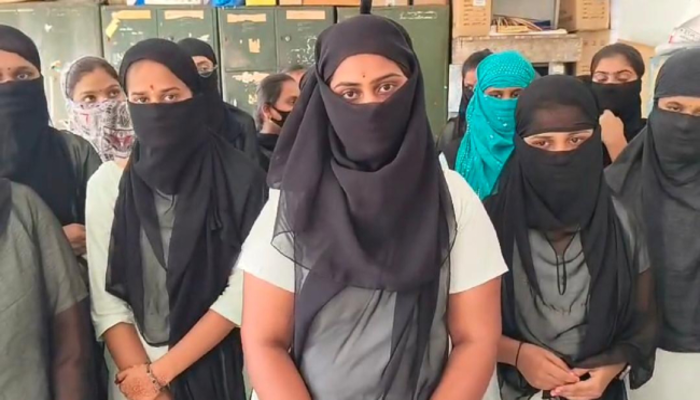
Case Summary
In Solapur, Maharashtra, 150 Hindu female students and 9 Hindu employees of a Government Women’s Industrial Training Institute (ITI) were subjected to pressure to convert to Islam. They also faced religious discrimination, severe harassment, threats for wearing a tilak, and systematic victimisation by a Muslim instructor, Rameja Kampli, and her associates. According to the complaints, Hindu female students were pressured to change their religion and were subjected to a hostile environment where they faced humiliation, threats, and targeting for displaying Hindu religious symbols such as a tilak and kumkum. One student who sought leave due to illness was mocked by Rameja Kampli, who stated, “You apply kumkum; you cannot be ill.” Students further stated that Hindu girls were defamed by being falsely linked with male students, including Muslim students. The complaints also stated that Rameja Kampli facilitated the irregular appointment of a Muslim woman named Rukhsar Shaikh, who encouraged girls to enter romantic relationships and advised them to harm themselves if their parents opposed their marriages. Students also stated that lessons encouraging romantic relationships were conducted within the institute. The complaints further stated that Muslim students received preferential treatment in admissions and education. Hindu students stated that Muslim students were taught separately by Muslim instructor Arif Sheikh, while Hindu students faced discrimination. The complaints also stated that Muslim students were being targeted by Hindu teachers, creating a hostile atmosphere for Hindu students and staff. The complaint submitted by students and employees was presented to Shivraj Gaikwad, coordinator of Sakal Hindu Samaj, a Hindu organisation, who was informed about the pressure to convert to Islam, religious discrimination, harassment, and other issues faced by Hindu students and employees. The complaint also named Principal Haridas Pradeep, revealing his involvement in and failure to address the irregularities within the institute. Separately, Hindu employees submitted a written representation to the Additional Chief Secretary of the Skill Development Department on 27 March 2026 seeking action. Sakal Hindu Samaj also submitted a representation to the Chairperson of the High-Level Chief Office Investigation Committee regarding the matter. The complaint further stated that an earlier inquiry committee, headed by Meghna Joshi, failed to conduct an impartial investigation and raised concerns among complainants about the handling of previous inquiries. The Hindu students further stated that educational activities were suspended for four days every month and that they were forced to perform non-academic labour, including sweeping, mopping, and cutting bushes. Students stated that these activities resulted in injuries, dizziness, and other health problems. Students also stated that during menstruation, they were advised to drink less water to avoid going to the toilet. Those who objected to these practices were threatened and followed to their homes. Students further stated that they were forced to purchase uniforms and training materials at inflated prices, despite the government providing them free of cost. The institute’s Hindu employees also stated that they faced systematic discrimination and professional victimisation. According to employee complaints, Hindu staff members were harassed, pressured, and selectively removed from their positions, after which Muslim employees were appointed through irregular procedures without proper advertisements or the required experience. A Hindu employee, Swati Pukale, was removed from her position, and Nahid Shaikh was appointed to the vacant post without advertisement despite lacking the required experience, according to the complaint. Similar concerns were raised regarding the recruitment of Almas Shaikh and other Muslim employees. The complaint further stated that a Muslim staff member, Tamanna Shaikh, remained absent from work for several months, during which students were not taught the relevant subject. Instead of appointing a Hindu employee, a Muslim recruit was later selected for the post. The complaint also stated that a Hindu teacher was permanently transferred and that Rukhsar Shaikh was subsequently appointed unofficially in her place. Students stated that this appointment was irregular and part of a wider pattern of favouritism towards Muslims and administrative misconduct within the institute. Cleaning employee Archana Jadhav was also removed from her position and replaced by Zakir Suleman, a Muslim male employee, despite government guidelines requiring female cleaning staff in girls’ educational institutions. Following protests, Archana Jadhav was reinstated; however, she continued to face mental harassment, according to the complaint. The complaints further stated that Hindu employees faced discriminatory treatment in administrative matters, while Muslim employees received preferential treatment. The Muslim accused, Rameja Kampli, was involved in corruption, bribery, and abuse of authority within the institute. Hindu employees stated that Rameja demanded monthly payments from employees for signing bills and influenced recruitment and admission procedures to favour Muslim students and staff. Hindu employees further stated that former Principal Amar Jadhav was threatened by Rameja Kampli’s husband after attempting to address forced conversion, religious discrimination and irregularities within the institute. The threats included warnings of death and being run over by a truck. Employees stated that Amar Jadhav was eventually forced out of the institution. Hindu students and employees who raised concerns stated that they faced threats of criminal cases and other forms of retaliation. Reports regarding an administrative inquiry also examined complaints involving employee Tasika Tattwar, who was recorded as teaching at the Government Women’s ITI while simultaneously undergoing training at another Industrial Training Institute in Akkalkot, with attendance marked at both institutions. The matter formed part of an administrative investigation, and findings were submitted to the government. Investigators also indicated that examining the institution's operations over the previous five years could reveal further administrative irregularities. Following the complaints, representatives of Sakal Hindu Samaj approached authorities and sought action. Subsequently, the Maharashtra government constituted an inquiry committee to investigate the complaints, and a team from the committee visited the institute as part of the investigation process. A high-level head office inquiry committee of the Directorate of Vocational Education and Training (DVET), Mumbai, visited the institute and interacted directly with students from different departments, recording their statements regarding religious, administrative, and financial irregularities. Separately, a special investigation team led by Pune Deputy Director Anil Jadhav was deputed to Solapur to investigate complaints and administrative decisions made during the previous principal's tenure. When approached about the complaints, Principal Pradeep Haridas claimed that he had been transferred from the institution and therefore could not comment on them without obtaining permission from his superiors. He noted that his name had been included in the complaint and stated that he was unable to provide further details because he was no longer serving as the institute's principal. In contrast, acting Principal Manoj Bidkar disputed the complaints, claiming that more than nine courses were being conducted properly at the institute and that the controversy stemmed from disputes between employees associated with the beauty parlour and the sewing department. He claimed that no comparable complaints had emerged from other departments. Reports further stated that Police Inspector Dinesh Kulkarni said Shivraj Gaikwad had been contacted after videos relating to the incident were circulated on social media. According to Kulkarni, Gaikwad was asked to appear at the police station along with the complainant for further inquiry, but had not done so by the time the statement was made. Hindu organisations demanded a thorough investigation into the complaints and called for strict action against the Muslim perpetrators. Sakal Hindu Samaj also warned of launching a strong agitation if the matter was not investigated impartially and appropriate action was not taken against those responsible. The matter was also raised at the state government level by Shiv Sena Member of Legislative Council Manisha Kayande, who brought forward complaints that nearly 150 Hindu female students of the government-run ITI in Solapur were being pressured to change their religion and become Muslims. Maharashtra Chief Minister Devendra Fadnavis assured action against those involved in the Solapur ITI conversion case and the sexual harassment case involving a Spanish company in Talegaon Dabhade. Taking to his X account (formerly Twitter), CM Fadnavis stated that appropriate action would be initiated after the probe inquiry against the individuals involved in the cases.
Why it is Hate Crime ?
In this case, the first primary category selected is: Predatory Proselytisation. The subcategory selected is: Harassment, threats, coercion for conversion. Harassment covers a wide range of behaviours of an offensive nature. It is commonly understood as behaviour that demeans, humiliates, and intimidates a person, including threats and coercion. Harassment and threats, in this case, find their root on discriminatory grounds which has the effect of nullifying a person’s rights or infringing upon his freedom to exercise his right specifically owing to the victim’s religious identity. Verbal and physical threats and psychological or physical harassment are often used against Hindu victims because they choose to practice their professed religion. Religious harassment also includes forced and involuntary conversions by harassment, threats or coercion. Coercion includes intimidatory tactics like force-feeding a Hindu victim beef to convert to another religion, forceful circumcision etc. In several cases documented, non-Hindu perpetrators or those who harbour specific animosity towards Hinduism, harass victims simply based on their religious identity. Such cases often also include harassment to ensure the Hindu victim abandons his/her professed religion and adopts the religion of the perpetrator. Such cases where Hindu victims are harassed to convert to the perpetrator’s religion are rooted in animosity towards the victim’s religious identity and are therefore documented as religiously motivated hate crimes. The second primary category is: Attack not resulting in death. The subcategory selected is: Attacked for Hindu identity. In several cases, Hindus are attacked merely for their Hindu identity without any perceived provocation. A classic example of this category of religiously motivated hate crime is a murder in 2016. 7 ISIS terrorists were convicted for shooting a school principal in Kanpur because they got ‘triggered’ seeing the Kalava on his wrist and tilak that he had put. In this, the Hindu victim had offered no provocation except for his Hindu religious identity. The motivation for the murder was purely religious, driven by religious supremacy. Such cases where Hindus are targeted merely for their religious identity would be documented as a hate crime under this category. The third primary category selected in this case is: Restriction/ban on Hindu practices. The subcategory selected is: Restriction on expression of Hindu identity. An example of the state-affected prejudicial and targeted orders against the Hindu community would be a government denying the right of a Hindu or a group of Hindus to hold a religious procession owing to the animosity of non-Hindu groups. Denial of the religious right of the Hindus to assuage the non-Hindu group which harbours animosity to a point where it could lead to violence against Hindus is not only a failure of law and order but is a prejudicial order against Hindus, denying them their fundamental rights to express their religious identity. An example of a hate crime against Hindus by a non-Hindu would be a non-Hindu institution forcing its Hindu employees to abandon religious symbols that a Hindu would wear as an expression of faith owing to inherent prejudice against the faith professed by the victim or a non-Hindu group of people restricting a Hindu group from constructing a place of worship simply because the demography of the area in which the temple is being built is dominated by non-Hindus. Such actions are driven by religious animosity and/or prejudice against Hindus and their faith and would therefore be categorized as a hate crime. The fourth primary category selected in this case is: Hate speech against Hindus. The subcategory selected is: Anti-Hindu slurs, mocking faith. Anti-Hindu slurs and the deliberate mocking of the Hindu faith owing to religious animosity involve the usage of derogatory terms, stereotypes, or offensive references to religious practices, symbols, or figures. One of the common anti-Hindu slurs used against Hindus is “cow-worshipper” and “cow piss drinker”. The intention of using this term is to demean and mock Hindus as a group and their religious beliefs since Hindus consider the cow holy. Additionally, some symbols and the slurs attached to them have a historical context that exacerbates the insult, hate, stereotyping, dehumanisation and oppression against Hindus. Cow worship has been used for centuries to denigrate Hindus, insult their faith and oppress Hindus specifically as a religious group. There has been overwhelming documentation about how cow slaughter has been used to persecute Hindus with cow meat being thrown in temples and places of worship. There has also been overwhelming documentation where cow meat (beef) has been force-fed to Hindus to either forcefully convert them to Islam or denigrate their faith. Apart from cow worship, the Swastika – which holds deep religious significance for the Hindus – has also been misinterpreted and distorted to use as a slur against Hindus. Similarly, the worship of the Shivling has been used by supremacist ideologies and religions to denigrate Hindus owing to religious animosity. Such slurs and denigration stem out of inherent animosity and hate towards Hindus and their faith, therefore, it is categorised as hate speech targeted at Hindus specifically owing to their religious identity. The other subcategory selected is: Violent Threats. Violent threats, explicit, implicit or implied, is the most dangerous form of hate speech since it goes beyond discriminatory and prejudicial language to express the intent of causing harm to an individual or a group of people based on their religious identity and faith. There could be several different kinds of threats that are issued to Hindus based on religious animosity. An explicit threat would mean the direct threat of violence towards an individual Hindu, a group of Hindus or Hindus at large. Physical violence, death threats, threats of destruction of property belonging to Hindus and threats of genocide would mean explicit threats against Hindus for their religious identity. Implicit threats may not be a direct threat but implied through the use of symbols of actions – for example – in the Nupur Sharma case, other than explicit threats, there were also implicit threats when Islamists took to the streets to burn and beat her effigies. It implies that they want to do the same to Nupur Sharma – thereby is considered an implicit threat. Violent threats can be delivered in person, through letters, phone calls, graffiti, or increasingly through social media and other online platforms. It would be important to understand that a threat – explicit or implicit, online or offline – to an individual who happens to be a Hindu does not qualify as a religiously motivated threat. Such a threat, while vile and dangerous, could be owing to non-religious reasons and/or personal animosity. To qualify as a religiously motivated threat, it would need to exhibit an indication that the individual is being targeted for religious reasons and/or owing to his/her religious identity as a Hindu. This case is a clear example of a religiously motivated hate incident because Hindu students and Hindu employees were subjected to pressure to convert to Islam, along with religious discrimination, harassment, humiliation, intimidation, victimisation, and adverse treatment within the institution. The victims’ complaints did not describe isolated disputes between individuals but rather a broader environment in which Hindu students and staff members were treated differently from their Muslim counterparts and were subjected to pressure to convert. The pattern of preferential treatment towards Muslim students and employees alongside adverse treatment directed at Hindu students and employees demonstrated that religion was a significant factor in the treatment experienced by the victims and made the case relevant for inclusion in a database tracking anti-Hindu hate incidents. A particularly significant religious marker in this case was that the students and employees subjected to harassment, humiliation, intimidation, discrimination, victimisation, pressure to convert, and professional setbacks were Hindu. The pattern of conduct demonstrated selective targeting based on religious identity rather than isolated personal disputes or administrative disagreements. When members of one religious community are repeatedly exposed to adverse treatment and pressure to convert while members of another community receive more favourable treatment, it reflects a clear disparity rooted in religion. This indicated that the victims’ faith identity, along with pressure to abandon it through conversion, was a central factor in the hostility and discriminatory treatment they experienced, making religious discrimination and forced conversion pressure a key feature of the case. A central element in this case was the sustained pressure placed on Hindu victims to convert to Islam. Forcing or pressuring individuals to abandon their faith identity represents a direct attack on their religious autonomy and freedom of conscience. Religious identity is not only a matter of belief but also of cultural, social, and spiritual continuity. When individuals are pressured to convert, it amounts to coercive interference with their fundamental right to retain their faith and practice it freely. In this context, the pressure to convert Hindu *victims was not an isolated or incidental issue but part of a broader pattern of discrimination, humiliation, and differential treatment. Such conduct effectively strips individuals of equal standing on the basis of religion and creates an environment where continuing in their faith becomes associated with disadvantage, hostility, or exclusion. This form of coercive pressure, therefore, constitutes a strong indicator of religiously motivated hostility and transforms the case into one involving forced religious erasure, where the victims’ Hindu identity itself was placed under sustained institutional pressure to be abandoned. Another major religious marker in this case was the mistreatment of Hindu students who displayed Hindu religious symbols, such as a tilak and kumkum. In Hindu tradition, these symbols are not merely decorative marks but visible and deeply significant expressions of faith, devotion, religious identity, and cultural heritage. The tilak has been worn by Hindus for centuries and serves as a sacred mark associated with spiritual discipline, reverence towards deities, participation in religious practices, and adherence to Hindu traditions. For Hindus, applying a tilak is an act of religious observance that symbolises devotion, auspiciousness, and a connection with their faith. Similarly, kumkum carries important religious and cultural significance and is widely used during worship, festivals, and other sacred occasions. Because these symbols are publicly visible expressions of Hindu identity, targeting individuals for displaying them amounted to targeting them for openly practising and expressing their religion, alongside the broader pressure to convert. Hindu students who wore a tilak or kumkum were subjected to threats, harassment, humiliation, pressure to convert, and discriminatory treatment specifically because of these visible manifestations of their faith. Such conduct went beyond ordinary misconduct and directly interfered with the students’ ability to freely practise and express their religious beliefs. It created an environment in which Hindu students were pressured both to conceal or abandon outward expressions of their faith and, more broadly, to convert in order to avoid hostility, ridicule, or adverse treatment. When students are penalised for displaying sacred symbols associated with their religion and simultaneously subjected to pressure to convert, the message conveyed is that their religious identity is unwelcome and that openly identifying as Hindu carries negative consequences. Rather than protecting religious freedom and equal treatment, the conduct described in this case transformed both the visible expression of Hindu faith and the faith itself into a basis for punishment, exclusion, and conversion pressure. The targeting of students for wearing a tilak and kumkum, therefore, constituted a strong indicator of religiously motivated hostility and anti-Hindu discrimination. The mocking of a Hindu student who sought leave due to illness was another significant religious marker. Instead of addressing her request in a professional and respectful manner, her visible Hindu identity became the focus of ridicule when she was told that she could not be ill because she wore kumkum. The significance of this incident lay not merely in the insulting nature of the remark but in the fact that a Hindu religious symbol was specifically singled out and used as the basis for humiliation, alongside an environment of pressure to convert. Kumkum is a sacred and culturally significant marker of Hindu faith, devotion, and identity, and invoking it in a derogatory manner transformed a routine interaction into one centred on the student’s religion. When an individual’s faith and religious practices become objects of mockery, while also being placed under conversion pressure in the wider environment, the conduct moves beyond ordinary misconduct and becomes an expression of religious contempt. Such remarks create an atmosphere in which Hindu students feel embarrassed, intimidated, discouraged from openly displaying symbols associated with their faith, and indirectly pressured to abandon their religious identity. By using a Hindu religious symbol to belittle and humiliate a student, the incident reflected hostility directed specifically towards Hindu religious identity and contributed to a broader environment of anti-Hindu hostility. The treatment of Hindu female students was another important indicator of religiously motivated targeting. Hindu girls were defamed by being linked to male students, many of whom were Muslims, and were exposed to messaging that encouraged romantic relationships despite parental opposition. The significance of this conduct lay in the fact that Hindu girls were specifically singled out, making them the focus of sustained social pressure and reputational harm. Linking female students to male students without justification damaged their standing among peers, families, and the wider community, particularly in a conservative educational setting where reputation carries considerable importance. The conduct subjected Hindu girls to humiliation, embarrassment, emotional distress, inappropriate interference in their personal lives, and indirect pressure to abandon their religious identity. It also undermined parental authority by encouraging behaviour contrary to the wishes and concerns of families. When viewed alongside the wider pattern of discrimination and conversion pressure, this targeting of Hindu girls reflected a broader pattern in which female members of the Hindu community were singled out for adverse treatment and predatory relationships. As a result, the treatment of Hindu female students emerged as a significant religious marker within the case. Another important religious marker is the preferential treatment extended to Muslim students in admissions and instruction, while Hindu students were denied similar opportunities, alongside pressure to convert directed at Hindu students. One example cited was the operation of a separate class for Muslim students. Educational institutions are expected to provide equal opportunities to all students regardless of religion. When special educational arrangements are made available to one religious group while another is excluded, it creates an unequal system based on faith identity. Such treatment not only provides practical advantages to one community but also signals that Muslim students are more valued than Hindus because of their religion. For Hindu students, this creates feelings of exclusion, unequal status, and pressure to convert within the institution, where they start feeling that conversion is the only way to avoid discrimination. Viewed alongside the wider pattern of religious targeting, this differential treatment constituted a significant indicator of religious discrimination, conversion pressure, and anti-Hindu bias. The instigation of Muslim students against Hindu teachers was another serious religious marker. Educational institutions depend upon mutual respect between students and teachers to function effectively. Encouraging hostility towards teachers because of their religious identity undermined this foundation and created divisions within the institution, alongside an environment where Hindu students and staff were subjected to pressure to convert. Hindu teachers became targets of antagonism and opposition because of their faith, placing them at a professional disadvantage and weakening their authority in the classroom. Such conduct affected not only the teachers concerned but also contributed to an environment in which members of the Hindu community were treated with less respect and fairness, and where conversion pressure formed part of the broader atmosphere. The requirement imposed on Hindu students to perform strenuous non-academic labour, including sweeping, mopping, and cutting bushes, was another significant indicator of discriminatory treatment and pressure to convert. Educational institutions exist to provide education and skill development, not to burden selected groups of students with physically demanding work unrelated to their studies. Hindu students were identified as the primary victims of such treatment. Reports that students suffered injuries, dizziness, and other health-related problems further highlighted the seriousness of the burden imposed upon them. Subjecting one religious community to degrading or burdensome tasks while others were not similarly treated, alongside conversion pressure, created a clear disparity and demonstrated that Hindu students were being targeted because of their religious identity. Additional hardships imposed on students, including being advised to drink less water during menstruation to avoid using the toilet and being compelled to purchase uniforms and training materials at inflated prices despite government provisions, further illustrate the hostile environment described in the case. These actions adversely affected both the physical well-being and financial circumstances of students, alongside broader pressure to convert. While each instance was concerning on its own, together they formed part of a broader pattern in which Hindu students were subjected to repeated disadvantages, burdens, and coercive religious pressure. This cumulative pattern strengthened the conclusion that the victims experienced discrimination and conversion pressure linked to their religious identity. The treatment of Hindu employees represented another major religious marker. Hindu staff members faced harassment, pressure to convert, victimisation, and removal from their positions, while Muslim employees were recruited in their place despite having lesser qualifications or following irregular procedures. Employment decisions within public institutions are expected to be based on merit, competence, and established rules rather than religious identity. The repeated and selective replacement of Hindu employees by Muslim recruits, alongside conversion pressure, suggested a pattern that extended beyond isolated workplace disputes. Such actions had serious consequences for livelihoods, careers, and professional dignity. The overall picture was one in which Hindu employees experienced professional disadvantages while Muslim employees benefited from favourable treatment, creating an environment of unequal treatment and conversion pressure based on religion. This demonstrates the religiously motivated nature of the crime. The threats directed at former Principal Amar Jadhav constituted one of the most serious aspects of the case. He attempted to address the discrimination faced by Hindu students and employees, irregular recruitment practices favouring Muslim employees and students, and the broader environment of pressure to convert. Following his efforts, he was subjected to severe intimidation and threats of death and being run over by a truck by the husband of the Muslim coordinator. These threats went far beyond ordinary workplace disputes and represented a deliberate attempt to silence intervention on behalf of Hindu employees and to prevent challenges to both discrimination and conversion pressure. The significance of this incident lay in the fact that the threats were directed at a person attempting to rectify discrimination and conversion pressure within the institution. Rather than being allowed to address complaints, he was met with intimidation, creating a climate of fear that discouraged others from raising concerns about religious discrimination or forced conversion pressure. The targeting of Amar Jadhav demonstrated how efforts to challenge preferential treatment, victimisation, and conversion-related coercive pressure were met with hostility and retaliation, reinforcing the broader pattern of religiously motivated targeting. This case reflected a pattern of religiously motivated targeting of Hindus in their workplace, where Hindu employees face discrimination, pressure to convert, harassment, forced removal or suppression of religious symbols, and professional victimisation in professional environments. The Hinduphobia Tracker has previously documented over 40 such incidents across different sectors, in which Hindu individuals faced adverse treatment due to their religious identity in professional settings. These documented cases included incidents reported across various educational institutions, corporate workplaces, and service-sector environments, involving organisations such as Tata Consultancy Services Nashik, Tata Consultancy Services Chennai, Jamia Millia Islamia University, Al-Falah University, Aligarh Muslim University, Lulu Mall, Air India, Wipro, Tech Mahindra, Pantaloons, Lenskart among others, where religiously motivated discrimination, coercion, or hostility towards Hindu employees or students were recorded. Viewed collectively, these cases reflected a recurring pattern of religious hostility in workplace environments, where Hindu employees experience unequal treatment, coercive pressure regarding their faith, and targeted discrimination linked to their religious identity. Overall, this case met multiple indicators of a religiously driven hate crime. Therefore, it is being added to the Hinduphobia Tracker’s hate crime database. Disclaimer: The Hinduphobia Tracker records incident dates based on when the crime or discriminatory conduct occurred rather than when it was reported by the media. However, in this case, media reports do not specify the exact date on which the harassment, discrimination, and victimisation of the Hindu students and employees began. The only specific date mentioned in the available reports is 27 March 2026, when Hindu employees submitted a formal complaint regarding the incidents. Since no earlier incident date is provided, 27 March 2026 has been selected as the indicative incident date for documentation purposes only. This date should not be interpreted as the date on which the misconduct first occurred, but rather as the earliest verifiable date connected to the victims' complaints and the public documentation of the case. Based on the information currently available in media reports and complaints, the following individuals have been recorded as perpetrators for documentation purposes: Rameja Kampli, Rameja Kampli's husband, Principal Haridas Pradeep, Arif Sheikh, and Rukhsar Sheikh. Accordingly, the current perpetrator count has been recorded as five (5). This count is based solely on individuals who have been specifically identified by name in connection with the acts described in the case. However, the complaints also refer to the involvement of associates and other individuals who participated in or facilitated the discriminatory conduct but whose identities have not been publicly disclosed. As a result, the actual number of perpetrators may be higher than the number currently recorded. The perpetrator count may be revised if additional identified individuals emerge through future reporting, investigations, or official findings While this tracker acknowledges that five individuals have been named as accused in this case, for documentation purposes, the religion of the perpetrators has been recorded as Muslim since the primary accused and her associates are confirmed to be Muslim. In addition to the 150 Hindu female students and 9 Hindu employees identified as victims in this case, former Hindu Principal Amar Jadhav has also been recorded as a victim. The available information indicates that he became the target of threats and intimidation after attempting to address the discrimination and irregularities within the institution. Accordingly, the total number of victims in this case has been recorded as 160.
Victim Details
Total Victim
160
Deceased
0
Gender
- Male 1
- Female 159
- Third Gender 0
- Unknown 0
Caste
- SC/ST 0
- OBC 0
- General 0
- Unknown 160
Age Group
- Minor 0
- Adult 160
- Senior Citizen 0
- Unknown 0


Case Status
Complaint filed


Perpetrators Details
Perpetrators
Muslim Extremists
Perpetrators Range
From 2 To 5
Perpetrators Gender
both
 Sources




