Hindu women barred from observing Vat Purnima at Mahatma Phule Wada by Maharashtra Archaeology Department
 Pune, Maharashtra, India
  1 June, 2026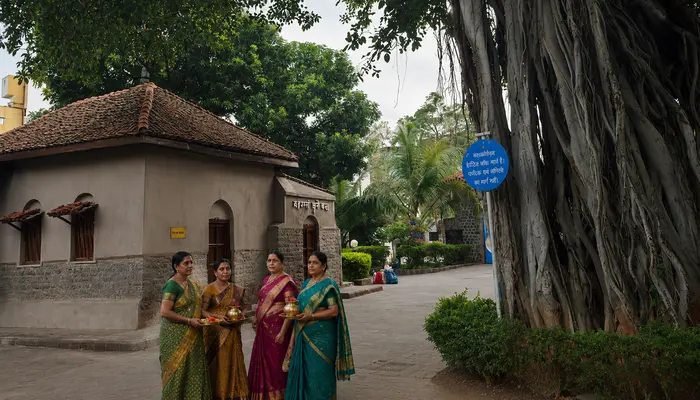
Case Summary
On 2 June 2026, Hindus were barred from celebrating the Hindu festival of Vat Purnima at the historic Mahatma Phule Wada in Ganj Peth, Pune, after the Maharashtra Archaeology Department issued an order prohibiting the celebration on flimsy grounds. The order concerned a banyan tree located within the premises of the Mahatma Phule Wada, where married Hindu women had traditionally performed Vat Purnima rituals by tying sacred threads around the tree and offering prayers. The Maharashtra Archaeology Department sought police deployment till 29 June 2026 to ensure that no religious programme took place at the site. In its order, the department claimed that social reformers Jyotirao Phule and Savitribai Phule had opposed ritualism and religious orthodoxy. It relied on this interpretation of their legacy, along with the interpretation of Rule 8(f) of the Maharashtra Ancient Monuments and Archaeological Sites and Remains Rules, 1962, to justify the prohibition of the Hindu religious observance. The decision sparked controversy and was challenged through a detailed legal objection submitted on 19 June 2026 on behalf of women who traditionally observed the festival at the site and other citizens. The petition stated that the administration had imposed a blanket restriction on a long-standing Hindu religious practice without consulting those directly affected by the decision. It stated that no archaeological assessment, structural report, or scientific evidence had been produced to demonstrate that the rituals caused any damage to the protected monument. The objection further maintained that the ban was rooted not in conservation concerns but in an ideological interpretation of Mahatma Phule’s views, which had been used as the basis for restricting a peaceful Hindu religious practice. The petition also contended that the department had misapplied Rule 8(f), stating that the provision was intended to protect existing customs and practices rather than prohibit them. According to the objection, women had performed Vat Purnima rituals at the banyan tree for several years without causing harm to the monument, and previous police involvement had been limited to maintaining law and order when objections were raised by activists. The petition maintained that the continuation of an established religious practice could not reasonably be treated as a violation of the rule and that neither the Maharashtra Ancient Monuments and Archaeological Sites and Remains Act, 1960, nor the associated rules granted authorities the power to completely prohibit such peaceful religious observances in the absence of demonstrable damage to the monument. The objection further invoked constitutional protections relating to equality, personal liberty, freedom of expression, and freedom of religion. It criticised the administration for selectively targeting a Hindu religious practice while permitting similar observances at other protected sites and argued that any legitimate concerns regarding crowd management or preservation could have been addressed through proportionate measures rather than a complete prohibition. The petition additionally stated that the principles of natural justice had been violated because the women and devotees affected by the order were neither notified nor given an opportunity to present their views before the restriction was imposed. It ultimately sought the withdrawal of the order, permission for the peaceful observance of Vat Purnima at the site, and assurances that future decisions affecting such religious practices would not be taken without consulting those concerned. The dispute subsequently developed into a wider controversy concerning religious freedom, administrative overreach, and the restriction of a traditional Hindu religious observance based on ideological interpretations associated with the legacy of Mahatma Phule.
Why it is Hate Crime ?
This case has been added to the tracker under the primary category of - Restriction/ban on Hindu practices. Within it, the sub-category selected here is - Administration restricting religious practice. In several cases, it is seen that the administration/state disallows a religious practice owing to prejudicial orders and concerns, targeted specifically against the Hindu community. Such restriction/prohibition would be considered documented as a hate crime because the orders are often a result of pressure by groups that harbour animosity towards Hinduism and Hindus. Often, the restriction by the authorities is driven by bias, hostility, or prejudice against the specific community being stopped from holding a religious practice, by pressure groups that harbour animosity towards Hindus, intrinsic to their faith. Since practices are intrinsic to the faith of the Hindus, such prejudicial restriction is considered a curtailing of the fundamental rights of the Hindu community. In several cases, for example, the authorities ban a Hindu religious practice due to pressure from groups opposed to the religion. In other instances the prohibition is selectively enforced against one religious group (Hindus) while others are allowed to proceed. There are still other cases where the authorities preemptively restrict a religious practice by Hindus because those who hold animosity towards Hindus may get “provoked” leading to them being violent, thereby assuaging the sentiments of those who hold animosity towards Hindus by curtailing the religious rights of Hindus. Such acts and orders are prejudiced, indicating discriminatory motives owing to the capitulation to groups that harbour animosity towards Hindus and therefore, would be categorized as a religiously motivated hate crime since the original pressure leading to the order itself is a result of hatred/bias/prejudice/religious hate against Hindus. The other sub-category selected here is - Restriction on expression of Hindu identity. An example of the state-affected prejudicial and targeted orders against the Hindu community would be a government denying the right of a Hindu or a group of Hindus to hold a religious procession owing to the animosity of non-Hindu groups. Denial of the religious right of the Hindus to assuage the non-Hindu group which harbours animosity to a point where it could lead to violence against Hindus is not only a failure of law and order but is a prejudicial order against Hindus, denying them their fundamental rights to express their religious identity. An example of a hate crime against Hindus by a non-Hindu would be a non-Hindu institution forcing its Hindu employees to abandon religious symbols that a Hindu would wear as an expression of faith owing to inherent prejudice against the faith professed by the victim or a non-Hindu group of people restricting a Hindu group from constructing a place of worship simply because the demography of the area in which the temple is being built is dominated by non-Hindus. Such actions are driven by religious animosity and/or prejudice against Hindus and their faith and would therefore be categorized as a hate crime. This case has been included in the Hinduphobia Tracker because it involved the restriction of a longstanding Hindu religious practice by the Maharashtra Archaeology Department on the basis of ideological objections directed specifically at Hindu rituals and beliefs. The prohibition did not arise from any evidence that the Vat Purnima observance caused damage to the protected monument or posed a threat to public safety. Rather, the Maharashtra Archaeology Department attempted to justify its decision by invoking the perceived opposition of Jyotirao Phule and Savitribai Phule to ritualism and religious orthodoxy. The religious beliefs and practices of Hindu women who had traditionally worshipped at the site for years were suddenly treated as incompatible with the ideological legacy associated with the monument, resulting in an attempt to prevent them from exercising their religious traditions. When a Hindu religious practice is singled out for restriction not because of any demonstrable harm but because it is viewed unfavourably through an ideological lens and by twisting the interpretation of rules, it constitutes a form of institutional prejudice against that religious practice. The significance of the ritual targeted in this case further underscores why the restriction was an affront to Hindu religious rights. Vat Purnima is an important Hindu festival observed primarily by married women across several parts of India, particularly in Maharashtra. Rooted in the revered story of Savitri and Satyavan from the Mahabharata, the festival symbolises devotion, marital commitment, spiritual strength, and the triumph of righteousness over adversity. On this day, women worship the banyan tree, which is regarded as sacred in Hindu tradition and symbolises longevity, stability, and the cyclical nature of life. The act of tying sacred threads around the tree and offering prayers is not a mere social custom but a deeply religious observance imbued with spiritual meaning. Consequently, preventing women from performing Vat Purnima rituals amounted to restricting a recognised expression of Hindu faith and worship. When a ritual of such religious significance is curtailed not because it causes harm but because of ideological objections to the practice itself, it showcases serious prejudice towards Hindu beliefs and the unequal treatment of Hindu religious traditions. A significant aspect of this case is that the authorities did not rely upon archaeological, structural, or conservation-related grounds to justify the prohibition. No evidence was presented to show that tying sacred threads around the banyan tree, offering prayers, or conducting Vat Purnima rituals damaged the monument in any way. Instead, the rationale advanced was that the site represented the social reform legacy of Phule, who was allegedly opposed to such rituals. This reasoning effectively transformed a matter of heritage management into a judgment on the legitimacy of Hindu religious customs themselves. The state is expected to remain neutral between competing ideological viewpoints and religious beliefs. However, in this instance, an ideological interpretation was used to restrict a Hindu religious observance, thereby placing the burden of that interpretation exclusively upon Hindu devotees and their practices. The case also reflects a broader pattern in which Hindu customs and traditions are portrayed as regressive, undesirable, or incompatible with modern values, leading to attempts to curtail their public expression. Therefore, preventing the performance of Vat Purnima at this site where it had been practised for years conveyed the message that the religious sentiments and traditions of Hindu devotees were less deserving of protection than the ideological preferences advanced by those seeking the prohibition. Such actions contribute to an environment in which Hindu religious practices are treated as problems to be managed or eliminated rather than as legitimate expressions of faith protected under the principles of religious freedom. The discriminatory nature of the restriction becomes more apparent because the prohibition targeted the continuation of an existing Hindu religious practice rather than addressing any issues associated with due to the continuation of the said religious practice. The petition challenging the order stated that less restrictive measures could have been adopted if there were genuine concerns existed regarding crowd management, preservation, or law and order. Instead, a complete prohibition was pursued. This approach disproportionately burdened Hindu devotees by denying them access to a traditional religious practice while privileging an ideological interpretation over their right to worship. The decision therefore went beyond routine administrative regulation and entered the realm of restricting religious expression based on hostility towards, or disapproval of, a Hindu ritual. For these reasons, the incident qualifies for inclusion in the Hinduphobia Tracker. The central issue was not merely a dispute over monument management but the use of state authority to suppress a Hindu religious observance because it was considered inconsistent with a particular ideological narrative. By seeking to prevent Hindu women from performing a peaceful and longstanding religious ritual without demonstrating any tangible harm, the action reflected institutional bias against a Hindu practice and undermined the equal protection of Hindu religious rights. The case therefore represents an instance where Hindu faith, customs, and traditions were subjected to differential treatment and restriction on grounds that were fundamentally ideological rather than legal, conservation-related, or evidence-based.


Case Status
Case sub-judice


Perpetrators Details
Perpetrators
State and Establishment
Perpetrators Range
N/A
Perpetrators Gender
unknown
 Sources




