Tribal Hindu woman lured, pressured to convert to Islam and undergo nikah by Muslim man posing as Hindu in Madhya Pradesh's Chhindwara
 Chhindwara, Madhya Pradesh, India
  12 June, 2023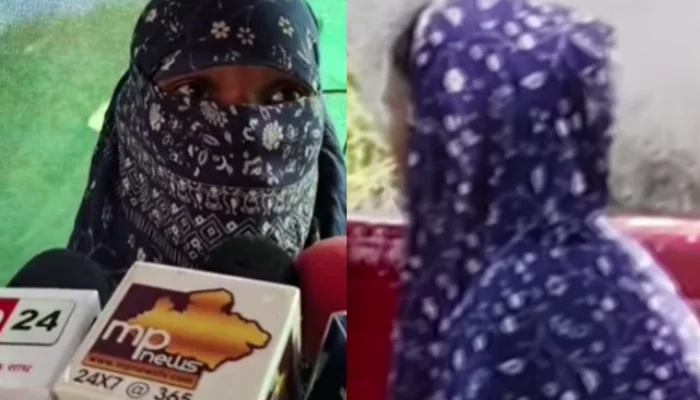
Case Summary
In Ravanwara Shivpuri under the Parasia area of Chhindwara district, Madhya Pradesh, a tribal Hindu woman was lured into a relationship by a Muslim man named Sameer Khan, who concealed his religious identity and posed as a Hindu man. The accused subjected the victim to sexual exploitation and subsequently pressured her to convert to Islam and undergo nikah (Islamic marriage). She was also subjected to blackmail and financial exploitation by the accused. According to the complaint, the woman first came into contact with Sameer Khan through Instagram approximately three years earlier (2023). During this time, he was pretending to be Hindu by concealing his Muslim identity and name. Over time, the two began communicating regularly and developed a close relationship. The woman stated that the accused ensnared her in a romantic relationship and subsequently established sexual relations with her. She further stated that during the course of the relationship, the accused recorded an obscene video of her. The victim informed the police that she had obtained a bank loan of ₹64,000, out of which Sameer Khan took ₹50,000 for himself and never returned the money. She further stated that after recording the objectionable video, the accused continuously blackmailed her by threatening to make the video viral on the internet. According to the complaint, he repeatedly demanded money from her while using the video as a means of coercion. Out of fear and distress, she endured the harassment for a prolonged period. The woman also stated that on 13 June 2026, Sameer Khan came to her residence, created further disturbances, threatened her, and continued exerting pressure on her. According to her complaint, the accused repeatedly pressured her to convert to Islam and marry him through nikah. She stated that whenever she resisted these demands, he would visit her residence, create disturbances, and subject her to continued mental harassment and distress. The complainant further stated that when she firmly opposed conversion and marriage, the accused threatened to kill her. Disturbed by the threats, blackmail, financial exploitation, and repeated pressure, she informed her acquaintances about the entire incident and sought assistance. The matter subsequently came to the attention of the Vishwa Hindu Parishad. The organisation's divisional leadership contacted the victim, and office-bearers of the Vishwa Hindu Parishad accompanied her to Shivpuri Police Station, where she lodged a formal complaint against the accused. Based on the complaint, Ravanwara Shivpuri Police registered a case against Sameer Khan under various provisions of the Bharatiya Nyaya Sanhita and the Madhya Pradesh Freedom of Religion Act, 2021. Police stated that an investigation had been initiated and that further action would be taken based on the findings of the inquiry. Kanchan Rajput, Station House Officer of Ravanwara Shivpuri Police Station, confirmed that a case had been registered against the accused under multiple provisions of the Bharatiya Nyaya Sanhita and the Madhya Pradesh Freedom of Religion Act, 2021. She stated that the matter remained under investigation and that further action would be taken in accordance with the facts established during the inquiry. Following the incident, office-bearers of several Hindu organisations expressed concern and demanded strict action against the accused, describing the matter as a case of "Love Jihad". Nitesh Golu Suryavanshi, Vibhag Sah-Mantri of the Vishwa Hindu Parishad, stated that the victim should receive justice and called for an impartial investigation into the matter. Police officials stated that the case was being investigated on the basis of the complaint and the First Information Report. They added that the veracity of the crime, the sequence of events, and the available evidence were being examined and that the complete facts of the case would become clear only after the investigation was completed. The administration also appealed to the public to refrain from spreading rumours and to maintain calm and restraint until the investigation concluded.
Why it is Hate Crime ?
The primary category selected in this case is: Crimes against women in relationships and other sexual crimes. The subcategory selected is: Man pretends to be Hindu. When a non-Hindu man pretends to be a Hindu to deceive a Hindu woman into a relationship, the act is seen as triggered by malafide intentions. In some cases, the woman eventually accepts the man’s original religious identity and converts after the man’s identity is revealed. These cases could be argued as cases of religious brainwashing and a result of the pressure a woman feels after getting into a relationship with a man. The woman, it can be argued, also changed her religious identity because of the stigma she believes she might face if she chooses to walk out of a deceptive relationship. However, for the purpose of documenting hate crimes, the cases in this subcategory are limited to those where there is explicit violence aimed at religious conversion against the wishes of the victim (force-feeding beef, blackmailing with intimate videos, rape on refusal to convert, etc), or if the woman herself complains of the man’s religious deception. In such cases, it is established that the deception of the non-Hindu man had a specific aim of religious conversion or targeting of the victim due to her Hindu religious identity, therefore, making it a religiously motivated hate crime. The other subcategory selected is: Forced conversion before marriage. The tertiary category selected is: Forced to do Nikah. In such cases, a non-Hindu man is in a relationship with a Hindu woman when the pressure to convert her religion begins to manifest. In such cases, typically, two patterns emerge. First, when the relationship is consensual, and the religious identity of the perpetrator is known to the Hindu woman in the relationship, however, at some point during the relationship, the non-Hindu man starts to force the victim to convert her religion and give up her Hindu religious identity. The second is when the woman gets into a marriage with the man pretending to share her faith. Later, when the truth is revealed, the man starts pressuring the woman to convert her religion and give up her religious identity. In both the situations, the methods used to force the victim to convert her religion often revolve around force-feeding beef, forcing her to wear hijab, forcing her to read the Kalma or even pressurizing the victim to do ‘Nikah’, which is marriage under Islamic law, with a prerequisite being conversion to Islam. Cases where a Hindu woman consensually converts to Islam in a relationship will be left out of the hate crime database, even though it could be argued in several cases that the conversion was a result of religious brainwashing. The other subcategory selected is: Blackmailed to convert. When Hindu women are in a relationship with non-Hindu men, there are cases where the woman is blackmailed to convert her religion, owing to her religious identity of being a Hindu. Such relationships may be consensual with the religious identity of the non-Hindu man known to the victim, however, there could be cases where the relationship is not consensual and the non-Hindu man starts blackmailing a Hindu woman to convert her religion. In these cases, it is often seen that the Hindu woman is blackmailed with intimate photos and/or videos, threats of harm to her or her family, threats of violence etc. Such cases are driven by specific religious motivations and against the religious identity of the victim and are therefore qualified as hate crimes. The other subcategory selected is: Assault or threat upon refusal to convert. When Hindu women are in a relationship with non-Hindu men, there are cases where the woman faces threats or assault after she refuses to convert and change her religious identity owing to pressure/force by the non-Hindu man. Such relationships may be consensual with the religious identity of the non-Hindu man known to the victim. Somewhere along the relationship, the non-Hindu man starts pressurizing the Hindu woman to convert to Islam and upon her refusal, assaults or threatens the victim. Such cases are driven by specific religious motivations and against the religious identity of the victim and are therefore qualified as hate crimes. Cases where the Hindu woman converts to Islam and does not file a complaint about the force or threat, are not considered a part of the hate tracker, even though, it may be argued that the woman was brainwashed or threatened to convert to Islam. In this case, the Hindu woman was deceived into a relationship by a Muslim man pretending to be Hindu. She was subjected to sexual exploitation, financial exploitation, pressure to convert and undergo nikah. Firstly, the perpetrator's act of deception by posing as a Hindu itself demonstrates a clear bias and malicious intent towards the victim’s religion. By hiding his true identity, the Muslim man manipulated the Hindu woman's trust and targeted her under false pretences, indicating a premeditated effort to exploit the woman based on her religious background. This constituted a direct violation of her right to informed consent regarding whom she chooses to be in a relationship with, as well as an infringement upon her religious beliefs. Thus, the perpetrator’s deliberate decision to hide his religious identity strongly underscores the religious motive behind this crime. In such instances, identity concealment is not just a deceptive tactic for personal reasons but a calculated strategy rooted in religious profiling and targeting. The accused was aware that the victim, being Hindu, would likely refuse his advances if she knew his real identity, and he circumvented this by lying, which directly points to a religiously driven intent. This deception reflects a broader pattern where Hindu women are singled out using false identities for relationship formation under misleading pretences by Muslim men. Such targeted victimisation based on religious identity demonstrated a disregard for the victim’s faith and exposed the exploitative nature of the conduct described in the case. Furthermore, the sexual exploitation of the victim in this case was not merely performed for sexual gratification; it was driven by religious hatred directed at the victim due to her Hindu identity. Considering that the perpetrator pretended to be Hindu, deceived her through a false identity, and targeted her specifically for being a Hindu before later pressuring her to convert and marry, it is clear that the victim was targeted explicitly for her religious identity. Similarly, the sexual exploitation in this case was religiously driven, with the intent to dominate and humiliate a Hindu woman for her religious identity. Such religiously motivated sexual violence against Hindu women is clearly rooted in hate for Hinduism and the Hindu community, making it a religiously driven hate crime. The subsequent act of pressuring the victim to convert to Islam further underscores the hate-driven nature of the offence. Forcing or coercing an individual to convert amounts to a hate crime because it violates a person's religious autonomy and fundamental human rights. Such an action treats their existing faith as something inferior and unacceptable that needs to be discarded forcibly. This complete disregard for the victim's right to conscience and belief makes the entire act of pressuring her to convert a crime rooted deeply in religious hostility. The demand for her to convert to Islam specifically to undergo a nikah was intended to solidify and formalise this forced conversion. In Islamic jurisprudence, a marriage between a non-Muslim woman and a Muslim man is not permissible unless the woman converts to Islam. The perpetrator was therefore pressuring her to convert to fulfil this theological and jurisprudential requirement. This requirement was utilised to institutionalise her forced conversion, aiming to make it difficult or impossible for the victim to return to her Hindu faith. Consequently, marriage in this case served as a mechanism to dominate and humiliate the woman for her religious identity and to establish complete control over her. The act of blackmailing the victim for financial exploitation further showcases the depth of hostility involved in the crime. The victim was not only blackmailed for financial gain but was also coerced to convert to Islam under the threat of exposure, and she was issued with death threats when she firmly refused to convert. Employing blackmail and death threats as coercive tactics to force a conversion amounts to a hate crime, demonstrating a profound level of religious hostility. It reveals that the perpetrator was prepared to cross any limit to forcibly erase the victim's Hindu identity, making it a clear case of a religiously driven crime. When the victim refused to convert, the accused repeatedly subjected her to continued threats, disturbances near her residence, and persistent harassment, resulting in sustained mental distress. The conduct described included frequent visits to her home, creation of disturbances in the locality, and continuous pressure intended to compel compliance. Such a pattern of repeated intimidation and coercive behaviour, when linked to demands for religious conversion, reflects a form of sustained harassment aimed at influencing the victim’s personal and religious choices. This is a clear example of coercive pressure, significantly impacting the victim’s sense of safety, dignity, and mental well-being. Since this case meets several parameters of a religiously driven hate crime, it is being added to the hate crime database of the Hinduphobia Tracker. Disclaimer: The Hinduphobia Tracker records incident dates based on when the victim’s ordeal begins, rather than when the matter is reported or published by the media. In this case, the earliest media reporting of the incident was on 20 June 2026. The report further indicates that the accused first lured the victim approximately three years prior, in 2023, and also records a specific incident dated 13 June 2026, when the accused visited the victim’s residence, created disturbances, issued threats, and exerted pressure upon her to convert to Islam and undergo nikah (Islamic marriage). Taking both references into account, an indicative incident date of 13 June 2023 has been selected for documentation purposes, representing an estimated point at which the victim’s ordeal is understood to have begun based on the available information. This date is used solely as a reference for documentation purposes only.
Victim Details
Total Victim
1
Deceased
0
Gender
- Male 0
- Female 1
- Third Gender 0
- Unknown 0
Caste
- SC/ST 1
- OBC 0
- General 0
- Unknown 0
Age Group
- Minor 0
- Adult 1
- Senior Citizen 0
- Unknown 0


Case Status
Complaint registered


Perpetrators Details
Perpetrators
Muslim Extremists
Perpetrators Range
One Person
Perpetrators Gender
male
 Sources




