Hindu woman lured, taken to madrasa, converted to Islam by two Muslim men: minor son forcibly circumcised
 Kushalnagar, Karnataka, India
  18 May, 2026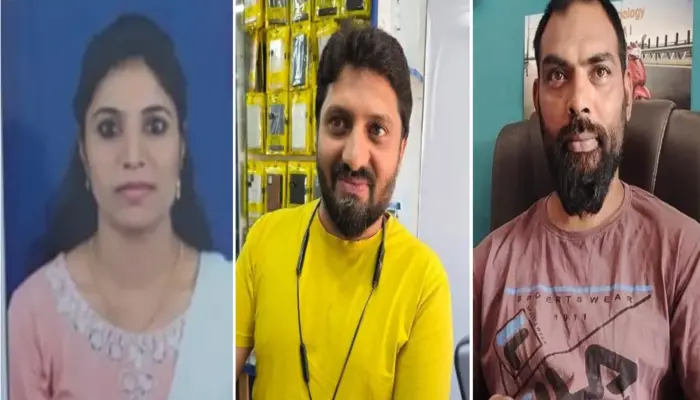
Case Summary
In Kushalnagar of Kodagu district, Karnataka, a married Hindu woman and her minor son were lured, abducted and converted to Islam by two Muslim men, Salim and Jalil. The minor Hindu boy was also forcibly circumcised by the perpetrators. According to reports, the Hindu woman went missing with her nine-year-old son in May 2026 and was later traced to a madrasa in Malappuram district of Kerala. The Hindu woman, identified as Sajitha, had been living with her husband and children and had worked for approximately three years at a shop located within the Nisargadham Tourist Centre complex near Kushalnagar. The shop was owned by a Muslim man named Salim, who had operated the establishment for nearly a decade. In May 2026, Sajitha disappeared along with her son, prompting extensive searches by her husband and family. Unable to locate them, Sajitha’s husband grew suspicious of Salim and sought assistance from local Hindu organisations. A missing person complaint was subsequently lodged at the Kushalnagar police station. Following continued efforts by the police and supporting organisations, Sajitha and her son were eventually located in a madrasa in Kerala’s Malappuram district. The investigation revealed that both the woman and her son had converted to Islam after reaching Kerala. It was further stated that the minor boy had forced undergone circumcision in accordance with Islamic religious practices, a development that caused considerable distress to the family. The investigation linked the case to individuals operating in parts of Malappuram district, including the Ponnani and Manjeri regions. Authorities found that Sajitha had been staying in Kerala with her son after leaving Karnataka. Police arrested Salim and another individual identified as Jalil in connection with the case. Furthermore, the investigation was ongoing against them under charges of kidnapping, incitement to convert and other related charges. Police investigated their roles in facilitating the woman’s movement from Karnataka to Kerala and in the events that followed. Reports stated that the shop associated with Salim at the Nisargadham Tourist Centre was closed after details of the case became public. The incident generated strong reactions from local Hindu organisations, which expressed concern over the circumstances under which the woman and her son had left their family and subsequently converted. The organisations called for a comprehensive investigation into the broader activities surrounding the case and urged authorities to take stringent action against all those found responsible. Police continued their investigation to determine the full extent of the network and the involvement of all persons connected to the matter.
Why it is Hate Crime ?
This case has been added to the tracker under the primary category Predatory Proselytisation. Within this, the subcategory selected is - Proselytisation by grooming, brainwashing, manipulation or subtle indoctrination, with the tertiary category being - Conversion of Minor. Religious brainwashing essentially means the often subtle and forcible indoctrination to induce someone to give up their religious beliefs to accept contrasting, regimented ideas. Religious grooming or brainwashing also involves propaganda and manipulation. It involves the systematic effort, driven by religious malice and indoctrination, to persuade “non-believers’ to accept allegiance, command, or doctrine to and of a contrasting faith. Cases of such grooming or brainwashing are far more nuanced than direct threats, coercion, inducement and violence. In such cases, it is often seen that there is repeated, subtle, and continual manipulation of the victim to induce disaffection towards their own faith and acceptance of the perpetrator's contrasting faith. While subtle indoctrination is widely acknowledged as predatory, an element which is often understated in such conversions or the attempts of such conversion is the role of loyalty and trust which might develop between the perpetrator and the victim. Fiduciary relationships are often abused to affect such religious conversion. For example, an educator transmitting religious doctrine of a competing faith to a Hindu student. The Hindu student is likely to accept what the teacher transmits owing to the existence of a fiduciary relationship. The exploitation of the fiduciary relationship to religiously indoctrinate victims would also be included in this category. Since the underlying animosity towards the victim’s faith forms the basis of predatory proselytisation, such cases are considered religiously motivated hate crimes. This case has been added to the tracker because a married Hindu woman and her minor son went missing from their home in Karnataka and were later traced to a madrasa in Kerala, where both had converted to Islam. The circumstances surrounding the disappearance, the subsequent religious conversion, and the forced circumcision aspect proves that the victims were targeted because of their religious identity. Firstly, it is important to note here that the son was a minor, which means the element of consent and genuine change of conscience was missing ab initio. Minors, due to their young age and lack of maturity, are particularly vulnerable to manipulation and coercion. They may not have the ability to fully understand the implications of converting to another religion, and the Muslim perpetrators purposely targeted and exploited this vulnerability of the victim. Since this case exemplifies the use of coercion and manipulation to achieve religious conversion, it is a blatant act of religious hate, which is why it has been documented here in the hate tracker. Secondly, the forced circumcision is another deeply disturbing element that underlines the religious animosity of the act. Circumcision is irreversible. For a Hindu boy, it is not a cultural or religious practice and carrying it out without his consent is a direct attack on his religious identity. By doing so, the perpetrators ensured that the child bears the lifelong physical and symbolic marker of forced Islamic conversion. This was not only an assault on his bodily autonomy but also on his Hindu faith, demonstrating a targeted act of hatred against his religion, Hinduism. Thirdly, the Hindu woman was also converted to Islam. Pressuring a Hindu individual to discard her religious faith and embrace another was a direct attack on her religious identity and dignity. It was not a matter of personal choice; it was coercion rooted in hostility towards the victim's Hindu identity. Such an attempt reflects religious animosity because the act was not simply about personal differences but about erasing the victim’s Hindu faith, making it a religiously motivated crime. The case is further significant because both the woman and the child were removed from their existing social and religious environment before being found in a madrassa in Kerala. In many such cases, separation from family members and familiar surroundings is used to facilitate the exertion of influence and reduce the ability of victims to seek assistance or make independent decision. The intention is to break the victims down, emotionally, physically, and spiritually, so that they could be converted. Such actions stem from inherent hostility towards the victim's professed faith since Abrahamic faiths believe that any non-adherent to the faith is subject to being dehumanised till they convert. Therefore, religious conversions, even of minors, are often seen as a badge of honour, totally disregarding the methods used to achieve it. Since such predatory actions stem from doctrinal animosity towards the Hindu faith and its adherents, this case is being documented as a religiously motivated hate crime. Disclaimer: It is important to clarify that none of the media sources covering this case have specified the exact date when the victim's ordeal began, though it is mentioned that the victim and her son went missing in May 2026. Thus, to document this case, we have used an indicative date, 19 May 2026, as a placeholder to represent the beginning of her suffering. While media coverage of the incident emerged on 19 June 2026, the Hinduphobia Tracker records the incident based on when the victim’s ordeal began, not when it was reported.
Victim Details
Total Victim
2
Deceased
0
Gender
- Male 1
- Female 1
- Third Gender 0
- Unknown 0
Caste
- SC/ST 0
- OBC 0
- General 0
- Unknown 2
Age Group
- Minor 1
- Adult 1
- Senior Citizen 0
- Unknown 0


Case Status
Arrested


Perpetrators Details
Perpetrators
Muslim Extremists
Perpetrators Range
From 2 To 5
Perpetrators Gender
male
 Sources




