Ancient Hindu temple land encroached upon by madrasa in Barabanki; memorial sites of Hindu saints damaged
 Bara Banki, Uttar Pradesh, India
  18 June, 2026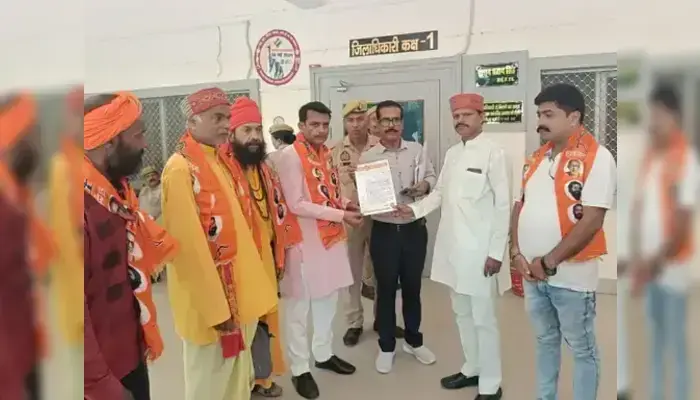
Case Summary
The land of the ancient Chaturbhuj Hindu Temple located in Barabanki, Uttar Pradesh was encroached upon by an illegal madrasa. Furthermore, Hindu organisation raised concerns regarding the occupation and use of temple property. Members of the Hindu organisation led by District President of Shiv Sena Kishanlal Rawat went to the Collectorate and submitted a memorandum to the District Magistrate seeking the removal of the illegal encroachments on temple land and demanding the cancellation of recognition granted to a madrasa operating within the temple premises. The memorandum called for an impartial investigation into the matter, legal action against those responsible for occupying the land, and measures to restore the property to temple management. Concerns were also raised regarding the safety of Baba Kamaldas, who had been spearheading efforts to reclaim the temple land, and a request was made for administrative protection to be provided to him. The memorandum further sought an inquiry into the damage caused to the tombs and memorial sites of saints and sages situated within the temple complex and urged strict action against those found responsible. Shiv Sena proposed the establishment of a government trust for the preservation and administration of the temple’s approximately 1,200 acres of land. The organisation warned that if satisfactory action was not taken by the administration within one month, it would escalate the matter by approaching the Chief Minister and launching a wider public agitation. The programme and memorandum submission were attended by several Hindu leaders and activists, including Hindu Jagran Manch State President Manish Srivastava, Vivek Awasthi, Dharmendra Mishra, Pravesh Rawat, and Baba Kamaldas.
Why it is Hate Crime ?
The primary category selected in this case is- Attack on Hindu religious representations. The subcategory selected is- Encroachment or illicit takeover of temple land/land near temple. In Hinduism, a temple is the abode of the Deity. The Deity in the Temple is consecrated, thereby making it a real, breathing entity. Hindus believe that not just the Deity but the temple premises itself are sacred to Hindus since Hindus hold the faith that the entire Temple space is an amalgamation of the divine energy of the deity. Not only the Temple but the Temple premises in its entirety are considered sacred by Hindus. In several cases, the premises of the Temple and/or religious centre are illicitly taken over by institutions belonging to other faiths, like the Waqf board or the Church. Other times, the temple property, land or the property of religious centres are illicitly encroached upon by non-Hindu groups. Any illicit takeover or encroachment is a crime an initio; however, when non-Hindu groups illicitly take over or encroach on the sacred land of Hindus, it is an affront to the Hindu community and is therefore classified as a religiously motivated hate crime under this category. The other sub-category selected here is - Desecration of Hindu religious symbol. Icons and symbols or a religious representation of a spiritual ideal are widely revered in Hinduism. Iconography is of vital significance in the Hindu milieu. It helps connect people’s spiritual beliefs with the real world. Iconography within the Hindu faith takes several shapes and forms. Murtis are of most significance to Hindus, to which daily rituals, prayers and offerings are done. Besides the murtis, there are several other symbols which have deep significance in the Hindu faith – the Om and Swastika for example. Since these Hindu religious symbols hold paramount importance in Hinduism, any desecration of symbols, icons, murtis, religious representations and manifestations, is driven by animosity towards the faith itself which manifests itself through these murtis, icons and symbols. Therefore, any desecration of these Hindu religious symbols and representations is considered religiously motivated hate crimes under this category. This case has been added to the tracker because it involved the continued occupation and use of land belonging to the ancient Chaturbhuj Temple in Barabanki, Uttar Pradesh, a site regarded by Hindu devotees as sacred religious property. The matter extended beyond an ordinary land dispute because the land in question was attached to a Hindu temple and was intended for religious purposes. For Hindus, a temple is not merely a physical structure but a sacred space dedicated to divine worship and religious observance. Equally important is the land attached to the temple, which forms an integral part of the institution's religious identity and functioning. Temple lands are traditionally used to facilitate worship, accommodate devotees, host religious gatherings, preserve religious heritage, and support the maintenance of the temple itself. Once dedicated to a deity, such land is regarded as sacred and is held in trust for religious purposes rather than for unrelated private or institutional use. The occupation of the Chaturbhuj Temple's land by a madrasa carried implications that extended far beyond a simple question of property ownership. Land dedicated to a Hindu temple and intended for religious purposes was being used for the operation of a madrasa, thereby altering the character and intended function of property consecrated for Hindu worship and religious activities. Temple land exists to support the functioning of the temple, facilitate religious observances, accommodate devotees, and preserve the institution's sacred heritage. When such land is encroached upon and utilised for a non-Hindu religious institution, it interferes with the temple's ability to fully exercise control over its religious resources and undermines the intended use of property dedicated to Hindu faith and worship. Such encroachment can also restrict the ability of devotees to preserve, manage, and utilise the space in accordance with its religious purpose, thereby affecting the broader religious interests of the Hindu community associated with the temple. The religious dimension of the incident was further reinforced because of the damage done to the tombs and memorial sites of saints and sages located within the temple complex. In Hindu tradition, sites associated with saints, ascetics, and spiritual figures hold deep religious significance and are often venerated as part of the broader sacred landscape of a temple. Any damage to such sites is viewed as an affront to the religious sentiments of devotees and an attack upon the community's spiritual heritage. Taken together, the occupation and use of land belonging to a Hindu temple, damage to religious heritage within the temple complex, the impact on devotees' ability to preserve and control sacred property, and the threats directed at individuals advocating for the protection of the site demonstrate why the incident possessed a clear religious dimension. The dispute affected property regarded by Hindus as sacred, interfered with the management and preservation of a Hindu religious institution, and raised concerns about the protection of Hindu religious rights and heritage. For these reasons, the case met the threshold for inclusion in the tracker under the category of an attack on Hindu religious representations and religious institutions.


Case Status
Complaint filed


Perpetrators Details
Perpetrators
Muslim Extremists
Perpetrators Range
Unknown
Perpetrators Gender
unknown
 Sources




