Hindu religious sentiments mocked: Government hospital in Navi Mumbai instructs feeding cow meat to children
 Navi Mumbai, Maharashtra, India
  13 June, 2026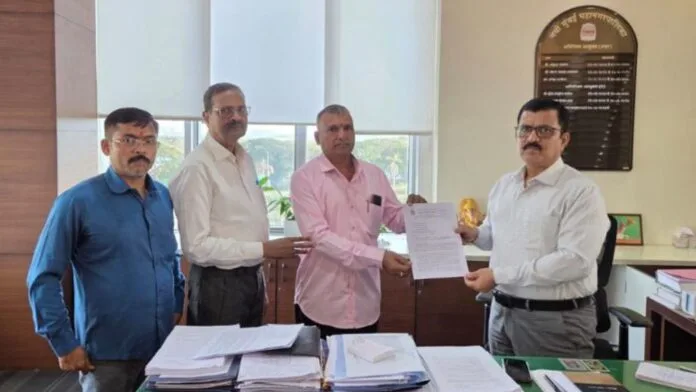
Case Summary
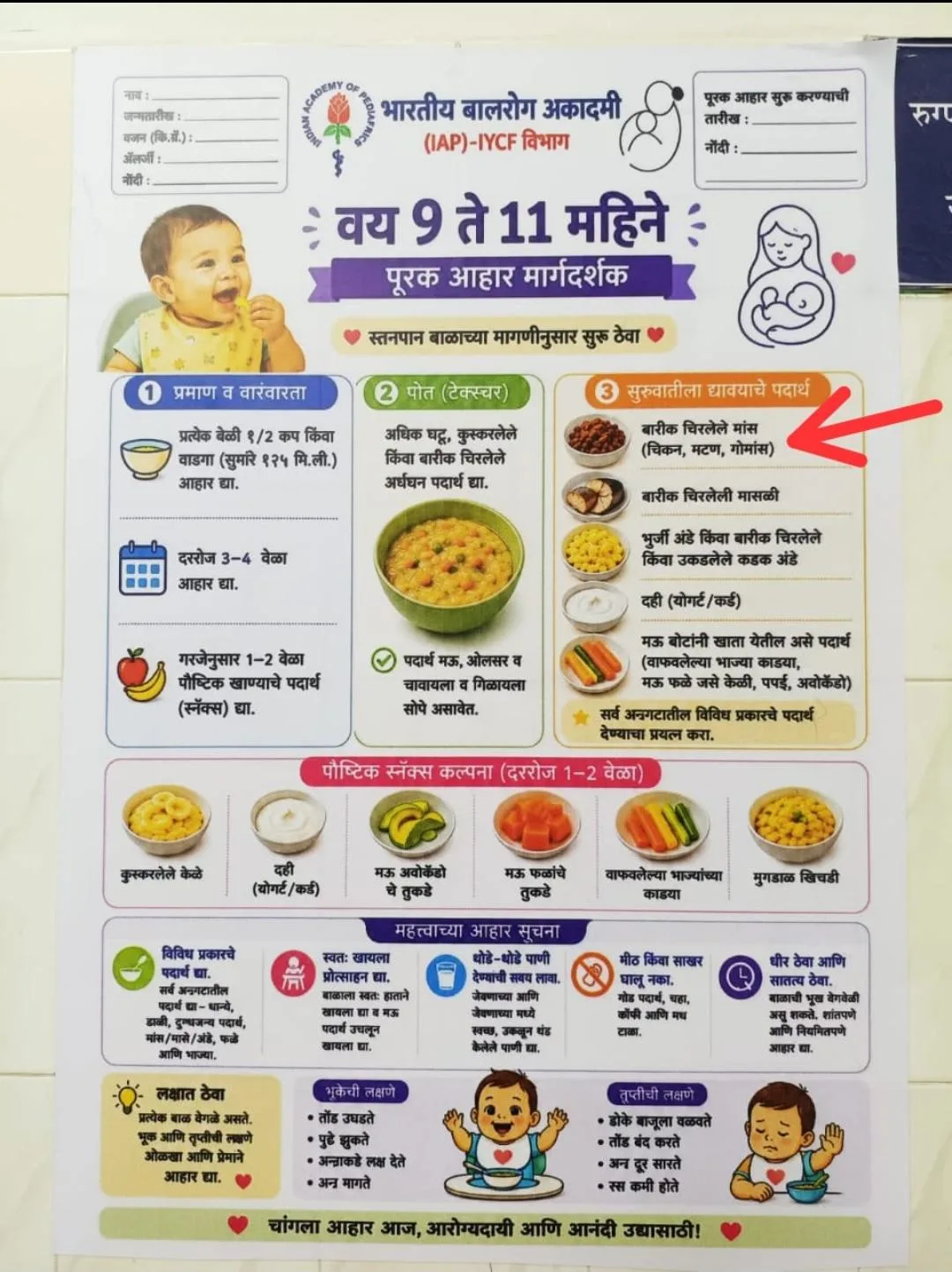
In Navi Mumbai, Maharashtra, Hindu religious sentiments were mocked after a government hospital displayed and distributed nutrition guidance recommending cow meat as food for infants, including Hindu children. The inclusion of cow meat in the hospital's recommended diet for children sparked widespread outrage and prompted objections from Hindu organisations. The controversy arose after a nutrition guide issued by the Indian Academy of Paediatrics (IAP) and displayed at the government-run Vashi Public Hospital included cow meat in its list of recommended foods for infants aged 9 to 11 months. The poster, titled "Complementary Feeding Guide for Age 9 to 11 Months," advised feeding infants finely chopped meat, including chicken, mutton, and cow meat. Objecting to its contents, Hindu Janajagruti Samiti (HJS) state coordinator Sunil Ghanwat submitted a written complaint to Maharashtra Chief Minister Devendra Fadnavis, demanding strict action against those responsible for preparing the nutrition guide as well as officials of the Indian Academy of Paediatrics (IAP) and Vashi Public Hospital. The organisation also submitted a memorandum to Sunil Pawar, Additional Commissioner of the Navi Mumbai Municipal Corporation. The delegation included Ravindra Nalawade, Ashok Sawant, and Govind Prasad Dubey. A copy of the complaint was also sent to the Navi Mumbai Police Commissioner. Separately, the Vishwa Hindu Parishad (VHP) also demanded that a criminal case be registered against those responsible for displaying the nutrition poster for hurting Hindu religious sentiments. According to the organisation, on 14 June 2026, activist Rohit Khandagale visited the Municipal Corporation Hospital in Vashi and noticed the poster displayed on the hospital wall. VHP activists subsequently removed the posters and submitted a memorandum to the Vashi Police Station seeking legal action against the Indian Academy of Paediatrics and those responsible for putting up the posters. According to the Hindu Janajagruti Samiti, it is unacceptable for cow meat to be recommended in a nutrition prescription issued by a government hospital in Maharashtra, as cow slaughter is prohibited under state law. The organisation stated that recommending cow meat for infants hurts the religious sentiments of millions of Hindus and creates social tension. The Vishwa Hindu Parishad also stated that the cow is regarded as sacred in Hindu Dharma and that the consumption of cow meat is contrary to Hindu religious beliefs. It stated that advising infants to consume cow meat is highly condemnable and hurts the religious sentiments of crores of Hindus. The organisation further stated that displaying such a poster in a public hospital appeared to be a deliberate attempt to provoke religious sentiments. The Hindu Janajagruti Samiti further stated that the cow holds a sacred place in Hindu beliefs and is regarded as a second mother for infants who are unable to receive their mother's milk. It also expressed concern over the declining population of indigenous cow breeds such as Gir, Sahiwal, and Deoni, adding that many countries are increasingly recognising the benefits of Indian cattle and practices such as cow therapy for mental health. Strongly condemning the issue, the Hindu Janajagruti Samiti demanded the registration of criminal cases against the Indian Academy of Paediatrics and the officials who approved the nutrition guide. It also called for the immediate withdrawal, confiscation, and destruction of all such nutrition prescriptions and posters distributed or displayed in government hospitals across Navi Mumbai and Maharashtra. HJS state coordinator Sunil Ghanwat warned that if the administration failed to take immediate action, the organisation would launch a massive public movement over the issue.
Case Images
Why it is Hate Crime ?
The first primary category selected in this case is "Attack on Hindu religious representations". The subcategory selected is "Defiling religious customs". Sanatan Dharma is not a religion of one book, which is to say that while it has religious scriptures that form the central tenets of the faith, there are several traditions followed through thousands of years, mostly passed from generation to generation orally. There are several such customs and traditions that are followed by various Hindus and Hindu sects. Defiling of these traditions and customs is a breach of an individual or group’s religious practices. Such practices can range from dietary restrictions like not eating non-vegetarian food for a certain period of the year, not eating non-vegetarian food at all, not eating beef since the cow is considered holy in Hinduism, the sanctity of religious customs followed in the house (like many ISCKON devotees), etc. Any malicious action leading to the breach of such traditions or defilement of these traditions owing to animosity towards the faith or for the sake of activism stems not only from the lack of faith in the religion itself but also from disregard for the faith of the devotees who follow the customs/traditions and implicit bias against the faith, the tradition itself. Since these specific traditions are central to the faith of the devotees of that specific sect of Hindus, any non-compliance with these traditional rules would be considered a religiously motivated hate crime. The second primary category selected in this case is "Hate Speech against Hindus". The subcategory selected is "Anti-Hindu slurs, mocking faith". Anti-Hindu slurs and the deliberate mocking of the Hindu faith owing to religious animosity involve the usage of derogatory terms, stereotypes, or offensive references to religious practices, symbols, or figures. One of the common anti-Hindu slurs used against Hindus is “cow-worshipper” and “cow piss drinker”. The intention of using this term is to demean and mock Hindus as a group and their religious beliefs since Hindus consider the cow holy. Additionally, some symbols and the slurs attached to them have a historical context that exacerbates the insult, hate, stereotyping, dehumanisation and oppression against Hindus. Cow worship has been used for centuries to denigrate Hindus, insult their faith and oppress Hindus specifically as a religious group. There has been overwhelming documentation about how cow slaughter has been used to persecute Hindus with cow meat being thrown in temples and places of worship. There has also been overwhelming documentation where cow meat (beef) has been force-fed to Hindus to either forcefully convert them to Islam or denigrate their faith. Apart from cow worship, the Swastika – which holds deep religious significance for the Hindus – has also been misinterpreted and distorted to use as a slur against Hindus. Similarly, the worship of the Shivling has been used by supremacist ideologies and religions to denigrate Hindus owing to religious animosity. Such slurs and denigration stem out of inherent animosity and hate towards Hindus and their faith, therefore, it is categorised as hate speech targeted at Hindus specifically owing to their religious identity. This case is a clear example of a religiously motivated hate crime aimed at hurting Hindu religious sentiments and targeting Hindu children through an official government institution. The government hospital in Maharashtra displayed and distributed nutrition guidance recommending cow meat as food for infants, including Hindu children. Given the significance of the cow in Hindu religious belief, prescribing cow meat for infants in a public hospital serving a predominantly Hindu population amounts to an act that directly conflicts with deeply held religious convictions and has the potential to offend and undermine the religious identity of Hindu families. It is also important to note that this incident occurred in Maharashtra, a Hindu-majority state, and that the recommendation was issued by a government hospital catering to the general public. By its very nature, the nutrition guidance was directed at infants and young children, including a majority of Hindu children. Any recommendation made by such a public institution is expected to be mindful of the religious beliefs and sensitivities of the communities it serves, especially when it is the majority community. Recommending cow meat as part of infant nutrition in a Hindu-majority society therefore directly implicates the religious sentiments of a large section of the population and particularly Hindu families whose children were the intended beneficiaries of the guidance. In Hinduism, the cow is not merely an animal but is revered as "Gau Mata", a symbol of motherhood, nurturing, sacrifice, compassion, and life-giving abundance. Hindu civilisation has for millennia accorded a uniquely elevated position to the feminine through the worship of goddesses such as Durga, Lakshmi, Saraswati, Kali, and countless local manifestations of the Divine Mother, and the cow occupies a sacred place within this civilisational framework as an embodiment of maternal care and divine grace. Vedic literature refers to the cow as "Aghnya", meaning "that which should not be harmed or killed," reflecting its deeply rooted sanctity in Hindu belief and practice. Cow-derived products play an essential role in Hindu rituals, ceremonies, and religious observances, making the cow a sacred symbol intimately connected to Hindu religion, culture, and civilisational identity rather than merely livestock. Consequently, harming or slaughtering a cow is regarded by all Hindus as a grave sacrilege, while the consumption of cow meat constitutes a serious religious transgression and one of the most significant religious taboos within Hindu society. Against this backdrop, instructing parents to feed cow meat to infants directly contradicts Hindu religious values and normalises a practice that all Hindus consider religiously prohibited. Such guidance amounts to the defilement of sacred religious customs and causes deep offence by encouraging conduct that conflicts with one of the most deeply held Hindu religious beliefs. The recommendation therefore mocks a practice that is central to Hindu faith and hurts the religious sentiments of the Hindu community. The fact that this recommendation originated from a government hospital further aggravates its impact. Public institutions are expected to respect the religious diversity and constitutional rights of all citizens and to avoid endorsing practices that unnecessarily offend the faith of any community. When a government institution officially recommends a practice that all Hindus regard as a grave religious transgression, it lends institutional legitimacy to that recommendation and emboldens the normalisation of conduct that disregards and insults Hindu religious beliefs. Such official endorsement amplifies the harm caused to Hindu religious sentiments and reinforces the perception that a sacred aspect of Hindu faith is being trivialised by a public authority. Taken together, the recommendation of cow meat for infants by a government hospital, its direct conflict with a deeply held Hindu religious prohibition, its impact on a predominantly Hindu population, and its defilement of a sacred religious custom collectively demonstrate multiple elements of a religiously motivated act directed against Hindu beliefs, customs, and identity. The incident therefore satisfies multiple parameters relied upon by the Hinduphobia Tracker for identifying attacks on Hindu religious customs and the mocking of Hindu faith. Accordingly, since this case meets several parameters of a hate crime, it is being added to the hate crime database of the Hinduphobia Tracker. Disclaimer: The Hinduphobia Tracker records incident dates based on when the alleged crime occurs rather than when it is reported by the media. However, in the present case, media reports do not specify the exact date on which the incident took place. The only date mentioned is 14 June 2026, when VHP activist Rohit Khandagale discovered the nutrition poster at Vashi Public Hospital and submitted a complaint regarding the matter. Accordingly, 14 June 2026 has been selected as the indicative incident date for documentation purposes only and should not be construed as the confirmed date of the incident.


Case Status
Complaint filed


Perpetrators Details
Perpetrators
State and Establishment
Perpetrators Range
Unknown
Perpetrators Gender
unknown
 Sources




