Hindu identity undermined: Muslim cleric attempts to divide Hindus along caste and regional lines, claims Hindus are minority in India
 New Delhi, Delhi, India
  1 February, 2026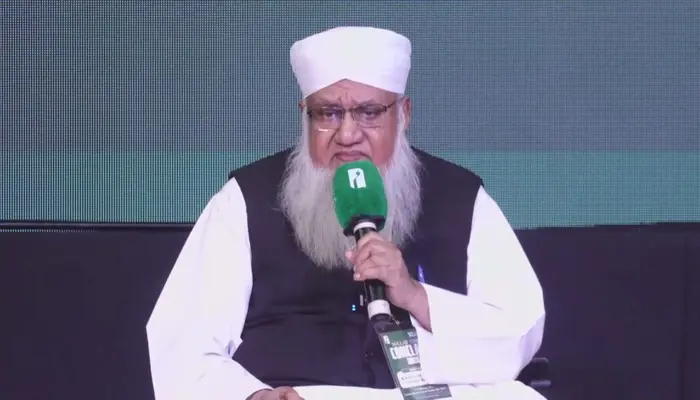
Case Summary
The Hindu community was targeted by Muslim leader and cleric Sajjad Nomani, spokesperson of the All India Muslim Personal Law Board. He spread false rhetoric in an attempt to create divisions among Hindus along caste lines by claiming that Jats, Gurjars, Dalits, OBCs, Lingayats, etc., are not originally Hindus. Maulana Khalilur Rahman Sajjad Nomani, a senior member of the All India Muslim Personal Law Board (AIMPLB), sparked controversy after making remarks that questioned the status of Hindus as the majority community in India and sought to exclude several Hindu and Hindu-associated communities from the Hindu fold. During his concluding address at the Millat Times Conclave 2026, held at the India Islamic Cultural Centre in New Delhi on 2 February 2026, Nomani claimed that Hindus were no longer a majority in the country. Referring to his travels and research conducted over three decades, he argued that several communities commonly counted within the Hindu population should be viewed separately. He claimed that Scheduled Castes, Scheduled Tribes, people of Tamil Nadu, Lingayats and sections of the Jat community should not be considered Hindus. He further claimed that tribal communities were the original inhabitants of the country and therefore should not be classified as Hindus. In his address, Nomani also said that Sikhs, Christians and Buddhists were distinct from Hindus and maintained that the conventional understanding of India’s demographic composition was misleading. Emphasising his position, he declared that Hindus were a minority in India and stated that under no circumstances could they be considered a majority. He further remarked that Muslims had previously divided Hindus into “secular” and “fascist” categories and had relied upon what he termed “secular Hindus” for political support, but that these groups had ultimately enabled the rise of what he described as “fascist Hindus”. His comments were delivered before an audience that included political leaders, journalists, scholars and public figures attending the conclave. The event had been organised to mark the tenth anniversary of Millat Times and featured discussions on media, democracy, constitutional values and contemporary politics. Among those present were Congress leaders Mani Shankar Aiyar, Salman Khurshid and Imran Pratapgarhi, Samajwadi Party leader Iqra Hasan Chaudhary and BJP leader Yasir Jilani. Although the speech had originally been delivered in February 2026, a video recording of the remarks surfaced widely on social media on 18 June 2026, triggering public debate and criticism. The comments attracted attention for challenging the religious identity of several communities traditionally regarded as part of the broader Hindu fold and for presenting Hindus as a minority despite official demographic classifications and census-based understandings of the country’s religious composition.
Why it is Hate Crime ?
The primary category selected in this case is- Hate Speech against Hindus. The subcategory selected is- Anti-Hindu subversion and prejudice. The tertiary category selected is- Anti-Hindu fake news or downplaying. Hate speech is defined as any speech, gesture, conduct, writing, or display that is prejudicial against a specific individual and/or group of people, which is leading to or may lead to violence, prejudicial action or hate against that individual and/or group. Media plays a specific and overarching reach in perpetuating prejudicial attitudes towards a community owing to unfair, untrue coverage and/or misrepresentation/misinterpretation, selective coverage and/or omission of facts of/pertaining to issues affecting a specific religious group. This type of bias can dehumanise the victim group, making it easier for others to justify harmful actions against them, which aligns with the objectives of hate speech laws aimed at preventing such harm. It is often observed that the media takes a prejudicial stand against the Hindu community driven by their need to shield the aggressor community which happens to be a numeric minority, however, is the one perpetrating violence against Hindus. For example, the media is often quick to contextualise religiously motivated crimes against Hindus, omit or misrepresent facts that point towards religiously motivated hate crimes, justify and/or downplay religiously motivated hate crimes or simply present fake news to stereotype Hindus. Such media bias leads to the denial of persecution and is often used to dehumanise Hindus, leading to justification for violence against them. For example, the media covered several fake allegations of Hindus targeting Muslims and forcing them to chant Jai Shree Ram. Most of these cases were proved false and fabricated after police investigation. These fake news reports were subsequently never retracted or clarified. Such fake news led to the justification of violence and dehumanisation of Hindus based on the argument that since Hindus targeted Muslims and forced them to chant Jai Shree Ram, the dehumanisation of Hindus and violence against them was par for the course and merely a retaliation. Such media bias leads to prejudicial portrayal of Hindus and offers a justification for violence against them and therefore, is considered hate speech under this category. This case has been added to the tracker because Maulana Sajjad Nomani made remarks that attempted to deny and delegitimise the Hindu identity of several communities traditionally recognised as part of the broader Hindu fold. During a public address, he claimed that Scheduled Castes, Scheduled Tribes, Tamils, Lingayats, and sections of the Jat community should not be considered Hindus and used this assertion to argue that Hindus were not a majority in India. Such statements amounted to a direct attack on Hindu religious identity and social cohesion, as they attempted to fragment the Hindu community into separate and competing groups based on caste, ethnicity, region, and social background. By questioning the Hindu identity of communities that have historically identified themselves as Hindus and participated in Hindu religious and cultural traditions, Nomani sought to undermine the collective identity of Hindus and portray Hindu society as an artificial construct rather than a civilisational and religious continuum. The communities singled out by Nomani have long-standing historical, cultural, and religious links with the broader Hindu fold. Scheduled Castes, Scheduled Tribes, Jats, Lingayats, and Tamil Hindus have for centuries participated in Hindu festivals, pilgrimages, temple traditions, customs, and forms of worship associated with Sanatan Dharma. Tribal communities in particular preserve several ancient traditions centred on nature worship, ancestor veneration, sacred groves, and local deities, all of which have historically coexisted within the wider Hindu civilisational framework. Likewise, Lingayats, despite possessing distinct theological traditions, worship Lord Shiva and emerged from within the broader Hindu religious ecosystem. Therefore, portraying these communities as non-Hindu was not merely a demographic observation but a deliberate attempt to detach them from their historical and religious roots and create divisions within Hindu society. The rhetoric employed by Nomani reflected a broader pattern often used by anti-Hindu ideological groups, whereby Hindu society is fragmented into caste, regional, linguistic, or ethnic identities in an attempt to weaken the unifying force of Hindu religious identity. Similar narratives have frequently been promoted by Islamist groups, separatist movements, and certain caste-based political ideologies that seek to portray Dalits, tribals, regional communities, or specific castes as entirely separate from Hindu civilisation. The objective behind such narratives is not social reform or academic debate but the weakening of Hindu unity by encouraging various Hindu communities to dissociate themselves from their shared religious and cultural heritage. Such efforts attack the very foundations of Hindu collective identity and seek to create distrust, alienation, and fragmentation within the Hindu community. Such false narratives are perpetuated in order to delegitimise Hindu civilisation, dehumanise Hindus, and create social fragmentation within the community. The direct consequence of this form of rhetoric is not only the spread of hostility against particular sections of Hindus, but also the creation of pressure upon other Hindu communities to distance themselves from the faith altogether by convincing them that the religion itself discriminates against them. Since such rhetoric seeks to attack the very foundations of Hindu unity, identity, and religious continuity through delegitimisation, alienation, and manufactured caste hostility, it constitutes a form of hate speech directed against Hindus and the faith they profess. Nomani's remarks went beyond merely excluding certain communities from Hindu identity. He also stated that Muslims had previously divided Hindus into "secular" and "fascist" categories and reflected on political strategies involving different sections of Hindu society. By framing Hindus as a fragmented collection of groups rather than a unified religious community, his comments reinforced a narrative that sought to politically and socially weaken Hindu cohesion. Such rhetoric targeted Hindus not as individuals but as a collective religious group and attempted to delegitimise their shared identity by denying the Hindu character of millions of people who identify as Hindu. Furthermore, the assertion that Hindus were not a majority in India rested entirely upon the exclusion of several communities from the Hindu fold despite their long-standing association with Hindu traditions, beliefs, and practices. This demonstrated that the purpose of the remarks was not to accurately describe demographic realities but to advance a narrative aimed at diminishing the numerical, cultural, and civilisational presence of Hindus in India. Efforts to erase or deny the Hindu identity of entire communities amount to an attack on the collective religious identity of Hindus and contribute to hostility against the faith by portraying it as lacking legitimacy, continuity, and cohesion. For these reasons, the remarks constituted a form of anti-Hindu hate speech. By attempting to separate various Hindu communities from the broader Hindu fold, delegitimise their religious identity, and promote narratives that weaken Hindu social and religious cohesion, Nomani targeted Hindus on the basis of their faith. Such statements sought to create divisions within the Hindu community, undermine Hindu unity, and erode the collective identity of Hindus as a religious group, thereby making this a clear case of hate speech directed against Hindus and their faith. This was not the first time that Nomani had propagated such anti-Hindu rhetoric. In the past, he had also spread the false “Bhagwa Love Trap” conspiracy theory, an anti-Hindu conspiracy narrative that claimed that Muslim women were being deliberately targeted by Hindu men for predatory relationships, forced conversion to Hinduism, and sexual exploitation. Nomani claimed that several Muslim women had become “heretics” or “infidels” after entering relationships with Hindu men and portrayed this as part of a larger conspiracy orchestrated by the Rashtriya Swayamsevak Sangh (RSS). Through such statements, Hindu men were collectively painted as predatory and manipulative, while Hindu organisations were portrayed as conspiratorial entities working to “target” Muslim women. Such rhetoric, despite being entirely unsupported by evidence, spread false narratives designed to generate fear, insecurity, and hostility within the Muslim community against Hindus. By portraying ordinary interfaith relationships involving Hindu men as part of an organised religious conspiracy, such propaganda demonised Hindu men and stigmatised Hindu organisations as existential threats to Muslims. This type of rhetoric amounted to hate speech and anti-Hindu propaganda because it deliberately vilified Hindus on the basis of their religious identity and portrayed Hindu men as dangerous predators solely because they belonged to the Hindu faith. Such narratives provoke hostility, vigilantism, and retaliatory violence against Hindu individuals and organisations by creating the perception that Hindus are collectively engaged in a malicious conspiracy against Muslims. The repeated propagation of fabricated claims about Hindu men “trapping” Muslim women not only dehumanised Hindu men but also encouraged communal suspicion and hatred against the wider Hindu community. By framing Hindus as a coordinated religious threat, Nomani’s rhetoric fostered religious polarisation and legitimised aggression against Hindus under the guise of protecting the Muslim community. Such attempts to spread fear and hostility against Hindus on the basis of fabricated conspiracy theories constituted a clear form of anti-Hindu hate speech. This form of rhetoric does not merely remain confined to speeches or propaganda, but percolates into real-world communal hostility and violence against Hindus. The Hinduphobia Tracker has previously documented 152 cases between 1 January 2023 and 21 May 2026 in which Hindu men were attacked or killed for being in relationships with Muslim women. In these cases, both the Muslim women and the Hindu men were aware of each other’s religious identities, and there was no evidence of coercion or pressure upon the Muslim women to convert to Hinduism. Despite this, the Hindu men were targeted, assaulted, and in several cases murdered for their religious identity and for transgressing perceived religious boundaries by being in relationships with Muslim women. Such conspiracy theories spread by Nomani and his ilk contribute towards the creation of an atmosphere where Hindu men are viewed with suspicion and hostility merely because of their religious identity. The repeated spread of narratives portraying Hindu men as predators, conspirators, or agents of organised Hindu groups increases the likelihood of vigilantism, mob violence, social ostracisation, and targeted communal attacks against Hindus. Rhetoric propagated by individuals such as Nomani fuels communal paranoia by portraying interfaith relationships involving Hindu men as deliberate acts of religious aggression against Muslims. This, in turn, legitimises hostility and violence against Hindu men in the minds of Muslim individuals who view such relationships as violations of religious boundaries. In this sense, such propaganda does not simply amount to inflammatory speech but carries the potential to directly incite hatred and violence against the Hindu community. Such anti-Hindu rhetoric, like the fabricated “Bhagwa Love Trap” conspiracy theory, is propagated by individuals like Nomani to delegitimise and downplay documented cases commonly referred to in public discourse as “Love Jihad”. The term is widely used to describe cases in which Hindu women are targeted by Muslim men through predatory interfaith relationships or marriages with the objective of forced religious conversion, sexual exploitation, coercion, or manipulation. In several such documented cases, Hindu women were lured through deception, including instances where Muslim men concealed their religious identity and posed as Hindus, while in other cases the relationships culminated in coercive conversion to Islam, pressure to abandon Hindu practices, forced consumption of beef, sexual exploitation, physical assault, or threats of violence. According to documentation by the Hinduphobia Tracker, nearly 1,165 such cases involving Hindu women were recorded between January 2023 and 21 May 2026, in which victims were subjected to deception, coercion, blackmail, forced conversion, sexual exploitation, or trafficking-related abuse. In several instances, victims who resisted conversion or exploitation were assaulted or killed. In this context, rhetoric such as the “Bhagwa Love Trap” conspiracy theory attempts to invert and trivialise concerns surrounding such cases by portraying Hindu men as the actual conspirators and predators, despite the absence of evidence supporting such claims. By spreading fabricated narratives that depict Hindu men and Hindu organisations as systematically targeting Muslim women, individuals like Nomani seek to create a false equivalence that undermines discussion surrounding documented cases involving Hindu victims. Such propaganda not only demonises Hindu men and organisations but also serves to delegitimise concerns raised by victims and their families regarding coercion, exploitation, and religiously motivated targeting of Hindu women. In doing so, this rhetoric further entrenches communal hostility and functions as a form of anti-Hindu propaganda aimed at portraying the Hindu community as inherently predatory and dangerous.


Case Status
Unknown


Perpetrators Details
Perpetrators
Muslim Extremists
Perpetrators Range
One Person
Perpetrators Gender
male
 Sources




