Hindu woman brutally killed in Nawabganj amidst ongoing persecution of Hindu minorities in Bangladesh
 Chapai Nawabganj District, Bangladesh
  16 June, 2026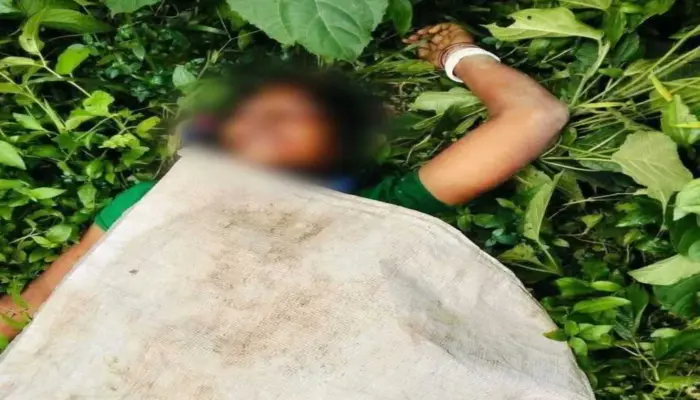
Case Summary
In Chapai Nawabganj, Bangladesh, a Hindu woman, identified as Rupali Sarkar (36), was brutally murdered by unidentified assailants. The victim, a resident of Panchgachhi Uttarpara village in Daudpur Union and the wife of Arun Sarkar, was found dead in a mango orchard with multiple injury marks on her body, indicating that she had been subjected to a violent assault before being killed. According to reports, local residents discovered the deceased victim's body lying in a mango orchard adjacent to Siraj Nazrul Hat (Nitai Bazar) in the Panchgachhi Uttarpara area on the morning of 17 June 2026 and immediately informed the police. Officers from Nawabganj Police Station reached the scene and recovered the body. Eyewitnesses and locals stated that the victim's body bore several wounds, while preliminary observations suggested that she may have been strangled to death. However, the exact cause of death is expected to be determined following the post-mortem examination. The gruesome killing caused grief and concern among local residents. The victim's family demanded a thorough investigation into the incident and the swift identification and prosecution of those responsible for the murder. Police confirmed that the body has been sent for autopsy and that an investigation had been launched to uncover the circumstances surrounding the killing and identify the perpetrators. Further legal action would be taken based on the findings of the ongoing investigation. This escalation of violence against Hindus in Bangladesh has unfolded in three distinct phases: first, following the ouster of Sheikh Hasina's government in August 2024; second, after the death of Sharif Osman Bin Hadi in December 2025; and third, in the immediate aftermath of the 13th National Parliamentary Election 2026. Following the ouster of Sheikh Hasina, multiple reports documented attacks on Hindu homes, temples, and religious institutions, alongside intimidation campaigns, arson, and mob assaults targeting minority neighbourhoods. The Hinduphobia Tracker recorded 336 such incidents against the Hindu minority, underscoring the scale and persistence of anti-Hindu violence during this period. A further escalation occurred following the death of Sharif Osman Bin Hadi, a Muslim political activist and student leader known for his anti-Hindu and anti-India rhetoric. Hadi had been involved in political unrest after the fall of the Hasina government and was killed in Dhaka on 18th December 2025 during clashes. In the aftermath of his death, Hindu communities were blamed and subsequently targeted in retaliatory violence. Hindu homes were selectively set ablaze in multiple localities, forcing families to flee and leaving many displaced. The attacks appeared patterned rather than sporadic, with Muslim mobs focusing on Hindu neighbourhoods, properties, and religious symbols. Among the victims was Dipu Chandra Das, who was lynched to death and his body was set ablaze by a Muslim mob over false blasphemy allegations. The Hinduphobia Tracker documented 51 incidents of anti-Hindu violence in the period following Hadi's death alone. Reports further indicated that posters and written materials calling for the extermination of Hindus were displayed in public spaces, signalling an alarming normalisation of genocidal rhetoric. When combined with acts of arson, vandalism, assault, and targeted intimidation, these developments contributed to an environment of hostility and insecurity for the Hindu minority. The third phase of violence emerged after the 13th National Parliamentary Election 2026. Within days of the announcement of results, Hindu families in districts including Noakhali, Rangpur, Nilphamari, Sylhet, Thakurgaon, and Dinajpur reported attacks involving arson, looting, assault, and vandalism of temples and homes. In several instances, Hindu homes were selectively targeted, looted, and families were threatened with displacement.
Why it is Hate Crime ?
This case is being added to the Hinduphobia Tracker under the primary category- Attack resulting in death. The subcategory selected is- Attacked for Hindu identity. In several cases, Hindus are attacked merely for their Hindu identity without any perceived provocation. A classic example of this category of religiously motivated hate crime is a murder in 2016. 7 ISIS terrorists were convicted for shooting a school principal in Kanpur because they got ‘triggered’ seeing the Kalava on his wrist and tilak that he had put. In this, the Hindu victim had offered no provocation except for his Hindu religious identity. The motivation for the murder was purely religious, driven by religious supremacy. Such cases where Hindus are targeted merely for their religious identity would be documented as a hate crime. Under this category, cases where the attack led to the death of the Hindu victim/s would be documented. In this case, a 36-year-old Hindu woman named Rupali Sarkar was brutally murdered by a group of unidentified assailants in Bangladesh. In the prevailing environment of anti-Hindu hostility in Bangladesh, this incident aligns with the wider pattern of violence affecting Hindu minorities. While some may argue that the case details do not explicitly state a religious motive, the broader context of anti‑Hindu persecution in Bangladesh remains relevant for classification. During periods of sustained violence against Hindus based on religious identity, the Hinduphobia Tracker applies a contextual presumption that attacks on Hindu victims are likely faith‑targeted, even when the immediate report does not record a specific religious marker. In such periods, the normalisation of religious hostility and the dehumanisation of minorities can contribute to crimes against them without perpetrators openly stating a motive. For the purpose of documenting the 2024 to 2026 ethnic cleansing of Hindus in Bangladesh and the subsequent persecution after the political exile of Sheikh Hasina, the death of Sharif Osman Hadi, and the 13th National Parliamentary Election 2026, the Hinduphobia Tracker records such incidents as likely religiously motivated at the point of entry. If any case is later established through credible investigation or court findings to stem from motivations other than religious hostility, it will be revised or removed from the hate crime database. In this case, the victim was subjected to a brutal assault that left multiple injuries on her body before her death, and her body was abandoned in a mango orchard where it was later discovered by local residents. The manner in which the crime was carried out and the severity of the violence inflicted upon the victim are consistent with the pattern of attacks reported against Hindu victims during this period and therefore support the contextual classification of likely religious hostility, absent contrary evidence. The case is documented as likely involving faith targeting, given the victim's identity as a Hindu woman belonging to a vulnerable religious minority and the surrounding pattern of persecution, while remaining open to revision if new facts emerge. The killing of Rupali Sarkar must therefore be examined not in isolation but against this documented backdrop of repeated violent targeting of Hindu individuals across Bangladesh. The extreme violence inflicted upon her highlights the precarious security situation faced by members of the Hindu minority community. Her murder aligns with a continuing pattern in which Hindu individuals, including women from Hindu households, face lethal violence in an environment where their religious identity increasingly exposes them to heightened vulnerability. Given the broader environment of sustained anti-Hindu persecution in Bangladesh, the case meets the threshold for inclusion in the Hinduphobia Tracker's hate crime database.
Victim Details
Total Victim
1
Deceased
1
Gender
- Male 0
- Female 1
- Third Gender 0
- Unknown 0
Caste
- SC/ST 0
- OBC 0
- General 0
- Unknown 1
Age Group
- Minor 0
- Adult 1
- Senior Citizen 0
- Unknown 0


Case Status
Unknown


Perpetrators Details
Perpetrators
Unknown
Perpetrators Range
Unknown
Perpetrators Gender
unknown
 Sources




