Minor Hindu girl trapped in relationship, raped, forcibly converted to Islam, and coerced into nikah at a dargah by Muslim man
 Rapar, Gujarat, India
  20 July, 2025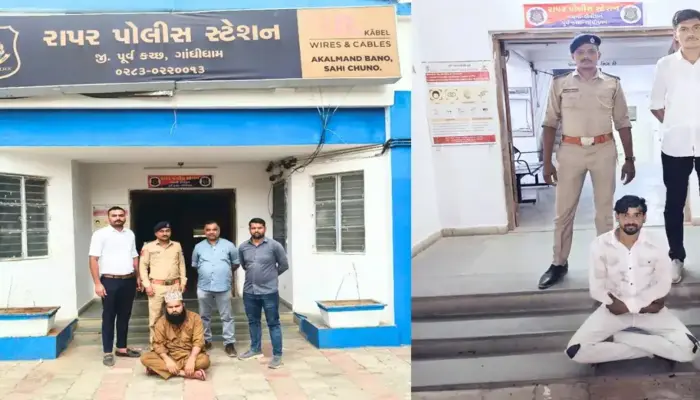
Case Summary
In Rapar, Kutch East, Gujarat, a minor Hindu girl was lured into a relationship, raped, kidnapped, forcibly converted to Islam, and forced into a nikah (Islamic marriage) by a Muslim man. The accused is identified as Zaheen Abdul Chauhan, a resident of Samavas, Rapar. The accused converted the victim to Islam at the Khwaja Saheb Dargah in Ajmer. The Imam of Ajmer was also involved in the forced conversion of the victim. This incident came to light when the victim's mother filed a complaint on 12 June 2026. Based on the complaint, Rapar police arrested the main accused, Zaheen, on 13 June 2026. As the investigation progressed, police established that the girl had been coercively converted to Islam and married at the Khwaja Saheb Dargah in Ajmer on 21 July 2025. Based on these findings, a Rapar police team travelled to Ajmer and arrested the Dargah's Imam and Qazi, Mohammad Ramzan Janmohammad. According to the complaint, Zaheen Abdul Chauhan and the minor Hindu girl worked at the same catering company, where they became acquainted. The accused lured the girl into a relationship and subsequently subjected her to repeated sexual assault. The complaint further stated that whenever they met, the accused forced physical relations upon her and repeatedly threatened to kill her brother if she revealed the matter to anyone, allowing the abuse to continue over an extended period. Police investigation revealed that on 21 July 2025, the accused forcibly took the victim to the Khwaja Saheb Dargah in Ajmer for marriage. According to investigators, documents prepared for the ceremony recorded her age as 21 years. The Imam and Qazi of the Dargah, Mohammad Ramzan Janmohammad, made the victim sign a declaration stating, "I accept Islam, and I accept the marriage," thereby carrying out a forceful religious conversion and solemnising the marriage. Following the ceremony, her name was changed to "Shakeena." According to the complaint, the abuse continued even after the marriage. Although the girl continued living with her parents, the accused repeatedly took her to his residence, rented apartments, and other locations, where he forced sexual relations upon her. The complaint further detailed that over time he began threatening not only the victim but also her brother and other members of her family. The matter came to light after the victim's mother became aware of the situation and approached Rapar police on 12 June 2026. Deputy Superintendent of Police Sagar Sambada (Bhachau, Kutch East) stated that, upon receiving the complaint, police confirmed that Zaheen Abdul Chauhan had abducted the complainant's daughter, repeatedly subjected her to sexual assault, and forced her into an illegal marriage. On the instructions of Border Range Inspector General of Police Chirag Kordia and Superintendent of Police (East Kutch, Gandhidham) Sagar Bagmar, separate teams of Rapar police and the district Local Crime Branch were constituted to investigate the case. Under the guidance of Deputy Superintendent of Police Sagar Sambada, Local Crime Branch Inspector J.M. Vala, Police Sub-Inspector D.G. Patel, and Rapar Police Station Police Inspector R.L. Khatana formed separate teams and, based on human intelligence and technical analysis, arrested Zaheen Abdul Chauhan on 13 June 2026. Further investigation uncovered an illegal religious conversion and marriage at the Ajmer Dargah. Subsequently, a special team led by Rapar Police Inspector R.L. Khatana travelled to Ajmer and arrested Imam and Qazi Mohammad Ramzan Janmohammad on 15 June 2026. Police also seized the marriage register from him as part of the investigation. Both accused were produced before a court, which granted police custody remand until 19 June 2026. At the time of writing this report, the investigation remains ongoing.
Why it is Hate Crime ?
This case is being added to the Hinduphobia Tracker under the first primary category: Predatory Proselytisation. The subcategory selected is: Proselytisation by grooming, brainwashing, manipulation, or subtle indoctrination. The tertiary categories selected are: Rape and sexual assault/harassment, Conversion of Minor, Family claims grooming. Religious brainwashing essentially means the often subtle and forcible indoctrination to induce someone to give up their religious beliefs to accept contrasting regimented ideas. Religious grooming or brainwashing also involves propaganda and manipulation. It involves the systematic effort, driven by religious malice and indoctrination, to persuade “non-believers’ to accept allegiance, command, or doctrine to and of a contrasting faith. Cases of such grooming or brainwashing are far more nuanced than direct threats, coercion, inducement and violence. In such cases, it is often seen that there is repeated, subtle and continual manipulation of the victim to induce disaffection towards their own faith and acceptance of the contrasting faith of the perpetrator. While subtle indoctrination is widely acknowledged as predatory, an element which is often understated in such conversions or the attempts of such conversion is the role of loyalty and trust which might develop between the perpetrator and the victim. Fiduciary relationships are often abused to affect such religious conversion. For example, an educator transmitting religious doctrine of a competing faith to a Hindu student. The Hindu student is likely to accept what the teacher is transmitting owing to existence of the fiduciary relationship. The exploitation of the fiduciary relationship to religiously indoctrinate victims would also be included in this category. Since the underlying animosity towards the victim’s faith forms the basis of predatory proselytization, such cases are considered religiously motivated hate crimes. The other subcategory selected in this case is: Harassment, threats, coercion for conversion. Harassment covers a wide range of behaviours of an offensive nature. It is commonly understood as behaviour that demeans, humiliates, and intimidates a person, including threats and coercion. Harassment and threats, in this case, find their root on discriminatory grounds which has the effect of nullifying a person’s rights or infringing upon his freedom to exercise his right specifically owing to the victim’s religious identity. Verbal and physical threats and psychological or physical harassment are often used against Hindu victims because they choose to practice their professed religion. Religious harassment also includes forced and involuntary conversions by harassment, threats or coercion. Coercion includes intimidatory tactics like force-feeding a Hindu victim beef to convert to another religion, forceful circumcision etc. In several cases documented, non-Hindu perpetrators or those who harbour specific animosity towards Hinduism, harass victims simply based on their religious identity. Such cases often also include harassment to ensure the Hindu victim abandons his/her professed religion and adopts the religion of the perpetrator. Such cases where Hindu victims are harassed to convert to the perpetrator’s religion are rooted in animosity towards the victim’s religious identity and are therefore documented as religiously motivated hate crimes. The second primary category selected is: Crimes against women in relationships and other sexual crimes. The subcategory selected is: Brainwashed and/or Groomed. The tertiary categories selected are: Rape and sexual assault/harassment, Conversion of Minor, Family claims grooming. In our database, we have not added incidents where women have converted to another religion of their free will and no allegations of forced/involuntary conversion have been made. However, there are certain cases of conversion where the consent itself is a result of the brainwashing or grooming of a minor by the non-Hindu perpetrator trying to victimise a woman for her Hindu religious identity. The phenomenon of grooming points to non-Hindu perpetrators identifying their Hindu victims’ vulnerabilities and exploiting them over months and sometimes years, to extract the supposed ‘consent’ in order to convert their religion. In most cases of grooming, the victims are minors or the grooming started when the victim was a minor. In other cases of grooming, the non-Hindu perpetrator brainwashes and grooms a minor victim to extract their trust and then proceeds to rape them repeatedly with the intent of converting them to their faith. It is pertinent to understand here that when the victim is a minor, the ‘consent’ to convert or enter into a romantic relationship with an adult itself is redundant – addressed by POCSO. While every case of conversion of a minor and incidents of establishing a physical relationship with a minor by an adult is a crime, for the purpose of this database, a case would be considered a hate crime only if there is a distinct religious angle to the grooming. For example, in the UK, if a Hindu minor is targeted by Pakistani grooming gangs, it would be considered a hate crime because the victims are specifically targeted owing to their non-Muslim religious identity with the perpetrators being Muslim. In other cases, if a Hindu minor is brainwashed into entering a physical relationship with the non-Hindu adult perpetrator and the family alleges grooming/brainwashing of the minor to convert her religion, it would form a part of this database. If the victim is a Hindu adult, the case would form a part of this database only if the victim herself says that she was brainwashed/groomed to convert her religion. However, if the victim is deceased (murdered or otherwise), the case would form a part of this database if her family/friends provided testimony that the victim was brainwashed/groomed to convert her religion. Since these crimes have a distinct religious angle where the victim is being targeted owing to her Hindu religious identity, these cases are considered a hate crime. The other subcategory selected is: Forced conversion before marriage. The tertiary categories selected are: Forced to do Nikah, Forced to go to mosque. In such cases, a non-Hindu man is in a relationship with a Hindu woman when the pressure to convert her religion begins to manifest. In such cases, typically, two patterns emerge. First, when the relationship is consensual, and the religious identity of the perpetrator is known to the Hindu woman in the relationship, however, at some point during the relationship, the non-Hindu man starts to force the victim to convert her religion and give up her Hindu religious identity. The second is when the woman gets into a marriage with the man pretending to share her faith. Later, when the truth is revealed, the man starts pressuring the woman to convert her religion and give up her religious identity. In both the situations, the methods used to force the victim to convert her religion often revolve around force-feeding beef, forcing her to wear hijab, forcing her to read the Kalma or even pressurizing the victim to do ‘Nikah’, which is marriage under Islamic law, with a prerequisite being conversion to Islam. Cases where a Hindu woman consensually converts to Islam in a relationship will be left out of the hate crime database, even though it could be argued in several cases that the conversion was a result of religious brainwashing. In this case, a minor Hindu girl was systematically targeted, lured into a relationship, subjected to repeated forced sexual violations, and subsequently taken to a prominent religious site, a dargah, for forced conversion and marriage by the Muslim perpetrator. The involvement of an adult Muslim perpetrator, operating in coordination with an established Islamic cleric at the Ajmer Dargah to institutionalise the conversion, demonstrates that the actions were driven by religious bias and hostility. By targeting an individual specifically because of her religious background and utilising religious institutions to enforce a change of faith, the offence meets the fundamental criteria of a hate crime, where the victim's Hindu identity is the primary motivating factor behind the criminal acts. It is first important to consider that the victim is a minor, which means the element of consent and genuine change of conscience is missing ab initio. Minors, due to their young age, are highly vulnerable to manipulation, grooming, and coercion. They do not possess the developmental maturity to understand the long-term legal, social, and spiritual ramifications of converting to another religion, nor can they legally consent to relationships or marriage with an adult. The Muslim perpetrator deliberately and maliciously exploited the victim's age vulnerability, using her lack of experience to target her for religious conversion and sexual exploitation. Because the targeting relied on exploiting a child's vulnerability to systematically dismantle her original identity, this case is a religiously motivated hate crime. Following this, it is important to state that the perpetrator repeatedly sexually assaulted the victim over an extended period. In cases of this nature, sexual violence is frequently used not merely for physical gratification, but as an expression of hostility against the victim's religious identity. The repeated assaults functioned as a tool to punish, subjugate, and humiliate the Hindu girl specifically for being a Hindu, amounting to a religiously motivated rape. This form of violence is rooted in contempt for the victim's identity and is designed to inflict maximum psychological trauma. Furthermore, such actions are intended to project dominance over the larger Hindu community by exploiting societal vulnerabilities regarding the protection of minors, thereby extending the impact of the hate crime beyond the individual victim to her entire community. The repeated levels of sexual exploitation that the minor was made to undergo showcase the extent to which the victim was dehumanised by the perpetrator based on her religious identity. The systematic abuse indicates that the victim was not viewed with basic human empathy, but rather as an object to be dominated and converted. Additionally, the fact that the perpetrator utilised highly coercive methods, specifically threatening to kill her brother if she revealed the abuse, demonstrates a calculated strategy to exploit her familial bonds and fears. By leveraging the safety of her family against her, the perpetrator ensured her silence and maintained control, allowing the frequent sexual violations to continue unabated, which further highlights the targeted malice characteristic of an identity-based crime. The act of taking the minor to a Dargah in Ajmer, luring her a significant distance away from her home in Gujarat, constitutes a severe form of harassment and isolation. As a minor, the victim was uprooted from the protective environment of her family and her extended Hindu community. The perpetrator deliberately transported her far away from her support systems to ensure that there would be no intervention from anyone who could protect her or advocate for her interests. This physical displacement was a calculated tactic designed to induce helplessness, strip away her sense of security, and facilitate the forced conversion without external interference, showcasing the predatory and malicious nature of the operation. Taking the victim to a Dargah and forcibly converting her there illustrates how forced conversion operates as a hate crime. Forced conversion directly violates the victim's religious autonomy and fundamental human rights, treating her original Hindu faith as something inferior that must be discarded and eradicated. This coercive imposition of the Islamic faith disrespects her heritage and psychological integrity. Furthermore, conducting this act inside a major Dargah was done to completely alienate her from her familiar surroundings, placing her in an environment where she was surrounded entirely by individuals of the perpetrator's faith. This was intended to induce fear, discomfort, and compliance, ensuring that the Islamic faith was imposed upon her in a forceful manner that left no room for resistance. The subsequent nikah ceremony that took place serves as a distinct religious marker within this crime, as the marriage was not an alliance based on mutual affection or choice. Instead, the marriage was used deliberately as a mechanism to trap the victim and formalise the forced conversion. Under traditional Islamic jurisprudence, a nikah between a Muslim man and a non-Muslim woman from a non-Abrahamic faith is not permissible unless the partner converts to Islam. Therefore, the perpetrator enforced the religious conversion specifically to satisfy these theological requirements and institutionalise the forced conversion and the marital union. This structured approach to erasing her original identity demonstrates a deep hostility towards her Hindu background, making the marriage an instrument to seal a religiously motivated crime. The forced alteration of the victim's name and the imposition of an Islamic name, "Shakeena," represents a calculated effort to completely eradicate her original Hindu identity. This act of renaming was not a mere formality but a psychological tactic designed to cut all ties to her heritage, leaving no visible scope or path for her to return to her original faith in the future. By systematically stripping away her birth name, the perpetrators sought to complete her alienation and finalise her assimilation into a different religious community against her will. This total erasure of an individual's identity, forced upon a minor under duress, constitutes a distinct form of religiously driven violence that clearly qualifies as a hate crime. The fact that the entire forced conversion and marriage process was supported and executed by the local cleric and Qazi at the Ajmer Dargah highlights the coordinated nature of the offence. The involvement of an official religious authority indicates that the crime did not occur in isolation, but was enabled by individuals within religious structures who validated the forced conversion of a minor. The willingness of the cleric to register the marriage and administer the declaration of faith, despite the victim's minor status and the coercive circumstances, demonstrates institutional complicity. This level of cooperation showcases how well-coordinated these forced conversion tactics are, involving figures of authority to legitimise an illegal act and reinforcing the status of the event as a hate crime. Another point to highlight is the fact that the perpetrators went to the extent of forging official documents to alter the minor's age, falsifying records to state she was twenty-one years old, which further exposes the highly premeditated and structured nature of the crime. The active support of the Qazi in facilitating and accepting these forged documents demonstrates that this was not an impulsive act, but a well-coordinated attack designed to evade legal scrutiny and circumvent child protection laws. The deliberate fabrication of legal records to mask the victim's minor status shows a high level of criminal planning and collusion between the primary Muslim perpetrator and the religious cleric, highlighting the organised malice behind the entire operation. Overall, since this case meets several established parameters of a religiously motivated offence, it is being added to the hate crime database of the Hinduphobia Tracker. Disclaimer: The Hinduphobia Tracker records incident dates based on when the victim's ordeal begins rather than when the media reports the incident. In the present case, the available news reports do not mention the exact date when the victim's ordeal first began, that is, when she was first lured into a relationship by the perpetrator. They only specify that she was taken to the Khwaja Saheb Dargah in Ajmer on 21 July 2025, where she was forcibly converted to Islam and made to undergo a nikah ceremony. This is the earliest date mentioned in the available reports, with no indication of when the victim and the perpetrator first met or when the relationship began. Hence, after considering all these parameters, 21 July 2025 has been selected as the indicative incident date and is recorded for documentation purposes only.
Victim Details
Total Victim
1
Deceased
0
Gender
- Male 0
- Female 1
- Third Gender 0
- Unknown 0
Caste
- SC/ST 0
- OBC 0
- General 0
- Unknown 1
Age Group
- Minor 1
- Adult 0
- Senior Citizen 0
- Unknown 0


Case Status
Arrested


Perpetrators Details
Perpetrators
Muslim Extremists
Perpetrators Range
From 2 To 5
Perpetrators Gender
male
 Sources




