Hindus branded as potential murderers and rapists as leftist professor demonises Hindu community; vilified with sweeping criminal stereotypes
 India
India  13 June, 2026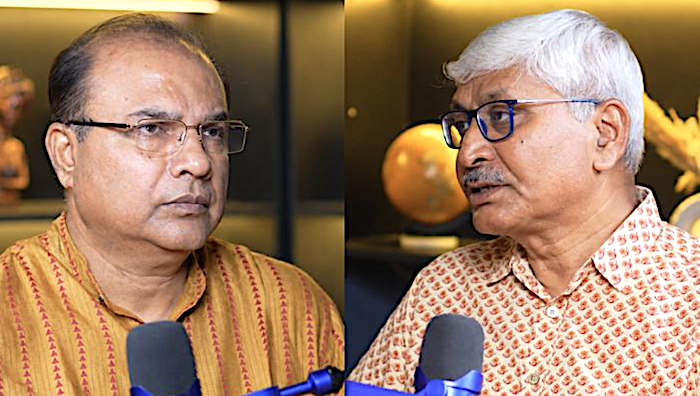
Case Summary
A Hindu community was subjected to sweeping derogatory remarks during a public discussion on YouTube on 14th June 2026, in which Hindu households, Hindu society, Hindu religious traditions, Hindu festivals, Hindu organisations and Hindu institutions were collectively portrayed as violent, criminal and dangerous. The remarks were made during a conversation on the YouTube channel Satya Hindi, hosted as part of the programme “Baat Bolegi”, featuring Apoorvanand, a professor in the Department of Hindi at the University of Delhi, and interviewer Mukesh Kumar. The discussion focused extensively on Hindus and Hinduism, repeatedly attributing criminality, violence and hatred to Hindus as a religious community. During the conversation, Apoorvanand directed a series of remarks towards Hindus, presenting Hindu society as inherently radicalised, violent and hostile towards minorities. Hindu households were singled out as spaces where criminal tendencies were said to be normalised. In one of the most direct statements made during the discussion, he stated that every Hindu home contained either a “potential murderer” or a “potential rapist”. He further expanded this characterisation by asserting that if a Hindu individual was not actively committing such crimes, they were nevertheless predisposed towards them through their thoughts or imagination. The remarks were framed as a consequence of what he described as the “mass radicalisation” of Hindus. The discussion then moved beyond individual Hindus and extended these allegations to Hindu society as a whole. Hindus were described as inherently violent, casteist, anti-Muslim and sexually perverse. Hindu homes were presented as environments where violence against Muslims was becoming acceptable. The conversation portrayed Hindu families as spaces where hatred towards Muslims was widespread and normalised. These statements collectively attributed criminal intent and violent tendencies to an entire religious community on the basis of its religious identity. As the discussion progressed, Hindus were repeatedly positioned as aggressors while Muslims were presented as perpetual victims. It was stated that Muslims were unsafe in public spaces because of Hindus and that they faced constant threats from Hindu individuals in daily life. References were made to trains, neighbourhoods, schools, colleges, markets and public transport, where Hindus were portrayed as unpredictable threats to Muslim safety. Hindus were thus depicted not as individual actors but as a collective source of fear and insecurity for another religious community. The conversation also targeted Hindu religious beliefs and traditions. Apoorvanand mocked aspects of Hindu theology and challenged the pluralistic foundations of Hinduism. Hindu worship practices were presented as evidence of intolerance rather than diversity. Hindu concepts relating to social service, charity and community welfare were dismissed and denied. Statements were made asserting that Hinduism lacked concepts of service, neighbourly duty and social responsibility. These comments focused specifically on Hindu religious traditions and sought to discredit core aspects of Hindu belief and practice. The discussion further extended these allegations to Hindu social structures and cultural identity. Hindu society was described as inherently violent because of the varna system. Hindus were portrayed as naturally inclined towards exclusion, discrimination and violence. The conversation suggested that anti Muslim hostility existed across all sections of Hindu society and was not confined to any particular social group. Hindu communities of different castes and backgrounds were collectively associated with hatred towards Muslims, expanding the allegations from specific individuals to the broader Hindu population. Hindu organisations and institutions were also targeted during the discussion. Various Hindu groups, including the Rashtriya Swayamsevak Sangh, Bajrang Dal and other Hindu organisations, were portrayed as responsible for creating an environment of hatred and violence. The conversation characterised these organisations as forces that transformed ordinary Hindu beliefs into organised hostility. Hindu religious and cultural mobilisation was repeatedly linked to criminality and communal violence. The discussion also focused on Hindu festivals and public religious observances. Hindu festivals such as Ram Navami were described as occasions for intimidation and aggressive mobilisation. Hindu religious gatherings and devotional events were portrayed as platforms for hostility towards minorities. The comments connected Hindu cultural celebrations with violence and communal tensions, thereby attaching negative and threatening connotations to visible expressions of Hindu religious identity. Historical events were also invoked to attribute collective responsibility to Hindus as a religious community. During the discussion on the anti Sikh violence of 1984, Hindus were collectively blamed for the killings and violence. Ordinary Hindus were described as participants in the violence, and the discussion portrayed the events as evidence of broader flaws within Hindu society. Responsibility was shifted from specific political actors and organisations towards Hindus as a collective religious group. The conversation additionally referenced incidents involving communal violence and killings, including the death of Ram Gopal Mishra during the Bahraich violence. The discussion framed the killing in a manner that placed emphasis on Hindu actions while presenting the violence as understandable from the perspective of self-defence. Even in incidents where a Hindu individual was the victim of violence, the narrative returned to broader allegations regarding Hindu aggression and hostility. The remarks further expanded beyond Hindu society to include allegations against institutions perceived to be influenced by Hindus. The judiciary, police, bureaucracy, media and armed forces were described as being affected by majoritarian hostility. The discussion suggested that anti minority bias had become embedded within public institutions, linking these claims to broader assertions regarding Hindu society and Hindu political influence. Throughout the discussion, the repeated focus remained on Hindus as a religious community. Hindu homes, Hindu families, Hindu religious beliefs, Hindu festivals, Hindu organisations and Hindu social structures were collectively associated with violence, criminality, intolerance and hatred. The statements did not focus on specific individuals or isolated incidents but repeatedly generalised negative characteristics to Hindus as a whole. The conversation took place on a public platform and consisted of numerous remarks directed towards Hindus and Hinduism. The discussion remained centred on portraying Hindu society as responsible for violence, communal hostility and discrimination, while attributing criminal and dangerous tendencies to Hindu households and Hindu individuals because of their association with the Hindu faith. This is not the first time the leftist professor has displayed his anti-Hindu mindset. Apoorvanand's writings reveal a consistent hostility towards Hindu concerns, Hindu religious expression, and Hindu assertions of identity. He has described the sacred Hindu chant "Jai Shri Ram" as an "expression of hooliganism", reducing a revered religious invocation of millions of Hindus to a symbol of aggression. This tendency to view Hindu religious expression through a negative lens runs throughout his work. More significantly, his commentary often follows a pattern where Hindus are portrayed as the problem even when they are the victims. Following the lynching of Hindu youth Tarun Kumar by a Muslim mob in Delhi's Uttam Nagar, Apoorvanand devoted considerable attention in portraying the accused Muslims as the victims and the reactionary Hindu outrage as a bigger existential threat than the Islamist attacks. Rather than focusing on the fact that a Hindu family had lost a son to Muslim mob violence, he portrayed Hindu protestors demanding justice as a dangerous and potentially violent force. In effect, a narrative was spun that transformed a case of a Hindu youth being lynched by a Muslim mob into a story about Hindu aggression and Muslim vulnerability, basically, craftily transforming a case of anti-Hindu violence into a story about Hindu aggression. His hostility towards Hindus is also evident in the way he frames historical communal violence. While discussing the lynching of Hindu youth Tarun Kumar, Apoorvanand invoked the 1984 anti-Sikh riots and characterised them as an instance of Hindus attacking Sikhs. This framing ignored the well-documented role of Congress leaders and workers in organising and inciting the violence following Indira Gandhi's assassination. In fact, the 2004 Nanavati Commission report also explicitly found that it was Congress leaders and workers who either helped or incited mobs. There was no role of the BJP-RSS or common Hindus in the violence. In fact, ordinary Hindus and RSS sheltered Sikhs, protecting them from bloodthirsty mobs of Congress workers. By recasting a Congress-orchestrated pogrom as a case of "Hindu violence", he shifted responsibility from political actors to the Hindu community as a whole. Apoorvanand has also attacked Hindu festivals. He said that during Ram Navami, 13- and 14-year-old children move in thousands with swords in front of Muslim homes and consider it their right. He also said that Hindu jagrans no longer sing the glory of gods and goddesses but play abusive songs about what will be done to Muslims and Muslim women. He called it the “extreme fall” of society. Apoorvanand's role in the 2020 anti-Hindu Delhi riots also attracted controversy. His name appeared in charge sheets related to the riots, where he faced allegations of involvement in a larger conspiracy to incite unrest and provoke the Muslim mob against Hindus. While these allegations have not resulted in a conviction, they reinforced that his hostility towards Hindus extends beyond his writings and public commentary. In April 2023, he came out in support of Muslims and claimed that the idea of “Ghazwa-e-Hind” was evoked by Hindutvavadis to justify their violence and no Muslim talks about it. In a post on X quoting Yogendra Yadav, where he talked about the ideas of Khalistan, Gazwa-e-Hind and Hindu Rashtra, Apoorvanand said, “Found it disappointing that while discussing Khalistan and Hindu Rashtra, it is thought necessary to bring GEH. Has any Indian organisation or any individual issued a call for it, as with the earlier two? GEH is evoked by Hindutvavadis to justify their violence. No Muslim talks about it.”
Why it is Hate Crime ?
This case has been added to the tracker under the primary category of - Hate speech against Hindus. Within it, the sub-category selected is - Anti-Hindu subversion and prejudice. Hate speech is defined as any speech, gesture, conduct, writing, or display that is prejudicial against a specific individual and/or group of people, which is leading to or may lead to violence, prejudicial action or hate against that individual and/or group. Media plays a specific and overarching reach in perpetuating prejudicial attitudes towards a community owing to unfair, untrue coverage and/or misrepresentation/misinterpretation, selective coverage and/or omission of facts of/pertaining to issues affecting a specific religious group. This type of bias can dehumanise the victim group, making it easier for others to justify harmful actions against them, which aligns with the objectives of hate speech laws aimed at preventing such harm. It is often observed that the media takes a prejudicial stand against the Hindu community driven by their need to shield the aggressor community which happens to be a numeric minority, however, is the one perpetrating violence against Hindus. For example, the media is often quick to contextualise religiously motivated crimes against Hindus, omit or misrepresent facts that point towards religiously motivated hate crimes, justify and/or downplay religiously motivated hate crimes or simply present fake news to stereotype Hindus. Such media bias leads to the denial of persecution and is often used to dehumanise Hindus, leading to justification for violence against them. For example, the media covered several fake allegations of Hindus targeting Muslims and forcing them to chant Jai Shree Ram. Most of these cases were proved false and fabricated after police investigation. These fake news reports were subsequently never retracted or clarified. Such fake news led to the justification of violence and dehumanisation of Hindus based on the argument that since Hindus targeted Muslims and forced them to chant Jai Shree Ram, the dehumanisation of Hindus and violence against them was par for the course and merely a retaliation. Such media bias leads to prejudicial portrayal of Hindus and offers a justification for violence against them and therefore, is considered hate speech under this category. Another sub-category selected for this case is - Anti-Hindu slurs, mocking faith. Anti-Hindu slurs and the deliberate mocking of the Hindu faith owing to religious animosity involve the usage of derogatory terms, stereotypes, or offensive references to religious practices, symbols, or figures. One of the common anti-Hindu slurs used against Hindus is “cow-worshipper” and “cow piss drinker”. The intention of using this term is to demean and mock Hindus as a group and their religious beliefs since Hindus consider the cow holy. Additionally, some symbols and the slurs attached to them have a historical context that exacerbates the insult, hate, stereotyping, dehumanisation and oppression against Hindus. Cow worship has been used for centuries to denigrate Hindus, insult their faith and oppress Hindus specifically as a religious group. There has been overwhelming documentation about how cow slaughter has been used to persecute Hindus with cow meat being thrown in temples and places of worship. There has also been overwhelming documentation where cow meat (beef) has been force-fed to Hindus to either forcefully convert them to Islam or denigrate their faith. Apart from cow worship, the Swastika – which holds deep religious significance for the Hindus – has also been misinterpreted and distorted to use as a slur against Hindus. Similarly, the worship of the Shivling has been used by supremacist ideologies and religions to denigrate Hindus owing to religious animosity. Such slurs and denigration stem out of inherent animosity and hate towards Hindus and their faith, therefore, it is categorised as hate speech targeted at Hindus specifically owing to their religious identity. The case has been included in the tracker under the category of anti-Hindu subversion and prejudice because the conduct involved the systematic attribution of negative, criminal, and violent characteristics to Hindus as a religious community rather than criticism of specific individuals or identifiable acts. The remarks did not focus on particular offenders, organisations, or incidents. Instead, they advanced sweeping conclusions about Hindus as a whole, portraying Hindu society as inherently radicalised, predisposed towards violence, and naturally inclined towards hostility. While minorities such as Muslims are perpetual victims. Such generalisations are significant because they shift responsibility from individual conduct to collective religious identity, treating Hindus not as diverse individuals but as members of a community supposedly defined by dangerous traits. This form of prejudice targets Hindus because they are Hindu and constructs Hindu identity itself as a source of suspicion. The religious dimension of the conduct is further demonstrated by the repeated portrayal of Hindu households, Hindu social structures, Hindu festivals, Hindu organisations, and Hindu religious life as manifestations of an inherently harmful community. The statements went beyond political disagreement or social criticism and instead framed Hindu identity as a threat to minorities and wider society. By repeatedly presenting Hindus as a community associated with violence, hatred, and extremism, the remarks sought to delegitimise Hindu collective identity and create the impression that Hindu religious and cultural belonging is itself a cause for concern. Such rhetoric is prejudicial because it does not distinguish between individuals and instead attributes alleged moral and behavioural failings to an entire religious group. This pattern is particularly significant because prejudice against a religious community often manifests through the demonisation of that community's identity rather than through direct attacks on specific persons. When Hindus are collectively portrayed as inherently dangerous, radicalised, or predisposed towards criminal conduct, the result is the normalisation of suspicion and hostility towards Hindus solely because of their faith. The repeated effort to associate Hindu society with violence and intolerance transformed Hindu identity from a religious and cultural affiliation into a negative stereotype. Such conduct contributes to the stigmatisation of Hindus as a community and reinforces narratives that treat Hindu existence, organisation, and public expression as inherently problematic. The religious significance of such language lies in its targeting not merely individuals but a community bound together by a shared faith, heritage, and religious identity. Hindus were not criticised for specific conduct; they were characterised as possessing an inherent propensity towards murder, rape, and violence because they belonged to Hindu society. This constitutes a form of religious vilification because it associates the Hindu community with criminality at a collective level and presents Hindu identity as morally suspect. Such rhetoric strips Hindus of individual agency and instead portrays criminal behaviour as a natural consequence of belonging to the Hindu faith and community. The repeated use of these descriptions also served to mock and degrade Hindu identity by reducing one of the world's largest religious communities to a collection of negative stereotypes. The remarks conveyed the message that Hindu households, Hindu culture, and Hindu society are breeding grounds for violence and abuse. By attaching labels such as “potential murderer” and “potential rapist” to Hindus as a category, the rhetoric sought to demean, humiliate, and discredit Hindus in the public sphere. This was not a criticism of conduct but a vilification of identity, making religious affiliation the basis for vilification and public stigmatisation. The discussion went even further by portraying Hindu society itself as inherently violent, casteist, anti-Muslim, and sexually perverse. Hindus were repeatedly described as a collective threat to minorities. Public spaces, neighbourhoods, schools, markets, trains, and other everyday settings were presented as dangerous for Muslims because Hindus allegedly inhabit them. In effect, Hindus were not criticised for particular acts. Rather, their very presence as a community was presented as a source of fear and insecurity. Such rhetoric dehumanises a religious group by portraying its members as inherently dangerous because of who they are rather than what they have done. The remarks are also notable when viewed in the context of Apoorvanand's previous public positions. Over the years, he has repeatedly characterised Hindu religious expression and Hindu social mobilisation in negative terms. He has described the sacred Hindu chant "Jai Shri Ram" as an "expression of hooliganism", portrayed Hindu festivals as platforms for intimidation, and frequently framed incidents involving Hindu victims through narratives centred on Muslim victimhood. His writings have often been criticised for presenting Hindus as aggressors even in situations where Hindus themselves were the victims of violence. The comments made during this discussion, therefore, did not emerge in isolation but formed part of a broader pattern of rhetoric directed against Hindu identity and Hindu concerns. Therefore, the systematic portrayal of Hindus as inherently radicalised, violent, and dangerous, coupled with the use of language that associated Hindu identity with murder, rape, and criminality, demonstrates a clear pattern of anti-Hindu prejudice and religious vilification. The conduct targeted Hindus collectively because of their religious identity, promoted negative stereotypes about the Hindu community, and contributed to the stigmatisation of the Hindu faith and society. Such rhetoric fosters contempt and hostility towards Hindus and their faith and therefore warrants inclusion in the Hinduphobia Tracker.


Case Status
Unknown


Perpetrators Details
Perpetrators
Others
Perpetrators Range
One Person
Perpetrators Gender
male
 Sources




