Hindu woman deceived, forcibly converted to Islam for nikah by Muslim man pretending to be Hindu; assaulted upon refusal
 Delhi, India
  8 March, 2023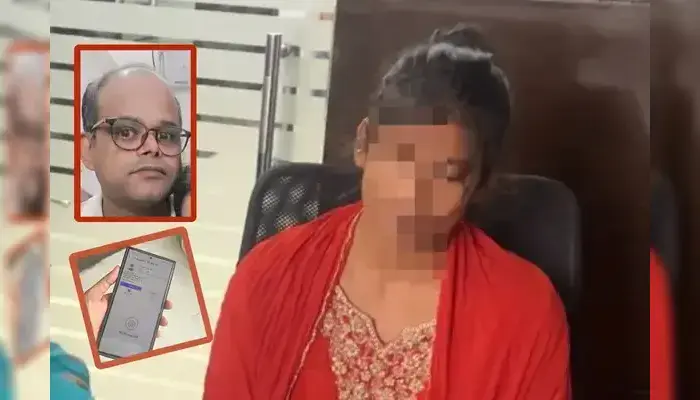
Case Summary
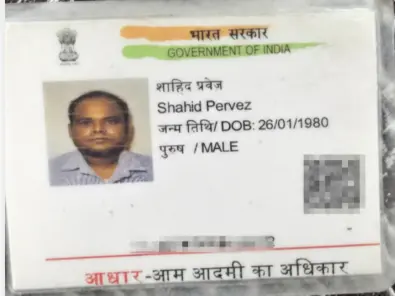
A 27-year-old Hindu woman named Shobha Kumari, originally from Bihar and residing in Delhi with her young daughter, was deceived into a live-in relationship by a Muslim man named Shahid Parvez, who pretended to be Hindu. The victim was pressured to convert to Islam, undergo nikah and was subjected to physical violence upon refusal. According to the victim, Shobha, a divorced single mother working as a cook in households in Delhi's CR Park area, came into contact with the accused through social media in March 2023. During their interactions, he introduced himself as a Hindu man named Suresh, used the name "SK Yadav" on Instagram, and deceptively lured her into a relationship. Approximately two months later, they met in person, and he claimed that he was unmarried despite being around twenty years older than her. He expressed his intention to marry her and provide a secure future for both her and her daughter. Trusting these assurances, Shobha entered into a relationship with him and eventually moved into a residence with him in DDA Flats, Kalkaji, in 2024. The two lived together and maintained a physical relationship. According to the complaint, Shahid assured Shobha that he would bear the household expenses and her daughter's educational costs if she fulfilled the responsibilities of a wife. After about a year of cohabitation, Shobha discovered that his real name was Shahid Parvez and that he had concealed both his religious identity and his true personal background. When confronted, he admitted that she would not have entered the relationship had she known his actual identity from the beginning. She subsequently learned that he was already married and had an eight-year-old son, information he had never disclosed despite repeatedly discussing marriage and a future together. When she questioned him about the deception, he told her she could either accept the situation or leave the residence. The complaint revealed that Shahid later began pressuring Shobha to convert to Islam. When she resisted, she was subjected to physical assault and coercion. Then Shahid Parvez took her to a mosque in Delhi’s Okhla Mandi area, where a Muslim cleric asked her to recite the Kalma. When she failed to recite the Kalma, the Muslim cleric refused to perform her conversion and Nikah, saying that the Nikah cannot be performed until she accepts Islam. The Muslim cleric then asked Shahid Parvez to take her away, citing the fear of the Banjrang Dal. After unsuccessful attempts at multiple locations, he later produced two documents written in Urdu and instructed her to sign them, telling her that they were nikahnama papers. Unable to understand the contents, she signed the documents. A rent agreement dated March 2025 subsequently recorded her name as "Sibra Parvez" and identified her as the wife of Shahid Parvez. In March 2026, Shobha discovered that Shahid also had an eighteen-year-old daughter, another fact he had concealed from her. This revelation led to disputes between them, although they continued residing together. On 9 June 2026, she found that Shahid had vacated the residence without informing her. His belongings had been removed, his mobile phone had been switched off, and he could no longer be contacted. She also discovered that her gold jewellery, including earrings, a nose ring, a necklace, and a maang tikka, was missing from the residence. As part of the complaint, Shobha submitted photographs showing her wearing the missing jewellery, screenshots of the Instagram account used by Shahid under the name "SK Yadav", a copy of Shahid Parvez's Aadhaar card, tenant verification documents recording her as "Sibra Parvez", and her own Aadhaar card identifying her as Shobha Kumari. Following her testimony, a complaint was submitted to the Delhi Police and the National Human Rights Commission seeking an investigation into the incidents.
Case Images

Why it is Hate Crime ?
This case has been added to the tracker under the primary category of - Crimes against women in relationships and other sexual crimes. Within the sub-category selected is- Man pretends to be Hindu. The tertiary category selected is- Name Changed. When a non-Hindu man pretends to be a Hindu to deceive a Hindu woman into a relationship, the act is seen as triggered by malicious intentions. In some cases, the woman eventually accepts the man’s original religious identity and converts after the man’s identity is revealed. These cases could be argued as cases of religious brainwashing and a result of the pressure a woman feels after getting into a relationship with a man. The woman, it can be argued, also changed her religious identity because of the stigma she believes she might face if she chooses to walk out of a deceptive relationship. However, for the purpose of documenting hate crimes, the cases in this subcategory are limited to those where there is explicit violence aimed at religious conversion against the wishes of the victim (force-feeding beef, blackmailing with intimate videos, rape on refusal to convert, etc), or if the woman herself complains of the man’s religious deception. In such cases, it is established that the deception of the non-Hindu man had a specific aim of religious conversion or targeting of the victim due to her Hindu religious identity, therefore, making it a religiously motivated hate crime. The other sub-category selected is - Forced conversion before marriage, with the tertiary category being - Forced to do nikah. In such cases, a non-Hindu man is in a relationship with a Hindu woman when the pressure to convert her religion begins to manifest. In such cases, typically, two patterns emerge. First, when the relationship is consensual, and the religious identity of the perpetrator is known to the Hindu woman in the relationship, however, at some point during the relationship, the non-Hindu man starts to force the victim to convert her religion and give up her Hindu religious identity. The second is when the woman gets into a marriage with the man pretending to share her faith. Later, when the truth is revealed, the man starts pressuring the woman to convert her religion and give up her religious identity. In both the situations, the methods used to force the victim to convert her religion often revolve around force-feeding beef, forcing her to wear hijab, forcing her to read the Kalma or even pressurizing the victim to do ‘Nikah’, which is marriage under Islamic law, with a prerequisite being conversion to Islam. Cases where a Hindu woman consensually converts to Islam in a relationship will be left out of the hate crime database, even though it could be argued in several cases that the conversion was a result of religious brainwashing. The other sub-category selected is - Assault or threat upon refusal to convert. When Hindu women are in a relationship with non-Hindu men, there are cases where the woman faces threats or assault after she refuses to convert and change her religious identity owing to pressure/force by the non-Hindu man. Such relationships may be consensual with the religious identity of the non-Hindu man known to the victim. Somewhere along the relationship, the non-Hindu man starts pressurizing the Hindu woman to convert to Islam and upon her refusal, assaults or threatens the victim. Such cases are driven by specific religious motivations and against the religious identity of the victim and are therefore qualified as hate crimes. Cases where the Hindu woman converts to Islam and does not file a complaint about the force or threat, are not considered a part of the hate tracker, even though, it may be argued that the woman was brainwashed or threatened to convert to Islam. This case has been added to the tracker because a Hindu woman was deceived into a relationship by a Muslim man named Shahid Parvez, who pretended to be Hindu. She was pressured to convert to Islam, deceived into nikah and assaulted upon refusal. The case reflected a pattern of religious targeting, coercion, and systematic efforts to erase the victim’s Hindu identity through intimidation, abuse, and forced imposition of Islamic practices. Firstly, the accused deliberately concealed his religious identity to initiate and sustain a relationship with a Hindu woman. This itself is a clear manifestation of bias and malicious intent towards the victim's religion. By concealing his true identity, he exploited her trust, targeting her under false pretences. This indicates a premeditated intent to manipulate her based on her religious background. In cases like these, the tactic of adopting a false Hindu identity to manipulate and "ensnare" a Hindu individual is not just an act of personal betrayal but can also be interpreted as an expression of disdain or disregard for Hinduism and its customs that reflects a deeper animosity towards Hindus and their beliefs. In such instances, identity concealment is not merely a personal deception but a calculated strategy rooted in religious targeting and profiling. The accused was aware that the victim, being Hindu, may not have consented to the relationship had she known his real identity from the outset. He therefore circumvented her ability to exercise informed choice by deliberately lying about his name and religious background. This demonstrated a premeditated effort to exploit the victim specifically on the basis of her religious identity. Secondly, the accused attempted to force the Hindu victim to renounce her religion and convert to Islam. Pressuring a Hindu individual to discard her religious faith and embrace another was a direct attack on her religious identity and dignity. It was not a matter of personal choice; it was coercion rooted in hostility towards the victim's Hindu identity. Such an attempt reflects religious animosity because the act was not simply about personal differences but about erasing the victim’s Hindu faith, making it a religiously motivated crime. Thirdly, the nikahnama aspect is particularly significant in understanding the religious dimension of this case. The attempts to secure the victim's conversion and obtain her consent to a nikah after the relationship had already been established through concealment and deception demonstrates that the accused's objective was not merely to pursue a personal relationship, but also to bring the victim within a different religious framework. By pressuring the victim to abandon her Hindu faith and deceiving her into signing documents connected to an Islamic marriage, the accused displayed a disregard for her religious autonomy and right to make informed decisions regarding matters of faith. This was not incidental to the events but was instead a factor that the accused sought to erase or replace, thereby demonstrating a clear element of religiously motivated targeting and animosity towards the victim's faith. Fourth, when the victim resisted, she was subjected to physical violence. The assault following her refusal to abandon her faith suggests that the accused was unwilling to respect her religious beliefs and personal agency. The use of force in response to her decision to remain Hindu indicates that the pressure to convert was not a casual suggestion but an objective that the accused sought to achieve despite her clear unwillingness. In such cases, violence serves a dual purpose: physical subjugation and religious humiliation. The intention was to break the victim down, emotionally, physically, and spiritually, so that she could be converted. This was not random violence; it was systematic, targeted, and rooted in religious animosity. Taken together, the concealment of identity, deception regarding marriage, pressure to convert, attempts to secure a nikah, and the use of violence when the victim resisted demonstrate that the victim's Hindu identity was not incidental to the events. Rather, her faith became the subject of sustained efforts to alter, suppress, and replace against her wishes. For this reason, the case has been categorised as a religiously motivated hate crime involving religious targeting, coercive conversion attempts, and anti-Hindu hatred. Disclaimer: The Hinduphobia Tracker records the date of the incident based on when the crime occurred. The media reports published this case on 16 June 2026. However, the media reports do not specify the exact date of the beginning of the victim’s ordeal. The victim came in contact with the accused in March 2023, and on 9 June 2026, the accused abandoned her. Considering these two pieces of information, we are using an indicative date of 9 March 2023 as the date of the incident. This date is used for documentation purposes only and represents the estimated beginning of her ordeal.
Victim Details
Total Victim
1
Deceased
0
Gender
- Male 0
- Female 1
- Third Gender 0
- Unknown 0
Caste
- SC/ST 0
- OBC 0
- General 0
- Unknown 1
Age Group
- Minor 0
- Adult 1
- Senior Citizen 0
- Unknown 0


Case Status
Complaint registered


Perpetrators Details
Perpetrators
Muslim Extremists
Perpetrators Range
One Person
Perpetrators Gender
male
 Sources




