Hindu minor girl lured by Muslim man posing as Hindu with Tilak and Kalava in Damoh, Madhya Pradesh
 Damoh, Madhya Pradesh, India
  13 June, 2025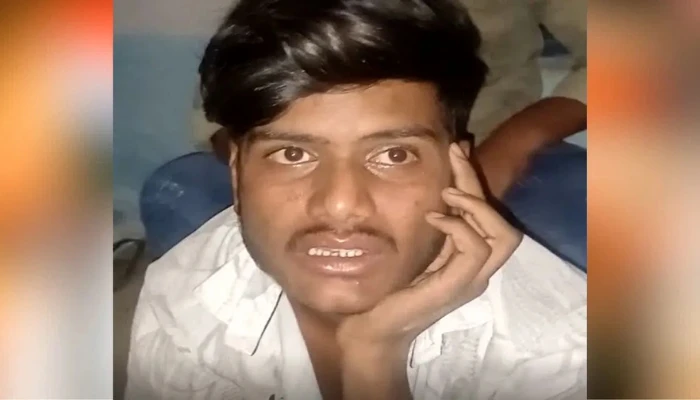
Case Summary
In Damoh, Madhya Pradesh, a minor Hindu girl was lured into a relationship through sustained identity deception by a Muslim man who concealed his religious identity across months of contact. The accused, Sahil Khan, operated under the alias Sahil Lala, presenting himself as a Hindu and donning a Tilak on his forehead and a Kalava on his wrist to impersonate religious identity. Later, pictures emerged showing the duo marrying each other in a temple, as per Hindu customs. According to reports, Sahil Khan, a resident of Jabalpur Naka in Damoh, first made contact with the Hindu minor at a religious programme. He attended with a kalava tied around his wrist and a tilak on his head. He presented himself as a participant in Hindu religious activity. His social media profiles were also under the name Sahil Lala, omitting his Muslim identity, and he used those profiles to connect with and cultivate a relationship with the victim. Over the following months, the victim, then sixteen years of age, believed she was corresponding with a Hindu youth named Sahil Lala. The accused built sufficient trust to meet her on one or two occasions. During this period, his actual religious identity, Sahil Khan, a Muslim, remained concealed. Some reports stated that the accused married the victim forcibly, and when the matter was being investigated, the photos of their marriage emerged. According to the complaint, when the victim discovered his real identity, she stopped all communication. The accused escalated his conduct, pressured her to resume contact, and claimed he wished to convert to Hinduism, stating he intended to visit Bageshwar Dham to formalise the conversion. He threatened the victim and her family, warning them of consequences if they resisted. The family, fearing social embarrassment and reputational harm, remained silent for a period rather than approaching authorities. On Sunday, 14 June 2025, the accused arrived at the victim's residence, explicitly threatening to kill the victim and her family members. Following this incident, the family contacted local Hindu organisations and lodged a formal complaint at Kotwali Police Station, Damoh. Local workers from the Hindu organisation also reached the police station. A woman police officer recorded the victim's statement in accordance with legal procedure for minor victims. The victim stated that she had first met someone named Sahil at a religious gathering, that their contact had developed thereafter, and that they had met on one or two occasions. Based on her statement, a formal FIR was registered against the accused. Subsequently, a video of the accused circulated on social media. The footage recorded on Sunday, 14 June 2026, evening, when community members and the victim's family apprehended him after he came to meet her, showed him stating a desire to abandon Islam and adopt Hinduism, and expressing dissatisfaction with his own religion. The police confirmed the video had come to their attention and stated that its authenticity and the circumstances of its recording were under investigation. The accused thereafter absconded and was being actively sought by police at the time of reporting. When he had been apprehended briefly by community members and Hindu organisation workers, they examined his mobile phone. They found photographs and posts from social media documenting his interactions with the victim. These included a temple ceremony in which he placed a mangalsutra around the victim's neck, an act carrying the symbolic weight of a Hindu marriage.
Why it is Hate Crime ?
The primary category selected in this case is: Crimes against women in relationships and other sexual crimes. The subcategory selected is: Man pretends to be Hindu. The tertiary category selected is: Name Changed, Married as per Hindu rituals, Wears symbols of Hinduism. When a non-Hindu man pretends to be a Hindu to deceive a Hindu woman into a relationship, the act is seen as triggered by malicious intentions. In some cases, the woman eventually accepts the man’s original religious identity and converts after the man’s identity is revealed. These cases could be argued as cases of religious brainwashing and a result of the pressure a woman feels after getting into a relationship with a man. The woman, it can be argued, also changed her religious identity because of the stigma she believes she might face if she chooses to walk out of a deceptive relationship. However, for the purpose of documenting hate crimes, the cases in this subcategory are limited to those where there is explicit violence aimed at religious conversion against the wishes of the victim (force-feeding beef, blackmailing with intimate videos, rape on refusal to convert, etc), or if the woman herself complains of the man’s religious deception. In such cases, it is established that the deception of the non-Hindu man had a specific aim of religious conversion or targeting of the victim due to her Hindu religious identity, therefore, making it a religiously motivated hate crime. The religious motive of the crime is evident from the fact that the Muslim perpetrator deliberately hid his real identity and pretended to be a Hindu in order to gain the trust of the Hindu victim. If religion had no role in the crime, there would have been no need for him to conceal his faith and present himself as a Hindu. The deception worked precisely because he knew that sharing the same religious identity would make the victim more comfortable, trusting, and willing to interact with him. This makes the victim's Hindu identity central to the offence. The perpetrator did not simply lie about his name or personal details. He specifically used a false Hindu identity as a tool to approach, manipulate, and exploit a Hindu victim. The fact that he felt the need to pose as a Hindu shows that he understood the importance of religion in the victim's life and deliberately exploited it for his own benefit. The deception also reflected a deeper disregard for Hindu beliefs and community trust. Rather than respecting the victim's religious identity and her right to make informed choices, the perpetrator treated her faith as an obstacle to be bypassed through dishonesty. Hindu identity was reduced to a disguise that could be adopted whenever it became useful. Such conduct demonstrates contempt for the religious boundaries, customs, and values that the victim was entitled to rely upon while deciding whom to trust. It is also significant that the perpetrator specifically targeted a Hindu victim through a fabricated Hindu identity. The entire deception depended upon exploiting the trust associated with being Hindu. This shows that the victim's Hindu identity was not incidental to the crime but one of the factors that made her a target. The perpetrator consciously chose a method that weaponised Hindu identity itself in order to gain access, influence, and control. For this reason, the offence carries clear religiously aggravating elements. The perpetrator's ability to target and exploit the victim depended on religious deception and the manipulation of trust associated with Hindu identity. This demonstrates that the victim's religion was not incidental to the crime but one of the key factors that enabled it. In cases like these, the tactic of adopting a false Hindu identity to manipulate and "ensnare" a Hindu individual is not just an act of personal betrayal but can also be interpreted as an expression of disdain or disregard for Hinduism and its customs that reflects a deeper animosity towards Hindus and their beliefs, and this is why this case has been added here. More importantly, the victim here was a minor, which means the element of consent and genuine change of conscience was missing ab initio. Minors, due to their young age and lack of maturity, are particularly vulnerable to manipulation and coercion. They may not have the ability to fully understand the implications of converting to another religion, and the Muslim perpetrator purposely targeted and exploited this vulnerability of the victim. Another notable aspect here is that the accused used Hindu religious symbols to further his agenda. In Hinduism, the Tilak and Kalawa hold deep religious, cultural, and spiritual significance. It symbolises protection, blessings, unity, and commitment to spiritual and ethical principles. Its use across various rituals and ceremonies underscores its importance in the Hindu way of life. By exploiting religious symbols and rituals sacred to Hindus, the Muslim not only betrayed the woman's trust but also showed a profound disrespect for her faith. His type of exploitation, particularly when it involves religious deception, highlights a profound disrespect for the victim's faith and autonomy. It is a deliberate and calculated attempt to exert control over her, using religion as a tool of manipulation and domination. Such actions are rooted in religious intolerance and are clear manifestations of religiously motivated hate. Disclaimer: Hinduphobia Tracker records incidents based on when the victim's ordeal became manifest through the principal criminal act, rather than on the date the matter was reported or on the date of first contact. In this case, 14 June 2025 has been used as the incident date because this was the date on which the accused arrived at the victim's residence, issued threats, and the matter culminated in a formal complaint and police action. While the deception and grooming had occurred over a longer period, the date of which is not mentioned in the report, 14 June 2025 marked the point at which the victim and her family directly confronted the consequences of the accused's conduct and sought legal intervention.
Victim Details
Total Victim
1
Deceased
0
Gender
- Male 0
- Female 1
- Third Gender 0
- Unknown 0
Caste
- SC/ST 0
- OBC 0
- General 0
- Unknown 1
Age Group
- Minor 1
- Adult 0
- Senior Citizen 0
- Unknown 0


Case Status
Complaint filed


Perpetrators Details
Perpetrators
Muslim Extremists
Perpetrators Range
One Person
Perpetrators Gender
male
 Sources




