Hindu villagers including minor children subjected to religious conversion through illegal church operating on school premises in Rajnandgaon, Chhattisgarh
 Raj Nandgaon, Chhattisgarh, India
  12 June, 2026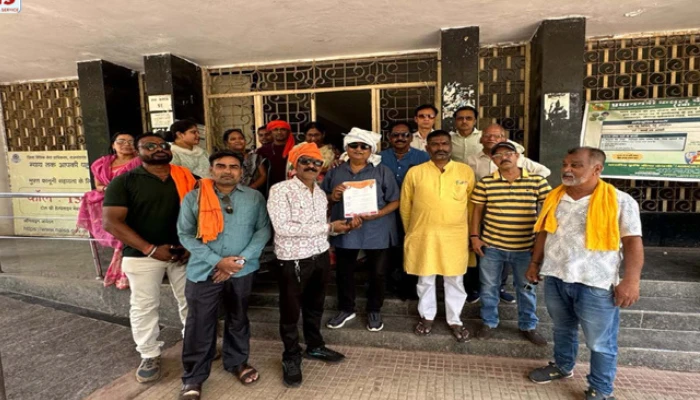
Case Summary
In Paneka, Rajnandgaon district, Chhattisgarh, minor Hindu students enrolled at Mar Gregorius Memorial Public School(MGM) and Hindu villagers from the surrounding area were converted to Christianity. The conversion activities took place through a church established without any governmental or statutory authorisation and were used to conduct weekly prayer gatherings for targeting the conversion of Hindu school children and local residents. Hindu Jagran Manch, a Hindu organisation, submitted a formal memorandum to the District Collector and the Superintendent of Police, Rajnandgaon, seeking a ban on the operation of an unlawful church on the campus of MGM School, Paneka. They demanded registration of a First Information Report (FIR) against those responsible for conducting conversion activities therein. According to the memorandum, the church had been established and operated solely with permission from the school’s management. No independent legal sanction had been obtained for establishing a place of worship within an educational institution. The organisation characterised this arrangement as illegal, as it conflated a licensed educational space with an unauthorised religious facility. The memorandum stated that every Sunday, individuals from outside the village were summoned to the premises for prayer meetings. Alongside these weekly gatherings, students studying at the school were subjected to conversion efforts, a development that caused deep resentment among Hindu villagers in the area. Hindu Jagran Manch demanded the constitution of a Special Investigation Committee to independently examine the conversion, registration of FIRs against those found responsible, and the immediate cessation of all conversion-related activity at the premises. The organisation issued a warning that if conversion activity was not halted, it would launch an agitation, and that responsibility for any consequent disruption would lie with the school’s management and the district administration. The memorandum was submitted in the presence of numerous organisation members and workers, including Sushil Laddha, Savita Bose, Prabhat Gupta, Raja Jugal Gupta, Sanjay Mishra, Neelu Sahu, Bhola Yadav, Rinku Tiwari, Bhavya Devangan, Mahendra Jangal, Harish Bhanushali, Manoj Golchha, Anand Gupta, Santosh Turhate, Rohit Yadav, Rishabh, Ritesh Sahu, Ashish Kumar, Mausami Sharma, Hemlal Dheemar, Pranesh Ashish, and Raju Sao. No official response from the district administration or the Superintendent of Police had been recorded at the time of reporting.
Why it is Hate Crime ?
This case has been added to the tracker under the primary category Predatory Proselytisation. Within this, the subcategory selected is - Proselytisation by grooming, brainwashing, manipulation or subtle indoctrination, with the tertiary category being - Conversion of Minor. Religious brainwashing essentially means the often subtle and forcible indoctrination to induce someone to give up their religious beliefs to accept contrasting, regimented ideas. Religious grooming or brainwashing also involves propaganda and manipulation. It involves the systematic effort, driven by religious malice and indoctrination, to persuade “non-believers’ to accept allegiance, command, or doctrine to and of a contrasting faith. Cases of such grooming or brainwashing are far more nuanced than direct threats, coercion, inducement and violence. In such cases, it is often seen that there is repeated, subtle, and continual manipulation of the victim to induce disaffection towards their own faith and acceptance of the perpetrator's contrasting faith. While subtle indoctrination is widely acknowledged as predatory, an element which is often understated in such conversions or the attempts of such conversion is the role of loyalty and trust which might develop between the perpetrator and the victim. Fiduciary relationships are often abused to affect such religious conversion. For example, an educator transmitting religious doctrine of a competing faith to a Hindu student. The Hindu student is likely to accept what the teacher transmits owing to the existence of a fiduciary relationship. The exploitation of the fiduciary relationship to religiously indoctrinate victims would also be included in this category. Since the underlying animosity towards the victim’s faith forms the basis of predatory proselytisation, such cases are considered religiously motivated hate crimes. This case was included in the tracker because Hindu students and residents of Paneka village in Rajnandgaon district, Chhattisgarh, were subjected to organised Christian conversion activities carried out from within an educational institution. The incident revealed a sustained and institutionalised effort to influence the religious beliefs of Hindu school children and members of the local Hindu community. The most significant aspect of this case was the manner in which the conversion activity was embedded within an educational environment. An unauthorised church established on the school campus to conduct religious conversion activities targeting minor Hindu children and Hindu villagers under the guise of prayer meetings. More importantly, using a school as the setting for religious conversion efforts had profound implications. A school is not merely a physical venue but an institution built upon trust, authority, and the expectation that children would be educated rather than subjected to religious influence. By embedding conversion activities in such an environment, those responsible positioned themselves in a space where their religious messaging could appear legitimate and normal. The choice of setting was significant because it reduced the likelihood of scrutiny, weakened natural resistance, and enabled sustained engagement with children in circumstances where they were expected to defer to institutional authority. Particular significance attached to the involvement of minors. Childhood is a formative stage during which religious beliefs, cultural identity, and community attachments are still developing. Efforts directed towards children carried the potential to shape their understanding of faith before they possessed the maturity or independence necessary to critically evaluate competing religious claims. The targeting of minors, therefore, extended beyond ordinary religious advocacy and entered the realm of influencing individuals at a stage of heightened vulnerability, where authority, routine exposure, and social pressure could have a disproportionate effect on personal belief formation. Moreover, what were presented as prayer gatherings served to familiarise Hindu children and residents with Christian religious practices in a setting that encouraged acceptance rather than critical engagement. Such activities served not merely to introduce an alternative faith but to gradually weaken attachment to existing religious traditions and create conditions favourable to religious conversion. The underlying objective was not the coexistence of different beliefs but the replacement of one religious identity with another. By operating through a framework of trust and regular interaction, those responsible sought to normalise Christian practices among Hindu participants and facilitate a gradual shift away from their inherited faith. The implications extended beyond individual children to the wider Hindu community. The organised outreach directed towards local villagers reflected an attempt to influence the religious character of the community as a whole rather than isolated individuals. Such efforts carried the potential to disrupt long-established cultural and religious traditions that formed an integral part of community life. In tribal areas, where religious practices, customs, and collective identity were closely interconnected, religious conversion could have consequences extending beyond personal belief, affecting social cohesion, cultural continuity, and the preservation of indigenous traditions. The sustained effort to introduce external religious influences into such communities reflected an attempt to reshape their religious landscape and weaken the continuity of existing Hindu and tribal traditions across generations. The Christian faith, by its very theological foundations, places a strong emphasis on proselytisation. In pursuit of conversion objectives, Christian evangelists often employ unethical means, ranging from psychological pressure and misinformation to inducements such as money or jobs. These tactics are designed not as acts of charity but as tools to engineer religious change under the guise of social upliftment, particularly among vulnerable and underprivileged communities. This systematic attempt to erode the religious foundation of individuals and replace it with allegiance to another faith reflects deep religious malice and animus against the Hindu identity. Since the activities specifically targeted vulnerable Hindu minors and villagers, this case was added to the tracker under religiously motivated targeting and organised proselytisation of Hindus. Disclaimer: The Hinduphobia Tracker records incidents according to the date on which an event occurred or when the victim’s experience first began. Media reports covering this case did not specify the exact date on which the conversion-related activities commenced. Accordingly, the date entered in the tracker corresponds to the date the matter was first reported in the media.


Case Status
Complaint filed


Perpetrators Details
Perpetrators
Christian Extremists
Perpetrators Range
Unknown
Perpetrators Gender
unknown
 Sources




