Hindu teenager brutally attacked by Muslim mob over minor dispute in Cox's Bazar, Bangladesh
 Cox's Bazar District, Bangladesh
  4 May, 2026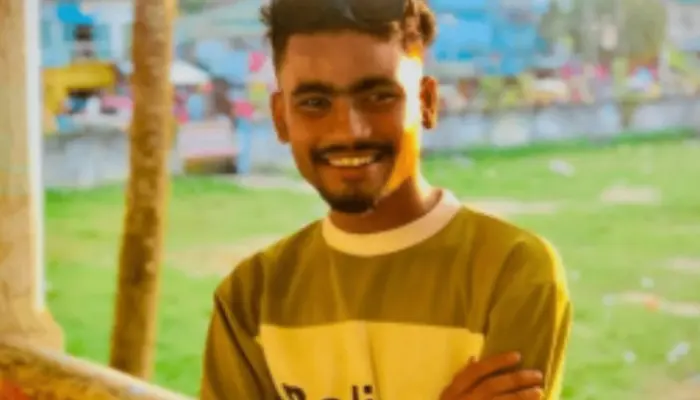
Case Summary
A Hindu minor boy, Pritam Sharma, was brutally attacked by a Muslim mob led by Muslim political leader Mohammad Junaid in Ramu, Cox's Bazar, Bangladesh. The incident took place over a minor dispute. According to the victim's family, on 5 May 2026 at around 5:30 pm, 17-year-old Pritam Sharma, son of Mridul Sharma and a resident of the Purba Merangloa Telepatti area of Fatekharkul Union, was returning home after having breakfast in the Ramu Chaumuhani area. On the way, he stopped to speak with a group of known youths. During this time, a dispute broke out between local youths and Chhatra Dal leader Mohammad Junaid of Ukhiyarghona Tilapara over a minor local issue. As the situation escalated, Pritam left the area and headed home. The victim’s family stated that after seeing Pritam in CCTV footage at the scene, Junaid became enraged. Soon after, a Muslim mob of around 20–30 people went to Pritam’s house and brutally assaulted him. The victim's family also stated that they too were threatened during the incident. Following this, Pritam was taken to Ramu Police Station. Despite being a minor, he was kept in custody for nearly 24 hours and later produced before the court in connection with the case. The family further stated that he was physically assaulted at the police station. Court sources said the investigating officer sought a five-day remand for interrogation. However, during the hearing, the defence questioned his age and denied his involvement. The court rejected the remand plea and granted him interim bail the same day. After the incident, legal assistance was arranged through Santosh Sharma, central general secretary of the Bangladesh Puja Udjapan Parishad, with local support provided by Soumik Chowdhury of the Ramu Upazila Committee. Regarding the matter, Ramu Police Station Officer-in-Charge (OC) Monirul Islam Bhuiyan falsely claimed, “There was a case of assault against Pritam. His opponents detained him and informed the police. He was later arrested in this case and produced before the court. No application for remand was made.” Meanwhile, local groups have called for an impartial investigation, urging that no minor should be subjected to harassment due to political or personal influence. The escalation of violence against Hindus in Bangladesh has unfolded in three distinct phases: first, following the ouster of Sheikh Hasina’s government in August 2024; second, after the death of Sharif Osman Bin Hadi in December 2025; and third, in the immediate aftermath of the 13th National Parliamentary Election 2026. Following the ouster of Sheikh Hasina, multiple reports documented attacks on Hindu homes, temples, and religious institutions, alongside intimidation campaigns, arson, and mob assaults targeting minority neighbourhoods. The Hinduphobia Tracker has recorded 336 such incidents against the Hindu minority, underscoring the scale and persistence of anti-Hindu violence during this period. A further escalation occurred following the death of Sharif Osman Bin Hadi, a Muslim political activist and student leader known for his anti-Hindu and anti-India rhetoric. Hadi had been involved in political unrest after the fall of the Hasina government and was killed in Dhaka on 18th December 2025 during clashes. In the aftermath of his death, Hindu communities were blamed and subsequently targeted in retaliatory violence. Hindu homes were selectively set ablaze in multiple localities, forcing families to flee and leaving many displaced. The attacks appeared patterned rather than sporadic, with Muslim mobs focusing on Hindu neighbourhoods, properties, and religious symbols. Among the victims was Dipu Chandra Das, who was lynched to death and his body was set ablaze by a Muslim mob over false blasphemy allegations. The Hinduphobia Tracker documented 51 incidents of anti-Hindu violence in the period following Hadi’s death alone. Such incidents underscored the vulnerability of the Hindu minority amid rising communal hostility and the weaponisation of religious accusations. Reports further indicated that posters and written materials calling for the extermination of Hindus were displayed in public spaces, signalling an alarming normalisation of genocidal rhetoric. When combined with acts of arson, vandalism, assault, and targeted intimidation, these developments suggested a coordinated environment of hostility aimed at terrorising the Hindu community and reinforcing majoritarian dominance. The third phase of violence was unleashed after the 13th National Parliamentary Election 2026. Within days of the announcement of results, Hindu families in districts such as Noakhali, Rangpur, Nilphamari, Sylhet, Thakurgaon, and Dinajpur reported coordinated attacks involving arson, looting, assault, and vandalism of temples and homes. In several instances, Hindu homes were selectively targeted, looted, and families were threatened with displacement.
Why it is Hate Crime ?
The primary category selected in this case is: Attack not resulting in death. The subcategory selected in this case is: Communal Clash/Attack. Communal clash is a form of collective violence that involves clashes between groups belonging to different religious identities. For a communal clash between Hindus and non-Hindus to qualify as a religiously motivated hate crime, the trigger of the violence itself would have to be anti-Hindu in essence. For example, if there is a Hindu religious procession that comes under attack from a non-Hindu mob and after the initial attack, Hindus retaliate in self-defence, leading to a communal clash between the two religious communities. While at a later stage, both communities are involved in the clash/violence, the initial trigger of the violence was by the non-Hindu mob against the Hindus and therefore, it could safely be termed as an anti-Hindu violence. Further, the trigger would also have to be religiously motivated. In the cited example, the attack by the non-Hindu mob was against religious processions and therefore, can be concluded to be religiously motivated. In some cases, the trigger may be non-religious, however, it develops into religious violence against Hindus at a later stage. In such cases too, the foundational animosity towards Hindus becomes the motivating factor of the crime and therefore, it would be classified as a religiously motivated hate crime against Hindus under this category. The other subcategory selected is: Attacked for Hindu identity. In several cases, Hindus are attacked merely for their Hindu identity without any perceived provocation. A classic example of this category of religiously motivated hate crime is a murder in 2016. 7 ISIS terrorists were convicted for shooting a school principal in Kanpur because they got ‘triggered’ seeing the Kalava on his wrist and tilak that he had put. In this, the Hindu victim had offered no provocation except for his Hindu religious identity. The motivation for the murder was purely religious, driven by religious supremacy. Such cases where Hindus are targeted merely for their religious identity would be documented as a hate crime under this category. This case is presented as a clear example of a religiously motivated hate crime because a minor Hindu boy, Pritam Sharma, was brutally assaulted following a minor dispute involving local youths and a Muslim political leader, Mohammad Junaid. The dispute itself was minor in nature and did not warrant any escalation beyond routine local resolution mechanisms. However, the involvement of a Muslim political leader was a turning point that escalated a contained disagreement into a coordinated act of mob violence. Instead of resolving the matter through legal recourse, the Muslim political leader escalated it by mobilising a group of Muslim individuals who collectively targeted the Hindu minor boy. The scale of mobilisation, the leadership role attributed to a Muslim political figure, and the intensity of the assault together indicate a disproportionate and organised response that far exceeds the original trigger, suggesting that the violence was driven by communal bias and hatred rather than the dispute itself. Even if the initial trigger was not explicitly religious in nature, the conduct during the attack demonstrates clear selective targeting based on the victim’s religious identity. The violence was not random or evenly directed at all parties involved in the local context; instead, a Hindu minor boy was specifically identified, isolated, and subjected to a sustained and brutal assault by a Muslim mob. This selective targeting is central to understanding the incident as a hate crime, because the victim’s religious identity functioned as a key marker for violence once the mob was mobilised. The disproportionate level of aggression, far exceeding what would be expected in a minor dispute, further reinforces the inference that the assault was not merely situational, but driven by hostility that attached itself to the victim’s Hindu identity. Such behaviour reflects a pattern where the dispute acts as a pretext, while the underlying motivation manifests through communal targeting and collective violence. In the broader context of communal tensions and recurring violence against Hindus in Bangladesh, this incident is consistent with a documented and repeatedly observed pattern in which even non-religious or minor interpersonal disputes escalate into severe, targeted, and disproportionate attacks against Hindu individuals. In such environments, underlying prejudice, social hostility, and communal bias do not remain abstract sentiments but actively shape the nature of conflict resolution at the local level, where ordinary disagreements can quickly be reframed through a communal lens once tensions escalate. This creates a situation in which Hindus become especially vulnerable to collective violence from the Muslim majority, as even routine disputes can be converted into opportunities for group mobilisation, intimidation, and physical assault directed at Hindus as a religious minority. The severity of the assault in this case, combined with the collective participation of a Muslim mob, reflects more than spontaneous anger; it indicates a socially conditioned readiness to escalate violence disproportionately when the victim belongs to a minority religious community, particularly the Hindu community. Additionally, the intimidation and pressure faced by the victim’s family after the incident further demonstrate an environment where coercion and fear are used to suppress accountability. Taken together, these factors point towards a broader atmosphere in which violence is not merely reactive or isolated, but shaped and reinforced by underlying communal animosity, demonstrating how structural hostility can transform even trivial or incidental triggers into episodes of extreme and targeted violence against the minority Hindu community. This incident is not isolated but aligns with a documented and previously recorded pattern in which even non-religious disputes escalate into disproportionate and targeted attacks against the Hindu community. The Hinduphobia Tracker has previously documented such an incident from Dahar Mashihati village in Jessore district, Bangladesh, where violence erupted not due to any religious provocation but following a land-related dispute involving local individuals. In that case, on the night of 22 May 2025, multiple Hindu families were attacked, and their homes and shops were looted and vandalised in a coordinated assault by a Muslim mob. The immediate trigger was the killing of Tariqul Islam, a 50-year-old local political figure associated with the Krishak Dal, who was killed during a minor dispute over the lease of land involving a Hindu man, Piltu Biswas. Although the underlying conflict was a civil land dispute, the aftermath saw collective retaliation directed not at the specific individuals involved alone, but extended broadly against Hindu families in the area, demonstrating how the violence expanded beyond the original dispute into communal targeting. This previously documented case highlights a recurring structural pattern in which incidents that are initially non-religious in nature become communalised in their aftermath, resulting in collective punishment or retaliatory violence against Hindus as a group. Similarly, in the present case, the escalation of a minor local dispute into a mob attack against a Hindu minor reflects the same underlying dynamic, where the identity of the victim becomes a decisive factor in the scale and direction of violence. Such patterns demonstrate how, in certain contexts, grievances, whether personal, political, or economic, are redirected into broader communal aggression, disproportionately affecting Hindu minorities. This repetition of escalation from neutral triggers to targeted violence reinforces the assessment that such incidents are not isolated, but part of a wider and documented trend of communalised retaliation against Hindus in Bangladesh. Another important point to highlight is that no action was taken against the Muslim perpetrators, while the victim himself was arrested and subjected to violence even within the police station. This act points towards a serious form of institutional bias in the handling of the incident. Such differential treatment based on religious identity shifts the case beyond an individual act of violence into the realm of a potential hate crime, where the victim’s Hindu identity becomes a determining factor not only in the initial assault but also in the response of state authorities. When law enforcement fails to act impartially and instead treats individuals differently on the basis of religion, it reflects a breakdown of equal protection under the law and amounts to institutionalised discrimination. In this framework, the selective targeting and harsher treatment of the Hindu victim indicates that religious identity played a central role at multiple stages of the incident, thereby meeting the broader definitional elements of a hate crime, which includes bias-motivated harm and unequal treatment rooted in faith identity. Since this case meets the parameters of a hate-driven offence, it is being added to the Hinduphobia Tracker's Hate Crime database.
Victim Details
Total Victim
1
Deceased
0
Gender
- Male 1
- Female 0
- Third Gender 0
- Unknown 0
Caste
- SC/ST 0
- OBC 0
- General 1
- Unknown 0
Age Group
- Minor 1
- Adult 0
- Senior Citizen 0
- Unknown 0


Case Status
Unknown


Perpetrators Details
Perpetrators
Muslim Extremists
Perpetrators Range
From 10 to 100
Perpetrators Gender
male
 Sources




