70-year-old Hindu saint stabbed to death by Muslim youths following dispute over Temple loudspeaker in Muslim-majority locality
 Unnao, Uttar Pradesh, India
  8 June, 2026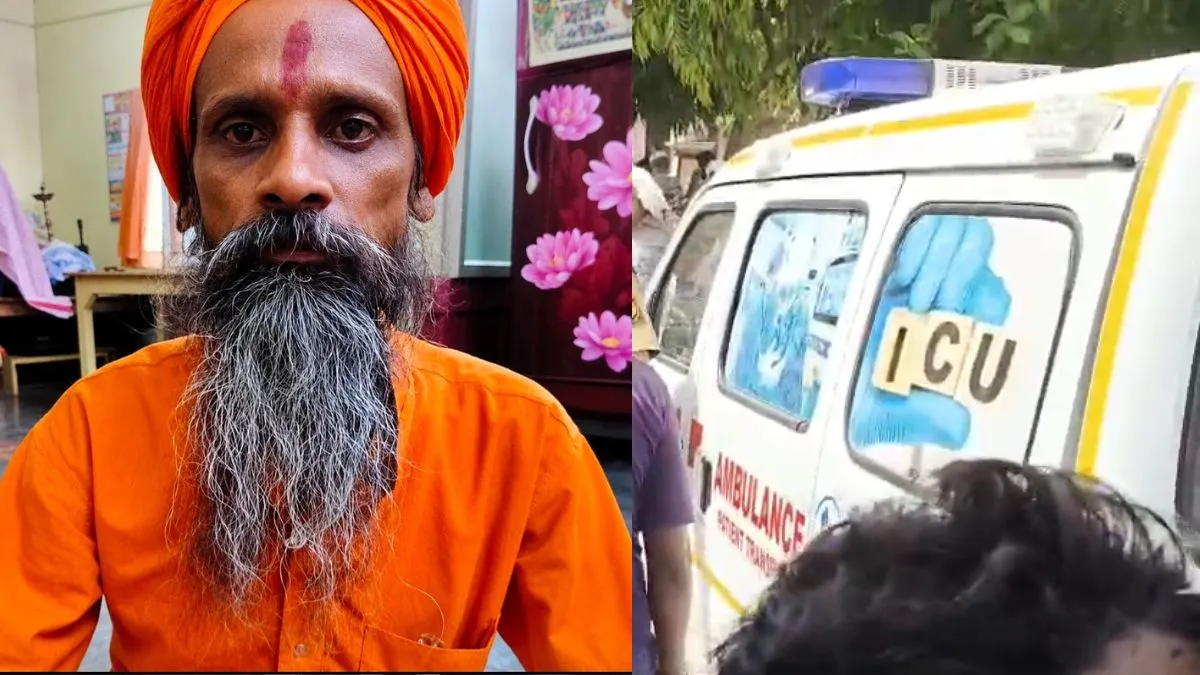
Case Summary
A Hindu saint, Sant Milan Das, was stabbed to death by some Muslim youths in Bangarmau, Unnao district, Uttar Pradesh, following a dispute over the use of a loudspeaker during prayers at a Hindu temple under construction in a Muslim-majority locality. The 70-year-old saint, who was overseeing the construction of the temple in Ghure Tola, sustained multiple stab wounds during the attack and later succumbed to his injuries. The incident triggered tension in the area and led to the deployment of a heavy police force. On a complaint by the victim’s brother, Virendra Singh, a murder case was registered at Bangarmau police station under relevant provisions of the Bharatiya Nyaya Sanhita against five people, identified as Izrayal, Lalli, Yameen, Shanu and Shafi. According to local residents, Sant Milan Das had been overseeing the construction of a temple in the neighbourhood and regularly conducted prayers at the site. Residents stated that some local Muslim residents had repeatedly objected to the use of a loudspeaker during the temple's daily religious activities. On the day of the incident, the saint was reportedly called away from the temple by some individuals, following which an argument broke out over the issue. During the confrontation, Sant Milan Das was attacked with a knife and sustained multiple stab wounds. Reports indicate that he was stabbed repeatedly in the back. The assailants fled from the scene after the attack. Local residents later found the saint in an injured condition approximately 200 metres from the temple construction site and rushed him to a nearby primary health centre. However, doctors declared him dead. The murder sent shockwaves through the locality and led to heightened tensions. Police officials, including senior officers, reached the spot and initiated an investigation. The body was sent for post-mortem examination, while security was intensified in the area to prevent any escalation of communal tensions. An FIR was registered based on a complaint filed by the deceased saint's brother. Police subsequently registered a named case against five individuals in connection with the murder. Three accused, identified as Lalli, Yamin, and Shafiq, were arrested and taken into custody for questioning, while efforts continued to apprehend the remaining accused. The investigation into the murder remained ongoing.
Why it is Hate Crime ?
This incident has been added to the tracker under the category- Attack resulting in death. Within this, the selected subcategory is: Attacked for Hindu identity. In several cases, Hindus are attacked merely for their Hindu identity without any perceived provocation. A classic example of this category of religiously motivated hate crime is a murder in 2016. 7 ISIS terrorists were convicted for shooting a school principal in Kanpur because they got ‘triggered’ seeing the Kalava on his wrist and tilak that he had put. In this, the Hindu victim had offered no provocation except for his Hindu religious identity. The motivation for the murder was purely religious, driven by religious supremacy. Such cases where Hindus are targeted merely for their religious identity would be documented as a hate crime. Under this category, cases where the attack led to the death of the Hindu victim/s would be documented. Another selected subcategory is- Attacked for supporting/being part of perceived Hindu party/org or working for Hindu community In several cases, Hindus are attacked specifically or tangentially for their association with parties or organizations perceived to be pro-Hindu and/or for working in favor of the Hindu community. One of the classic cases was the attack against a Bharatiya Janata Party Yuva Morcha (BJYM) worker Praveen Nettaru. Nettaru was attacked and hacked to death for his association with Hindu organizations and his work for the Hindu community. He was murdered by PFI, a terror organization that aimed to commit a genocide of Hindus, target Hindu leaders specifically, and turn India into an Islamic Nation. In such cases, it is possible that the immediate trigger for the violence is non-religious – either according to the perpetrator or the police. However, there are surrounding circumstances from which the conclusion can be reached that the victim was attacked for his association with a Hindu organization. In a similar case, Rinku Sharma was attacked by radicals. He was a member of Bajrang Dal and regularly worked for the Hindu community. While the police cited a different non-religious trigger for the attack, it is true that he was associated to a Hindu organization and the family of Rinku Sharma specifically attributed his gruesome murder to him working for Bajrang Dal and raising Jai Shree Ram slogans. Such cases are intrinsically driven by religious hate. Under this category, cases where the attack led to the death of the Hindu victim/s would be documented. The third subcategory is- Attacked for opposing radicals or trying to save victim. In several cases, Hindus are attacked for opposing religiously motivated crimes being committed against a fellow Hindu or simply for voicing an opinion opposing radical elements, who either have in the past or continue to persecute Hindus. In such cases, the initial attack against the victim, against which the Hindu was trying to defend the victim, would also need to be classified as a religiously motivated hate crime. Since the initial crime itself was religiously motivated and the subsequent crime of attempting to save the victim or speaking against the radical elements ends up inviting a violent attack, it would also be classified as a religiously motivated hate crime. Under this category, cases where the attack led to the death of the Hindu victim/s would be documented. The fourth subcategory selected is- Attacked for crossing 'Muslim area'. One of the reasons that Hindus get attacked unprovoked specifically by Islamists is them crossing ‘Muslim areas’. Essentially, Muslim mobs often attack Hindus crossing or present in certain areas which have a majority Muslim population. It has often been cited as one of the reasons to blame Hindus for attacks against themselves, signaling that Hindus displaying religious symbols, taking out religious processions, or crossing any area that is dominated by Muslim residents is a provocation in and of itself. These areas are mostly ghettoized areas where mobs mobilize quickly to attack Hindus for a variety of reasons like playing music during a religious procession, crossing a mosque, wearing a tilak or any other religious symbol in a Muslim-dominated area, praying at a local temple in that area, etc. There have been cases where the few local Hindus of that area have been attacked on their way to the Temple for prayers as well, simply because the area is considered a Muslim-dominated area. Several times, it is entirely possible that the immediate trigger for the violence against Hindus was non-religious in nature, however, the violence became religiously motivated in nature because the area was Muslim dominated and the residents on the whole harboured animosity towards Hindus, evidenced from the actions of the mob, the slogans, and the nature of the attack. Such crimes are motivated by the religious identity of the victims and are therefore classified as hate crimes. Under this category, we would document cases where the attacks have led to the death of the Hindu victims. The primary religious marker in this case was the opposition to Hindu religious practices associated with a temple under construction. The dispute centred on the use of a loudspeaker during prayers conducted by Sant Milan Das. This is significant because the objection was not directed at a personal or private activity but at the public expression of Hindu worship. When hostility emerges specifically in response to the performance of Hindu religious practices, it indicates intolerance towards the faith itself and towards the right of Hindus to practise their religion openly. Another important marker is the victim's identity. Sant Milan Das was a Hindu saint actively involved in the construction of a temple and the conduct of religious activities. As a religious figure, he represented the spiritual and communal life of local Hindus. The attack was therefore not merely directed at an individual but at a person who symbolised and facilitated Hindu religious expression within the locality. The broader context further strengthens the crime's religious dimension. The temple was being constructed in a Muslim-majority locality, and objections had been raised repeatedly against the religious activities taking place there. Such hostility often stems from a mindset of religious supremacy, where the symbols, institutions, and practices of another faith are seen as something that should be restricted, discouraged, or subordinated. The repeated objections to temple prayers in this case suggest that the issue extended beyond a simple neighbourhood disagreement and reflected discomfort with the continued assertion of Hindu religious life in the locality. The violence that followed transformed that hostility into a direct attack on the individual who stood at the centre of those religious activities. This case, therefore, goes beyond an ordinary act of violence. The victim was targeted while carrying out activities central to Hindu religious life, and the conflict that led to his murder arose directly from objections to those activities. The killing of a Hindu saint associated with temple construction and prayer reflects hostility towards the assertion of Hindu religious presence and worship. For these reasons, the case qualifies as a religiously motivated hate crime and has been included in the tracker.
Victim Details
Total Victim
1
Deceased
1
Gender
- Male 1
- Female 0
- Third Gender 0
- Unknown 0
Caste
- SC/ST 0
- OBC 0
- General 1
- Unknown 0
Age Group
- Minor 0
- Adult 1
- Senior Citizen 0
- Unknown 0


Case Status
Case sub-judice


Perpetrators Details
Perpetrators
Muslim Extremists
Perpetrators Range
From 2 To 5
Perpetrators Gender
male
 Sources




