Hindu man in Muzaffarnagar forcibly converted to Islam after being drugged, blackmailed and subjected to casteist abuse by Muslims
 Muzaffarnagar, Uttar Pradesh, India
  10 June, 2026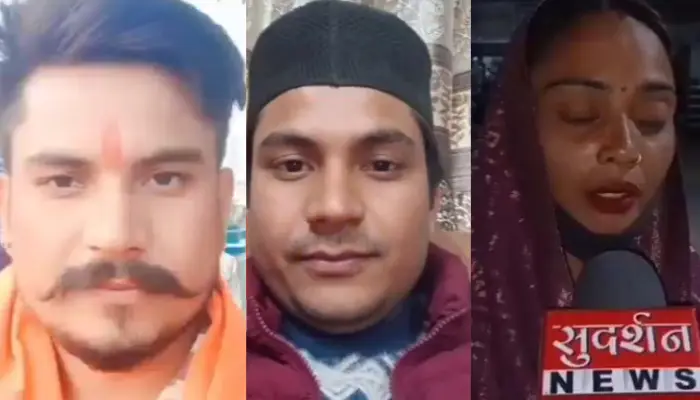
Case Summary
In Muzaffarnagar, Uttar Pradesh, a Hindu man named Ravish Kumar, who belongs to the Dalit community, was forcibly converted to Islam after being drugged, having obscene photographs and videos taken of him, and being blackmailed with the material by Muslims. The victim was also subjected to casteist abuse by the Muslim perpetrators. They also threatened him by saying that they had already converted many Dalit and Jat Hindus to Islam and would convert a large number of Hindus in future. According to media reports, the incident came to light after the victim's wife spoke publicly to the media and sought help, stating that her husband had gone missing following the ordeal. She said that Ravish Kumar worked for a finance company and had visited the house of a Muslim mother and daughter in Mehmood Nagar in connection with a work-related matter. During the visit, the two drugged him, took obscene photographs and videos with him, and then used those images to blackmail him and pressure him into converting to Islam. Following this, the Muslim mother-daughter duo continued blackmailing Ravish Kumar and financially exploited him by extorting large sums of money from him. According to the victim's wife, her husband told her that the accused repeatedly threatened him with the obscene photographs and videos and used them to keep him under their control. She further stated that the accused forcibly took Ravish Kumar to a mosque in the Malipur area of Uttar Pradesh, where he was forcibly converted to Islam against his will. According to her account, he was also forced to offer namaz and perform Islamic religious practices while remaining under constant threats and blackmail. According to the victim's wife, Ravish Kumar began receiving repeated death threats after his forced conversion to Islam. She said that two Muslim youths, identified as Tufail and Ashraf from Delhi, threatened to kill him and continuously intimidated him. She further stated that the perpetrators hurled casteist slurs at the victim, telling him, "We Muslims have converted so many Dalits and Jats across the entire Baghpat area and other parts of Uttar Pradesh. What can you Ch*mars (caste-based abuse hurled at Dalits) do to us?" Ravish Kumar lived under constant fear due to these threats and, amid the ongoing intimidation and blackmail, suddenly went missing. Distressed by the situation, his wife approached the local police station and lodged a complaint seeking action against the accused. Before-and-after photographs of Ravish Kumar also surfaced on social media. In the photographs said to be from before the conversion, he was seen wearing a tilak and displaying Hindu religious symbols. In the photographs shared after the conversion, he was seen wearing a skullcap, offering namaz, and participating in Islamic religious practices. These images were widely circulated online in connection with the case. Regarding the matter, the Muzaffarnagar Police issued a statement through its official X handle, stating that, based on the written complaint submitted by the victim's wife at the Civil Lines Police Station, a First Information Report had been registered on 29 May 2026 under the relevant provisions of the Bharatiya Nyaya Sanhita. The police further stated that the complaint was being investigated and that appropriate legal action would be taken based on the findings of the investigation.
Why it is Hate Crime ?
The first primary category selected in this case is: Predatory Proselytisation. The subcategory selected under this is: Harassment, threats, coercion for conversion. Harassment covers a wide range of behaviours of an offensive nature. It is commonly understood as behaviour that demeans, humiliates, and intimidates a person, including threats and coercion. Harassment and threats, in this case, find their root on discriminatory grounds which has the effect of nullifying a person’s rights or infringing upon his freedom to exercise his right specifically owing to the victim’s religious identity. Verbal and physical threats and psychological or physical harassment are often used against Hindu victims because they choose to practice their professed religion. Religious harassment also includes forced and involuntary conversions by harassment, threats or coercion. Coercion includes intimidatory tactics like force-feeding a Hindu victim beef to convert to another religion, forceful circumcision etc. In several cases documented, non-Hindu perpetrators or those who harbour specific animosity towards Hinduism, harass victims simply based on their religious identity. Such cases often also include harassment to ensure the Hindu victim abandons his/her professed religion and adopts the religion of the perpetrator. Such cases where Hindu victims are harassed to convert to the perpetrator’s religion are rooted in animosity towards the victim’s religious identity and are therefore documented as religiously motivated hate crimes. The second primary category selected in this case is: Hate speech against Hindus. The subcategory selected is: Anti-Hindu slurs, mocking faith. Anti-Hindu slurs and the deliberate mocking of the Hindu faith owing to religious animosity involve the usage of derogatory terms, stereotypes, or offensive references to religious practices, symbols, or figures. One of the common anti-Hindu slurs used against Hindus is “cow-worshipper” and “cow piss drinker”. The intention of using this term is to demean and mock Hindus as a group and their religious beliefs since Hindus consider the cow holy. Additionally, some symbols and the slurs attached to them have a historical context that exacerbates the insult, hate, stereotyping, dehumanisation and oppression against Hindus. Cow worship has been used for centuries to denigrate Hindus, insult their faith and oppress Hindus specifically as a religious group. There has been overwhelming documentation about how cow slaughter has been used to persecute Hindus with cow meat being thrown in temples and places of worship. There has also been overwhelming documentation where cow meat (beef) has been force-fed to Hindus to either forcefully convert them to Islam or denigrate their faith. Apart from cow worship, the Swastika – which holds deep religious significance for the Hindus – has also been misinterpreted and distorted to use as a slur against Hindus. Similarly, the worship of the Shivling has been used by supremacist ideologies and religions to denigrate Hindus owing to religious animosity. Such slurs and denigration stem out of inherent animosity and hate towards Hindus and their faith, therefore, it is categorised as hate speech targeted at Hindus specifically owing to their religious identity. This case is a clear example of a religiously motivated hate crime because the Muslim perpetrators targeted a Hindu victim, drugged him, took obscene photographs and videos of him, and then used that material to blackmail, threaten, and pressure him into converting to Islam. The victim was also subjected to casteist abuse, intimidation, and threats throughout the ordeal. Taken together, these actions demonstrate that the victim's religious identity was not incidental to the crime but was central to it. The combination of coercion, forced religious conversion, intimidation, and abuse directed at a Hindu individual demonstrates that the crime is rooted in hostility towards the victim's religious identity and therefore fits the parameters of a religiously motivated hate crime. Firstly, the circumstances surrounding the initial targeting of the victim are significant. The Hindu victim had visited the perpetrators' residence solely for work-related and professional purposes. However, instead of treating him as a professional visitor, the Muslim perpetrators identified him as a Hindu, drugged him, and took obscene photographs and videos while he was in a vulnerable state. These images were then used as tools of blackmail. The blackmailing was not merely an act of financial exploitation; rather, it formed part of a broader pattern of coercion aimed at forcing the victim to abandon his Hindu faith. The manner in which the victim was entrapped, manipulated, and placed in a position of extreme vulnerability demonstrates a deliberate and coordinated effort to exert control over him for the purpose of religious conversion. Such conduct reflects the predatory nature of the crime and reinforces its religiously motivated character. The act of forcing the victim to convert through blackmail and threats further strengthens the hate crime dimension of the case. The victim was pressured with the threat that the obscene material would be circulated publicly if he did not comply. Conversion obtained through coercion, intimidation, and blackmail is fundamentally different from an individual's free exercise of religious choice. Here, in this case, the perpetrators sought to strip the victim of his Hindu identity and compel him to adopt a different faith against his will. Such actions demonstrate that the perpetrators saw the victim's native Hindu faith as something inferior that needed to be forcibly wiped off from his life. Forced conversion of this nature infringes upon an individual's religious autonomy, freedom of conscience, and fundamental rights. When coercion is employed specifically to make a person renounce their faith, it takes on the character of a religiously motivated hate crime directed at that individual's religious identity. The victim was taken to a mosque and compelled to undergo conversion-related religious practices. He was made to participate in Islamic customs, wear attire associated with the faith, wear a skullcap, and offer namaz. These practices were not undertaken voluntarily but were imposed upon him while he remained under pressure and threat. The forcible imposition of Islamic religious customs and rituals on the victim was an attempt to dismantle the victim's existing religious identity step by step and replace it with Islam. Such conduct goes beyond personal intimidation and enters the realm of religious coercion. The forced adoption of religious practices by a person who does not consent to them represents a serious violation of religious freedom and supports the conclusion that the victim was targeted because of his faith, making the incident a clear example of a religiously motivated crime. Even after the conversion, the victim continued to receive death threats. Rather than ending once the conversion had taken place, the intimidation persisted, creating an ongoing atmosphere of fear, vulnerability, and psychological pressure. Such threats compounded the trauma already experienced by the victim and reinforced his sense of insecurity. The continuation of threats after the conversion suggests that the perpetrators sought not only to force a change in religious identity but also to maintain control through fear. The threats were linked to his status as a Hindu and his resistance to the coercion he faced. Hence, they further strengthen the argument that the incident constituted a hate crime motivated by hostility towards his religious identity. Another significant aspect of the case concerns the statements made by the Muslim perpetrators regarding the conversion of Dalits and Jats. The perpetrators openly boasted that they had converted many Dalits and Jats to Islam and would continue doing so. These statements demonstrate that the forced conversion of Hindus was viewed not with remorse or secrecy but with pride and satisfaction. The remarks portray the conversion of members of Hindu communities as an achievement worthy of celebration and repetition, normalising and glorifying the coercive conversion of Hindus rather than treating it as a wrongful act. Such a mindset fosters an environment in which forced proselytisation and coercive religious conversions are encouraged and viewed as desirable outcomes, thereby creating conditions that facilitate similar hate crimes against Hindus on a wider scale. This transforms the incident from an isolated act against one individual into part of a broader pattern in which the conversion of Hindus is treated as a source of prestige and accomplishment. Such rhetoric displays overt hostility towards Hindu identity and reflects a mindset that celebrates the erosion of that identity, thereby reinforcing the hate-based character of the incident. The use of casteist slurs against the victim further highlights the hostility underlying the conduct. It can be argued by some that a caste-specific slur is aimed at the victim's micro identity of belonging to the Dalit section of the Hindu community and not his Hindu identity itself. However, as far as Abrahamic religions are concerned, the micro identities of caste, region, and language are secondary. It is the religious identity that drives the animosity of the perpetrators against the Hindu victim. In this case, while the perpetrators hurled caste abuses at Ravish Kumar, the animosity was driven by hostility towards Hinduism and Hindus. Therefore, these casteist slurs functioned as anti-Hindu hate slurs directed at the victim because of his Hindu identity rather than merely his caste identity. The use of such slurs in the context of blackmail, coercion, threats, and forced religious conversion further makes the religious hate element of the crime even more evident. Finally, the fact that the victim subsequently went missing adds a particularly alarming dimension to the case. According to the information available, he disappeared after enduring blackmail, coercion, threats, abuse, and forced conversion. The disappearance heightened concerns about his safety and well-being and underscored the severe consequences that arise when a Hindu individual is subjected to sustained intimidation. The sequence of events raises concerns about the danger faced by the victim and the extent of the pressure he was placed under because of his religious identity. The disappearance therefore serves as a further indicator of the seriousness of the targeting and the risks associated with the hostility directed towards him. Such instances of forced proselytisation are manifestations of doctrinal hostility embedded within Abrahamic religions like Islam that regard non-adherents as inferior and encourage their conversion. This leads to the dehumanisation of those who do not share the faith and creates an environment in which coercive conversion, intimidation, and blackmail become instruments for stripping Hindu individuals of their religious identity. In this case, the entire sequence of events, from the targeting of Ravish Kumar to the blackmail, threats, coercion, and forced conversion, was rooted in hostility towards the victim because of his Hindu identity. Therefore, this case is being added to the hate crime database of the Hinduphobia Tracker. Disclaimer: The Hinduphobia Tracker records the date of an incident based on when the victim's ordeal begins, rather than the date on which the incident is reported by the media. However, in the present case, media reports do not specify the exact date on which the victim's ordeal commenced. Accordingly, 10 June 2026, the date on which the incident first came to light through media coverage, has been selected as the indicative incident date for documentation and database purposes only.
Victim Details
Total Victim
1
Deceased
0
Gender
- Male 1
- Female 0
- Third Gender 0
- Unknown 0
Caste
- SC/ST 1
- OBC 0
- General 0
- Unknown 0
Age Group
- Minor 0
- Adult 1
- Senior Citizen 0
- Unknown 0


Case Status
Complaint registered


Perpetrators Details
Perpetrators
Muslim Extremists
Perpetrators Range
From 2 To 5
Perpetrators Gender
both
 Sources




