Hindu woman deceived by Muslim man posing as Hindu, sexually exploited and pressured into Islamic practices, accused admits being part of a grooming gang
 Bareilly, Uttar Pradesh, India
  5 June, 2026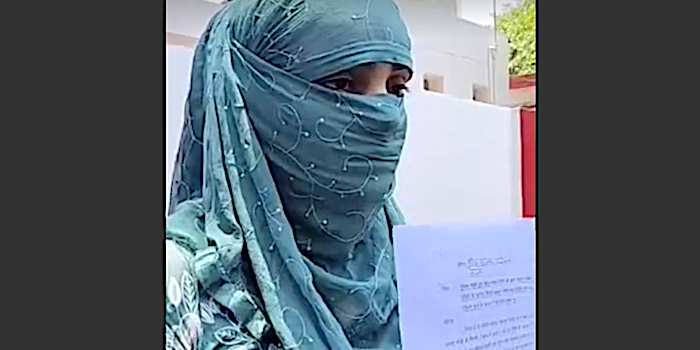
Case Summary
A Hindu woman in Bareilly, Uttar Pradesh, was deceived into a relationship by a Muslim man who concealed his religious identity and presented himself as a Hindu. The victim entered a relationship on the understanding that she was involved with a Hindu man and marriage would follow. Over time, she discovered that the man had hidden crucial facts about his identity and personal life while maintaining control over her through deception, threats, and coercion. The Hindu woman, a resident of Sanjay Nagar in Bareilly, came into contact with a man introducing himself as Bobby around one and a half years before the complaint was filed. She stated that she met him while visiting her grandmother's house in the Shahdana area. During this period, the man persistently followed her for approximately one and a half months before approaching her and seeking friendship. The woman accepted the friendship, believing that he was a Hindu man named Bobby. As their association developed, the Muslim man strengthened her trust by assuring her that he intended to marry her. On the basis of these assurances, he persuaded her to leave with him and move into the accommodation arranged by him in the Nakatiya area of Bareilly. The Hindu woman stated that she remained with him for nearly a year under the belief that marriage would take place. Throughout this period, he continued to reassure her that he would marry her while maintaining the relationship on that promise. The Hindu woman later stated that during the period they lived together, he repeatedly exploited her sexually while continuing to postpone marriage. She said that he regularly assured her that the marriage would take place soon, thereby keeping her committed to the relationship. During this period, she remained unaware of his true religious identity and believed that he was the Hindu man he had introduced himself as at the beginning of their association. To maintain control over her, the Muslim man also created obscene photographs and videos of the Hindu woman. She stated that these recordings were subsequently used to blackmail her and prevent her from speaking out or leaving the relationship. According to her complaint, he threatened to make the material public if she approached the police or disclosed the circumstances of the relationship. She further stated that he took possession of her jewellery, including a gold necklace, mangalsutra, earrings, ring, and a silver anklet, after convincing her that the items would be used in connection with purchasing property in her name. Several months before approaching the authorities, the Hindu woman discovered that the man she knew as Bobby was in fact Arbaaz Khan, a Muslim man and the son of Qayyum. She also learned that he was already married and the father of two children. The revelation fundamentally altered her understanding of the relationship, as she realised that his identity, marital status, and religious background had been concealed from her throughout their association. After learning his true identity, the Hindu woman confronted Arbaaz Khan and demanded that he honour his promise of marriage. She stated that instead of fulfilling those promises, he assaulted her and intensified the threats directed against her. She said he warned that the obscene videos would be circulated publicly if she refused to comply with his demands or challenged him further. The Hindu woman further stated that Arbaaz Khan took her to Sharafat Mian's shrine, compelled her to recite the Kalma, and made her participate in Islamic religious practices there. She stated that these actions took place after he had already established control over her through deception, emotional dependence, blackmail, and threats. The woman said that she was also taken to religious shrines on multiple occasions as part of these efforts. The Hindu woman further stated that when she resisted and objected to these actions, Arbaaz Khan informed her that he was part of a group whose purpose was to target Hindu girls and convert them to Islam. She stated that the pressure to abandon her Hindu faith increased after his true identity became known and after she questioned him about the future of their relationship. The situation escalated further when the woman sought to distance herself from him and considered approaching the authorities. She stated that Arbaaz Khan, along with his associate Arish, his sister Simran, and his brother-in-law Raja, repeatedly threatened her with serious consequences if she pursued legal action or disclosed the details publicly. According to her complaint, the threats included warnings of defamation as well as threats to her life. Fearing for her safety and seeking legal intervention, the Hindu woman approached the Senior Superintendent of Police in Bareilly and submitted a written complaint detailing the events. In her complaint, she described the sequence of deception, the concealment of religious identity, the promise of marriage, the prolonged physical exploitation, the creation of obscene videos for blackmail, the coercive religious practices, the pressure to convert to Islam, and the threats that followed after she discovered the truth. The woman stated that she no longer wished to maintain any connection with Arbaaz Khan and requested strict legal action against him and those who had assisted or threatened her. Following the submission of her complaint, police initiated an investigation into the matter and began examining the allegations and evidence presented by the victim. The case remained under investigation while authorities proceeded with further action based on the complaint and findings.
Why it is Hate Crime ?
This case has been added to the tracker under the primary category - Crimes against women in relationships and other sexual crimes. Within this, the subcategory selected is - Man pretends to be Hindu. Under this, the tertiary category selected is - Name changed. When a non-Hindu man pretends to be a Hindu to deceive a Hindu woman into a relationship, the act is seen as triggered by malafide intentions. In some cases, the woman eventually accepts the man’s original religious identity and converts after the man’s identity is revealed. These cases could be argued as cases of religious brainwashing and a result of the pressure a woman feels after getting into a relationship with a man. The woman, it can be argued, also changed her religious identity because of the stigma she believes she might face if she chooses to walk out of a deceptive relationship. However, for the purpose of documenting hate crimes, the cases in this subcategory are limited to those where there is explicit violence aimed at religious conversion against the wishes of the victim (force-feeding beef, blackmailing with intimate videos, rape on refusal to convert, etc), or if the woman herself complains of the man’s religious deception. In such cases, it is established that the deception of the non-Hindu man had a specific aim of religious conversion or targeting of the victim due to her Hindu religious identity, therefore, making it a religiously motivated hate crime. The other subcategory selected in this case is - Forced conversion before marriage. Under this, the tertiary categories selected are - Forced to go to mosque and forced to follow non-Hindu religious practices. In such cases, a non-Hindu man is in a relationship with a Hindu woman when the pressure to convert her religion begins to manifest. In such cases, typically, two patterns emerge. First, when the relationship is consensual, and the religious identity of the perpetrator is known to the Hindu woman in the relationship, however, at some point during the relationship, the non-Hindu man starts to force the victim to convert her religion and give up her Hindu religious identity. The second is when the woman gets into a marriage with the man pretending to share her faith. Later, when the truth is revealed, the man starts pressuring the woman to convert her religion and give up her religious identity. In both the situations, the methods used to force the victim to convert her religion often revolve around force-feeding beef, forcing her to wear hijab, forcing her to read the Kalma or even pressurizing the victim to do ‘Nikah’, which is marriage under Islamic law, with a prerequisite being conversion to Islam. Cases where a Hindu woman consensually converts to Islam in a relationship will be left out of the hate crime database, even though it could be argued in several cases that the conversion was a result of religious brainwashing. The other subcategory selected in this case is - Blackmailed to convert. When Hindu women are in a relationship with non-Hindu men, there are cases where the woman is blackmailed to convert her religion, owing to her religious identity of being a Hindu. Such relationships may be consensual with the religious identity of the non-Hindu man known to the victim, however, there could be cases where the relationship is not consensual and the non-Hindu man starts blackmailing a Hindu woman to convert her religion. In these cases, it is often seen that the Hindu woman is blackmailed with intimate photos and/or videos, threats of harm to her or her family, threats of violence etc. Such cases are driven by specific religious motivations and against the religious identity of the victim and are therefore qualified as hate crimes. The other subcategory selected in this case is - Assault or threat upon refusal to convert. When Hindu women are in a relationship with non-Hindu men, there are cases where the woman faces threats or assault after she refuses to convert and change her religious identity owing to pressure/force by the non-Hindu man. Such relationships may be consensual with the religious identity of the non-Hindu man known to the victim. Somewhere along the relationship, the non-Hindu man starts pressurising the Hindu woman to convert to Islam and upon her refusal, assaults or threatens the victim. Such cases are driven by specific religious motivations and against the religious identity of the victim and are therefore qualified as hate crimes. Cases where the Hindu woman converts to Islam and does not file a complaint about the force or threat, are not considered a part of the hate tracker, even though, it may be argued that the woman was brainwashed or threatened to convert to Islam. This case has been included in the tracker because the available facts indicate that deception, sexual exploitation, blackmail, and coercion were allegedly used against a Hindu woman in a manner that directly targeted her religious identity. The complaint does not describe a consensual interfaith relationship in which both parties entered the relationship with full knowledge of each other's identities. Instead, it describes a situation in which the Muslim man concealed his religious identity, presented himself as a Hindu, and built the relationship on that false representation. The concealment of identity is a significant religious marker in this case. According to the complaint, the victim entered the relationship believing that she was involved with a Hindu man named Bobby. The fact that Arbaaz Khan allegedly hid not only his religious identity but also his marital status suggests that the relationship was built on deception from the outset. Had the victim been informed of these facts at the beginning, she may have made different decisions regarding the relationship. The deliberate concealment of religious identity raises questions about whether the deception was intended to overcome resistance that might otherwise have existed. The religious dimension became even more apparent after the victim discovered his true identity. According to the complaint, she was taken to religious shrines, compelled to recite the Kalma, and made to participate in Islamic religious practices against her wishes. These actions were significant because they went beyond personal exploitation and directly targeted her religious identity. The objective was not merely to maintain control over the victim but to draw her away from her existing faith and towards another religious identity. The repeated pressure to participate in Islamic practices demonstrates a conscious effort to weaken her attachment to Hinduism and replace it with an Islamic identity. Another important religious marker is the statement attributed to the accused that he was part of a group whose purpose was to target Hindu girls and convert them to Islam. If established, this statement is highly significant because it transforms the incident from an individual act of deception into part of a broader ideological effort directed at Hindu women because of their religious identity. It indicates that the victim was not targeted randomly but because she belonged to a particular faith community. The complaint further suggests that deception, emotional dependence, sexual exploitation, blackmail, and threats were used in combination to maintain control over the victim. The creation of obscene videos, threats to circulate them publicly, and threats to her life allegedly served as tools to prevent resistance and ensure compliance. Such methods are frequently seen in predatory conversion cases where the victim's ability to freely refuse religious pressure is gradually eroded through fear, dependency, and intimidation. The case also reflects a pattern documented in numerous other incidents where Hindu women are targeted through false identities, promises of marriage, prolonged emotional manipulation, and subsequent pressure to convert. In such cases, the relationship itself functions as the mechanism through which religious influence is established. The eventual pressure to abandon Hindu beliefs and participate in Islamic religious practices reveals that the objective extends beyond the relationship and enters the realm of religious transformation. It is important to understand that such acts are carried out by Muslim perpetrators due to indoctrination by the Islamic theology, which advocates that all non-Muslims (referred to as kafirs) are inferior and subject to subjugation unless they convert to Islam or live under Islamic rule (dhimmitude). These ideas are not mere abstractions; they manifest in actions where non-Muslims, especially Hindus in India, are seen as targets for religious domination, coercion, or humiliation. This theological framework fosters an "us versus them" mindset, in which any assertion of Hindu identity or religious freedom is seen not only as undesirable but as a threat to Islamic supremacy. As a result, perpetrators who are shaped by such teachings feel justified, even morally obligated, to harass, suppress, or violently attack Hindus, particularly when Hindus assert their religious rights or resist conversion. Such acts, therefore, are not isolated but driven by a broader ideological hostility towards Hindus as non-believers and reflect an attempt to impose religious dominance. Having said this, the statement that the accused was part of a group that targeted Hindu girls for conversion further reinforces concerns that the conduct was driven by ideological hostility towards Hindu religious identity and an attempt to impose religious dominance rather than by genuine personal affection alone. For these reasons, the case has been included in the tracker as a religiously motivated hate crime. Disclaimer: The exact date of when the Hindu woman and the Muslim perpetrator first came into contact was not specified in the available sources. However, the incident became publicly known through reports published on 6th June 2026. Accordingly, the Hinduphobia Tracker has recorded the respective date as the incident date for documentation purposes only.
Victim Details
Total Victim
1
Deceased
0
Gender
- Male 0
- Female 1
- Third Gender 0
- Unknown 0
Caste
- SC/ST 0
- OBC 0
- General 0
- Unknown 1
Age Group
- Minor 0
- Adult 1
- Senior Citizen 0
- Unknown 0


Case Status
Complaint filed


Perpetrators Details
Perpetrators
Muslim Extremists
Perpetrators Range
From 2 To 5
Perpetrators Gender
both
 Sources




