Hindu students targeted after Muslim classmates attempt to make them consume beef at school in Goalpara, Assam
 Goalpara, Assam, India
  4 June, 2026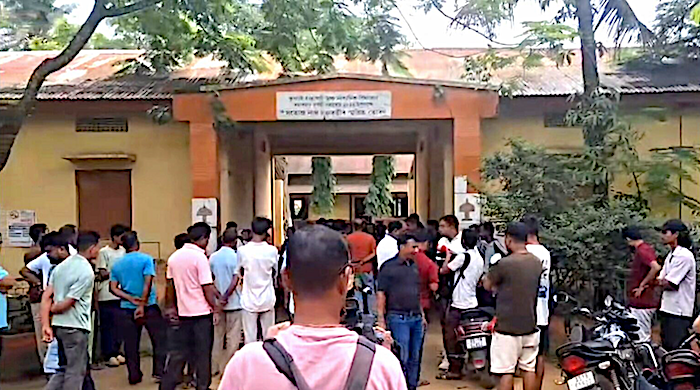
Case Summary
In Krishnai of Goalpara district, Assam, two Hindu students were targeted inside their school after their Muslim classmates brought beef onto the school premises and attempted to make them consume it. The incident unfolded during the school lunch break and left the affected Hindu students distressed. The incident occurred on 5 June 2026, at the Habraghat Higher Secondary School in Krishnai, Assam, when five Muslim students studying in Class IX brought beef to school in their tiffin boxes and consumed it on the premises. During this time, they approached two Hindu classmates and attempted to forcibly make them consume the beef as well. They picked up pieces of the beef on a spoon and brought it towards the mouths of the two Hindu students. Realising that it was beef, the Hindu students knocked the spoon away, causing the meat to fall to the ground, after which they stamped on it and walked away. The incident caused considerable distress to the victims, with family members later stating that one of the students did not eat anything after returning home. Following the incident, the two Hindu students informed a teacher about what had happened. The matter was brought to the attention of the school authorities. However, the Hindu students were advised not to speak further about the incident and were told that raising the matter publicly could escalate tensions and create a larger controversy. No immediate public disclosure of the incident took place within the school. After returning home, the Hindu students informed their families about the events that had occurred at the school. Their families learned that the students had been subjected to attempts to make them consume beef, leading to anger among parents and local residents. The matter soon became public, prompting members of the local community to gather at the school and demand accountability from both the accused students and the school administration. On the following day, parents and local residents gathered at the school seeking accountability regarding the treatment of the Hindu students. Family members stated that the Hindu students had been pressured into an act they considered religiously unacceptable. One of the affected students stopped eating after the incident because of the distress caused by the events at school. Questions were also raised about how beef had been brought onto school premises and why multiple students had arrived carrying it on the same day. Public discussion intensified as details of the incident spread through the locality. The matter generated significant concern among parents and residents in Krishnai and the surrounding areas. The families of the affected Hindu students approached Krishnai Police Station and lodged a complaint regarding the incident. A First Information Report was subsequently filed. Following the registration of the case, police brought the five Muslim students and their guardians to the police station for questioning. During the investigation, the mother of one of the students, Nur Sahida Begum, was arrested and sent to judicial custody. Senior district officials, including the District Commissioner and Superintendent of Police, visited the school to assess the situation. Residents demanded strict action against those involved and called for a thorough investigation. Local demands were also raised for disciplinary action within the school. Authorities later issued directions restricting students from bringing meat and fish in school tiffins, while permitting vegetarian food and eggs. The investigation into the incident remained ongoing. School authorities later stated that the students involved had been counselled, written undertakings had been obtained from them promising not to repeat such conduct, and they had been forgiven because it was considered a first offence. The principal also stressed the need for parents to monitor the contents of their children's tiffin boxes more carefully.
Why it is Hate Crime ?
This case has been added to the tracker under the primary category - Attack not resulting in death. Within this, the subcategory selected is - Attacked for Hindu identity. In several cases, Hindus are attacked merely for their Hindu identity without any perceived provocation. A classic example of this category of religiously motivated hate crime is a murder in 2016. 7 ISIS terrorists were convicted for shooting a school principal in Kanpur because they got ‘triggered’ seeing the Kalava on his wrist and tilak that he had put. In this, the Hindu victim had offered no provocation except for his Hindu religious identity. The motivation for the murder was purely religious, driven by religious supremacy. Such cases where Hindus are targeted merely for their religious identity would be documented as a hate crime under this category. This case qualified as a religiously motivated hate crime because the conduct was directed at Hindu students because of their religious identity and involved an act that directly conflicted with their religious beliefs. The Muslim students brought beef to school and attempted to make two Hindu students consume it despite the well-known religious significance of the cow within Hinduism. The deliberate selection of Hindu students as targets demonstrated that the conduct was not random or indiscriminate. The act derived its significance precisely because the victims were Hindu, making their religious identity central to the targeting. The incident carried a strong element of religious hostility because the sanctity of the cow occupies a unique and deeply revered position in Hindu religious life. For many Hindus, consuming beef is not simply a dietary matter but a profound violation of religious conviction and sacred values. The attempt to force Hindu students to consume beef therefore represented a direct attack on beliefs that are fundamental to their religious identity. The conduct showed clear disregard for Hindu religious sensitivities and demonstrated an intention to humiliate, provoke, or violate Hindu students through an act known to be deeply offensive within their faith. For many Hindus, abstaining from beef is an integral part of devotion and spiritual observance. Violating this discipline is not merely a breach of etiquette but an assault on the cultural and spiritual identity of Hindus. Such deliberate defilement of a Hindu religious practice is not a neutral or isolated act, but it reflects conscious contempt for Hindu beliefs and demonstrates the underlying religious hostility that the Muslim students harboured against the Hindu students. The targeting of minor Hindu students further highlighted the religious nature of the incident. The victims were approached specifically because they were Hindus and were pressured to participate in an act contrary to their religious beliefs. The perpetrators understood that the act would carry little significance if directed towards those who did not attach religious importance to the cow. Its impact depended entirely upon the Hindu identity of the victims. This establishes that the conduct was directed not merely at individuals but at individuals because they belonged to the Hindu faith. The incident also reflected an attempt to undermine the ability of Hindu students to freely practise and adhere to their religious convictions. By attempting to force a religiously prohibited act upon them, the perpetrators sought to override the victims’ faith-based choices and compel conduct that directly conflicted with their beliefs. Such actions go beyond ordinary bullying or student misconduct because they specifically targeted a protected aspect of the victims’ religious identity and sought to violate it. Therefore, the deliberate targeting of Hindu students, the attempt to force them to consume beef despite its sacred significance within Hinduism, and the complete disregard shown towards their religious convictions demonstrated clear religious animosity. The victims were selected because they were Hindus, and the act itself was designed around a practice known to be deeply offensive to Hindu beliefs, establishing the religiously motivated nature of the incident and justifying its inclusion under the categories of attack not resulting in death and attacked for Hindu identity.
Victim Details
Total Victim
2
Deceased
0
Gender
- Male 0
- Female 0
- Third Gender 0
- Unknown 2
Caste
- SC/ST 0
- OBC 0
- General 0
- Unknown 2
Age Group
- Minor 2
- Adult 0
- Senior Citizen 0
- Unknown 0


Case Status
Case sub-judice


Perpetrators Details
Perpetrators
Muslim Extremists
Perpetrators Range
From 5 to 10
Perpetrators Gender
unknown
 Sources




