Hindu man brainwashed and forcibly converted by Muslim woman linked to Pakistan-connected conversion network; his family threatened for refusing conversion
 Shamli, Uttar Pradesh, India
  3 June, 2021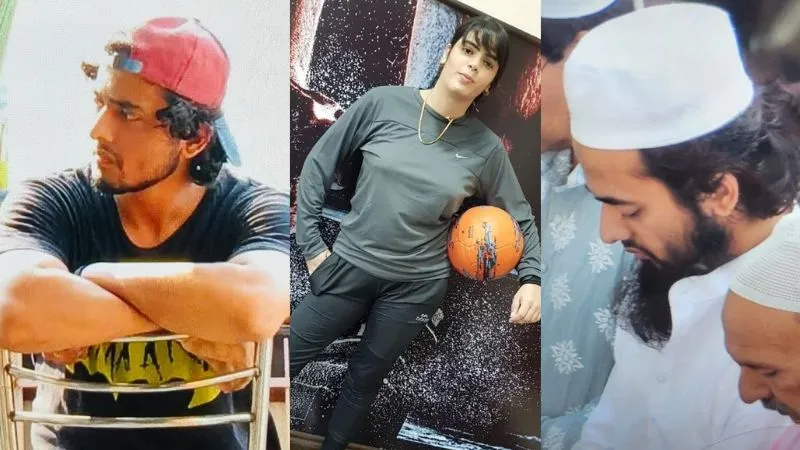
Case Summary
In Shamli, Uttar Pradesh, a Hindu man was lured into a relationship by a female Muslim gym trainer, who forcibly converted him to Islam, financially exploited him, and subjected him to sustained religious indoctrination over several years. The Hindu victim's family was also pressured to convert to Islam and received threats when they resisted. The investigation revealed connections to Pakistan, the involvement of Islamic fundamentalists, and the participation of a conversion network that included three clerics who were involved in the religious indoctrination and conversion. The victim, 27-year-old Ayush Malik, son of pharmaceutical businessman and District Chemist Association President Devraj Malik, came into contact with a Muslim woman named Chandni Qureshi, a trainer at Qureshi Plus Gym, around five years ago, in 2021. Ayush, who holds a Bachelor of Pharmacy degree and runs Bharat Medical Store, was targeted and lured into a relationship by the accused, Chandni. According to Devraj's complaint, Chandni and her relatives cultivated a relationship with Ayush and systematically brainwashed him into converting to Islam. The family stated that his name was changed to Rehman, while the Shamli Superintendent of Police, N. P. Singh, later stated that the complainant had stated that Ayush was now known as Mohammad Ali. The family also stated that his appearance had changed significantly. Ayush grew a beard and regularly wore a Muslim-style white cap and traditional Islamic attire. The family further said that Ayush was coerced into adopting Islamic religious practices, including offering prayers at a mosque. Photographs that later surfaced publicly showed him offering prayers at a mosque and sitting at his medical store dressed in traditional Islamic attire. Devraj Malik stated that Chandni and her family arranged a Nikahnama (Islamic marriage contract) and subsequently used it to exert control over his son, Ayush Malik. He stated that the nikah (Islamic marriage) was performed secretly without their knowledge around four years ago (2022). The victim's father further stated that the accused extracted large sums of money from Ayush over several years and used the funds for personal gain, including the construction of a house. The complaint stated that Ayush's earnings were systematically diverted and that he was manipulated into complying with the accused's demands. The family further stated that the accused were living a luxurious lifestyle using money obtained from Ayush. In his complaint, Devraj Malik stated that the accused not only targeted his son but also attempted to pressure other Hindu family members to convert to Islam. He expressed fears regarding the safety of his family and stated that they had received death threats for refusing conversion. He further stated that the operation involved a wider network and external support. Devraj also expressed concern that the accused could attempt to gain control of or seize family properties in the future. He requested police protection for himself and his family, along with strict legal action against those involved. Based on the complaint, police registered a First Information Report against ten Muslim individuals, including Chandni Qureshi, several members of her family, and three Muslim clerics, some of whom were associated with a mosque near Azad Chowk in Shamli. The accused were booked under various provisions relating to forced religious conversion, cheating, forgery, extortion, organised crime, and criminal intimidation. According to Shamli Superintendent of Police N. P. Singh, police arrested Chandni Qureshi and her father, Islam Qureshi, and sent them to judicial custody. Two days later, the police also arrested Chandni Qureshi's cousin, Taufiq alias Bhola, and sent him to jail. A fake marriage certificate was also recovered from Taufiq. Chandni's sister was among those who remained at large. Police also stated that the role of cleric Munawar and an unidentified individual was being investigated as part of the conspiracy. A Special Investigation Team was constituted to investigate the network and determine the full extent of the conspiracy. Local Intelligence Unit teams were also involved in the investigation. In a statement to the media, Singh revealed a Pakistani connection to the entire case. According to the police, Ayush was brainwashed into embracing Islamic fundamentalist ideology. They confirmed that the investigation revealed that Ayush had subscribed to the YouTube channel of radical Islamic speaker Dr Israr Ahmed. According to Shamli Superintendent of Police N. P. Singh, the investigation showcased that Chandni was the one who introduced Ayush to online content featuring the speeches of Dr Israr Ahmed. Ayush was continuously exposed to his Islamic teachings, which began to influence his thinking about Islam. Notably, the incident first came to public attention after Swami Yashveer Maharaj, a Hindu leader, released a video stating that Ayush Malik had been targeted and converted through a deliberate conspiracy. The matter gained wider public attention after photographs and videos showing Ayush participating in Islamic religious practices began circulating publicly. Swami Yashveer Maharaj also raised concerns that pressure was being exerted on other members of the family to embrace Islam and demanded a thorough investigation into the matter. Following the video's circulation, Hindu organisations protested and supported the family in pursuing legal action. Following this, on 29 June 2026, reports emerged that the victim, Ayush Malik, had returned to Hinduism through a Ghar Wapsi ceremony. A video that surfaced after his return shows Ayush performing Hindu rituals and offering prayers. In the video, he states that although he had converted to Islam, he has now decided, of his own free will, to return to Sanatan Dharma (Hinduism) and live with his family. "I had embraced Islam and changed my religion. But after seeing your pain and keeping my family in mind, I have, of my own free will, returned to Hinduism. I want to live under the care and protection of my family," Ayush says in the video.
Why it is Hate Crime ?
The first primary category selected in this case is: Men attacked for being associated with non-Hindu women. The subcategory selected is: Brainwashed and/or Groomed. The tertiary category selected is: Family claims grooming. In our database, we have not added incidents where men have converted to another religion of their free will and no allegations of forced/involuntary conversion have been made. However, there are certain cases of conversion where the consent itself is a result of the brainwashing or grooming of a minor by the non-Hindu perpetrator trying to victimise a man for his Hindu religious identity. The phenomenon of grooming points to non-Hindu perpetrators identifying their Hindu victims’ vulnerabilities and exploiting them over months and sometimes years, to extract the supposed ‘consent’ in order to convert their religion. In most cases of grooming, the victims are minors or the grooming started when the victim was a minor. In other cases of grooming, the non-Hindu perpetrator brainwashes and grooms a minor victim to extract their trust and then proceeds to rape them repeatedly with the intent of converting them to their faith. It is pertinent to understand here that when the victim is a minor, the ‘consent’ to convert or enter into a romantic relationship with an adult itself is redundant – addressed by POCSO. While every case of conversion of a minor and incident of establishing a physical relationship with a minor by an adult is a crime, for the purpose of this database, a case would be considered a hate crime only if there is a distinct religious angle to the grooming. For example, in the UK, if a Hindu minor is targeted by Pakistani grooming gangs, it would be considered a hate crime because the victims are specifically targeted owing to their non-Muslim religious identity with the perpetrators being Muslim. In other cases, if a Hindu minor is brainwashed into entering a physical relationship with the non-Hindu adult perpetrator and the family alleges grooming/brainwashing of the minor to convert her religion, it would form a part of this database. If the victim is a Hindu adult, the case would form a part of this database only if the victim himself says that he was brainwashed/groomed to convert his religion. However, if the victim is deceased (murdered or otherwise), the case would form a part of this database if his family/friends provided testimony that the victim was brainwashed/groomed to convert his religion. Since these crimes have a distinct religious angle where the victim is being targeted owing to his Hindu religious identity, these cases are considered hate crimes. The other subcategory selected is: Forced to convert before marriage. In such cases, a non-Hindu woman is in a relationship with a Hindu man when the force/pressure against the Hindu man to convert his religion begins to manifest. The relationship in such cases is mostly consensual and the religious identity of the perpetrator is known to the Hindu man in the relationship, however, at some point during the relationship, the non-Hindu woman starts to force/pressure the victim to convert his religion and give up his Hindu identity. In such cases, the methods used to force/pressure the victim to convert his religion often revolve around forcing/pressurizing the man to involuntarily consume beef, forced circumcision, forcing/pressurizing to read the Kalma or even pressurizing the victim to do ‘Nikah’, which is marriage under Islamic law, with a prerequisite being conversion to Islam. Cases where the Hindu man consensually converts to Islam in a relationship will be left out of the hate crime database, even though it could be argued in several cases that the conversion was a result of religious brainwashing. The second primary category selected is: Predatory Proselytisation. The subcategory selected is: Proselytisation by grooming, brainwashing, manipulation or subtle indoctrination. The tertiary category selected is: Family claims grooming. Religious brainwashing essentially means the often subtle and forcible indoctrination to induce someone to give up their religious beliefs to accept contrasting regimented ideas. Religious grooming or brainwashing also involves propaganda and manipulation. It involves the systematic effort, driven by religious malice and indoctrination, to persuade “non-believers’ to accept allegiance, command, or doctrine to and of a contrasting faith. Cases of such grooming or brainwashing are far more nuanced than direct threats, coercion, inducement and violence. In such cases, it is often seen that there is repeated, subtle and continual manipulation of the victim to induce disaffection towards their own faith and acceptance of the contrasting faith of the perpetrator. While subtle indoctrination is widely acknowledged as predatory, an element which is often understated in such conversions or the attempts of such conversion is the role of loyalty and trust which might develop between the perpetrator and the victim. Fiduciary relationships are often abused to affect such religious conversion. For example, an educator transmitting religious doctrine of a competing faith to a Hindu student. The Hindu student is likely to accept what the teacher is transmitting owing to existence of the fiduciary relationship. The exploitation of the fiduciary relationship to religiously indoctrinate victims would also be included in this category. Since the underlying animosity towards the victim’s faith forms the basis of predatory proselytization, such cases are considered religiously motivated hate crimes. The other subcategory selected is: Harassment, threats, coercion for conversion. Harassment covers a wide range of behaviours of an offensive nature. It is commonly understood as behaviour that demeans, humiliates, and intimidates a person, including threats and coercion. Harassment and threats, in this case, find their root on discriminatory grounds which has the effect of nullifying a person’s rights or infringing upon his freedom to exercise his right specifically owing to the victim’s religious identity. Verbal and physical threats and psychological or physical harassment are often used against Hindu victims because they choose to practice their professed religion. Religious harassment also includes forced and involuntary conversions by harassment, threats or coercion. Coercion includes intimidatory tactics like force-feeding a Hindu victim beef to convert to another religion, forceful circumcision etc. In several cases documented, non-Hindu perpetrators or those who harbour specific animosity towards Hinduism, harass victims simply based on their religious identity. Such cases often also include harassment to ensure the Hindu victim abandons his/her professed religion and adopts the religion of the perpetrator. Such cases where Hindu victims are harassed to convert to the perpetrator’s religion are rooted in animosity towards the victim’s religious identity and are therefore documented as religiously motivated hate crimes. This case is a clear example of a religiously motivated hate crime because a Hindu man was lured into a relationship, subjected to sustained religious brainwashing, and ultimately converted to Islam. The victim was exposed to prolonged Islamic indoctrination by the Muslim woman involved in the case and by a broader conversion network that included members of her family and multiple Muslim clerics. The investigation further revealed links to Pakistan and exposure to Islamic fundamentalist ideology. Taken together, these factors indicate that the victim was not merely involved in a personal relationship but was subjected to a systematic process aimed at transforming his religious identity. The objective of this process was the abandonment of his Hindu faith and the adoption of Islam through sustained ideological brainwashing and religious conditioning. The hostility extended beyond the victim himself, as his family stated that they too were pressured to embrace Islam and received death threats when they refused. The targeting of a Hindu individual and his family for religious conversion, coupled with threats and organised ideological coercion, makes this a clear case of a religiously motivated hate crime rooted in anti-Hindu hostility. It is important to note that the Hinduphobia Tracker generally exercises caution in cases involving adult Hindus where allegations of forced conversion are raised solely by family members, since adults are legally capable of making their own religious choices and their own account must be given significant weight. However, this case stands on a different footing. The concerns here did not arise merely from family allegations. The police investigation itself reportedly uncovered links to Pakistan, exposure to Islamic fundamentalist ideology, and the existence of a broader network involving multiple individuals engaged in similar activities. Further, the influence was not confined to a single individual. Reports indicated that the pressure and religious influence extended to other family members as well, suggesting a pattern that went beyond a personal religious decision. These factors lend credence to the view that the incident was not simply an individual's voluntary change of faith but involved systematic grooming, ideological indoctrination, and organised efforts aimed at religious conversion. The presence of a wider network, structured mechanisms of influence, and multiple actors fundamentally alters the character of the case and distinguishes it from ordinary interfaith or individual conversion matters. For this reason, the absence of Ayush Malik's public testimony does not preclude his recognition as a victim in this case. Adults are not immune to manipulation, coercion, or ideological conditioning. Psychological influence, sustained indoctrination, social isolation, and organised grooming can affect individuals regardless of age. The existence of a coordinated network having connections with Pakistan dedicated to influencing an individual's religious beliefs demonstrates that adults can also become targets of conversion efforts designed to reshape their identity and worldview over time. When there is evidence of organised religious indoctrination, international ideological influences, and multiple actors working towards a conversion outcome, the question extends beyond individual consent and enters the realm of systematic religious targeting. In such circumstances, the victim's status as an adult does not negate the possibility that he was subjected to coercive and manipulative processes intended to forcibly alter his religious identity. The facts of the case showcase that the victim was first targeted through a personal relationship. Chandni Qureshi cultivated a relationship with Ayush Malik and gradually drew him into a process that culminated in his conversion to Islam. The relationship was not merely incidental to the conversion but formed the foundation upon which the subsequent religious influence was built. The victim was specifically identified as a Hindu man and was ultimately forcibly converted to Islam. This sequence of events demonstrates that his religious identity was central to the actions taken against him. The targeting of a Hindu individual through an intimate relationship, followed by efforts to alter his faith and religious practices, indicates that the victim was profiled and selected on the basis of his religious identity. This makes the incident a religiously motivated hate crime in which the relationship functioned as a vehicle for religious conversion. The prolonged exposure to religious indoctrination further strengthens the hate crime element of the case. Ayush Malik was repeatedly exposed to the teachings of Islamic fundamentalist preacher Dr Israr Ahmed and was subjected to sustained religious and ideological brainwashing. Such methods go far beyond ordinary religious discussion or personal belief. They represent a deliberate attempt to reshape an individual's worldview and religious identity through continuous exposure to ideological material. The purpose of such indoctrination is not merely persuasion but transformation. By systematically influencing the victim's beliefs and encouraging the abandonment of his Hindu identity, the perpetrators interfered with his religious autonomy and his fundamental right to practise and preserve his own faith. The use of personal relationships and emotional attachment as tools through which religious conversion is pursued makes the conduct particularly coercive. When a person's faith identity becomes the target of sustained ideological pressure, the result is not simply a change in belief but an attack on the individual's religious freedom and cultural identity. This is what makes the conduct hateful in nature. The victim was converted to Islam before being married under Islamic rites, further illustrating how conversion and marriage functioned as a mechanism of control. The conversion was not a separate or incidental development but was closely linked to the subsequent nikah and the broader relationship. The conversion process, therefore, served as a means of establishing religious and personal dominance over the victim. By compelling the abandonment of his original faith before marriage and securing compliance through sustained pressure and manipulation, the accused transformed conversion into a tool of control. The victim's religious identity was not respected as an equal or legitimate part of his life but was instead replaced through a process designed to make him conform to the expectations and demands of the accused individuals and the clerics associated with them. Such conduct reflects hostility towards the victim's original Hindu faith because the conversion process necessarily rests upon the rejection of the religious identity with which the victim was born and raised. This demonstrates that the victim's Hindu identity was treated as something inferior that needed to be discarded and replaced. The conversion, therefore, served not merely as a religious act but as an assertion of dominance over the victim's beliefs, traditions, and sense of self. The use of coercion, indoctrination, psychological influence, and organised pressure to secure such an outcome demonstrates a profound disregard for the victim's religious autonomy, making it a religiously driven hate crime. The fact that Ayush Malik was not the only individual targeted in this case and that members of his family were also pressured to convert and threatened when they refused significantly strengthens the hate crime dimension of the incident. Religious freedom includes not only the right to adopt a faith but also the right to retain one's existing faith without intimidation, coercion, or harassment. When Hindu individuals are pressured to abandon their religion and are threatened for refusing to do so, their religious autonomy is directly undermined. Such conduct demonstrates hostility towards the religious identity of the targeted individuals and an unwillingness to respect their freedom of conscience. The perpetrators' objective extended beyond influencing a single Hindu individual and encompassed attempts to pressure multiple members of a Hindu family into embracing the Islamic faith. This highlights how coercive conversion efforts affect entire Hindu families rather than isolated individuals. Conversion achieved through threats, intimidation, or sustained coercive pressure cannot be regarded as a genuine exercise of religious choice because the decision is no longer being made freely. Instead, the individual's ability to exercise independent judgment is compromised by fear and pressure. This is precisely why such conduct represents a serious violation of religious autonomy and contributes to the hate crime character of the incident. The case details also point to a broader, more organised effort than a simple interpersonal relationship. The investigation referred to a Pakistani connection, exposure to the teachings of Dr Israr Ahmed, the involvement of multiple members of Chandni Qureshi's family, and the participation of several clerics. In total, ten individuals were named in connection with the case. The presence of multiple actors operating towards the same outcome suggests a coordinated conversion effort rather than an isolated dispute between two individuals. The significance of such a network lies in the fact that it targeted a Hindu individual and subsequently extended pressure towards other members of his family. This pattern indicates an effort to expand religious conversion beyond a single person. When conversion efforts are organised, sustained over long periods, involve multiple participants, and are directed at individuals because of their Hindu identity, they acquire a broader communal dimension. Such actions reflect hostility towards the continued existence and preservation of Hindu religious identity and therefore meet the threshold of a religiously motivated hate crime. The case also raises wider concerns regarding organised conversion efforts directed at members of the Hindu community. The case details suggest that the objective was not merely the establishment of a personal relationship but the religious transformation of the victim and the exertion of pressure upon his family. When a person's faith identity becomes the primary target of a sustained campaign involving ideological indoctrination, organised actors, and coercive methods, the conduct transcends private relations and enters the domain of group-based hostility. The focus on altering the religious identity of Hindu individuals demonstrates animosity towards the retention and practice of Hindu beliefs. Taken together, the targeting of a Hindu man, the organised efforts to convert him, the ideological grooming, the involvement of multiple actors, the pressure exerted on his family, and the threats issued against them establish this incident as a clear example of a religiously motivated hate crime. Therefore, this case is being added to the Hinduphobia Tracker's hate crime database. Disclaimer: The Hinduphobia Tracker records incident dates based on when a victim's ordeal begins rather than when the incident is reported by the media. In the present case, media reports have not specified the exact date on which the victim's ordeal began. They only provide the earliest timeline, stating that the events commenced in 2021 when the victim, Ayush Malik, first came into contact with the accused, Chandni Qureshi. The incident was first reported in the media on 4 June 2026. Based on both these pieces of information, 4 June 2021 has been selected as the indicative incident date. This date is recorded for documentation purposes only and should not be construed as the actual date on which the victim's ordeal began. In this case, the Hindu victim, Ayush Malik, and his family were stated to have been targeted for forced religious conversion. However, media reports do not specify the total number of family members who were subjected to pressure or threats. The reports only specifically identify Ayush Malik and his father, Devraj Malik. Accordingly, the victim count has been recorded as two (2). This is a conservative estimate referring only to Ayush Malik and Devraj Malik. This figure is recorded for documentation purposes only.
Victim Details
Total Victim
2
Deceased
0
Gender
- Male 2
- Female 0
- Third Gender 0
- Unknown 0
Caste
- SC/ST 0
- OBC 0
- General 0
- Unknown 2
Age Group
- Minor 0
- Adult 2
- Senior Citizen 0
- Unknown 0


Case Status
Case sub-judice


Perpetrators Details
Perpetrators
Muslim Extremists
Perpetrators Range
From 5 to 10
Perpetrators Gender
both
 Sources




