Vulnerable Hindus targeted through inducements in Christian conversion drive organised under the pretext of prayer meeting
 Sitapur, Uttar Pradesh, India
  4 June, 2026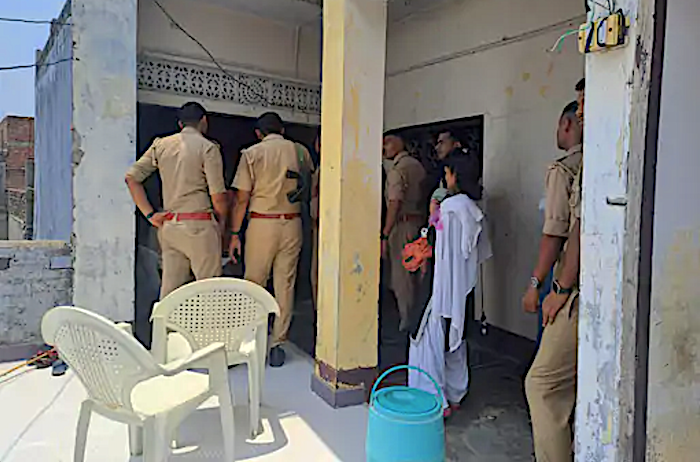
Case Summary
A Hindu community in Misrikh, Sitapur, was found at the centre of a religious conversion operation being conducted from a rented house in Uttar Pradesh. The gathering included multiple individuals who had assembled for a prayer meeting during which conversion activities were taking place. The incident came to light after information was passed to local authorities, leading to a police intervention that halted the programme before it could continue further. The incident occurred in the Misrikh Kotwali area of Sitapur district, Uttar Pradesh. A rented house in Mohalla Thok 3 had been used as the venue for regular religious gatherings that had reportedly grown in size over time. Local residents observed that attendance at these meetings had steadily increased, with people arriving from Misrikh town as well as nearby rural areas. The organiser of the gathering was identified as Surendra, son of Shankar Singh, a resident of Bihar who had been living in the Misrikh area for approximately ten years. According to information gathered during the operation, vulnerable individuals were being brought into contact with the organisers through promises of relief from illness and personal hardships. The programme centred on Christian religious activities and involved the distribution and use of religious literature. The purpose of the gathering was to encourage participants to abandon their existing faith and accept Christianity. A significant number of those present were women, along with other attendees from the surrounding region. The matter came to wider attention after activists associated with the Hindu Sena monitored activities on the premises and informed the police. Acting on this information, police officers reached the location on 5th June 2026 with a large force and entered the house while the gathering was underway. Upon arrival, officers found a prayer meeting in progress and began questioning those present about the nature of the event and the activities taking place. During the search of the premises, police recovered multiple Bibles, religious literature, candles, steel stands, and other Christian religious material. The recovered items were seized for examination as part of the investigation. Officers also identified the organiser and questioned attendees regarding the purpose of the gathering and the activities taking place inside the house. The operation resulted in the detention of approximately 16 women, along with other individuals present at the location. Some reports placed the total number of persons taken into custody between 20 and 25. All those present were transported to the police station for questioning, while statements were recorded as part of the inquiry. The gathering was stopped, and the conversion process was discontinued following the intervention. The police investigation remained ongoing. Circle Officer Brajesh Kumar, Inspector Pradeep Kumar Singh, Town In Charge Guddu Joshi, Crime Inspector Shyam Das, and other officers participated in the operation. Police stated that evidence recovered from the site was being examined and that legal action would be determined based on the investigation's findings. Authorities continued to record statements, verify evidence, and investigate all aspects of the alleged conversion network operating from the rented house.
Why it is Hate Crime ?
This case has been added to the tracker under the primary category- Predatory Proselytisation. Within this, the subcategory selected is - Conversion/attempts to convert by inducements. Predatory Proselytisation is not just limited to threat, harassment, force and violence, but it also has contours of stealth. In several cases, the Hindu victim is exploited to convert, with non-Hindus taking advantage of their poverty. In such cases, the Hindu victim who is suffering financially is offered monetary benefits, including lucrative offers for jobs, health treatment, education, etc, to induce the victim into changing his/her religion. In such cases, the religious identity of the victim and the aim to disenfranchise him from his faith form the heart of the crime. Also, taking advantage of and exploiting an individual’s economic vulnerabilities is widely acknowledged as exploitation, forms of which are often penalised by law. Such cases therefore are considered religiously motivated hate crimes since the victim’s religious identity forms the very heart of the crime itself. This case qualified as a religiously motivated hate crime because the activities discovered in Sitapur were directed towards securing the religious conversion of vulnerable Hindus to Christianity through organised and targeted proselytisation. The significance of the incident lay not merely in the presence of a religious gathering but in the deliberate effort to identify, attract, and influence members of the Hindu community for the purpose of changing their faith. The gathering was centred on Christian religious literature, prayer activities, and conversion-related messaging, demonstrating that the objective extended beyond private religious practice and focused on expanding the Christian faith at the expense of existing Hindu religious identity. Such conduct reflected a conscious effort to penetrate Hindu communities and encourage the abandonment of Hindu beliefs in favour of another religious framework. The religious motivation became particularly evident in the selection of individuals targeted. The conversion activities were directed towards economically weak, sick, and socially vulnerable Hindus, individuals whose hardships made them more susceptible to external influence. Rather than engaging people through theological debate or voluntary religious inquiry, the organisers focused on those facing financial difficulties, illness, or personal distress. This demonstrated a calculated strategy aimed at exploiting vulnerability to achieve religious conversion. The targeting of disadvantaged Hindus showed that the objective was not simply religious outreach but the expansion of Christianity through the recruitment of individuals whose circumstances made resistance more difficult. Such actions carried a clear religious motive because the vulnerability itself became a tool through which Hindu identity could be weakened and replaced. Reports indicated that promises of relief from illness, medical assistance, and other forms of support were used to attract vulnerable individuals into the conversion network. Medical inducements are particularly significant because they exploit fear, desperation, and dependence at moments when individuals are seeking solutions to serious personal hardships. By linking assistance and relief to a process that ultimately encouraged religious conversion, the organisers transformed humanitarian need into an instrument for religious expansion. The objective was not merely to provide aid but to create conditions under which vulnerable Hindus could be persuaded to abandon their existing faith. Such inducements undermine genuine freedom of conscience because decisions about religion become influenced by material and medical dependency rather than independent conviction. The organised nature of the gathering also demonstrated that the activities formed part of a broader conversion effort rather than an isolated interaction. Multiple individuals had assembled, Christian literature and Bibles were present, and attendees had reportedly been drawn from both the town and the surrounding rural areas. This reflected a coordinated attempt to create a sustained network of religious influence capable of reaching a wider Hindu population. The scale of participation indicated that the objective was not limited to individual religious practice but involved actively seeking new converts from among local Hindus. The concentration of such activities within a predominantly Hindu social environment further highlighted that Hindus were the primary focus of the conversion effort. Therefore, the organised proselytisation activities, the deliberate focus on vulnerable Hindus, the use of medical and material inducements, and the structured effort to encourage abandonment of Hindu beliefs established clear evidence of religiously motivated targeting. The incident centred on expanding Christianity through the conversion of Hindus and relied upon exploiting hardship, dependency, and vulnerability to achieve that objective. Therefore, the case displayed clear markers of predatory proselytisation directed at Hindus and constitutes a religiously motivated hate crime against the Hindu community. Disclaimer: Since the exact date on which the conversion activities and targeting of Hindu victims began could not be independently established from available reports and sources, 5th June 2026, the date of publication of the incident report, has been used as the incident date for documentation purposes only. The Hinduphobia Tracker acknowledges that multiple individuals were present and involved in the conversion-related gathering. However, as only Surendra was specifically identified in available reports as the organiser of the event, the perpetrator count has been recorded as 1 in the tracker, while noting that several additional unnamed individuals were also present and are being investigated in connection with the incident.


Case Status
Arrested


Perpetrators Details
Perpetrators
Christian Extremists
Perpetrators Range
One Person
Perpetrators Gender
male
 Sources




