Hindu woman forced to convert to Christianity for marriage by Christian man; her family also pressured for conversion
 Udham Singh Nagar, Uttarakhand, India
  1 June, 2026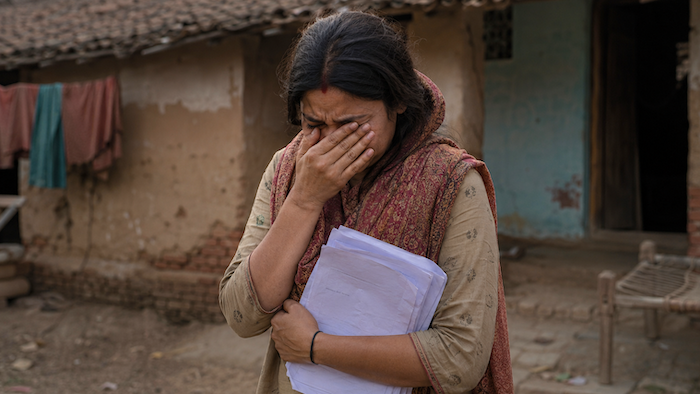
Case Summary
In Gadarpur of Udham Singh Nagar district, Uttarakhand, a Hindu woman named Shwetha was baptised and forced to convert to Christianity for marriage by a Christian man named Rohit. She was also revealed to have been repeatedly harassed, and her family was also pressured for conversion. According to reports, the victim, Shweta, approached the local administration and submitted a complaint stating that a Christian man named Rohit had arranged for her baptism, forced her to convert, and later married her under Christian religious practices. She further stated that after the marriage, she was subjected to continuous harassment and that efforts were also made to pressure members of her family to embrace Christianity as well. Following the complaint, the district administration initiated an inquiry under the directions of the District Magistrate. A district-level committee headed by Additional District Magistrate Kaustubh Mishra, along with Gadarpur Sub-Divisional Magistrate Richa Singh and other officials, visited Chakarpur village and recorded the statements of the complainant and her family members. During the inquiry, officials examined relevant documents and gathered information concerning the circumstances of the conversion, marriage and subsequent treatment of the victim. According to findings recorded during the preliminary investigation, evidence indicated that the victim had undergone baptism and religious conversion before the marriage and that pressure had been exerted upon her and her family in relation to religious conversion. After reviewing the material gathered during the inquiry, officials stated that the allegations appeared to be substantiated on a prima facie basis. Additional District Magistrate Kaustubh Mishra confirmed that a detailed report was being prepared for submission to the District Magistrate and that further action would be taken on the basis of the findings. Subsequently, the police registered an FIR in connection with the matter. Senior Superintendent of Police Ajay Ganpati stated that action against the accused would proceed following examination of the investigation conducted by the Special Investigation Team (SIT).
Why it is Hate Crime ?
This case has been added to the tracker under the primary category of - Crimes against women in relationships and other sexual crimes. Within it, the sub-category selected is - Forced conversion before marriage. In such cases, a non-Hindu man is in a relationship with a Hindu woman when the pressure to convert her religion begins to manifest. In such cases, typically, two patterns emerge. First, when the relationship is consensual, and the religious identity of the perpetrator is known to the Hindu woman in the relationship, however, at some point during the relationship, the non-Hindu man starts to force the victim to convert her religion and give up her Hindu religious identity. The second is when the woman gets into a marriage with the man, pretending to share her faith. Later, when the truth is revealed, the man starts pressuring the woman to convert her religion and give up her religious identity. In both the situations, the methods used to force the victim to convert her religion often revolve around force-feeding beef, forcing her to wear hijab, forcing her to read the Kalma or even pressurizing the victim to do ‘Nikah’, which is marriage under Islamic law, with a prerequisite being conversion to Islam. Cases where a Hindu woman consensually converts to Islam in a relationship will be left out of the hate crime database, even though it could be argued in several cases that the conversion was a result of religious brainwashing. The second primary category selected here - Predatory Proselytisation. Within it, the sub-category selected is - Harassment, threats, coercion for conversion. Harassment covers a wide range of behaviours of an offensive nature. It is commonly understood as behaviour that demeans, humiliates, and intimidates a person, including threats and coercion. Harassment and threats, in this case, find their root on discriminatory grounds which has the effect of nullifying a person’s rights or infringing upon his freedom to exercise his right specifically owing to the victim’s religious identity. Verbal and physical threats and psychological or physical harassment are often used against Hindu victims because they choose to practice their professed religion. Religious harassment also includes forced and involuntary conversions by harassment, threats or coercion. Coercion includes intimidatory tactics like force-feeding a Hindu victim beef to convert to another religion, forceful circumcision etc. In several cases documented, non-Hindu perpetrators or those who harbour specific animosity towards Hinduism, harass victims simply based on their religious identity. Such cases often also include harassment to ensure the Hindu victim abandons his/her professed religion and adopts the religion of the perpetrator. Such cases where Hindu victims are harassed to convert to the perpetrator’s religion are rooted in animosity towards the victim’s religious identity and are therefore documented as religiously motivated hate crimes. This case has been added to the tracker because a Hindu woman from Gadarpur, Uttarakhand, was baptised, converted to Christianity, married after the conversion, and subsequently subjected to harassment. The accused exerted conversion pressure not only on the victim but also on her family members to embrace Christianity. The victim stated that she was baptised and converted to Christianity by Rohit before being married according to Christian customs. The act of facilitating a religious conversion as a prerequisite or precursor to marriage raises serious concerns regarding religiously motivated coercion. The victim was not merely entering into a marital relationship; she was required to abandon her existing religious identity and undergo baptism into another faith. Such conduct goes beyond the sphere of a personal relationship and directly implicates the victim's religious freedom and right to continue practising her own faith without pressure or inducement. The victim's conversion reflects hostility towards her Hindu identity because the accused sought to replace her existing religious beliefs with those of another religion. Pressuring a Hindu individual to renounce Hinduism and adopt Christianity is not simply a matter of religious persuasion when accompanied by coercion, pressure, or conditions attached to marriage. Rather, it represents an attempt to erase the victim's religious identity and compel her to abandon the faith into which she was born and raised. Such actions demonstrate disregard for the victim's religious autonomy and was motivated by prejudice against her continued adherence to Hinduism. The targeting of an individual specifically on the basis of their religious identity transforms the act from a private dispute into one with a clear religious dimension. Furthermore, the victim stated that members of her Hindu family were also pressured to convert to Christianity. This aspect of the case is particularly significant because it demonstrates that the efforts were not limited to the conversion of a single individual. Instead, the pressure extended to her wider family network, indicating an intention to bring additional Hindu individuals into the fold of another religion. Such conduct reflects a broader pattern of religious targeting and demonstrates hostility towards the family's continued practice of Hinduism. The attempt to convert multiple members of a Hindu family underscores the religious nature of the incident and strengthens the indication that the victim and her relatives were targeted because of their religious identity. For these reasons, this case has been included in the tracker under hate crime and religiously motivated targeting. The baptism and conversion of the Hindu woman prior to marriage, the pressure exerted upon her to abandon her faith, the harassment she faced thereafter, and the attempts to convert her Hindu family members collectively demonstrate conduct directed at individuals because of their Hindu religious identity. This systematic attempt to erode the religious foundation of individuals and replace it with allegiance to another faith reflects deep religious malice and animus against the Hindu identity. Because the core motivation of the act stems from hostility toward the victim’s religion, it meets the threshold of a hate crime. Disclaimer: The Hinduphobia Tracker records incidents based on when an event occurred or when the victim's ordeal began. It is important to clarify that none of the media sources covering this case has specified the exact date when the accused pressured the victim and her family for conversion. Therefore, for documentation purposes, we have recorded the date based on when the incident was reported in the media, 2 June 2026. Disclaimer: The Hinduphobia Tracker acknowledges that the victim's family members were also subjected to pressure to convert to Christianity. However, only the primary victim, Shweta, has been explicitly identified in the available sources. Accordingly, the victim count for this case has been recorded as 1. This classification is made solely for documentation and record-keeping purposes and should not be interpreted as a determination regarding the number of individuals affected by the incident.
Victim Details
Total Victim
1
Deceased
0
Gender
- Male 0
- Female 1
- Third Gender 0
- Unknown 0
Caste
- SC/ST 0
- OBC 0
- General 0
- Unknown 1
Age Group
- Minor 0
- Adult 1
- Senior Citizen 0
- Unknown 0


Case Status
Complaint registered


Perpetrators Details
Perpetrators
Christian Extremists
Perpetrators Range
One Person
Perpetrators Gender
male
 Sources




