Hindu religious beliefs mocked; Muslim woman persuades Hindu leader to eat beef
 Gurgaon, Haryana, India
  29 May, 2026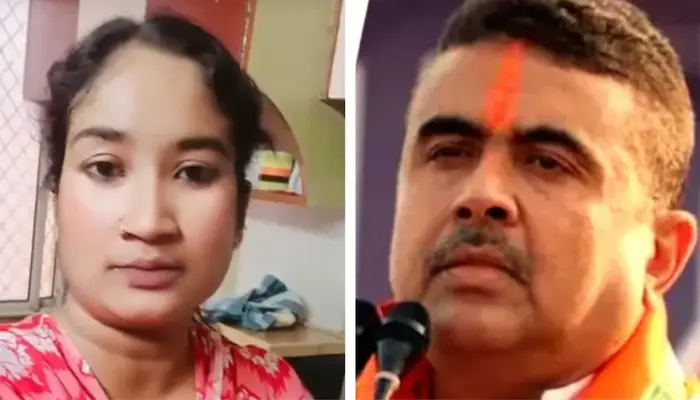
Case Summary
In the Chakkarpur area of Gurugram, Haryana, Hindu sentiments were outraged after the West Bengal Chief Minister, Suvendu Adhikari, was targeted by a Muslim woman named Josna Bibi, who stated that she had cooked beef and invited him to eat it. In the video, Josna Bibi referred to restrictions imposed on animal slaughter ahead of Eid al-Adha in West Bengal and criticised Suvendu Adhikari over these measures. While cooking, she stated that she had prepared beef and invited the Chief Minister to eat it, claiming that Muslims had not been permitted to carry out sacrifices as they wished. She further accused the Chief Minister of going to others' houses and eating meat, and added that she had prepared beef and roti for him and offered to serve rice as well if desired. The video also contained remarks accusing the Chief Minister of targeting and oppressing Muslims. In its concluding portion, Josna Bibi warned that excessive greed would have consequences and claimed that he would be answerable to Allah for his actions. She further accused him of provoking Hindus against Muslims and declared that Allah was watching and would teach him a lesson. Following the circulation of the video, a complaint was lodged with the police. An investigation established that the video had been recorded in Gurugram rather than West Bengal. Acting on the complaint, police traced Josna Bibi to her residence in the Chandralok area of Chakkarpur, took her into custody on 30 May 2026, and initiated legal proceedings.
Why it is Hate Crime ?
This case has been added to the tracker under the primary category - Hate speech against Hindus. Within this, the subcategory selected for this case is - Anti-Hindu slurs/mocking faith. Anti-Hindu slurs and the deliberate mocking of the Hindu faith owing to religious animosity involve the usage of derogatory terms, stereotypes, or offensive references to religious practices, symbols, or figures. One of the common anti-Hindu slurs used against Hindus is “cow-worshipper” and “cow piss drinker”. The intention of using this term is to demean and mock Hindus as a group and their religious beliefs since Hindus consider the cow holy. Additionally, some symbols and the slurs attached to them have a historical context that exacerbates the insult, hate, stereotyping, dehumanisation and oppression against Hindus. Cow worship has been used for centuries to denigrate Hindus, insult their faith and oppress Hindus specifically as a religious group. There has been overwhelming documentation about how cow slaughter has been used to persecute Hindus with cow meat being thrown in temples and places of worship. There has also been overwhelming documentation where cow meat (beef) has been force-fed to Hindus to either forcefully convert them to Islam or denigrate their faith. Apart from cow worship, the Swastika – which holds deep religious significance for the Hindus – has also been misinterpreted and distorted to use as a slur against Hindus. Similarly, the worship of the Shivling has been used by supremacist ideologies and religions to denigrate Hindus owing to religious animosity. Such slurs and denigration stem out of inherent animosity and hate towards Hindus and their faith, therefore, it is categorised as hate speech targeted at Hindus specifically owing to their religious identity. This case has been added to the tracker because it involved the deliberate invocation of a symbol that is held sacred by Hindus in a manner intended to provoke, mock, and express contempt towards Hindu religious beliefs. The accused, Josna Bibi, did not merely engage in political criticism of West Bengal Chief Minister Suvendu Adhikari or express disagreement with government policies. Instead, she centred her message on beef consumption and repeatedly drew attention to having cooked beef while addressing a Hindu public figure. The significance of the incident lies not simply in the discussion of food, but in the conscious use of a substance that many Hindus regard as religiously offensive due to the sacred status of the cow in Hinduism. To understand why the incident constitutes anti-Hindu hostility, it is necessary to recognise the unique position of the cow within Hindu religious tradition. For millions of Hindus, the cow is not merely an animal but an object of reverence associated with religious duty, purity, and sacredness. Respect for the cow forms part of Hindu religious consciousness and has historically occupied an important place in Hindu theology, practice, and culture. Consequently, beef carries a meaning that extends far beyond dietary preference. For many Hindus, the consumption of beef represents the slaughter and consumption of an animal that is regarded as sacred. This religious context is crucial because the accused's statements were framed around beef specifically rather than around food, meat consumption, or dietary habits in general. The fact that Josna Bibi specifically invited Suvendu Adhikari, a Hindu leader, to consume beef is particularly significant. Had the objective merely been to discuss dietary freedom, animal slaughter regulations, or political disagreements, there would have been no reason to repeatedly emphasise beef or personally invite a Hindu individual to consume it. The invitation was directed at a person whose religious background would make the consumption of beef a sacrilege. This transforms the statement from a neutral expression of dietary preference into a targeted act directed at a religious identity. The choice of beef was not incidental to the message; it was the message. The provocative force of the statement depended entirely upon the audience understanding that the cow is sacred in Hinduism and that asking a Hindu to eat beef would be regarded as insulting by many believers. The context in which the remarks were made further reinforces this conclusion. The accused did not merely state that she consumed beef herself. Instead, she used the preparation of beef as a vehicle to ridicule and challenge a Hindu political figure. The repeated references to having cooked beef, preparing beef and roti, and inviting the Chief Minister to partake in the meal were designed to maximise the symbolic impact of the act. Such statements derive their provocative value precisely from the knowledge that the subject matter concerns a religious taboo for many Hindus. Where an individual consciously exploits a religiously sensitive symbol in order to mock, taunt, or demean members of a faith community, the conduct moves beyond ordinary political criticism and enters the realm of religious hostility. The accused also attempted to justify her remarks by alleging that Suvendu Adhikari himself visited other people's homes and consumed meat. However, this argument deliberately blurred the distinction between meat consumption generally and beef consumption specifically. Many Hindus consume meat while simultaneously maintaining religious objections to beef because those objections arise from the sacred status of the cow rather than from vegetarianism alone. By treating all forms of meat as equivalent, the accused disregarded the actual basis of Hindu religious sensitivities and attempted to portray objections to beef as hypocritical. Josna Bibi further criticised restrictions imposed ahead of Eid al-Adha in West Bengal and suggested that Muslims had been prevented from carrying out sacrifices as they wished. However, facts demonstrated that there was never a blanket prohibition on Bakrid or animal sacrifice. Rather, the state government reiterated existing legal requirements regarding cattle slaughter, including certification requirements under applicable law, and restricted public slaughter outside authorised locations. Animals could still be slaughtered at designated facilities in accordance with the prescribed regulations. By presenting the situation as though Muslims had been prevented from carrying out sacrifices altogether, the accused exaggerated the nature of the restrictions and used that exaggerated portrayal to justify hostile remarks directed at a Hindu leader. Taken together, the facts indicate that this was not a case of ordinary political criticism, policy disagreement, or discussion of dietary practices. The repeated emphasis on beef, the personal invitation directed at a Hindu individual to consume it, the dismissal of the unique religious significance of the cow in Hinduism, the exaggeration of the underlying grievance, and the communal framing of the dispute collectively demonstrate hostility towards Hindu religious beliefs and sensitivities. The conduct derived its force from mocking a sacred symbol and challenging a religious taboo that is central to many Hindus. For these reasons, the incident has been included in the tracker as an instance of religiously motivated hostility directed at Hindu beliefs and practices. Disclaimer: The Hinduphobia Tracker records incidents based on when an event occurred or when the victim's ordeal began. It is important to clarify that none of the media sources covering this case has specified the exact date when the Muslim woman made those statements. Therefore, for documentation purposes, we have recorded the date based on when she was arrested by the police, 30 May 2026.
Victim Details
Total Victim
1
Deceased
0
Gender
- Male 1
- Female 0
- Third Gender 0
- Unknown 0
Caste
- SC/ST 0
- OBC 0
- General 1
- Unknown 0
Age Group
- Minor 0
- Adult 1
- Senior Citizen 0
- Unknown 0


Case Status
Arrested


Perpetrators Details
Perpetrators
Muslim Extremists
Perpetrators Range
One Person
Perpetrators Gender
male
 Sources




