Anti-Hindu bias: Leftist journalist targets Hindu religious expressions while praising Islamic observances on social media
 India
India  30 May, 2026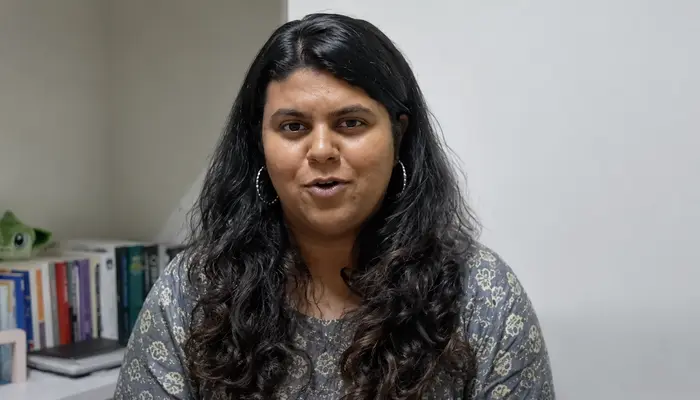
Case Summary
Journalist Lavanya Lakshmi Narayanan made repeated anti-Hindu statements on social media that targeted Hindu religious symbols, traditions and figures, including objections to a Lord Shiva-themed performance during the IPL 2026 closing ceremony and remarks about Goddess Sita during a discussion on Diwali. Her comments during the Karnataka hijab controversy, in which she defended the wearing of the hijab in educational institutions while invoking Hindu religious markers such as the tilak and bindi in support of her argument, also attracted criticism. On 31st May 2026, journalist Lavanya Lakshmi Narayanan, Deputy Team Lead at Sportstar under The Hindu Group, objected to singer Kailash Kher's performance of the devotional song "Babam Bam" during the closing ceremony of the Indian Premier League (IPL) 2026. The performance, which paid tribute to Lord Shiva and featured religious imagery created through drone displays, was warmly received by spectators. However, Lavanya posted on social media that religion should be kept out of sport and criticised the inclusion of the performance in the event. She later reiterated her position while responding to reactions online. Following the controversy, several of Lavanya's earlier social media posts resurfaced online. In these posts, she had expressed appreciation for Islamic religious practices and observances in sporting contexts. In one instance, she responded positively to a report about Turkish footballers breaking their Ramadan fast during a match. In another, she shared greetings associated with Eid and amplified content linked to Islamic celebrations. These posts were widely contrasted with her criticism of a Hindu devotional performance during the IPL ceremony. In the past, she also made comments concerning Hindu religious figures and traditions. In response to a Diwali-related social media post depicting Goddess Sita, Lavanya commented that Sita appeared "so done with this patriarchy-pavitrta shit". The remark generated criticism from social media users who viewed it as disrespectful towards a revered Hindu figure and the Ramayana. Her previous posts also included comments describing Hindu social and religious traditions through the lens of patriarchy. During the Karnataka hijab controversy, Lavanya publicly opposed restrictions on Muslim students wearing the hijab in educational institutions. Defending the practice, she posted, "Do you see anyone telling Hindus to not wear a bindi or any other religious markers to school and locking gates till they do? At least acknowledge the problem for what it is." Through this comparison, she argued that Muslim students should be permitted to wear the hijab in the same manner that Hindu students are allowed to display religious markers. The controversy surrounding her IPL remarks led to renewed scrutiny of her social media activity, with critics highlighting what they viewed as differing responses to Hindu and Islamic religious expressions in public spaces. Lavanya defended her position by stating that her objection related to secularism and the appropriateness of religious symbolism at events organised by sporting bodies.
Why it is Hate Crime ?
This case has been added to the tracker under the primary category of - Hate speech against Hindus. Within it, the sub-category selected is - Anti-Hindu subversion and prejudice. Hate speech is defined as any speech, gesture, conduct, writing, or display that is prejudicial against a specific individual and/or group of people, which is leading to or may lead to violence, prejudicial action or hate against that individual and/or group. Media plays a specific and overarching reach in perpetuating prejudicial attitudes towards a community owing to unfair, untrue coverage and/or misrepresentation/misinterpretation, selective coverage and/or omission of facts of/pertaining to issues affecting a specific religious group. This type of bias can dehumanise the victim group, making it easier for others to justify harmful actions against them, which aligns with the objectives of hate speech laws aimed at preventing such harm. It is often observed that the media takes a prejudicial stand against the Hindu community driven by their need to shield the aggressor community which happens to be a numeric minority, however, is the one perpetrating violence against Hindus. For example, the media is often quick to contextualise religiously motivated crimes against Hindus, omit or misrepresent facts that point towards religiously motivated hate crimes, justify and/or downplay religiously motivated hate crimes or simply present fake news to stereotype Hindus. Such media bias leads to the denial of persecution and is often used to dehumanise Hindus, leading to justification for violence against them. For example, the media covered several fake allegations of Hindus targeting Muslims and forcing them to chant Jai Shree Ram. Most of these cases were proved false and fabricated after police investigation. These fake news reports were subsequently never retracted or clarified. Such fake news led to the justification of violence and dehumanisation of Hindus based on the argument that since Hindus targeted Muslims and forced them to chant Jai Shree Ram, the dehumanisation of Hindus and violence against them was par for the course and merely a retaliation. Such media bias leads to prejudicial portrayal of Hindus and offers a justification for violence against them and therefore, is considered hate speech under this category. This case has been added to the Hinduphobia Tracker because it involved repeated public statements by journalist Lavanya Lakshmi Narayanan that displayed hostility towards Hindu religious symbols, traditions and figures, while simultaneously demonstrating a far more accommodating attitude towards comparable expressions of Islamic identity. The issue was not limited to a single remark or isolated controversy. Rather, her statements across multiple occasions revealed a recurring pattern in which Hindu religious expression was criticised, ridiculed or problematised, whereas Islamic religious practices were treated with greater acceptance and approval. The clearest example of this pattern emerged during the IPL 2026 closing ceremony. Lavanya objected to singer Kailash Kher's performance of the devotional song "Babam Bam", which paid tribute to Lord Shiva, and argued that religion should be kept out of sport. However, this position appeared inconsistent when viewed alongside her earlier comments regarding Islamic observances in sporting contexts. She had previously responded positively to reports of Turkish footballers breaking their Ramadan fast during a match and had shared content celebrating Islamic religious occasions. The issue therefore was not simply opposition to religion in sport. Rather, her differing responses treating Hindu religious expression as inappropriate in a sporting context, while praising Islamic religious expression within the same context. This double standard is significant because it reflects a broader tendency frequently observed in anti-Hindu discourse, where Hindu religious practices are singled out for criticism under the language of secularism, while similar expressions from Islam are defended as cultural or religious rights. Had Lavanya consistently opposed all religious expression in sporting spaces, her position could have been understood as a principled secular argument. Instead, her contrasting reactions to Hindu and Islamic religious practices proved that he objection was directed primarily at Hindu symbolism itself rather than at the broader principle she claimed to uphold. Her remarks regarding Goddess Sita further reinforced this pattern. In response to a Diwali-related post, she described Sita as appearing "so done with this patriarchy-pavitrta shit". For Hindus, Sita is one of the most revered figures in the Hindu tradition and is regarded as an embodiment of virtue, sacrifice, resilience and devotion. Mocking or trivialising such a sacred figure is not merely criticism of a social practice but was an act of ridicule directed towards a central figure of Hindu belief. Importantly, Lavanya's criticism was not confined to a specific custom or interpretation within Hindu society. Rather than discussing a particular practice, she repeatedly framed Hindu traditions and Hinduism itself through the lens of patriarchy. This distinction is important because criticism of individual customs is fundamentally different from portraying an entire religious tradition and its revered figures as symbols of oppression. By reducing Hindu civilisational and religious traditions to a narrative of patriarchy, her remarks contributed to negative stereotyping of Hindu beliefs and cultural heritage. Additionally, her intervention during the Karnataka hijab controversy also attracted criticism for similar reasons. During the debate over school uniform regulations, she defended the hijab and questioned why Muslim students were being asked to remove it while Hindu students were allowed to wear religious markers such as bindis. Through this comparison, she attempted to equate the hijab with Hindu religious symbols and argued that restrictions on one should logically apply to the other. Critics viewed this comparison as misleading because the central issue in the Karnataka dispute was not hostility towards Islam but whether schools could enforce uniform policies that limited overt religious attire inside classrooms. By framing the issue as discrimination against Muslim students while invoking Hindu symbols as a comparison, Lavanya appeared to dismiss legitimate concerns surrounding uniform regulations and instead portrayed the matter through a selective lens. At that time, the argument given by several politicians, social commentators, Hindu activists and even the judiciary was that schools have the right to enforce uniform rules, since wearing uniforms brings harmony and equality in the classroom, and therefore, schools not allowing girls to wear hijab in the classroom is not religious discrimination, but merely an enforcement of widely accepted uniform norms. The argument was also that overt religious symbols like the Hijab can be restricted under the school's policy of uniformity. It is also important to note that a tilak is a benign religious symbol that neither disrupts classroom activities nor interferes with the educational environment. For Hindu, wearing a tilak is a peaceful expression of faith and religious identity. More importantly, the issue in this case extends far beyond any purported uniform policy. Such statements demonstrates hostility towards Hindu religious practice and the students who adhered to it. Taken together, the cumulative pattern of Lavanya Narayanan's statements demonstrates more than isolated criticism of individual events. Her objection to a Hindu devotional performance, favourable comments regarding Islamic observances in similar contexts, derogatory remarks about Goddess Sita, repeated characterisation of Hindu traditions as patriarchal, and defence of the hijab through comparisons with Hindu symbols collectively reveal a pattern of selective criticism directed towards Hindu religious expression. Since the case involved repeated public statements that denigrated Hindu symbols, figures and practices while treating comparable expressions from another religion more favourably, it has been categorised in the Hinduphobia Tracker as an instance of anti-Hindu prejudice and bias in public discourse.


Case Status
Unknown


Perpetrators Details
Perpetrators
Others
Perpetrators Range
One Person
Perpetrators Gender
male
 Sources




