Hindu devotees exploited, Hindu customs desecrated by 40 Muslim men posing as Sadhus in Uttarakhand
 Haridwar, Uttarakhand, India
  31 May, 2026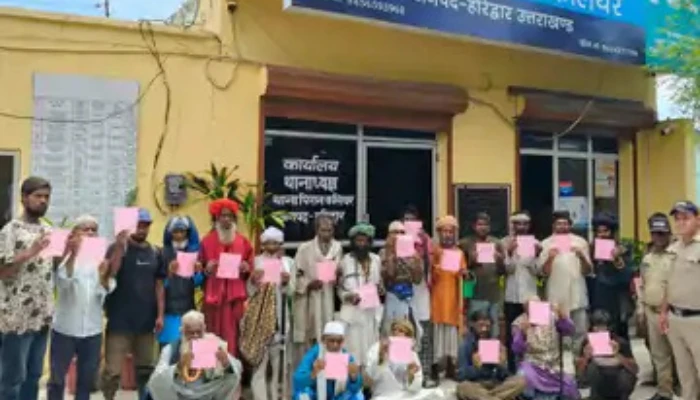
Case Summary
A police operation conducted under "Operation Kalnemi" in Kaliyar, Roorkee, Uttarakhand, resulted in the detention of 40 Muslim men who were posing as Hindu sadhus and babas to mislead Hindu devotees. Among those identified during the operation were Akbar, Wasim, and Shakeel. The police also initiated an investigation into the possible Bangladeshi background of some of the detained men. According to the police, the Muslim men dressed in saffron robes and adopted the appearance of Hindu saints, sadhus, tantriks, and astrologers. They operated in and around religious areas frequented by Hindu devotees and presented themselves as spiritual figures capable of resolving personal, financial, health, and family-related problems through rituals and supernatural powers. The police found that women and young Hindus were among the primary targets of these activities. Hindu devotees were approached with promises of solutions to marital disputes, unemployment, illnesses, family conflicts, and other personal difficulties. They were persuaded to spend money on rituals, blessings, talismans, astrological consultations, and other spiritual remedies. The operation revealed that the men were exploiting the religious faith of devotees and collecting money by offering false assurances that their problems could be resolved through such practices. During the verification process, the detained men were questioned about their identities, backgrounds, and claims of being Hindu religious figures. The police took all 40 men into custody for further questioning and verification. The action was carried out as part of Uttarakhand Police's "Operation Kalnemi", a campaign launched to identify people disguising themselves as Hindu saints and exploiting devotees in the name of religion. The investigation remains ongoing, including inquiries into the identities, backgrounds, and activities of the detained men.
Why it is Hate Crime ?
The primary category in this case is: Attack on Hindu religious representations. The subcategory under this is: Desecration of a Hindu religious symbol. Icons and symbols, or a religious representation of a spiritual ideal, are widely revered in Hinduism. Iconography is of vital significance in the Hindu milieu. It helps connect people’s spiritual beliefs with the real world. Iconography within the Hindu faith takes several shapes and forms. Murtis are of most significance to Hindus, to which daily rituals, prayers and offerings are done. Besides the murtis, there are several other symbols which have deep significance in the Hindu faith – the Om and Swastika, for example. Since these Hindu religious symbols hold paramount importance in Hinduism, any desecration of symbols, icons, murtis, religious representations and manifestations, is driven by animosity towards the faith itself, which manifests itself through these murtis, icons and symbols. Therefore, any desecration of these Hindu religious symbols and representations is considered a religiously motivated hate crime under this category. Another subcategory in this case is: Defiling religious customs. Sanatan Dharma is not a religion of one book, which is to say that while it has religious scriptures that form the central tenets of the faith, there are several traditions followed through thousands of years, mostly passed from generation to generation orally. There are several such customs and traditions that are followed by various Hindus and Hindu sects. Defiling of these traditions and customs is a breach of an individual or group’s religious practices. Such practices can range from dietary restrictions like not eating non-vegetarian food for a certain period of the year, not eating non-vegetarian food at all, not eating beef since the cow is considered holy in Hinduism, the sanctity of religious customs followed in the house (like many ISCKON devotees), etc. Any malicious action leading to the breach of such traditions or defilement of these traditions owing to animosity towards the faith or for the sake of activism stems not only from the lack of faith in the religion itself but also from disregard for the faith of the devotees who follow the customs/traditions and implicit bias against the faith, the tradition itself. Since these specific traditions are central to the faith of the devotees of that specific sect of Hindus, any non-compliance with these traditional rules would be considered a religiously motivated hate crime. This case qualifies for inclusion in the Hinduphobia Tracker because it involved the deliberate exploitation of Hindu religious beliefs, symbols, and traditions for financial gain. At the heart of this case is the deliberate misuse of revered Hindu religious symbols and representations to deceive and exploit Hindu devotees. The Muslim men detained during Operation Kalnemi did not merely engage in financial fraud; they adopted the attire, appearance, and identity of Hindu sadhus and spiritual figures to gain the trust of Hindu worshippers. In Hindu society, saffron robes, the appearance of a sadhu, and the image of a saintly figure are deeply respected and associated with spiritual discipline, renunciation, and religious authority. By disguising themselves as Hindu holy men and using these sacred representations as tools for deception, the perpetrators degraded and misused symbols that hold immense religious significance for Hindus. Such conduct amounts to an attack on Hindu religious representations because the sanctity attached to these symbols was exploited for personal gain. Icons, symbols, and religious representations of spiritual ideals occupy a central place in Hinduism. They serve as a bridge between the devotee's faith and the physical world and are treated with immense reverence. While murtis are among the most visible and sacred manifestations of Hindu iconography, religious representations in Hinduism extend beyond idols to include sacred symbols, attire, and figures associated with spiritual authority. Hindu sadhus, through their appearance, saffron robes, and role within the religious tradition, embody a respected spiritual ideal for many devotees. By falsely assuming the identity of Hindu holy men and using that religious representation as a tool for deception, the perpetrators desecrated and degraded a revered manifestation of the Hindu faith. Such misuse of sacred religious symbolism goes beyond ordinary fraud because it exploits the very symbols and representations that Hindus hold sacred. The conduct in this case also constituted a violation of longstanding Hindu religious traditions. Seeking blessings, guidance, and spiritual counsel from saints and sadhus is an integral part of Hindu religious life and has been practised for generations. The detained men exploited this sacred relationship of trust by falsely presenting themselves as spiritual guides and using that position to lure devotees with promises of solving personal, family, health, and financial problems. Women and young Hindus were particularly targeted and persuaded to part with money in exchange for rituals, blessings, and supposed spiritual remedies. More importantly, the location of this incident was also deliberate and significant. Haridwar has long been regarded as one of the holiest cities in Hinduism and has historically been associated with saints, ascetics, akharas, and spiritual traditions. Thousands of Hindu sadhus lived, meditated, performed penance, and guided devotees in and around Haridwar. The city attracted millions of Hindu pilgrims who visited in search of spiritual guidance, blessings, and religious instruction from revered holy men. The Muslim men did not choose this region randomly. They operated in the Haridwar-Roorkee area precisely because of its strong association with Hindu ascetics and the trust Hindu devotees placed in them. By posing as Hindu sadhus in a region renowned for its spiritual heritage, they exploited the sanctity and religious reputation of Haridwar to make their deception appear credible and to gain the confidence of Hindu devotees. What makes this case particularly significant is that the deception was built entirely around Hindu religious identity. The perpetrators did not gain the confidence of victims through ordinary means; they specifically relied on Hindu symbols, Hindu attire, and Hindu spiritual traditions to establish credibility and access vulnerable devotees. The success of the scheme depended upon the trust that Hindus place in their religious institutions, customs, and spiritual figures. The Hinduphobia Tracker follows the principle that hostility towards a faith can manifest not only through direct violence or verbal abuse but also through the deliberate misuse, corruption, and exploitation of sacred religious symbols and practices. In this case, Hindu religious representations were appropriated as tools of deception, while deeply held Hindu customs were abused to exploit devotees. The targeting of the Hindu faith, traditions, and religious sentiments makes this a relevant case for documentation in the tracker.


Case Status
Arrested


Perpetrators Details
Perpetrators
Muslim Extremists
Perpetrators Range
From 10 to 100
Perpetrators Gender
male
 Sources




