Dalit Hindu woman coerced to convert to Islam and undergo Nikah as condition for recovery of land in Farrukhabad, Uttar Pradesh
 Farrukhabad, Uttar Pradesh, India
  30 May, 2026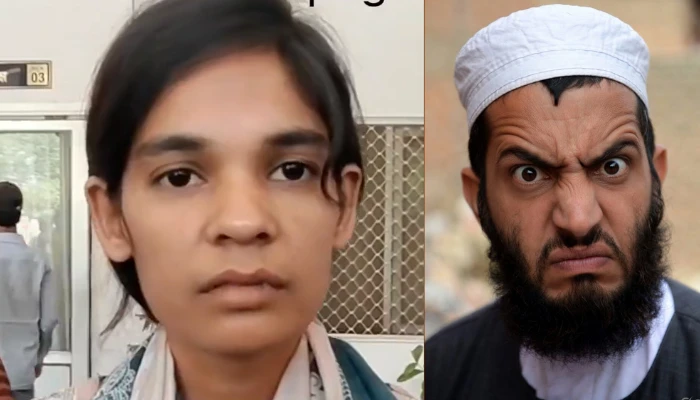
Case Summary
In Farukhabad, Uttar Pradesh, a Hindu woman was blackmailed into conversion to Islam and performing Nikah by Muslim men as a condition for getting her land back. The Muslim men stated, “Convert to Islam and do Nikah, then we’ll return your land”. The incident came to light after the victim's video went viral on social media. In the video, the victim stated that she and her family were being denied land unless they converted to Islam by Muslim men named Firoz and Dilshad. She further stated that the accused told her family that they would receive the land only after accepting Islam. The victim stated that pressure was being exerted on her family for religious conversion, and conversion to Islam was being presented as a prerequisite for obtaining the land. She further narrated that despite multiple police complaints, the accused were not arrested, and their land was still under the illegal possession of the Muslim men. Therefore, the victim approached the additional district magistrate for intervention in the matter.
Why it is Hate Crime ?
The first primary category selected in this case is Predatory Proselytisation. The selected subcategory is: Harassment, threats, and coercion for conversion. Harassment covers a wide range of behaviours of an offensive nature. It is commonly understood as behaviour that demeans, humiliates, and intimidates a person, including threats and coercion. Harassment and threats, in this case, find their root on discriminatory grounds, which has the effect of nullifying a person’s rights or infringing upon his freedom to exercise his right specifically owing to the victim’s religious identity. Verbal and physical threats and psychological or physical harassment are often used against Hindu victims because they choose to practice their professed religion. Religious harassment also includes forced and involuntary conversions by harassment, threats or coercion. Coercion includes intimidatory tactics like force-feeding a Hindu victim beef to convert to another religion, forceful circumcision, etc. In several cases documented, non-Hindu perpetrators or those who harbour specific animosity towards Hinduism, harass victims simply based on their religious identity. Such cases often also include harassment to ensure the Hindu victim abandons his/her professed religion and adopts the religion of the perpetrator. Such cases, where Hindu victims are harassed to convert to the perpetrator’s religion, are rooted in animosity towards the victim’s religious identity and are therefore documented as religiously motivated hate crimes. This case has been added to the tracker because it involves an attempt to secure religious conversion by exploiting the vulnerability and helplessness of a Hindu family. According to the victim's statement, the accused did not merely refuse to return the land or engage in a property dispute. Instead, they made conversion to Islam and Nikah the condition for the land's return, telling the family that they would receive their land only after accepting Islam. The significance of this condition cannot be overstated. For many poor and economically vulnerable households, a piece of land is far more than just property. It is often the family's primary source of financial security, the result of years of hard work, and sometimes the only meaningful asset accumulated over a lifetime. Land provides stability, dignity, and protection against future uncertainty. In many cases, it represents the savings and sacrifices of an entire generation. By withholding the land and linking its return to conversion, the accused exploited a point of acute vulnerability within the victim's family. What makes this incident particularly concerning is that the accused did not seek conversion through persuasion or religious discussion. Instead, they used the family's desperation and compulsion as leverage. The victim was effectively placed in a situation where access to what rightfully belonged to her family was made dependent upon abandoning her faith and embracing another religion. This is not a circumstance in which a person can exercise genuine freedom of conscience. When religious conversion is tied to the recovery of property, the individual's ability to make a free and independent choice is fundamentally compromised. The accused recognised the family's vulnerable position and attempted to use it to secure a religious outcome. Rather than respecting the family's religious identity, they sought to take advantage of their distress. The pressure was not directed at resolving a land issue but at compelling a change in faith by exploiting the victim's dependence on an asset that was crucial to her family's welfare and future. Overall, this case represented an attempt to use a family's vulnerability and dependence on land to pressure them into abandoning their faith. Since exploiting vulnerabilities for the explicit purpose of conversion is purely based on animosity towards the victim's faith, this case has been categorised as a religiously motivated hate crime. Disclaimer: The Hinduphobia Tracker records incident dates based on when the victim's ordeal began rather than when it was reported in the media. In this case, the exact date on which the victim's ordeal began was not specified in the available source material. Therefore, the date on which the victim's video first came into the public domain has been used as the indicative incident date for documentation purposes only.
Victim Details
Total Victim
3
Deceased
0
Gender
- Male 0
- Female 2
- Third Gender 0
- Unknown 1
Caste
- SC/ST 3
- OBC 0
- General 0
- Unknown 0
Age Group
- Minor 0
- Adult 2
- Senior Citizen 0
- Unknown 1


Case Status
Unknown


Perpetrators Details
Perpetrators
Muslim Extremists
Perpetrators Range
From 2 To 5
Perpetrators Gender
male
 Sources




