Hindu woman subjected to years of religious coercion and abuse after marriage to Muslim man, her children forced to chant anti-India slogans
 Raigarh, Chhattisgarh, India
  28 May, 2021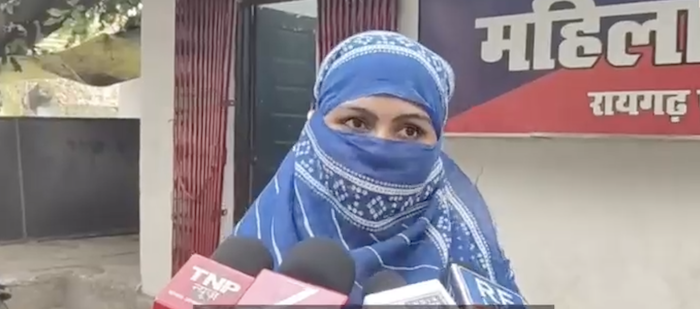
Case Summary
A Hindu woman from Raigarh, Chhattisgarh, endured years of religious coercion, physical abuse, and intimidation after marrying a Muslim man who concealed crucial details about his marital status. Her two young children were also drawn into the abuse and were subjected to religious and ideological pressure inside the household. The case came to public attention after she approached the authorities seeking protection for herself and her children. The Hindu woman, aged 35 and originally from Korba district, came into contact with Wasim Mohammad, a 43-year-old Muslim man from Jogidipa. Their relationship developed over time and culminated in their marriage in 2021, in accordance with Muslim customs. She later discovered that Wasim had concealed the fact that he was already married and had five children from his first marriage. She stated that he had presented himself as a divorced man before the marriage and had not disclosed his existing family. Following the marriage, the Hindu woman lived with Wasim and eventually became the mother of two children. She stated that significant changes began after their child's birth. She said that Wasim repeatedly pressured her to abandon her previous Hindu identity and conform to Islamic religious practices. He compelled her to recite the Kalma, offer Namaz, and observe fasting. The pressure continued over an extended period and became a recurring feature of her daily life. The Hindu woman stated that whenever she resisted or objected to these demands, she faced physical violence and intimidation. She said that she was sexually assaulted, subjected to repeated harassment, and thrown out of the house on multiple occasions. The coercion was directed not only at her personal conduct but also at her religious beliefs and practices. She described a sustained effort to compel her compliance with Islamic customs despite her objections. The abuse extended beyond the Hindu woman and affected her two children. She stated that Wasim regularly subjected the children to the same environment of intimidation and coercion. According to her statement, he forced them to raise "Pakistan Zindabad" slogans and made them repeat anti-India expressions. A video later surfaced in which their young son was made to chant such slogans. The Hindu woman stated that both she and her children were punished whenever they protested or resisted these actions. She further stated that her isolation increased because she had converted and had become estranged from members of the Hindu community and from her earlier social support network. During this period, she said that Wasim exercised increasing control over her life and took advantage of her vulnerable position. She described a prolonged pattern of domination, intimidation, and religious pressure directed against both her and her children. The Hindu woman also stated that Wasim frequently boasted that no action could be taken against him and that he possessed influential connections. She expressed fears for her safety and that of her children. As the situation deteriorated, she decided to seek intervention from the authorities and formally requested protection. At the time she approached the police, Wasim was already in jail in connection with a separate case involving the illegal liquor trade. The Hindu woman submitted a complaint at the women's police station and requested strict action against him. She also sought protection for herself and her two children, stating that they remained at risk. Her statement was recorded, and a First Information Report was subsequently registered. Police initiated an investigation into the allegations, while Hindu organisations also raised the matter before senior police officials and demanded action. The investigation remained ongoing.
Why it is Hate Crime ?
This case has been added to the tracker under the primary category - Crimes against women in relationships and other sexual crimes. Within this, the subcategory selected is - Brainwashed and/or groomed. Under this, the tertiary categories selected are - Rape and sexual assault/harassment, Victim says she was brainwashed/groomed and Conversion of minor. In our database, we have not added incidents where women have converted to another religion of their free will and no allegations of forced/involuntary conversion have been made. However, there are certain cases of conversion where the consent itself is a result of the brainwashing or grooming of a minor by the non-Hindu perpetrator trying to victimise a woman for her Hindu religious identity. The phenomenon of grooming points to non-Hindu perpetrators identifying their Hindu victims’ vulnerabilities and exploiting them over months and sometimes years, to extract the supposed ‘consent’ in order to convert their religion. In most cases of grooming, the victims are minors or the grooming started when the victim was a minor. In other cases of grooming, the non-Hindu perpetrator brainwashes and grooms a minor victim to extract their trust and then proceeds to rape them repeatedly with the intent of converting them to their faith. It is pertinent to understand here that when the victim is a minor, the ‘consent’ to convert or enter into a romantic relationship with an adult itself is redundant – addressed by POCSO. While every case of conversion of a minor and incidents of establishing a physical relationship with a minor by an adult is a crime, for the purpose of this database, a case would be considered a hate crime only if there is a distinct religious angle to the grooming. For example, in the UK, if a Hindu minor is targeted by Pakistani grooming gangs, it would be considered a hate crime because the victims are specifically targeted owing to their non-Muslim religious identity with the perpetrators being Muslim. In other cases, if a Hindu minor is brainwashed into entering a physical relationship with the non-Hindu adult perpetrator and the family alleges grooming/brainwashing of the minor to convert her religion, it would form a part of this database. If the victim is a Hindu adult, the case would form a part of this database only if the victim herself says that she was brainwashed/groomed to convert her religion. However, if the victim is deceased (murdered or otherwise), the case would form a part of this database if her family/friends provided testimony that the victim was brainwashed/groomed to convert her religion. Since these crimes have a distinct religious angle where the victim is being targeted owing to her Hindu religious identity, these cases are considered a hate crime. The other sub-category selected for this case is - Forced conversion after marriage. Under this, the tertiary category selected is - Forced to read Kalma. In such cases, a non-Hindu man marries a Hindu woman, and the force/pressure to convert to any Abrahamic faith, like Islam, begins after marriage. In such cases, typically, two patterns emerge. First, when the relationship is consensual, and the religious identity of the perpetrator is known to the Hindu woman in the relationship. The marriage could be under the Special Marriages Act, where neither parties are required to convert their religion for the marriage to be considered legitimate. While the victim in such cases enters matrimony assuming that religious identity is not a barrier, the non-Hindu man starts to pressure the woman to convert her religion after marriage. The second is when the woman gets into a marriage with the man, pretending to share her faith. Later, when the truth is revealed, the man starts pressuring the woman to convert her religion and give up her religious identity. In both situations, there is application of force by the perpetrator, including the denial of the woman’s religious rights. Some of the means by which the woman is forced/pressured to convert include force-feeding beef, being forced to read the Kalma, being forced to wear a hijab, forced to undergo Halala, etc. There are several instances where, after marriage, the woman voluntarily converts to Islam. Such cases are often argued to be a result of religious brainwashing, however, for the purpose of documenting religiously motivated hate crimes, in the absence of the victim complaining of forced conversion, such cases do not form a part of the database. Another sub-category selected for this case is - Assault or threat upon refusal to convert. When Hindu women are in a relationship with non-Hindu men, there are cases where the woman faces threats or assault after she refuses to convert and change her religious identity owing to pressure/force by the non-Hindu man. Such relationships may be consensual with the religious identity of the non-Hindu man known to the victim. Somewhere along the relationship, the non-Hindu man starts pressurizing the Hindu woman to convert to Islam and upon her refusal, assaults or threatens the victim. Such cases are driven by specific religious motivations and against the religious identity of the victim and are therefore qualified as hate crimes. Cases where the Hindu woman converts to Islam and does not file a complaint about the force or threat, are not considered a part of the hate tracker, even though, it may be argued that the woman was brainwashed or threatened to convert to Islam. The other subcategory is- Leaves Hindu partner upon refusal to convert. When Hindu women are in a relationship with non-Hindu men, there are cases where the woman faces pressure/threats/violence to convert and change her religious identity by the non-Hindu man. However, when the Hindu woman refuses to convert, the non-Hindu man ends the relationship or divorces the woman, as the case might be. Such relationships may be consensual with the religious identity of the non-Hindu man known to the victim. Somewhere along the relationship, the non-Hindu man starts pressuring the Hindu woman to change her religious identity and upon her refusal, ends the relationship. Cases where the Hindu woman converts to Islam and does not file a complaint about the force, or threat after she refuses to convert to Islam, are not considered a part of the hate tracker. The other primary category relevant is- Predatory proselytisation. Under this, the subcategory selected is- Harassment, threat, coercion for conversion. Harassment covers a wide range of behaviours of an offensive nature. It is commonly understood as behaviour that demeans, humiliates, and intimidates a person, including threats and coercion. Harassment and threats, in this case, find their root on discriminatory grounds which has the effect of nullifying a person’s rights or infringing upon his freedom to exercise his right specifically owing to the victim’s religious identity. Verbal and physical threats and psychological or physical harassment are often used against Hindu victims because they choose to practice their professed religion. Religious harassment also includes forced and involuntary conversions by harassment, threats or coercion. Coercion includes intimidatory tactics like force-feeding a Hindu victim beef to convert to another religion, forceful circumcision etc. In several cases documented, non-Hindu perpetrators or those who harbour specific animosity towards Hinduism, harass victims simply based on their religious identity. Such cases often also include harassment to ensure the Hindu victim abandons his/her professed religion and adopts the religion of the perpetrator. Such cases where Hindu victims are harassed to convert to the perpetrator’s religion are rooted in animosity towards the victim’s religious identity and are therefore documented as religiously motivated hate crimes. The other subcategory is- Proselytisation by grooming, brainwashing, manipulation and subtle indoctrination. Within this, the tertiary category selected is- Conversion of minor. This case qualified as a religiously motivated hate crime because the Hindu victim was subjected to sustained years of religious coercion, pressure to abandon her previous Hindu identity, and repeated attempts to impose Islamic beliefs and practices upon both her and her children. The conduct went beyond ordinary domestic abuse and centred on controlling the religious identity, beliefs, and upbringing of a Hindu woman and her family. Here, while the Muslim accused did not hide his identity, the nature of the relationship suggests that the Hindu woman was initially led to believe that her faith would not be a barrier to their romantic involvement. Trusting the accused's word, she entered the relationship. However, his true intentions were exposed post-marriage when he began pressuring her to convert to Islam. The harassment did not stop at her, but efforts were directed towards reshaping her children's religious identity as well. The children were compelled to raise anti-Hindu and anti-India slogans and were subjected to punishment when they did not comply. This demonstrated an attempt to influence and mould the family's beliefs and behaviour in accordance with the perpetrator's ideological and religious preferences. The conduct reflected a deliberate disregard for the Hindu identity and background of the victim and her children, replacing it with values and expressions that were incompatible with their previous religious and cultural upbringing. The pressure exerted on young children further demonstrated that the objective extended beyond the victim herself and sought to influence the next generation. The victim herself stated that she had been manipulated and groomed. Her account described a pattern in which trust, dependence, and isolation were used to place her in a vulnerable position from which resistance became increasingly difficult. This aspect of the case was significant because the religious pressure that followed did not arise incidentally but developed within a relationship where the victim's ability to freely exercise her own beliefs had steadily been undermined. The forced conversion after marriage and the repeated compulsion to recite the Kalma and perform Namaz were among the clearest religious markers in the case. The victim came from a Hindu background, yet she was subjected to continuous pressure to conform to Islamic religious practices and beliefs. The demand that she recite the Kalma, offer Namaz, and observe Islamic customs was not merely a lifestyle preference but a direct attempt to replace her existing religious identity with another faith. The religious nature of the conduct was unmistakable because the pressure was specifically directed at changing the victim's beliefs and religious practices. Her Hindu identity was central to the abuse, as the objective was not simply obedience but religious conformity. The repeated insistence on Islamic rituals demonstrated that the perpetrator viewed the victim's existing faith as something to be altered and abandoned. The religious motivation became even clearer through the violence and intimidation used whenever the victim resisted these demands. The victim stated that she was beaten, harassed, and thrown out of the house when she refused to comply with the religious expectations imposed upon her. The abuse was therefore directly linked to her unwillingness to submit to religious coercion. Physical violence was used as a mechanism to enforce compliance with Islamic practices and suppress resistance. This transformed the abuse from ordinary domestic violence into conduct carrying a clear religious dimension, where force and intimidation were deployed to compel a Hindu woman to abandon her beliefs and accept religious practices against her will. The other important aspect here is the harassment meted out at minor children to coerce them into conversion. It is a well-established fact that children are more susceptible to manipulation since they are still developing emotionally, cognitively, and socially. Their brains are not fully mature, making them more vulnerable to influence and less capable of critically evaluating information. Consequently, cases involving religious manipulation of minors not only represent an infringement on an individual's religious freedom but also demonstrate a calculated strategy of targeting those who are less able to resist or understand the long-term implications of conversion, making it a significant aspect of religiously motivated hate crime. This incident also raises an important question: what motivates individuals to engage in such conduct? Such acts are carried out by Muslim perpetrators due to indoctrination by the Islamic theology, which advocates that all non-Muslims (referred to as kafirs) are inferior and subject to subjugation unless they convert to Islam or live under Islamic rule (dhimmitude). These ideas are not mere abstractions; they manifest in actions where non-Muslims, especially Hindus in India, are seen as targets for religious domination, coercion, or humiliation. This theological framework fosters an "us versus them" mindset, in which any assertion of Hindu identity or religious freedom is seen not only as undesirable but as a threat to Islamic supremacy. As a result, perpetrators who are shaped by such teachings feel justified, even morally obligated, to harass, suppress, or violently attack Hindus, particularly when Hindus assert their religious rights or resist conversion. Such acts, therefore, are not isolated but driven by a broader ideological hostility towards Hindus as non-believers and reflect an attempt to impose religious dominance. Taken together, the grooming of the victim, the ideological conditioning of her children, the sustained efforts to impose Islamic practices, the pressure to recite the Kalma, and the violence used when she resisted demonstrated a pattern of conduct rooted in religious coercion. The victim's Hindu identity was not incidental to the offence but was one of the central reasons she was targeted. The abuse repeatedly focused on altering, suppressing, and replacing her existing religious beliefs and those of her children, making the religious motivation behind the conduct clear. Given that this case met the parameters of a religiously motivated hate crime, it was added to the hate crime database of the tracker. Disclaimer: The exact date of when the Hindu woman and the Muslim perpetrator first came into contact was not specified in the available sources. However, the year of marriage was reported to be around 2021. The tracker records incident dates based on when the crime occurred, not when it was reported or published. In this case, 29th May 2021 has been used as the indicative incident date, combining the known year with the article publication date of 29th May. This date has been recorded for documentation purposes only.
Victim Details
Total Victim
3
Deceased
0
Gender
- Male 1
- Female 1
- Third Gender 0
- Unknown 1
Caste
- SC/ST 0
- OBC 0
- General 0
- Unknown 3
Age Group
- Minor 2
- Adult 1
- Senior Citizen 0
- Unknown 0


Case Status
Complaint filed


Perpetrators Details
Perpetrators
Muslim Extremists
Perpetrators Range
One Person
Perpetrators Gender
male
 Sources




