Hindu temple vandalised, consecrated idol of Goddess Durga beheaded by unknown miscreants in Shahjahanpur, Uttar Pradesh
 Shahjahanpur, Uttar Pradesh, India
  28 May, 2026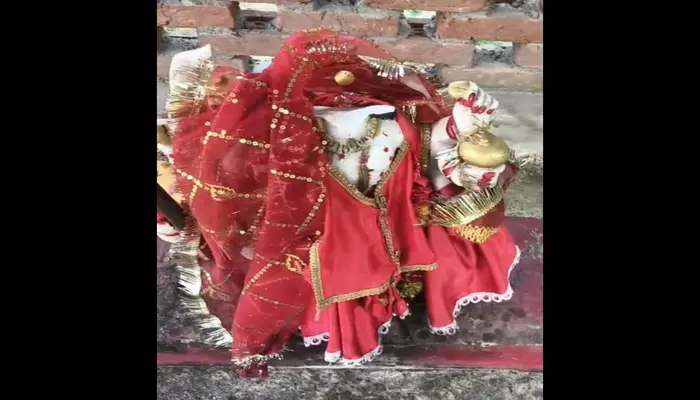
Case Summary
In Nigohi, Shahjahanpur district of Uttar Pradesh, the idol of Goddess Durga installed at the ancient Mithua Baba Temple was deliberately vandalised when unidentified miscreants decapitated the idol in an apparent attempt to disturb communal harmony and hurt Hindu religious sentiments. According to reports, the Hindu temple was regarded as a major centre of faith in the region, attracting devotees from nearby and distant areas who regularly visited to offer prayers and prasad. The idol had been installed through public donations collected by local residents, and the temple itself held deep religious significance for the Hindu community. The incident came to light on the morning of 29 May 2026 when temple priest Ramutar Gupta arrived to perform the daily worship. Upon opening the temple, he discovered that the idol of Goddess Durga had been beheaded and that the severed head was lying separately from the idol. Shocked by the sight, he immediately informed local residents and the police. News of the desecration spread quickly, drawing large numbers of devotees and local residents to the temple premises. During the subsequent police inspection, the severed head of the idol was recovered from a nearby field. The police took possession of it and later immersed it in the Kaimua River as part of the administrative response to the situation. The vandalism triggered widespread anger among local Hindus. Activists associated with the Vishwa Hindu Parishad and Yogi Sena arrived at the site and later staged a protest outside the police station, demanding the immediate identification and arrest of those responsible for the desecration. The incident caused considerable distress among devotees, with several women breaking down in tears upon learning that the idol had been damaged. Given the growing crowd and public outrage, the police administration remained on high alert to prevent any deterioration in law and order. Officials appealed for calm and assured residents that a new idol would be installed at the temple. Following complaints submitted by Hindu Mahasabha Metropolitan President Manvendra Singh and local resident Ramrahis Verma, the police registered a case against an unidentified person and initiated an investigation. Authorities began collecting information from nearby CCTV cameras and examining possible suspects to identify those responsible for the act. The incident was particularly significant because the Mithua Baba Temple was considered an important religious site in the area, and the government had already approved ₹2 crore for its renovation and development. The desecration of the idol therefore not only damaged a revered object of worship but also deeply offended the religious sentiments of the local Hindu community.
Why it is Hate Crime ?
This case is added to the tracker under the primary category: Attack on Hindu religious representations. The subcategory selected is: Desecration of Hindu religious symbols. Icons and symbols or a religious representation of a spiritual ideal are widely revered in Hinduism. Iconography is of vital significance in the Hindu milieu. It helps connect people’s spiritual beliefs with the real world. Iconography within the Hindu faith takes several shapes and forms. Murtis are of most significance to Hindus, to which daily rituals, prayers and offerings are done. Besides the murtis, there are several other symbols which have deep significance in the Hindu faith – the Om and Swastika for example. Since these Hindu religious symbols hold paramount importance in Hinduism, any desecration of symbols, icons, murtis, religious representations and manifestations, is driven by animosity towards the faith itself which manifests itself through these murtis, icons and symbols. Therefore, any desecration of these Hindu religious symbols and representations is considered religiously motivated hate crimes under this category. The other subcategory selected is- Attack on Temples. In Hinduism, a temple is the abode of the Deity. The Deity in the Temple is consecrated, thereby, making it a real, breathing entity. Hindus believe that not just the Deity but the temple premises itself are sacred to Hindus since Hindus hold the faith that the entire Temple space is an amalgamation of the divine energy of the deity. Given the central significance of Temples in Hindu Dharma, any attack against a Hindu Temple or its peripheral premises is an attack on the faith itself and is born out of animosity towards the faith, of which, the Temple is a central tenet. Any manner of attack against a Temple and/or its premises would therefore be considered a religiously motivated hate crime. This case constitutes a clear instance of a religiously motivated hate crime because unidentified miscreants deliberately desecrated the idol of Goddess Durga installed at the revered Mithua Baba Temple in Nigohi, Shahjahanpur district, by severing the deity's head from the idol and discarding it separately. The act was not an instance of ordinary vandalism, accidental damage, or random destruction of property. It specifically targeted a consecrated Hindu deity idol located within a functioning Hindu place of worship, thereby striking directly at a sacred symbol of Hindu faith and causing profound distress to the local Hindu community. In Hinduism, consecrated deity idols are not regarded as mere artistic representations or decorative objects. Through rituals of consecration, they are believed to embody the living presence of the deity and serve as the focal point of worship, devotion, and spiritual connection between devotees and the Divine. Hindu devotees offer prayers, rituals, and religious observances before these idols on a daily basis. Consequently, the deliberate mutilation or destruction of a consecrated idol is experienced not merely as damage to property but as a direct assault on the deity's sacred presence and on the religious beliefs of the devotees who worship there. The deity targeted in this case was Goddess Durga, one of the most revered and widely worshipped deities in Hinduism. She is venerated as the Divine Mother and the embodiment of strength, protection, righteousness, and victory over evil. Millions of Hindus across India worship Goddess Durga with deep devotion, particularly during major religious observances such as Navratri and Durga Puja. The deliberate decapitation of the idol carried profound religious significance. Decapitation is among the most severe and degrading forms of desecration that can be inflicted upon a sacred idol, as it intentionally disfigures the deity's most recognisable and revered features. The act went beyond ordinary damage or vandalism and involved the deliberate mutilation of a consecrated object of worship at the heart of Hindu devotional life. By specifically severing the idol's head, the perpetrators targeted a sacred symbol that held immense religious importance for devotees, inflicting maximum religious offence and causing deep distress within the Hindu community. The nature of the desecration demonstrated a profound disregard for Hindu religious sentiments and the sanctity of Hindu places of worship. The manner in which the act was carried out further demonstrates its targeted nature. The perpetrators did not merely damage the temple premises or engage in indiscriminate destruction. Instead, they specifically attacked the idol of Goddess Durga, severed its head from the body, and discarded the detached portion separately from the main idol. Such conduct reflects a deliberate act of desecration directed at the sacred form of the deity itself. The targeting of a consecrated idol within a temple setting indicates hostility towards what the idol represented: the living devotional presence of a Hindu deity and the religious identity of the Hindu community that worshipped there. The broader significance of the act is amplified by the status of the Mithua Baba Temple as an important religious centre in the region. The temple was a longstanding place of worship that attracted devotees from surrounding areas and held deep spiritual significance for local Hindus. The desecration, therefore, did not affect only a physical object; it violated a sacred religious space and disrupted the spiritual life of an entire community. The distress caused by the incident, including public protests and emotional reactions from devotees, illustrates the profound religious injury inflicted upon the Hindu community. The deliberate desecration of a consecrated idol inside a Hindu temple inevitably carries a message that Hindu sacred symbols and places of worship can be violated and dishonoured. Such acts create fear, insecurity, and anguish among devotees and extend beyond ordinary criminal damage. By targeting a revered representation of Goddess Durga within a temple environment, the perpetrators attacked a central symbol of Hindu religious identity and wounded the sentiments of the wider Hindu community. Therefore, since this incident involved the deliberate desecration of a consecrated idol of Goddess Durga within a Hindu place of worship, causing deep injury to Hindu religious sentiments and undermining the sanctity of a revered religious institution, it falls within the parameters of a religiously motivated hate crime and is being added to the hate crime database of the Hinduphobia Tracker.


Case Status
Complaint registered


Perpetrators Details
Perpetrators
Unknown
Perpetrators Range
Unknown
Perpetrators Gender
unknown
 Sources




