Hindu traditions portrayed negatively in Bakrid article favouring Muslim grievances by Delhi University professor
 Delhi, India
  26 May, 2026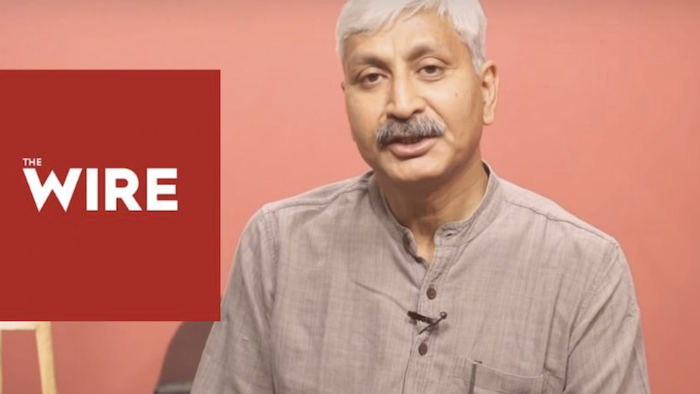
Case Summary
A Hindu community and Hindu religious traditions became the focus of a public article published by Delhi University professor Apoorvanand on 27th May 2026, ahead of Bakrid. The article criticised Hindu festivals, Hindu customs, Hindu religious processions, Hindu reverence for cows, Hindu religious sentiments, and Hindu public religious practices in the context of communal tensions, public order, and relations between Hindus and Muslims. Throughout the article, Hindu beliefs, traditions, and community practices were scrutinised and discussed as contributors to communal tensions. The article examined government measures introduced before Bakrid, including restrictions on prayers conducted on public roads, actions relating to cattle transportation and cow slaughter, and appeals for compliance with existing laws. It criticised appeals made by public officials encouraging respect for Hindu sentiments regarding cows and questioned efforts aimed at reducing cow sacrifice during the festival. The publication also discussed enforcement actions relating to cattle transportation, restrictions imposed in certain public locations before Bakrid, media coverage concerning animal sacrifice, and campaigns discouraging the slaughter of animals during the festival. Comparisons were drawn with Hindu religious traditions and sites, including Kamakhya Temple and Deoghar. The article repeatedly referred to Hindu festivals and religious observances, including Ganesh Chaturthi, Rath Yatra, Ram Navami, Durga Puja, Hanuman Jayanti, and Kanwar Yatra. These festivals were discussed in relation to road closures, processions, music, public gatherings, and the use of public spaces. The publication further contained statements regarding Hindu society and Hindu religious conduct. It stated that Hindus sought the right to play loud music in front of mosques, enter mosque premises, desecrate Muslim religious symbols, and raise anti-Muslim slogans during religious processions. It also stated that hostility towards Muslims became visible during Hindu festivals and referred to Hindu organisations, religious processions, and public mobilisation in the context of communal tensions. The article concluded with commentary on religious freedom, public order, communal relations, and ideological disputes, including references to the Sabarimala issue. Throughout the publication, Hindu festivals, customs, religious sentiments, and public religious practices remained central subjects of discussion and criticism, whereas Muslim religious practices were framed primarily through the lens of victimisation and discrimination. No police action, criminal proceedings, arrests, or judicial intervention relating to the publication itself were mentioned in the source material.
Why it is Hate Crime ?
This case has been added to the tracker under the primary category - Hate speech against Hindus. Within this, the subcategory selected is - Anti-Hindu subversion and prejudice. The tertiary category selected is- Anti-Hindu Fake News or Downplaying. Hate speech is defined as any speech, gesture, conduct, writing, or display that is prejudicial against a specific individual and/or group of people, which is leading to or may lead to violence, prejudicial action or hate against that individual and/or group. Media plays a specific and overarching reach in perpetuating prejudicial attitudes towards a community owing to unfair, untrue coverage and/or misrepresentation/misinterpretation, selective coverage and/or omission of facts of/pertaining to issues affecting a specific religious group. This type of bias can dehumanise the victim group, making it easier for others to justify harmful actions against them, which aligns with the objectives of hate speech laws aimed at preventing such harm. It is often observed that the media takes a prejudicial stand against the Hindu community driven by their need to shield the aggressor community which happens to be a numeric minority, however, is the one perpetrating violence against Hindus. For example, the media is often quick to contextualise religiously motivated crimes against Hindus, omit or misrepresent facts that point towards religiously motivated hate crimes, justify and/or downplay religiously motivated hate crimes or simply present fake news to stereotype Hindus. Such media bias leads to the denial of persecution and is often used to dehumanise Hindus, leading to justification for violence against them. For example, the media covered several fake allegations of Hindus targeting Muslims and forcing them to chant Jai Shree Ram. Most of these cases were proved false and fabricated after police investigation. These fake news reports were subsequently never retracted or clarified. Such fake news led to the justification of violence and dehumanisation of Hindus based on the argument that since Hindus targeted Muslims and forced them to chant Jai Shree Ram, the dehumanisation of Hindus and violence against them was par for the course and merely a retaliation. Such media bias leads to prejudicial portrayal of Hindus and offers a justification for violence against them and therefore, is considered hate speech under this category. This case has been added to the tracker because the hate speech directed at Hindus in this case was religiously motivated, as it did not focus on isolated individuals, specific incidents, or particular acts of misconduct. Instead, it centred on Hindu religious identity itself, repeatedly portraying Hindu beliefs, Hindu religious sentiments, Hindu festivals, and Hindu community concerns in a negative light. The criticism was not directed at a secular or political characteristic but at matters that are integral to Hindu faith and practice, including reverence for the cow, religious processions, festival observances, temple traditions, and the public expression of Hindu belief. By framing these distinctly Hindu religious practices as sources of communal tension and intolerance, the publication targeted core elements of Hindu identity rather than engaging with them as legitimate expressions of faith. This transformed the discussion from commentary on public issues into hostility directed towards a religious community and its traditions. The religious nature of the hostility is further demonstrated by the selective manner in which Hindu concerns were treated. Hindu religious sentiments regarding the sanctity of the cow, which hold profound theological, cultural, and spiritual significance within Hinduism, were repeatedly criticised and dismissed. Reverence for the cow is not a peripheral custom but one of the most widely recognised and deeply rooted aspects of Hindu religious life. Presenting concerns arising from this belief as problematic while treating opposing religious interests with greater sympathy diminished the legitimacy of Hindu religious convictions and encouraged readers to view Hindu faith-based concerns as obstacles rather than protected expressions of religious identity. This constitutes hate speech against Hindus because the negative characterisation was rooted in beliefs held specifically because of their religion. The anti-Hindu prejudice in this case is evident from the broader narrative that emerged throughout the publication. Hindu festivals, Hindu customs, Hindu religious sentiments, and Hindu public religious expressions remained the principal subjects of criticism. While Muslim concerns were consistently presented through the framework of discrimination, victimisation, and disproportionate scrutiny. This created an unequal standard in which Hindu religious practices were examined primarily through their perceived negative consequences, whereas Muslim religious concerns were afforded understanding and protection. Such a contrast reflects prejudice because one religious community was repeatedly associated with social problems and communal tensions, while the other was portrayed as the party facing injustice. The publication also attributed negative motives and conduct to Hindus as a collective religious group. Rather than limiting criticism to specific actors, it connected Hindu society, Hindu organisations, Hindu festivals, and Hindu religious mobilisation with hostility, intolerance, and communal discord. Assigning these characteristics to a religious community as a whole encourages broad negative perceptions of Hindus based on their religious identity. This is a form of anti-Hindu subversion because it undermines the legitimacy of Hindu public religious expression and encourages the belief that Hindu traditions themselves are inherently linked to social conflict. The cumulative effect of these actions demonstrates a clear religious motivation. The publication repeatedly centred Hindu religious beliefs, festivals, customs, and public expressions of faith as subjects of criticism while presenting Muslim concerns more sympathetically. By portraying Hindu traditions and sentiments as sources of tension and scrutiny, it fostered prejudice against Hindus on the basis of their religious identity, making the hostility directed at the faith itself rather than any individual conduct. Since this deliberate targeting of Hindus and their beliefs through one-sided narratives serves to malign their identity, culture, and faith, aligning with the broader scope of hate crimes that aim to marginalise or vilify a specific religious community, this has been classified as hate speech and added to the tracker.


Case Status
Unknown


Perpetrators Details
Perpetrators
Others
Perpetrators Range
One Person
Perpetrators Gender
male
 Sources




