Hindu woman deceived, raped and pressured for conversion and nikah by Muslim man posing as Hindu; assaulted upon refusal
 Bhilwara, Rajasthan, India
  27 May, 2012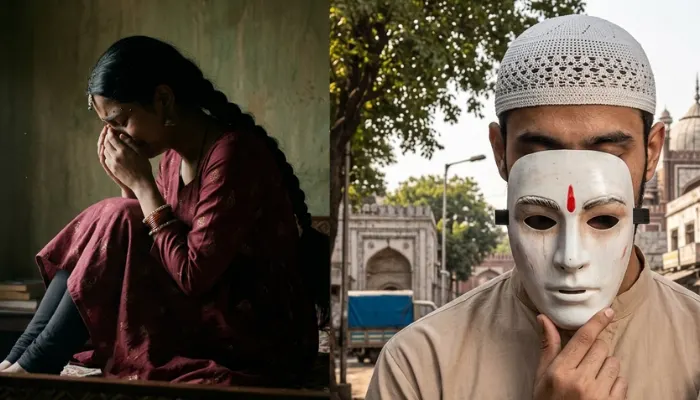
Case Summary
In Bhilwara, Rajasthan, a 35-year-old Hindu woman was deceived, assaulted and pressured for religious conversion and nikah by a Muslim man, who posed as a Hindu man to lure her. According to reports, the victim had filed a complaint with the police stating that she came into contact with the accused in 2012, when he introduced himself as a Hindu man. The woman stated that on one occasion, when she was alone, the accused drugged her drink and raped her. Following the rape, he threatened her for nikah (Islamic marriage) and repeatedly visited her house, where he continued to sexually exploit her under coercive circumstances. The woman stated that over time, the accused began pressuring her to convert to Islam and subjected her to physical violence whenever she resisted. He compelled her to sign certain documents, written in Urdu, which were later discovered to be linked to a Nikahnama prepared in accordance with Islamic marriage procedures. The woman further stated that the accused continuously intimidated her and threatened to kill her if she disclosed the matter to anyone. According to the complaint, the accused also took approximately ₹20 lakh in cash from the woman along with gold jewellery, including a chain, a ring, and her mother’s mangalsutra. Distressed by the prolonged abuse, coercion, and threats, the woman eventually approached the police and filed a formal complaint. During the investigation, police recovered Urdu books and a marriage-related document, including a Nikahnama, from the woman’s possession, which were taken into custody for examination. A case was registered based on the woman’s statement, and the accused was produced before a court and subjected to further questioning by the police.
Why it is Hate Crime ?
This case has been added to the tracker under the primary category of - Crimes against women in relationships and other sexual crimes. Within this, the subcategory selected is - Man pretends to be Hindu. When a non-Hindu man pretends to be a Hindu to deceive a Hindu woman into a relationship, the act is seen as triggered by malafide intentions. In some cases, the woman eventually accepts the man’s original religious identity and converts after the man’s identity is revealed. These cases could be argued as cases of religious brainwashing and a result of the pressure a woman feels after getting into a relationship with a man. The woman, it can be argued, also changed her religious identity because of the stigma she believes she might face if she chooses to walk out of a deceptive relationship. However, for the purpose of documenting hate crimes, the cases in this subcategory are limited to those where there is explicit violence aimed at religious conversion against the wishes of the victim (force-feeding beef, blackmailing with intimate videos, rape on refusal to convert, etc), or if the woman herself complains of the man’s religious deception. In such cases, it is established that the deception of the non-Hindu man had a specific aim of religious conversion or targeting of the victim due to her Hindu religious identity, therefore, making it a religiously motivated hate crime. The other sub-category selected is - Brainwashed and/or groomed, with the tertiary category being - Rape and sexual assault/harassement. When a non-Hindu man pretends to be a Hindu to deceive a Hindu woman into a relationship, the act is seen as triggered by malafide intentions. In some cases, the woman eventually accepts the man’s original religious identity and converts after the man’s identity is revealed. These cases could be argued as cases of religious brainwashing and a result of the pressure a woman feels after getting into a relationship with a man. The woman, it can be argued, also changed her religious identity because of the stigma she believes she might face if she chooses to walk out of a deceptive relationship. However, for the purpose of documenting hate crimes, the cases in this subcategory are limited to those where there is explicit violence aimed at religious conversion against the wishes of the victim (force-feeding beef, blackmailing with intimate videos, rape on refusal to convert, etc), or if the woman herself complains of the man’s religious deception. In such cases, it is established that the deception of the non-Hindu man had a specific aim of religious conversion or targeting of the victim due to her Hindu religious identity, therefore, making it a religiously motivated hate crime. The other sub-category selected here is - Forced conversion before marriage, with the tertiary category being - Forced to do nikah. In such cases, a non-Hindu man is in a relationship with a Hindu woman when the pressure to convert her religion begins to manifest. In such cases, typically, two patterns emerge. First, when the relationship is consensual, and the religious identity of the perpetrator is known to the Hindu woman in the relationship, however, at some point during the relationship, the non-Hindu man starts to force the victim to convert her religion and give up her Hindu religious identity. The second is when the woman gets into a marriage with the man pretending to share her faith. Later, when the truth is revealed, the man starts pressuring the woman to convert her religion and give up her religious identity. In both the situations, the methods used to force the victim to convert her religion often revolve around force-feeding beef, forcing her to wear hijab, forcing her to read the Kalma or even pressurizing the victim to do ‘Nikah’, which is marriage under Islamic law, with a prerequisite being conversion to Islam. Cases where a Hindu woman consensually converts to Islam in a relationship will be left out of the hate crime database, even though it could be argued in several cases that the conversion was a result of religious brainwashing. The other sub-category selected here is - Assault or threat upon refusal to convert. When Hindu women are in a relationship with non-Hindu men, there are cases where the woman faces threats or assault after she refuses to convert and change her religious identity owing to pressure/force by the non-Hindu man. Such relationships may be consensual with the religious identity of the non-Hindu man known to the victim. Somewhere along the relationship, the non-Hindu man starts pressurizing the Hindu woman to convert to Islam and upon her refusal, assaults or threatens the victim. Such cases are driven by specific religious motivations and against the religious identity of the victim and are therefore qualified as hate crimes. Cases where the Hindu woman converts to Islam and does not file a complaint about the force or threat, are not considered a part of the hate tracker, even though, it may be argued that the woman was brainwashed or threatened to convert to Islam. This case has been added to the tracker because, in Bhilwara, Rajasthan, a 35-year-old Hindu woman was deceived, sexually exploited, assaulted, and pressured for religious conversion and nikah by a Muslim man who posed as a Hindu in order to establish contact and gain her trust. Firstly, the perpetrator deliberately concealed his religious identity to initiate and sustain a relationship with a Hindu woman. This itself is a clear manifestation of bias and malicious intent towards the victim's religion. By concealing his true identity, he exploited her trust, targeting her under false pretences. This indicates a premeditated intent to manipulate her based on her religious background. In cases like these, the tactic of adopting a false Hindu identity to manipulate and "ensnare" a Hindu individual is not just an act of personal betrayal but can also be interpreted as an expression of disdain or disregard for Hinduism and its customs that reflects a deeper animosity towards Hindus and their beliefs. In such instances, identity concealment is not merely a personal deception but a calculated strategy rooted in religious targeting and profiling. The accused was aware that the victim, being Hindu, may not have consented to the relationship had she known his real identity from the outset. He therefore circumvented her ability to exercise informed choice by deliberately lying about his name and religious background. This demonstrated a premeditated effort to exploit the victim specifically on the basis of her religious identity. Secondly, the Muslim accused drugged the victim’s drink and raped her, after which he threatened her for conversion and nikah and continued to sexually exploit her through coercion and intimidation. He repeatedly visited her residence and maintained control over her through fear and threats. These exploitations were not random acts of crime; rather, they functioned as religiously motivated tools aimed at humiliating and dominating a Hindu woman because of her faith, as he also pressured her for conversion. The target was not the victim as an individual, but her Hindu identity. The specific focus on her Hindu identity in the commission of these acts highlights the religious hatred underlying the crime, making it a religiously motivated offence. Thirdly, in Islam, marriage to a non-Muslim partner is prohibited, which is why she was pressured for religious conversion. This shows that the Muslim perpetrator specifically targeted the Hindu victim for sexual exploitation and religious conversion. Pressuring a Hindu individual to discard her religious faith and embrace another was a direct attack on her religious identity and dignity. It was not a matter of personal choice; it was coercion rooted in hostility towards the victim's Hindu identity. Such an attempt reflects religious animosity because the act was not simply about personal differences but about erasing the victim’s Hindu faith, making it a religiously motivated crime. Fourth, often in such cases, sexual violence serves a dual purpose: physical subjugation and religious humiliation. The intention was to break the victim down, emotionally, physically, and spiritually, so that she could be converted. This was not random violence; it is systematic, targeted, and rooted in religious animosity Fifth, the victim also stated that the accused forced her to sign documents connected to a Nikahnama and continued to threaten her with death if she disclosed the abuse. The recovery of Urdu books and marriage-related documents during the investigation further reinforced the conversion-related dimension of the case. The prolonged nature of the exploitation, the concealment of identity, the insistence on conversion, and the coercive use of sexual violence collectively demonstrated that the victim was targeted not merely as an individual woman but specifically as a Hindu woman. Sixth, when the victim resisted the pressure to convert to Islam and refused to comply with the accused’s demands, she was subjected to physical assault, intimidation, and continued abuse. This demonstrated that the assaults were not random acts of aggression, but deliberate methods of coercion intended to break her resistance and force her into submission. The accused used fear, physical violence, threats of death, and sustained psychological intimidation to weaken the victim emotionally and mentally so that she would surrender her autonomy and accept both the religious conversion and the imposed Nikah. The abuse, therefore, functioned not only as physical domination but also as religious persecution, where the victim’s refusal to renounce her Hindu identity directly triggered further violence and coercion. This pattern reflected a systematic attempt to overpower the victim’s agency, erase her religious identity, and compel submission through sustained fear and brutality. Such acts stemmed from hostility towards the victim’s professed faith and reflected an attempt to dominate, humiliate, and erase her religious identity through deception, sexual exploitation, intimidation, and conversion pressure. Since the offences in this case were intrinsically tied to the victim’s Hindu identity and involved coercive attempts to alter her faith, the case has been documented in the tracker as a religiously motivated hate crime. Disclaimer: It is important to clarify that none of the media sources covering this case have specified the exact date when the victim's ordeal began, though it is mentioned that she came into contact with the accused in 2025. Thus, to document this case, we have used an indicative date, 28 May 2012, as a placeholder to represent the beginning of her suffering. While media coverage of the incident emerged on 28 May 2026, the Hinduphobia Tracker records the incident based on when the victim’s ordeal began, not when it was reported.
Victim Details
Total Victim
1
Deceased
0
Gender
- Male 0
- Female 1
- Third Gender 0
- Unknown 0
Caste
- SC/ST 0
- OBC 0
- General 0
- Unknown 1
Age Group
- Minor 0
- Adult 1
- Senior Citizen 0
- Unknown 0


Case Status
Case sub-judice


Perpetrators Details
Perpetrators
Muslim Extremists
Perpetrators Range
One Person
Perpetrators Gender
male
 Sources




