Hindu family including women and minor girls threatened, assaulted and pressured to accept Islam in Rohini
 Rohini, Delhi, India
  26 May, 2026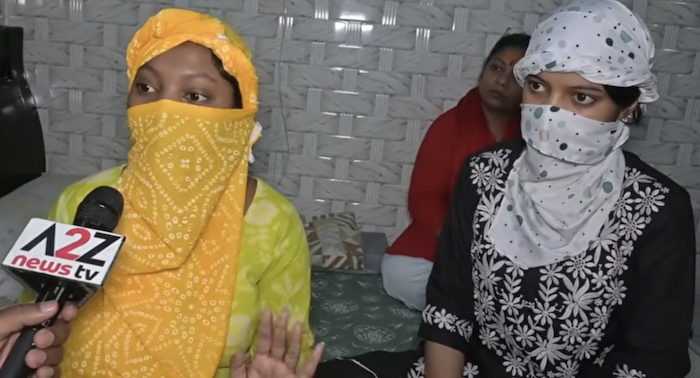
Case Summary
A Hindu family in Rohini, Delhi, faced sustained harassment, intimidation, threats, and physical assault from their Muslim neighbours inside their residential locality. The Hindu women and minor girls in the family stated that they were repeatedly targeted over their clothing, religious practices, social interactions, and refusal to accept Islam. The harassment escalated into violence after the Hindu family returned to their home during shifting work, and male friends arrived to assist them. The Hindu family lived in Rohini Sector 24, Delhi, in a house occupied primarily by women and children. The household consisted of the Hindu mother, her two daughters, a minor son, and their grandmother, who worked elsewhere for long hours. According to the family, tensions with the Muslim neighbours began shortly after they moved into the locality. The Hindu women stated that the Muslim women from the neighbouring house frequently entered their home uninvited and attempted to influence them towards Islam. They played Islamic sermons and Kalma recitations on the television inside the Hindu family’s home and repeatedly told the Hindu women that they should accept Islam. The Muslim women praised Islam, spoke about “jannat”, and pressured the Hindu girls to abandon Hindu beliefs. The Hindu family stated that the Muslim neighbours regularly mocked their Hindu religious practices and pilgrimage visits to Vrindavan and Khatu Shyam. The Muslim women questioned why the Hindu family spent money on Hindu pilgrimages and criticised them for following Hindu customs. The Hindu daughters stated that their neighbours objected to their clothing, hair, makeup, and personal appearance. They were repeatedly told not to wear shorts, sleeveless clothes, or keep their hair open. The Muslim women told them that such clothing would attract men and accused them of deliberately trying to lure boys. The Hindu family stated that the harassment intensified because there were no adult Hindu men permanently living inside the house. The Muslim neighbours repeatedly accused the Hindu women of immoral behaviour whenever male friends visited the home. The Hindu daughters stated that even when friends came only to help with shifting household belongings, the Muslim neighbours accused them of calling boys for “wrong activities”. The family stated that they were verbally abused, humiliated in public, and isolated within the locality. One of the Hindu daughters stated that the Muslim neighbour’s son obtained her phone number and began messaging her late at night. He repeatedly asked her to come outside and attempted to engage her in personal conversation despite her refusal. When she objected and addressed him as a brother because he called her mother “mausi”, he told her not to call him brother and continued making inappropriate advances. She stated that he later edited photographs, circulated cropped images involving male friends, and attempted to blackmail her by threatening to show manipulated pictures to her mother. The Hindu family stated that the Muslim neighbour’s son repeatedly pressured the Hindu girls to accept Islam. During confrontations, he physically grabbed one of the daughters and tried to pull her into a room while telling her to “accept Islam”. The Hindu women stated that the Muslim family openly said that Hindu girls who converted to Islam received “jannat” and that the neighbours repeatedly encouraged Hindu boys and girls in the locality to convert. The family also stated that the Muslim women boasted about trapping Hindu boys into relationships and convincing them to convert. The situation escalated further after the Hindu family temporarily moved out of the house for renovation and later returned. On the day of the move, male friends came to help move household belongings back into the home. The Muslim neighbours confronted the Hindu women and accused them of bringing boys into the house for immoral purposes. The confrontation turned violent. The Hindu family stated that the Muslim neighbours entered their property, kicked down their gate, damaged property, physically assaulted the Hindu mother and daughters, and attacked the boys who had come to help with the shifting. The Hindu daughters stated that the Muslim neighbour’s son exposed himself in front of them and repeatedly made obscene gestures while telling them to “come sit here and accept Islam”. The Hindu women stated that members of the Muslim family spat on them repeatedly during the confrontation and abused Hindu gods. The family also stated that knives and sticks were brought during the attack. One of the Muslim men arrived carrying a large knife and threatened the boys present at the house. The Hindu family stated that they feared for their safety because the neighbouring family had a history of violence and criminal behaviour within the locality. The Hindu mother stated that Muslim women from the neighbouring house openly threatened to have her daughters abducted and raped if the family filed a police complaint. The threats specifically targeted the Hindu daughters and warned that they would be picked up from the street and sexually assaulted. The Hindu family stated that these threats were made openly in front of others inside the locality. The Hindu women also described repeated hostility connected to their Hindu identity and lifestyle. They stated that the Muslim neighbours objected to their pilgrimage visits, criticised their Hindu customs, and repeatedly interfered with their freedom to dress according to their choice. The Hindu family stated that even Hindu neighbours became unwilling to openly support them during disputes because they feared confrontation and violence from the Muslim family. After the assault, the Hindu family approached the police station seeking protection and legal action. The family stated that police officials repeatedly pressured them to “compromise” with the Muslim neighbours instead of taking strict action. The Hindu women stated that despite informing police about threats, weapons, and physical assault, they did not receive immediate protection. The family also stated that the Muslim neighbours continued threatening and spitting at them even in the presence of police officers. Following the incident, the Hindu family sought support from Hindu organisations and non-governmental groups for safety and assistance. They stated that they feared further attacks and intimidation from the neighbouring Muslim family and their associates.
Why it is Hate Crime ?
This case has been added to the tracker under the primary category - Predatory Proselytisation. Within this, the subcategory selected is - Proselytisation by grooming, brainwashing, manipulation or subtle indoctrination. Under this, the tertiary categories selected are - Conversion of minor, Victim says she was brainwashed/groomed, and Family claims grooming. Religious brainwashing essentially means the often subtle and forcible indoctrination to induce someone to give up their religious beliefs to accept contrasting regimented ideas. Religious grooming or brainwashing also involves propaganda and manipulation. It involves the systematic effort, driven by religious malice and indoctrination, to persuade “non-believers’ to accept allegiance, command, or doctrine to and of a contrasting faith. Cases of such grooming or brainwashing are far more nuanced than direct threats, coercion, inducement and violence. In such cases, it is often seen that there is repeated, subtle and continual manipulation of the victim to induce disaffection towards their own faith and acceptance of the contrasting faith of the perpetrator. While subtle indoctrination is widely acknowledged as predatory, an element which is often understated in such conversions or the attempts of such conversion is the role of loyalty and trust which might develop between the perpetrator and the victim. Fiduciary relationships are often abused to affect such religious conversion. For example, an educator transmitting religious doctrine of a competing faith to a Hindu student. The Hindu student is likely to accept what the teacher is transmitting owing to existence of the fiduciary relationship. The exploitation of the fiduciary relationship to religiously indoctrinate victims would also be included in this category. Since the underlying animosity towards the victim’s faith forms the basis of predatory proselytization, such cases are considered religiously motivated hate crimes. The other subcategory under this is - Harassments, threats, coercion for conversion. Harassment covers a wide range of behaviours of an offensive nature. It is commonly understood as behaviour that demeans, humiliates, and intimidates a person, including threats and coercion. Harassment and threats, in this case, find their root on discriminatory grounds which has the effect of nullifying a person’s rights or infringing upon his freedom to exercise his right specifically owing to the victim’s religious identity. Verbal and physical threats and psychological or physical harassment are often used against Hindu victims because they choose to practice their professed religion. Religious harassment also includes forced and involuntary conversions by harassment, threats or coercion. Coercion includes intimidatory tactics like force-feeding a Hindu victim beef to convert to another religion, forceful circumcision etc. In several cases documented, non-Hindu perpetrators or those who harbour specific animosity towards Hinduism, harass victims simply based on their religious identity. Such cases often also include harassment to ensure the Hindu victim abandons his/her professed religion and adopts the religion of the perpetrator. Such cases where Hindu victims are harassed to convert to the perpetrator’s religion are rooted in animosity towards the victim’s religious identity and are therefore documented as religiously motivated hate crimes. Another subcategory under this is - Attempting to convert/converting by denigrating Hinduism. In several cases, Hindus are converted or an attempt is made to convert Hindus by denigrating their faith, Hinduism. In such cases, the Hindus associate with the non-Hindu perpetrators often by choice and then, the attempt to convert them by insulting their faith, showing the faith down etc begins. An example of this would be a non-Hindu gathering where the Hindus are attending the gathering of their own free will. However, once they attend the gathering, there is an explicit attempt to convert them by abusing their faith and hailing the faith of the perpetrator. The denigration of the Hindu faith is often based on misrepresentation of the Hindu faith, its doctrine and scriptures and insult to espoused traditions if not blatant lies about Hindu beliefs and ways. Such conversions or attempts at conversions are driven by animosity towards the Hindu faith and are therefore documented as religiously motivated hate crimes. The other primary category selected for this case is - Attack not resulting in death. Within this, the subcategory selected is - Attacked for Hindu identity. In several cases, Hindus are attacked merely for their Hindu identity without any perceived provocation. A classic example of this category of religiously motivated hate crime is a murder in 2016. 7 ISIS terrorists were convicted for shooting a school principal in Kanpur because they got ‘triggered’ seeing the Kalava on his wrist and tilak that he had put. In this, the Hindu victim had offered no provocation except for his Hindu religious identity. The motivation for the murder was purely religious, driven by religious supremacy. Such cases where Hindus are targeted merely for their religious identity would be documented as a hate crime under this category. The other subcategory is- Attacked for crossing 'Muslim area'. One of the reasons that Hindus get attacked unprovoked specifically by Islamists is for crossing ‘Muslim areas’. Essentially, Muslim mobs often attack Hindus crossing or present in certain areas which have a majority Muslim population. It has often been cited as one of the reasons to blame Hindus for attacks against themselves, signalling that Hindus displaying religious symbols, taking our religious processions or crossing any area which is dominated by Muslim residents is a provocation in and of itself. These areas are mostly ghettoized areas where mobs mobilize quickly to attack Hindus for a variety of reasons like playing music during a religious procession, crossing a mosque, wearing a tilak or any other religious symbol in a Muslim-dominated area, praying at a local temple in that area etc. There have been cases where the few local Hindus of that area have been attacked on their way to the Temple for prayers as well, simply because the area is considered a Muslim-dominated area. Several times, it is entirely possible that the immediate trigger for the violence against Hindus was non-religious in nature, however, the violence became religiously motivated in nature because the area was Muslim dominated and the residents on the whole harboured animosity towards Hindus, evidenced from the actions of the mob, the slogans, and the nature of the attack. Such crimes are motivated by the religious identity of the victims and are therefore classified as hate crimes under this category. Another primary category selected for this case is - Hate speech against Hindus. Within this, the sub-category selected is - Anti-Hindu slurs, mocking faith. Anti-Hindu slurs and the deliberate mocking of the Hindu faith owing to religious animosity involve the usage of derogatory terms, stereotypes, or offensive references to religious practices, symbols, or figures. One of the common anti-Hindu slurs used against Hindus is “cow-worshipper” and “cow piss drinker”. The intention of using this term is to demean and mock Hindus as a group and their religious beliefs since Hindus consider the cow holy. Additionally, some symbols and the slurs attached to them have a historical context that exacerbates the insult, hate, stereotyping, dehumanisation and oppression against Hindus. Cow worship has been used for centuries to denigrate Hindus, insult their faith and oppress Hindus specifically as a religious group. There has been overwhelming documentation about how cow slaughter has been used to persecute Hindus with cow meat being thrown in temples and places of worship. There has also been overwhelming documentation where cow meat (beef) has been force-fed to Hindus to either forcefully convert them to Islam or denigrate their faith. Apart from cow worship, the Swastika – which holds deep religious significance for the Hindus – has also been misinterpreted and distorted to use as a slur against Hindus. Similarly, the worship of the Shivling has been used by supremacist ideologies and religions to denigrate Hindus owing to religious animosity. Such slurs and denigration stem out of inherent animosity and hate towards Hindus and their faith, therefore, it is categorised as hate speech targeted at Hindus specifically owing to their religious identity. Another sub-category in this case is - Violent threats. Violent threats, explicit, implicit or implied, is the most dangerous form of hate speech since it goes beyond discriminatory and prejudicial language to express the intent of causing harm to an individual or a group of people based on their religious identity and faith. There could be several different kinds of threats that are issued to Hindus based on religious animosity. An explicit threat would mean the direct threat of violence towards an individual Hindu, a group of Hindus or Hindus at large. Physical violence, death threats, threats of destruction of property belonging to Hindus and threats of genocide would mean explicit threats against Hindus for their religious identity. Implicit threats may not be a direct threat but implied through the use of symbols of actions – for example – in the Nupur Sharma case, other than explicit threats, there were also implicit threats when Islamists took to the streets to burn and beat her effigies. It implies that they want to do the same to Nupur Sharma – thereby is considered an implicit threat. Violent threats can be delivered in person, through letters, phone calls, graffiti, or increasingly through social media and other online platforms. It would be important to understand that a threat – explicit or implicit, online or offline – to an individual who happens to be a Hindu does not qualify as a religiously motivated threat. Such a threat, while vile and dangerous, could be owing to non-religious reasons and/or personal animosity. To qualify as a religiously motivated threat, it would need to exhibit an indication that the individual is being targeted for religious reasons and/or owing to his/her religious identity as a Hindu. This case carried multiple clear religious markers because the harassment directed at the Hindu family was not limited to a neighbourhood dispute or personal hostility. The conduct specifically targeted the family’s Hindu identity, Hindu customs, Hindu religious practices, and the autonomy of Hindu women living inside a Muslim-dominated locality. The repeated attempts to humiliate, control, intimidate, and pressure the family into accepting Islamic norms reflected sustained hostility towards their Hindu way of life. One of the clearest religious markers was the repeated denigration of the family’s pilgrimage visits to Vrindavan and Khatu Shyam. Both places hold deep religious significance within Hinduism. Vrindavan is one of the holiest sites associated with Bhagwan Krishna and forms the spiritual heart of Vaishnav devotional traditions followed by millions of Hindus. Khatu Shyam is similarly one of the most revered pilgrimage sites of Hindu devotees. The repeated mocking of these pilgrimages was not casual criticism but reflected contempt towards Hindu devotional practices themselves. Within orthodox Islamic theology, idol or murti worship and Hindu devotional traditions are often viewed as 'shirk', meaning forbidden polytheism. This theological hostility frequently manifests as disdain towards visible Hindu expressions of worship, pilgrimage, and bhakti traditions. The repeated criticism of these pilgrimages, therefore, reflected deeper religious contempt for Hindu spiritual practices. Another major religious marker was the repeated pressure on the Hindu women and girls to accept Islam. The Muslim neighbours repeatedly entered the Hindu family’s home, played Islamic sermons and Kalma recitations inside their living space, glorified conversion through references to “jannat”, and specifically encouraged the Hindu girls to abandon Hindu beliefs. This was not an ordinary religious discussion or voluntary preaching. It reflected systematic religious grooming and psychological pressure directed at a vulnerable Hindu household consisting primarily of women and children. The conduct demonstrated an attempt to gradually normalise Islamic influence inside the family’s domestic environment while weakening their attachment to Hindu identity. The hostility towards the Hindu daughters’ clothing and appearance also carried a strong religious dimension. The repeated objections to shorts, sleeveless clothes, open hair, makeup, and social interaction reflected the imposition of conservative Islamic behavioural expectations upon Hindu women who did not follow those norms. The harassment specifically targeted the freedom of Hindu women to live according to their own cultural and religious traditions rather than conforming to standards imposed by the neighbouring Muslim family. This reflected a mindset that viewed independent Hindu women as needing control, discipline, or correction through religious and social intimidation. The repeated attempts to isolate and shame the Hindu women because adult Hindu men were absent from the household are also significant. The neighbouring Muslims identified this vulnerability of the Hindu women and used it as an opportunity to dominate and intimidate the women socially, psychologically, and physically. The targeting became especially severe because the household consisted largely of women and minors living in an increasingly hostile environment. It is important to note here that the victims here included minors, which essentially means that the element of consent and genuine change of conscience was missing ab initio. It is a well-established fact that children are more susceptible to manipulation since they are still developing emotionally, cognitively, and socially. Their brains are not fully mature, making them more vulnerable to influence and less capable of critically evaluating information. The underlying offence in this case was also directed towards children of a specific faith and involved harassment, threat and subtle tactics of indoctrination, which obviously stems from a bias against the Hindu faith. Another strong religious marker here was the direct attempt to coerce conversion through sexual intimidation and predatory behaviour. The Muslim neighbour’s son repeatedly pressured one of the Hindu daughters to “accept Islam” while physically grabbing her and attempting to isolate her inside a room. He combined sexual aggression with religious coercion and repeatedly linked conversion to promises of “jannat”. This is significant because the victim’s Hindu identity itself became the basis for the targeting. The conduct reflected a mindset where vulnerable Hindu girls were viewed as subjects to be manipulated, dominated, or absorbed through intimidation, sexual pressure, and conversion. The obscene gestures, exposure of genitals, spitting, and abuse of Hindu gods during the confrontation further exposed the religious hatred driving the violence. Spitting on Hindu women while abusing Hindu deities was not random aggression. In communal hostility, such acts serve as deliberate symbols of humiliation intended to communicate impurity, contempt, and domination over the targeted community. Similarly, abusing Hindu gods during the assault transformed the violence into an explicitly anti-Hindu act rather than a generic altercation. The perpetrators were not merely attacking individuals. They were attacking the religious identity associated with them. The threats to abduct and rape the Hindu daughters if the family approached the police also reflected communal intimidation rooted in religious hostility. The threats specifically targeted Hindu girls and were intended to terrorise the family into silence. Such threats are particularly significant because sexual violence and the fear of sexual violence have historically been used during communal targeting as tools of domination, intimidation, and punishment directed against women belonging to another religious community. Another important aspect was the repeated effort to make the Hindu family feel socially isolated inside the locality. The family stated that even other Hindus became reluctant to openly support them because they feared retaliation from the Muslim neighbours. This reflected an atmosphere in which intimidation had moved beyond one household and begun to shape the behaviour of the wider locality. The conduct also reflected a mindset of religious supremacy in which the Muslim-dominated locality was treated as a space where Hindu families were expected to either submit to Islamic social norms or face sustained harassment and exclusion. The repeated interference in the Hindu family’s clothing, religious practices, social interactions, and freedom of movement showed an attempt to control how Hindus lived within the area and gradually reduce their sense of belonging and security. Such intimidation often functions as a method of ghettoisation, where continuous pressure, humiliation, threats, and social isolation are used to make Hindu families feel unwelcome inside Muslim-dominated localities. Over time, this creates fear-based demographic control in which Hindus either withdraw socially, remain silent, or are pushed out altogether due to constant hostility and insecurity. Such acts are carried out by Muslim perpetrators due to indoctrination by the Islamic theology, which advocates that all non-Muslims (referred to as kafirs) are inferior and subject to subjugation unless they convert to Islam or live under Islamic rule (dhimmitude). These ideas are not mere abstractions; they manifest in actions where non-Muslims, especially Hindus in India, are seen as targets for religious domination, coercion, or humiliation. This theological framework fosters an "us versus them" mindset, in which any assertion of Hindu identity or religious freedom is seen not only as undesirable but as a threat to Islamic supremacy. As a result, perpetrators who are shaped by such teachings feel justified, even morally obligated, to harass, suppress, or violently attack Hindus, particularly when Hindus assert their religious rights or resist conversion. Such acts, therefore, are not isolated but driven by a broader ideological hostility towards Hindus as non-believers and reflect an attempt to impose religious dominance. Taken together, the repeated denigration of Hindu pilgrimage traditions, pressure to abandon Hindu beliefs, attempts to impose Islamic social norms on Hindu women, coercive conversion attempts, sexual intimidation, abuse of Hindu gods, threats of rape and abduction, and sustained communal intimidation established the religiously aggravating nature of the offence. The conduct reflected deep hostility towards Hindu identity, Hindu religious practices, and the autonomy of Hindu women, and therefore qualifies as a religiously motivated hate crime. Disclaimer: The exact date of when the harassment, coercion, and targeting of the Hindu family first began was not specified in the available sources. Therefore, in accordance with the publication date of the source video, 27th May 2026 has been recorded as the incident date in the tracker strictly for documentation purposes only.


Case Status
Complaint not filed


Perpetrators Details
Perpetrators
Muslim Extremists
Perpetrators Range
Unknown
Perpetrators Gender
both
 Sources




