Dalit Hindu woman lured away from family under false marriage promise, kept in captivity for years, subjected to conversion pressure and physical assault by Muslim man in Saharanpur
 Saharanpur, Uttar Pradesh, India
  24 May, 2022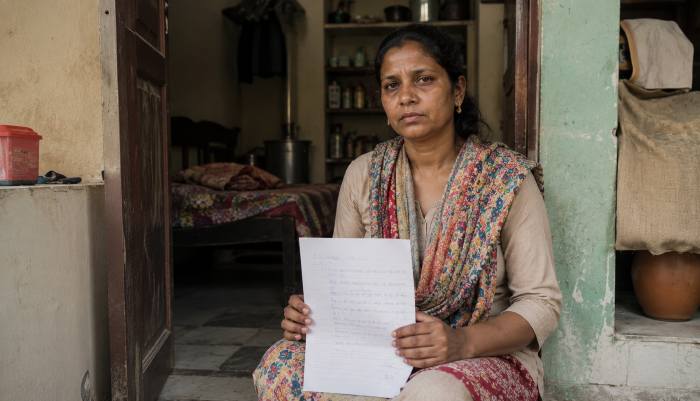
Case Summary
A Dalit Hindu woman, mother of two children, from Gangoh police station area, Saharanpur district, Uttar Pradesh, was lured away under a false marriage promise in 2022 by Sabban, a Muslim man who was already married with four children. He kept her in a rented house in Karnal, Haryana, subjected her to sustained physical and mental exploitation, and along with his family members subjected her to sustained pressure to convert from Hinduism to Islam. When she pressed him to fulfil the marriage promise and conduct nikah, he abused her, beat her, and threatened to kill her. She filed a complaint with police, leading to Sabban's arrest and judicial custody. As per details, Sabban lured the Dalit Hindu woman away from Uttar Pradesh in 2022 under a false promise of marriage, despite being already married with four children. He kept her in a rented house in Karnal, Haryana, away from her family and support network. Over an extended period he subjected her to sustained physical and mental exploitation. Sabban and his family members continuously pressured her to change her religion and convert to Islam. When she resisted and repeatedly pressed Sabban to fulfil his marriage promise and conduct nikah, he responded with abuse, physical assault, and death threats. The victim filed a complaint at Gangoh police station. Gangoh police, acting on the directions of Saharanpur SSP, registered a case against Sabban under serious sections including the SC/ST [Scheduled Castes and Scheduled Tribes Prevention of Atrocities] Act and the UP Prohibition of Unlawful Religious Conversion Act. Police trapped and arrested Sabban from the Buddhakhera Paith Road area. During interrogation, Sabban confirmed he was already married with four children, that the woman had been married with two children when he took her away in 2022, and that he had been keeping her in a rented house in Karnal since that year. He admitted that disputes over nikah had frequently led to fights between them. Sabban was produced before court and sent to judicial custody. Police stated that further investigation of all aspects of the case was underway.
Why it is Hate Crime ?
The primary category for this case is "Crimes against women in relationships and other sexual crimes". The sub-category for this case is "Brainwashed and/or groomed". The tertiary category for this case is "Rape and sexual assault/harassment" and "Victim says she was brainwashed and/or groomed". In our database, we have not added incidents where women have converted to another religion of their free will and no allegations of forced/involuntary conversion have been made. However, there are certain cases of conversion where the consent itself is a result of the brainwashing or grooming of a minor by the non-Hindu perpetrator trying to victimise a woman for her Hindu religious identity. The phenomenon of grooming points to non-Hindu perpetrators identifying their Hindu victims’ vulnerabilities and exploiting them over months and sometimes years, to extract the supposed ‘consent’ in order to convert their religion. In most cases of grooming, the victims are minors or the grooming started when the victim was a minor. In other cases of grooming, the non-Hindu perpetrator brainwashes and grooms a minor victim to extract their trust and then proceeds to rape them repeatedly with the intent of converting them to their faith. It is pertinent to understand here that when the victim is a minor, the ‘consent’ to convert or enter into a romantic relationship with an adult itself is redundant – addressed by POCSO. While every case of conversion of a minor and incidents of establishing a physical relationship with a minor by an adult is a crime, for the purpose of this database, a case would be considered a hate crime only if there is a distinct religious angle to the grooming. For example, in the UK, if a Hindu minor is targeted by Pakistani grooming gangs, it would be considered a hate crime because the victims are specifically targeted owing to their non-Muslim religious identity with the perpetrators being Muslim. In other cases, if a Hindu minor is brainwashed into entering a physical relationship with the non-Hindu adult perpetrator and the family alleges grooming/brainwashing of the minor to convert her religion, it would form a part of this database. If the victim is a Hindu adult, the case would form a part of this database only if the victim herself says that she was brainwashed/groomed to convert her religion. However, if the victim is deceased (murdered or otherwise), the case would form a part of this database if her family/friends provided testimony that the victim was brainwashed/groomed to convert her religion. Since these crimes have a distinct religious angle where the victim is being targeted owing to her Hindu religious identity, these cases are considered a hate crime. Another sub-category for this case is "Forced conversion before marriage". In such cases, a non-Hindu man is in a relationship with a Hindu woman when the pressure to convert her religion begins to manifest. In such cases, typically, two patterns emerge. First, when the relationship is consensual, and the religious identity of the perpetrator is known to the Hindu woman in the relationship, however, at some point during the relationship, the non-Hindu man starts to force the victim to convert her religion and give up her Hindu religious identity. The second is when the woman gets into a marriage with the man pretending to share her faith. Later, when the truth is revealed, the man starts pressuring the woman to convert her religion and give up her religious identity. In both the situations, the methods used to force the victim to convert her religion often revolve around force-feeding beef, forcing her to wear hijab, forcing her to read the Kalma or even pressurizing the victim to do ‘Nikah’, which is marriage under Islamic law, with a prerequisite being conversion to Islam. Cases where a Hindu woman consensually converts to Islam in a relationship will be left out of the hate crime database, even though it could be argued in several cases that the conversion was a result of religious brainwashing. One other sub-category for this case is "Assault or threat upon refusal to convert". When Hindu women are in a relationship with non-Hindu men, there are cases where the woman faces threats or assault after she refuses to convert and change her religious identity owing to pressure/force by the non-Hindu man. Such relationships may be consensual with the religious identity of the non-Hindu man known to the victim. Somewhere along the relationship, the non-Hindu man starts pressurizing the Hindu woman to convert to Islam and upon her refusal, assaults or threatens the victim. Such cases are driven by specific religious motivations and against the religious identity of the victim and are therefore qualified as hate crimes. Cases where the Hindu woman converts to Islam and does not file a complaint about the force or threat, are not considered a part of the hate tracker, even though, it may be argued that the woman was brainwashed or threatened to convert to Islam. The conduct directed at the Dalit Hindu woman by Sabban followed a documented two-phase methodology. The first phase was entrapment: a false marriage promise used to lure a married Hindu woman with two children away from her family and home in Uttar Pradesh and relocate her to a rented house in Karnal, Haryana, in a condition of geographic and social isolation. The second phase was exploitation and coercion: sustained physical and mental abuse, death threats, and conversion pressure applied to a woman who had been deliberately separated from every institutional and familial support available to her. The two phases together establish a conversion operation in which a false marriage promise was the entry point and sustained violence and religious coercion were the retention mechanisms. Here, though the Muslim accused did not hide his identity, the nature of the relationship suggests that the Hindu woman was initially led to believe that her faith would not be a barrier to their romantic involvement. Trusting the accused's word, she entered the relationship, during which the Muslim man took advantage of her physically under the pretence of marriage. However, his true intentions were exposed when he began pressuring her to convert to Islam. To further coerce the victim, he resorted to harassment and threats when she refused to comply with his demands for conversion. The details of the case reveal a deliberate targeting of the Hindu woman, with the intent to isolate her from her faith and impose a different religious identity upon her. This manipulation reflects the accused's clear bias against Hinduism. His actions were not just about physical exploitation but were rooted in a desire to strip the victim of her Hindu identity and force her into adopting Islam. The involvement of Sabban's family members in the conversion pressure is a further significant marker. The conversion demands were not limited to Sabban alone. His family members also continuously pressured the Dalit Hindu woman to change her religion. A household that collectively applies conversion pressure to a Hindu woman held in geographic isolation reflects an organised family-level conversion operation rather than individual conduct, consistent with the documented pattern of love jihad operations in which the perpetrator's family participates in the religious coercion alongside the primary perpetrator. This case is being added to the hate crime database of the Hinduphobia Tracker because the conduct directed at the Dalit Hindu woman was deliberate, premeditated, and rooted in a conversion operation in which a false marriage promise was the instrument of entrapment, geographic isolation was the operational framework, and sustained physical abuse and family-level conversion pressure were the mechanisms of coercion. The victim was targeted specifically because she was Hindu, and the false marriage promise was deployed because it was the most effective instrument available for separating a Dalit Hindu woman from her family and community in preparation for a sustained conversion operation conducted under conditions of total isolation. This reflects an underlying hostility toward Hindu religious identity that cannot be characterised as anything other than religiously motivated. Such acts are carried out by Muslim perpetrators due to indoctrination by the Islamic theology, which advocates that all non-Muslims (referred to as kafirs) are inferior and subject to subjugation unless they convert to Islam or live under Islamic rule (dhimmitude). These ideas are not mere abstractions; they manifest in actions where non-Muslims, especially Hindus in India, are seen as targets for religious domination, coercion, or humiliation. This theological framework fosters an "us versus them" mindset, in which any assertion of Hindu identity or religious freedom is seen not only as undesirable but as a threat to Islamic supremacy. As a result, perpetrators who are shaped by such teachings feel justified, even morally obligated, to harass, suppress, or violently attack Hindus, particularly when Hindus assert their religious rights or resist conversion. Such acts, therefore, are not isolated but driven by a broader ideological hostility towards Hindus as non-believers and reflect an attempt to impose religious dominance. Since this case was also not a random, isolated incident of grooming of a Hindu woman but a premeditated attack motivated by bias and hatred against the Hindu community, which is a defining feature of hate crimes, this has been added to the tracker. Disclaimer: The exact date on which Sabban first lured the Dalit Hindu woman away from her home was not confirmed in the source. The tracker records incident dates based on when the crime occurred, not when it was reported or published. This case involved a sustained course of conduct spanning approximately four years, beginning with the entrapment of the victim under a false marriage promise in 2022. In this case, therefore, 25 May 2022 has been used as the indicative incident date, with 25 May as the reporting date and the year aligning with the beginning of the victim's ordeal. This date has been recorded for documentation purposes only.
Victim Details
Total Victim
1
Deceased
0
Gender
- Male 0
- Female 1
- Third Gender 0
- Unknown 0
Caste
- SC/ST 1
- OBC 0
- General 0
- Unknown 0
Age Group
- Minor 0
- Adult 1
- Senior Citizen 0
- Unknown 0


Case Status
Arrested


Perpetrators Details
Perpetrators
Muslim Extremists
Perpetrators Range
One Person
Perpetrators Gender
male
 Sources




