Hindu woman pressured to convert to Islam, sexually exploited and abandoned after nine-year relationship with Muslim man in Chennai
 Chennai, Tamil Nadu, India
  24 May, 2017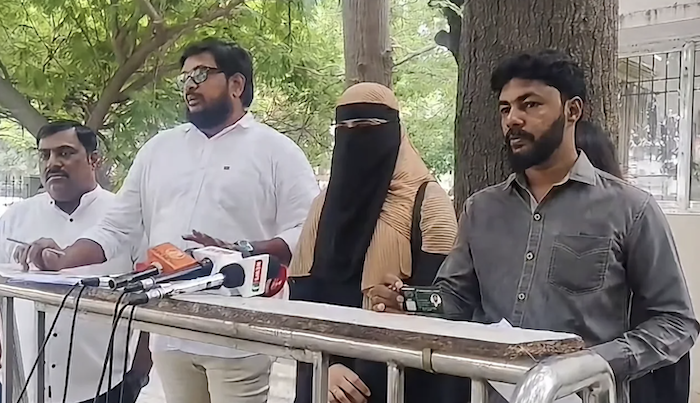
Case Summary
A Hindu woman in Chennai, Tamil Nadu, was drawn into a long relationship by a Muslim man who later converted her to Islam, changed her identity, financially exploited her, and abandoned her after nine years. The Hindu victim was introduced to Syed Ibrahim through his textile business, where she had joined as an employee. Over time, the relationship developed into a prolonged course of religious conversion, emotional manipulation, and exploitation that left the Hindu woman isolated and distressed. The Hindu woman, originally named Suganya, came into contact with Muslim perpetrator Syed Ibrahim after she joined one of the textile outlets operated by him in Chennai. Syed Ibrahim later proposed to her and pressured her to convert to Islam before marriage. Following the conversion, her Hindu identity and name were changed, and she began using the name Safa Mariyum. The relationship then continued for approximately nine years, during which the Hindu woman remained with Syed Ibrahim under the belief that he would eventually marry her. During the course of the relationship, the Hindu woman was subjected to sustained emotional, financial, and sexual exploitation. Syed Ibrahim extracted nearly Rs 13 lakh from her and repeatedly engaged in sexual relations with her under assurances of marriage. Throughout this period, the Hindu victim remained separated from her earlier Hindu identity after converting to Islam and adopting a new Muslim name. She also began wearing a burqa following the conversion. The relationship deteriorated in May 2026 when the Hindu woman discovered that Syed Ibrahim was preparing to marry another woman. She learnt about the wedding arrangements through one of his clients. When she confronted him regarding the marriage, he threatened to commit suicide if she disclosed details of their relationship and conversion to his family members. The Hindu woman later stated that she had been abandoned after years of conversion, exploitation, and false assurances. After learning about the impending marriage, the Hindu woman filed a complaint at the Arumbakkam Women’s Police Station on 6th May 2026. She stated that despite repeatedly approaching the police and commissioner’s office, she did not receive timely assistance to prevent the marriage. By 19th May 2026, no effective intervention had taken place despite her repeated attempts to seek help. On 20th May 2026, the Hindu woman travelled to a marriage hall in Royapuram along with several individuals, including activist Valarmathi, to confront Syed Ibrahim and stop the wedding ceremony. Shortly afterwards, police personnel from Royapuram Police Station arrived at the venue and ordered the group to leave. A confrontation followed between the Hindu woman and police personnel, after which she and the accompanying women were removed from the premises. Videos connected to the incident later circulated widely on social media. The incident soon attracted political and public attention across Tamil Nadu. Political functionaries and advocates gathered in support of the Hindu woman after details of the case emerged publicly. Television and social media discussions focused on the Hindu woman’s conversion, identity change, financial exploitation, and abandonment after nearly a decade of relationship with the Muslim perpetrator. Subsequently, Assistant Commissioner Bhaskaran assured that action would be taken regarding the Hindu woman’s complaint and that an inquiry would be conducted into the conduct of Inspector Chidambaram Bharathi during the incident at the marriage hall. Chennai Police later transferred Inspector Chidambaram Bharathi to the vacancy reserve list following the controversy and inquiry surrounding the altercation at the venue. The case continued to generate wider public debate because the Hindu woman maintained that Syed Ibrahim had entered the relationship with the objective of conversion and long term exploitation. The matter also drew attention due to the sustained duration of the relationship, the conversion of the Hindu woman from her original faith, the change in her identity, the financial exploitation involving Rs 13 lakh, and her eventual abandonment after nine years.
Why it is Hate Crime ?
This case has been added to the tracker under the primary category - Crimes against women in relationships and other sexual crimes. Within this, the sub-category selected is - Brainwashed and/or groomed. Under this, the tertiary categories selected are - Rape and sexual assault/harassment, and Victim says she was brainwashed/groomed. In our database, we have not added incidents where women have converted to another religion of their free will and no allegations of forced/involuntary conversion have been made. However, there are certain cases of conversion where the consent itself is a result of the brainwashing or grooming of a minor by the non-Hindu perpetrator trying to victimise a woman for her Hindu religious identity. The phenomenon of grooming points to non-Hindu perpetrators identifying their Hindu victims’ vulnerabilities and exploiting them over months and sometimes years, to extract the supposed ‘consent’ in order to convert their religion. In most cases of grooming, the victims are minors or the grooming started when the victim was a minor. In other cases of grooming, the non-Hindu perpetrator brainwashes and grooms a minor victim to extract their trust and then proceeds to rape them repeatedly with the intent of converting them to their faith. It is pertinent to understand here that when the victim is a minor, the ‘consent’ to convert or enter into a romantic relationship with an adult itself is redundant – addressed by POCSO. While every case of conversion of a minor and incidents of establishing a physical relationship with a minor by an adult is a crime, for the purpose of this database, a case would be considered a hate crime only if there is a distinct religious angle to the grooming. For example, in the UK, if a Hindu minor is targeted by Pakistani grooming gangs, it would be considered a hate crime because the victims are specifically targeted owing to their non-Muslim religious identity with the perpetrators being Muslim. In other cases, if a Hindu minor is brainwashed into entering a physical relationship with the non-Hindu adult perpetrator and the family alleges grooming/brainwashing of the minor to convert her religion, it would form a part of this database. If the victim is a Hindu adult, the case would form a part of this database only if the victim herself says that she was brainwashed/groomed to convert her religion. However, if the victim is deceased (murdered or otherwise), the case would form a part of this database if her family/friends provided testimony that the victim was brainwashed/groomed to convert her religion. Since these crimes have a distinct religious angle where the victim is being targeted owing to her Hindu religious identity, these cases are considered a hate crime. The other sub-category selected here is - Forced conversion before marriage. Under this, the tertiary category selected is - Forced to wear Hijab. In such cases, a non-Hindu man is in a relationship with a Hindu woman when the pressure to convert her religion begins to manifest. In such cases, typically, two patterns emerge. First, when the relationship is consensual, and the religious identity of the perpetrator is known to the Hindu woman in the relationship, however, at some point during the relationship, the non-Hindu man starts to force the victim to convert her religion and give up her Hindu religious identity. The second is when the woman gets into a marriage with the man pretending to share her faith. Later, when the truth is revealed, the man starts pressuring the woman to convert her religion and give up her religious identity. In both the situations, the methods used to force the victim to convert her religion often revolve around force-feeding beef, forcing her to wear hijab, forcing her to read the Kalma or even pressurizing the victim to do ‘Nikah’, which is marriage under Islamic law, with a prerequisite being conversion to Islam. Cases where a Hindu woman consensually converts to Islam in a relationship will be left out of the hate crime database, even though it could be argued in several cases that the conversion was a result of religious brainwashing. This case carried strong religious markers because the Hindu woman was subjected to prolonged grooming and manipulation over a period of nearly nine years that culminated in her conversion to Islam and the gradual erasure of her Hindu identity. Here, while the Muslim accused did not hide his identity, the nature of the relationship suggests that the Hindu woman was initially led to believe that her faith would not be a barrier to their romantic involvement. Trusting the accused's word, she entered the relationship, during which the Muslim man took advantage of her physically under the pretence of marriage. However, his true intentions were exposed when he began pressuring her to convert to Islam. To further coerce the victim, he resorted to emotional blackmail, leading to her conversion to Islam and isolation from her original Hindu identity. The Muslim perpetrator did not engage in a short-term relationship but sustained emotional influence and dependency over almost a decade, during which the Hindu woman was drawn deeper into an environment centred around religious conversion and control. The duration of the relationship demonstrated a systematic process of psychological conditioning rather than an ordinary interpersonal relationship. The prolonged nature of the manipulation showed clear religious motivation because the relationship ultimately revolved around transforming the religious identity of a Hindu woman and integrating her into an Islamic identity framework. The case also involved sustained sexual exploitation under false assurances of marriage over nearly a decade. The Hindu woman stated that the Muslim perpetrator repeatedly engaged in sexual relations with her while assuring her that he would marry her and remain committed to the relationship. During this period, she remained financially and emotionally invested in him, even handing over nearly Rs 13 lakh while continuing to believe that the relationship would culminate in marriage and stability. The sexual relationship was therefore with the intent to isolate her from her faith and impose a different religious identity upon her. This manipulation reflects the accused's clear bias against Hinduism. His actions were not just about physical or financial exploitation but were rooted in a desire to strip the victim of her Hindu identity and force her into adopting Islam. The eventual abandonment of the Hindu woman after conversion, financial exploitation, and sexual relations further reinforced the predatory nature of the relationship. The Hindu woman’s own statements further confirmed the existence of grooming, manipulation, and coercive control throughout the relationship. She stated that she had been trapped, deceived, mentally harassed, and exploited by the Muslim perpetrator for over nine years. Her complaint described how she was converted to Islam, financially exploited, and abandoned when the perpetrator prepared to marry another woman. She also approached the police multiple times after discovering the marriage plans, demonstrating the emotional dependency and distress created through years of manipulation. Her account established that the relationship had been built on prolonged psychological influence and deception that fundamentally altered her life, identity, and religious affiliation. The religious nature of the targeting became even more explicit through the complete transformation of the Hindu woman’s identity after entering the relationship. Following the conversion, her Hindu name Suganya was replaced with the Muslim name Safa Mariyum, symbolising the deliberate removal of her original Hindu identity and its replacement with an Islamic identity. The conversion was not limited to a change in faith alone but extended into her appearance, social identity, and daily life. She began wearing a burqa and covering her body in accordance with Islamic practices after her conversion. The imposition of Islamic clothing and the adoption of a Muslim name demonstrated a comprehensive process of religious assimilation in which visible markers of her Hindu identity were systematically erased. The transformation showed that the relationship was not merely personal in nature but deeply connected to religious conversion and identity alteration. This incident is not an isolated case but part of a broader pattern where Hindu women are deliberately targeted through deception and emotional blackmail for religious conversion and sexual exploitation. This stems from inherent hostility towards the victim's professed faith since Abrahamic faiths believe that any non-adherent to the faith is subject to being dehumanised till they convert. Such predatory actions stem from doctrinal animosity towards the Hindu faith and its adherents. Given these elements, the case has been classified as a religiously motivated hate crime, driven by the accused's animosity towards the Hindu faith. Disclaimer: The exact date of when the Hindu woman and the Muslim perpetrator first came into contact was not specified in the available sources. However, the relationship was said to have continued for approximately 9 years before the incident became public in 2026. The tracker records incident dates based on when the crime occurred, not when it was reported or published. In this case, 25th May 2017 has been used as the indicative incident date, derived by aligning the approximate beginning of the nine-year relationship with the article publication date of 25th May 2026. This date has been recorded for documentation purposes only.
Victim Details
Total Victim
1
Deceased
0
Gender
- Male 0
- Female 1
- Third Gender 0
- Unknown 0
Caste
- SC/ST 0
- OBC 0
- General 0
- Unknown 1
Age Group
- Minor 0
- Adult 1
- Senior Citizen 0
- Unknown 0


Case Status
Complaint filed


Perpetrators Details
Perpetrators
Muslim Extremists
Perpetrators Range
One Person
Perpetrators Gender
male
 Sources




