Sacred idol of a Hindu deity desecrated by miscreants in Gariaband, Chhattisgarh
 Gariaband, Chhattisgarh, India
  23 May, 2026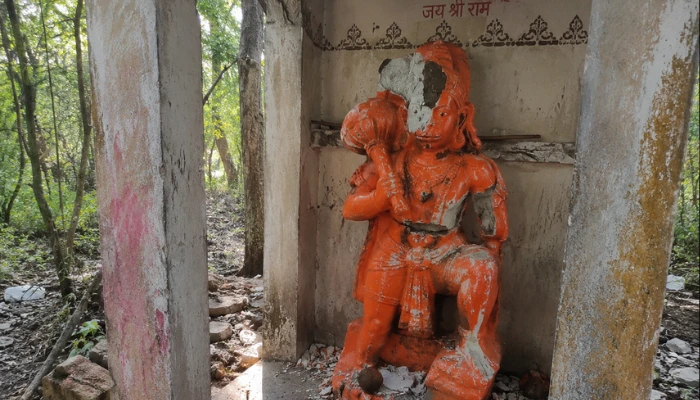
Case Summary
In the Gariaband district of Chhattisgarh, a sacred idol of Lord Hanuman was desecrated by a few unidentified miscreants in Bhendri-Jamgaon village under the Fingeshwar police station area. The perpetrators damaged the idol with bricks and tiles near the temple premises, leading to anger and outrage among local villagers and Hindu organisations. According to reports, the accused had consumed alcohol before carrying out the desecration. Traces of alcohol consumption and broken pieces of bricks and tiles were found near the temple premises. Following information about the incident, members of Hindu organisations, including Vishva Hindu Parishad district coordinator Mohit Sahu, reached the spot along with the police and inspected the site. A meeting of villagers was later held on 24 May 2026 under the leadership of Village Committee Chairman Bhekhlal Sahu to gather information regarding the incident. No involvement of any villager emerged during the discussions, after which villagers approached the Fingeshwar police station and lodged a formal complaint regarding the desecration. Hindu organisations condemned the incident and demanded strict action against the unidentified perpetrators responsible for desecrating the sacred idol. Villagers also stated that alcohol consumption would be strictly prohibited in the village and that fines would be imposed on individuals found consuming alcohol or creating disturbances at religious sites. Some villagers expressed suspicion that a mentally disturbed man seen roaming in the village a week earlier could have been linked to the incident. Police were investigating the matter from all possible angles. Meanwhile, villagers announced that a new idol of Lord Hanuman would be installed at the same site on 17 June 2026.
Why it is Hate Crime ?
The primary category selected in this case is- Attack on Hindu religious representations. The subcategory selected is- Desecration of Hindu religious symbol. Icons and symbols or a religious representation of a spiritual ideal are widely revered in Hinduism. Iconography is of vital significance in the Hindu milieu. It helps connect people’s spiritual beliefs with the real world. Iconography within the Hindu faith takes several shapes and forms. Murtis are of most significance to Hindus, to which daily rituals, prayers and offerings are done. Besides the murtis, there are several other symbols which have deep significance in the Hindu faith – the Om and Swastika for example. Since these Hindu religious symbols hold paramount importance in Hinduism, any desecration of symbols, icons, murtis, religious representations and manifestations, is driven by animosity towards the faith itself which manifests itself through these murtis, icons and symbols. Therefore, any desecration of these Hindu religious symbols and representations is considered religiously motivated hate crimes under this category. The other subcategory selected is- Attack on Temples. In Hinduism, a temple is the abode of the Deity. The Deity in the Temple is consecrated, thereby, making it a real, breathing entity. Hindus believe that not just the Deity but the temple premises itself are sacred to Hindus since Hindus hold the faith that the entire Temple space is an amalgamation of the divine energy of the deity. Given the central significance of Temples in Hindu Dharma, any attack against a Hindu Temple or its peripheral premises is an attack on the faith itself and is born out of animosity towards the faith, of which, the Temple is a central tenet. Any manner of attack against a Temple and/or its premises would therefore be considered a religiously motivated hate crime. This case is a clear example of a religiously motivated hate crime, as the perpetrators desecrated the sacred idol of Lord Hanuman that was kept inside a Hindu temple. The deliberate damaging of a sacred Hindu idol amounts to a direct attack on a revered religious symbol of the Hindu community. Such acts are not merely instances of vandalism or destruction of property, but constitute targeted acts aimed at hurting the religious sentiments and faith of Hindus. The incident, therefore, amounts to a clear case of a religiously motivated hate crime driven by hostility towards Hindu religious beliefs and symbols. In Hinduism, temple idols of deities hold deep religious and spiritual significance and are regarded as sacred embodiments of divine presence. Hindu devotees do not view such idols as ordinary objects or decorative artefacts, but as consecrated representations through which the deity is worshipped and spiritually invoked. Idols of deities such as Lord Hanuman are objects of deep reverence, devotion, and daily worship for Hindu devotees. Therefore, the act of desecrating or damaging a sacred idol amounts to an attack on a central symbol of Hindu faith itself. Such acts of desecration target sacred Hindu religious symbols with the intention or effect of insulting, violating, and hurting the religious sentiments of the Hindu community, thereby amounting to a clear case of a religiously motivated offence and hate crime. The fact that the desecration occurs to an idol kept inside a Hindu temple further demonstrates that this is not merely an isolated act of damage to a religious object, but an attack on the sanctity of the temple itself. In Hinduism, temples are sacred spaces of worship, devotion, and spiritual communion, where every aspect of the temple, including the sanctum, idols, offerings, and rituals, collectively forms a sacred religious ecosystem. The idol installed within a temple is inseparable from the sanctity and spiritual identity of the temple itself. Hence, the desecration of the idol also desecrates the sanctity of the temple as a whole. Such attacks on Hindu temples and their sacred symbols amount to clear cases of hate crimes because they target objects and spaces that hold profound religious significance for Hindus and are carried out in a manner that deeply hurts Hindu religious sentiments. This overall reflects clear religious animosity and hostility towards Hindu beliefs and places of worship. Some villagers expressed suspicion that a mentally disturbed individual seen roaming in the village earlier could be linked to the desecration. However, even if the perpetrator is later found to be mentally unstable, it does not justify or diminish the seriousness of the act committed against a sacred Hindu religious symbol. If the act were merely random behaviour arising from mental instability, then other public places, non-religious properties, or shrines belonging to different religions could equally have been targeted. Instead, the perpetrator specifically desecrated a sacred idol of Lord Hanuman kept inside a Hindu temple, which indicates a deliberate targeting of a Hindu religious symbol. This raises important questions regarding why Hindu temples and idols repeatedly become the focus of such acts of desecration. The repeated use of the “mental illness” explanation in cases involving attacks on Hindu temples and idols often risks downplaying the religious dimension of such incidents and obscuring the deep hurt caused to Hindu religious sentiments. Regardless of the mental condition of the perpetrator, the act still amounts to the desecration of a sacred Hindu symbol and an attack on the sanctity of a Hindu place of worship. Some may also attempt to argue that since the accused had consumed alcohol, the desecration occurred merely under the influence of intoxication rather than due to religious animosity. However, being under the influence of alcohol cannot justify or excuse the deliberate desecration of sacred Hindu religious symbols and places of worship. Intoxication does not explain why a specific Hindu temple and a sacred idol of Lord Hanuman were targeted instead of random public property or other non-religious locations. The act involved the damaging of a consecrated Hindu idol inside a temple, a site that holds profound religious and spiritual significance for Hindu devotees. Therefore, regardless of whether alcohol was involved, the act still amounted to a serious violation of Hindu religious sentiments and an attack on sacred Hindu symbols. Attempts to reduce such incidents merely to intoxicated behaviour risk minimising the gravity of the desecration and obscuring the religious dimension and communal impact of the attack on the Hindu community. In this case, even though the identities of the perpetrators remain unknown, the nature of the act itself clearly indicates religious animosity, as a sacred Hindu idol inside a temple is specifically targeted and desecrated. Therefore, this incident is being added to the hate crime database of the Hinduphobia Tracker as a case of a religiously motivated hate crime targeting Hindu religious symbols and places of worship. Disclaimer: The Hinduphobia Tracker records incident dates based on when the crime occurs rather than when it is reported in the media. In the current case, media reports do not specify the exact date on which the desecration of the idol took place. The reports only mention 24 May 2026 as the date on which villagers organised a meeting to discuss the incident and lodged a complaint regarding the desecration. Hence, 24 May 2026 is being used as the indicative incident date for documentation purposes only.


Case Status
Complaint filed


Perpetrators Details
Perpetrators
Unknown
Perpetrators Range
Unknown
Perpetrators Gender
unknown
 Sources




