Hindu sentiments outraged as Muslim youths make derogatory remarks against puja inside Bhojshala temple in Dhar, Madhya Pradesh
 Dhar, Madhya Pradesh, India
  21 May, 2026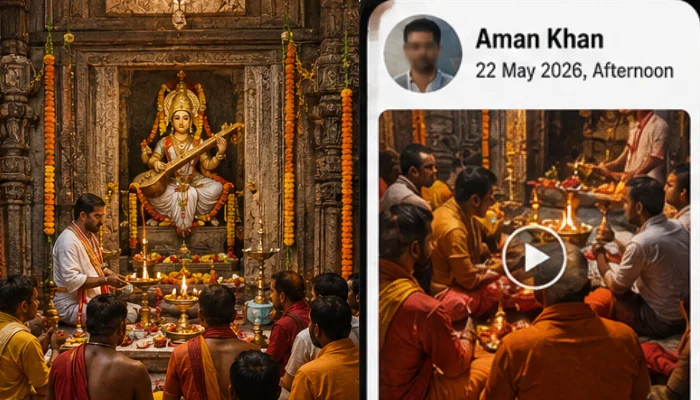
Case Summary
In Dhar, Madhya Pradesh, Hindu religious sentiments were hurt after Muslim youths made derogatory remarks regarding a puja taking place inside the Bhojshala temple and against Hindus performing the religious ceremony there. This incident has a backdrop in the long-standing Bhojshala controversy. Bhojshala was historically a Hindu temple and gurukul dedicated to Goddess Saraswati, constructed by Raja Bhoja of the Paramara dynasty. During the period of Islamic invasions under Alauddin Khilji, the temple was desecrated, and a mosque-like structure and dargah were built over parts of the site. Thereafter, the site remained a point of continuous dispute between Hindus and Muslims for decades, with Hindus rightfully asserting that Bhojshala was their ancient temple and Muslims claiming it as a mosque. The matter was ultimately examined by the Madhya Pradesh High Court at Indore, which, after considering archaeological findings, historical records, and other evidence, recognised Bhojshala as a Hindu religious site. The court also stated that namaz could not be offered within the Bhojshala premises as it was a Hindu temple, thereby restoring the site to the Hindu community. Following the verdict, members of the Hindu community celebrated the decision by conducting pujas and other Hindu religious rituals inside the Bhojshala temple premises. The celebrations were seen as marking the Hindu community’s victory in the long-standing dispute and the reclaiming of what they regarded as their historic religious site. In this current case, according to Kotwali Police Station in-charge Deepak Singh Chauhan, action was taken on the basis of a complaint filed by 21-year-old Himanshu Baij, a resident of the Nalcha Darwaza area. The complainant presented substantial evidence at the police station on the night of 22 May 2026. The complaint stated that a Muslim youth named Aman Khan had uploaded a video of a puja taking place at Bhojshala on social media during the afternoon of 22 May 2026. The video had been recorded during a religious ceremony being conducted within the premises. Alongside the video, Aman Khan also posted a highly objectionable comment directed against the Hindu community and the puja being performed at the site. Following the emergence of the controversial post, other Muslim youths, namely, Sonu Khan, Altaf Mirza, and three others, also made objectionable comments. The Hindu complainant submitted screenshots of all the posts and comments to the police. Following a preliminary investigation, the police registered a case against all six accused under the Bharatiya Nyaya Sanhita. The case was filed under Section 223(b), which pertains to wilful disobedience to an order duly promulgated by a public servant.
Why it is Hate Crime ?
This case is added to the tracker under the primary category- Hate Speech against Hindus. The subcategory selected is- Anti-Hindu slurs, mocking faith. Anti-Hindu slurs and the deliberate mocking of the Hindu faith owing to religious animosity involve the usage of derogatory terms, stereotypes, or offensive references to religious practices, symbols, or figures. One of the common anti-Hindu slurs used against Hindus is “cow-worshipper” and “cow piss drinker”. The intention of using this term is to demean and mock Hindus as a group and their religious beliefs since Hindus consider the cow holy. Additionally, some symbols and the slurs attached to them have a historical context that exacerbates the insult, hate, stereotyping, dehumanisation and oppression against Hindus. Cow worship has been used for centuries to denigrate Hindus, insult their faith and oppress Hindus specifically as a religious group. There has been overwhelming documentation about how cow slaughter has been used to persecute Hindus with cow meat being thrown in temples and places of worship. There has also been overwhelming documentation where cow meat (beef) has been force-fed to Hindus to either forcefully convert them to Islam or denigrate their faith. Apart from cow worship, the Swastika – which holds deep religious significance for the Hindus – has also been misinterpreted and distorted to use as a slur against Hindus. Similarly, the worship of the Shivling has been used by supremacist ideologies and religions to denigrate Hindus owing to religious animosity. Such slurs and denigration stem out of inherent animosity and hate towards Hindus and their faith, therefore, it is categorised as hate speech targeted at Hindus specifically owing to their religious identity. This incident is a clear case of a religiously motivated hate speech, as the Muslim perpetrators made derogatory remarks targeting a puja taking place at the Bhojshala temple and directed offensive comments towards members of the Hindu community. The nature of the remarks, as described, indicates hostility towards Hindu religious practices and beliefs being observed at the site. This collectively points towards it being an example of anti-Hindu hate speech, driven by religious intolerance. Considering the history of Bhojshala, where a Hindu temple was desecrated by Islamic invaders and a mosque was later constructed on the site, Hindus had to wage a long, hard legal battle to regain their religious shrine and the sacred gurukulam dedicated to Goddess Saraswati. That protracted struggle was an emotional, hard‑won victory for the Hindu community and a reaffirmation of their civilisational identity. The perpetrators’ mocking and denigrating of the puja at the temple reveals deep‑seated religious animosity toward the Hindu community and its faith. Given that the temple’s restoration followed all legal procedures, the mockery and abuse intended to offend Hindu sentiments constitute a clear case of anti‑Hindu hate speech. Hindu temples and pujas hold deep religious significance, and the deliberate targeting of those practices reinforces that this incident amounts to hate speech. The mocking of the puja being performed at Bhojshala reflects disrespect towards a religious ceremony that holds deep significance for practising Hindus. Such conduct is intended to provoke or offend religious sentiments. It also showcases that the accused felt no sympathy for the Hindu community’s struggle to reclaim a temple that had been desecrated during Islamic invasions of India. Their actions demonstrate a lack of respect for Hindu sentiments, beliefs, faith, and places of worship, and they show no empathy for what the Hindu community endured. This conduct reflects anti‑Hindu animosity and, in effect, expresses support for the historical desecration of Hindu temples. Additionally, the circulation of these remarks on social media, together with supportive comments, indicates that the perpetrators intended their anti‑Hindu hatred to reach a wide audience and to cause maximum offence to Hindu sentiments and beliefs, which supports treating the incident as hate speech or a hate crime. The deliberate posting and amplification on digital platforms show an aim to wound religious feelings and provoke communal disharmony rather than to raise a legitimate grievance or engage in private criticism. Such intentional, publicly circulated hostility increases the risk of real‑world harm and amounts to online Hinduphobia. Given these factors, the incident is being recorded in the hate crime database of the Hinduphobia Tracker.


Case Status
Complaint registered


Perpetrators Details
Perpetrators
Muslim Extremists
Perpetrators Range
From 5 to 10
Perpetrators Gender
male
 Sources




