Hindu teacher arrested after Muslims falsely accuse him of “blasphemy” in Bangladesh’s Gopalganj
 Gopalganj District, Bangladesh
  20 May, 2026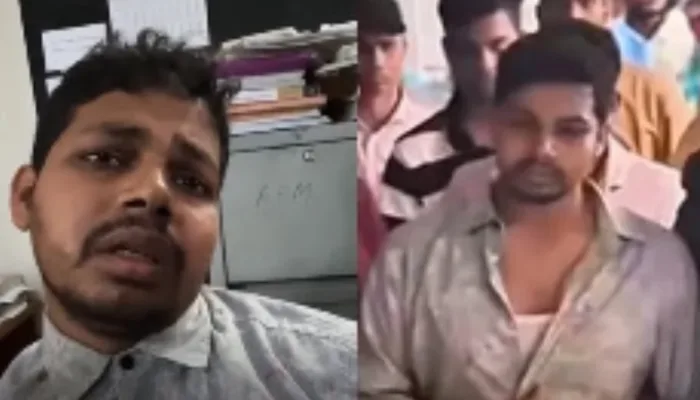
Case Summary
In Bangladesh’s Gopalganj district, a Hindu school teacher, Mithun Mondal, was falsely accused by Muslim students of making “blasphemous” remarks against Islam after a conversation at Pinjari High School in Kotalipara on 21 May 2026. Following the accusations, tensions escalated in the area, and Mithun Mondal was later arrested by the police. According to reports, during a discussion about the World Cup with Muslim students, Mithun Mondal remarked that “even God does not know which team will win the World Cup.” The innocuous statement was subsequently twisted by the Muslim students into an allegation of insulting Islam and used as the basis for blasphemy accusations against the Hindu teacher. Soon after the allegation began circulating, tensions escalated in the area, and angry Muslims locals gathered against the Hindu man. A video shared on social media showed a group of youths surrounding Mithun Mondal, aggressively interrogating him and pressuring him to “confess” to the allegation of blasphemy. Throughout the ordeal, Mithun Mondal consistently denied making any derogatory remarks against Islam. As the situation intensified, police arrived at the spot and intervened. However, instead of taking action against those intimidating and harassing the Hindu school teacher, the police took Mithun Mondal into custody. Authorities later stated that he had been detained over allegations of making derogatory comments about Islam and claimed he was taken into custody for “security reasons.” The incident created fear and tension in the area, with additional police deployed following the targeting and arrest of the Hindu man over the blasphemy accusation. This escalation of violence against Hindus in Bangladesh has unfolded in three distinct phases: first, following the ouster of Sheikh Hasina’s government in August 2024; second, after the death of Sharif Osman Bin Hadi in December 2025; and third, in the immediate aftermath of the 13th National Parliamentary Election 2026. Following the ouster of Sheikh Hasina, multiple reports documented attacks on Hindu homes, temples, and religious institutions, alongside intimidation campaigns, arson, and mob assaults targeting minority neighbourhoods. The Hinduphobia tracker has recorded 336 such incidents against the Hindu minority, underscoring the scale and persistence of anti-Hindu violence during this period. A further escalation occurred following the death of Sharif Osman Bin Hadi, a Muslim political activist and student leader known for his anti-Hindu and anti-India rhetoric. Hadi had been involved in political unrest after the fall of the Hasina government and was killed in Dhaka on 18 December 2025 during clashes. In the aftermath of his death, Hindu communities were blamed and subsequently targeted in retaliatory violence. Hindu homes were selectively set ablaze in multiple localities, forcing families to flee and leaving many displaced. The attacks appeared patterned rather than sporadic, with Muslim mobs focusing on Hindu neighbourhoods, properties, and religious symbols. Among the victims was Dipu Chandra Das, who was lynched to death and his body was set ablaze by a Muslim mob over false blasphemy allegations. The Hinduphobia tracker documented 51 incidents of anti-Hindu violence in the period following Hadi’s death alone. Such incidents underscore the vulnerability of the Hindu minority amid rising communal hostility and the weaponisation of religious accusations. Reports further indicated that posters and written materials calling for the extermination of Hindus were displayed in public spaces, signalling an alarming normalisation of genocidal rhetoric. When combined with acts of arson, vandalism, assault, and targeted intimidation, these developments suggest a coordinated environment of hostility aimed at terrorising the Hindu community and reinforcing majoritarian dominance. The third phase of violence was unleashed after the 13th National Parliamentary Election 2026. Within days of the announcement of results, Hindu families in districts such as Noakhali, Rangpur, Nilphamari, Sylhet, Thakurgaon, and Dinajpur reported coordinated attacks involving arson, looting, assault, and vandalism of temples and homes. In several instances, Hindu homes were selectively targeted, looted, and families were threatened with displacement.
Why it is Hate Crime ?
This case has been added to the tracker under the primary category of: Attack not resulting in death. Within it, the sub-category selected is: Attacked over 'Blasphemy. Blasphemy essentially refers to the desecration of anything which is held sacred/holy to a group of people. However, for religious supremacist groups, the elements of ‘blasphemy’ are ever-changing, shifting and expanding – leading to infringement on the rights of other religious groups, freedom of speech and expression, threats and even physical violence. There are instances where blasphemy is also used as a dog whistle to target Hindus owing to intrinsic animosity towards Hinduism. There are several instances where stating truths as mentioned in the non-Hindu doctrine itself has led to unmitigated violence against Hindus. There have also been instances where non-Hindus have themselves created a ‘blasphemous’ situation, like placing a Quran in a temple, to use it as an excuse to attack Hindus. Essentially, Blasphemy charges are often made up and/or are used to shut down any form of criticism of non-Hindu faiths and as a tool to target Hindus. Any physical violence over Blasphemy charges against Hindus is fundamentally based on animosity for Hindus and their faith, owing to religious supremacist ideologies; therefore, such attacks would be documented as religiously motivated hate crimes under this category. This case has been added to the tracker because it involved the targeting, intimidation, and arrest of a Hindu man in Bangladesh following allegations of making derogatory remarks about Islam. The incident demonstrated how accusations linked to blasphemy or perceived criticism of Islam are frequently weaponised against religious minorities, particularly Hindus, in Muslim-majority countries such as Bangladesh. In this case, Mithun Mondal, a Hindu school teacher from Kotalipara in Gopalganj district, was accused of making a “blasphemous” remark during a casual discussion with Muslim students regarding the World Cup. The remark in question was that “even God does not know which team will win the World Cup”, a common colloquial expression frequently used by people while discussing unpredictable sports matches and outcomes. The statement, in itself, was not derogatory towards Islam or any religion in any manner. However, despite the innocuous nature of the comment and Mithun Mondal’s denial of any wrongdoing, the remark was deliberately twisted into an allegation of blasphemy. He was subsequently publicly confronted, pressured to confess by a hostile Muslim crowd, and ultimately taken into police custody after tensions escalated in the area. The weaponisation of such a harmless statement as a basis for blasphemy allegations reflected malicious intent towards the victim and highlighted how his Hindu religious identity made him especially vulnerable to communal targeting and persecution. The incident reflected the vulnerability of Hindus to Muslim mob pressure and communal hostility once accusations of religious offence emerge. Videos circulating on social media showed groups of Muslim youths surrounding and interrogating Mithun Mondal while demanding an admission of guilt. Rather than ensuring immediate protection from intimidation and harassment, the situation culminated in police arresting the Hindu man over the allegations. The sequence of events illustrated how even unverified accusations can rapidly transform into a law-and-order issue when the accused belongs to the Hindu minority community. Blasphemy-related allegations in Muslim-majority countries such as Bangladesh and Pakistan are frequently weaponised to persecute Hindus and other minorities. Such accusations often rely on hearsay, selective interpretation, or exaggerated claims, yet they are capable of provoking public outrage, communal mobilisation, and police intervention before any impartial investigation takes place. In many cases, merely being accused becomes sufficient grounds for social humiliation, ostracism, arrest, or threats of violence. The reaction in this case, where local anger escalated quickly, and pressure was exerted publicly on the accused Hindu man, highlighted the unequal environment in which Hindu minorities are denied the presumption of innocence or protection from Muslim mob coercion. Muslim extremist groups have historically exploited blasphemy accusations to intimidate religious minorities, particularly Hindus, silence dissent, and reinforce social control. Hindus in Bangladesh remain particularly vulnerable because blasphemy allegations involving Islam frequently trigger collective outrage and public vigilantism, regardless of whether evidence exists or not. Such accusations have repeatedly led to Muslim mob attacks, destruction of Hindu homes and temples, forced displacement, arrests, and long-term persecution across Bangladesh. Furthermore, the response of the police exposed the systemic vulnerability faced by Hindus in Bangladesh. Instead of taking action against the Muslim crowd that surrounded, threatened, harassed, and aggressively interrogated Mithun Mondal over an unsubstantiated allegation, the police ultimately arrested the Hindu victim himself. The authorities failed to protect him from public intimidation and mob coercion, despite videos showing groups of Muslim youths confronting him and pressuring him to confess to “blasphemy.” By acting against the accused Hindu man rather than those engaging in intimidation and vigilantism, the police effectively appeared to side with the hostile Muslim crowd. This reflected a broader pattern in Bangladesh where law enforcement often bends under pressure from Islamist groups and Muslim mob outrage, particularly in cases involving allegations of insulting Islam. Such responses reinforce an atmosphere of fear and insecurity for Hindus, who remain highly vulnerable to anti-Hindu hostility and communal targeting. When police respond to mob pressure by detaining or penalising the minority victim instead of restraining those issuing threats and engaging in harassment, it sends a message that Muslim mobs can act with impunity. This emboldens the Muslim perpetrators and encourages the use of blasphemy accusations as a weapon to intimidate, silence, and persecute Hindus. The handling of this case demonstrated how accusations alone, even over an entirely innocuous statement, can become sufficient for public humiliation, harassment, and police action against a Hindu individual in Bangladesh. Overall, this case reflected the worsening atmosphere for Hindus in Bangladesh amid growing Islamist assertiveness and rising anti-Hindu hostility. The speed with which an alleged verbal remark escalated into public confrontation and police action demonstrated how accusations involving Islam can become instruments of intimidation and communal pressure against minorities. The targeting and arrest of Mithun Mondal, therefore, represented more than an isolated incident; it formed part of a broader pattern in which Hindus in Bangladesh face systemic vulnerability, fear, and disproportionate punishment under the pretext of protecting religious sentiments. Therefore, this case is being added to the hate crime database of the Hinduphobia Tracker.
Victim Details
Total Victim
1
Deceased
0
Gender
- Male 1
- Female 0
- Third Gender 0
- Unknown 0
Caste
- SC/ST 0
- OBC 0
- General 0
- Unknown 1
Age Group
- Minor 0
- Adult 1
- Senior Citizen 0
- Unknown 0


Case Status
Unknown


Perpetrators Details
Perpetrators
State and Establishment
Perpetrators Range
Unknown
Perpetrators Gender
unknown
 Sources




