Hindu sentiments insulted as Muslim politician makes inflammatory remarks regarding cow slaughter
 Kolkata, West Bengal, India
  19 May, 2026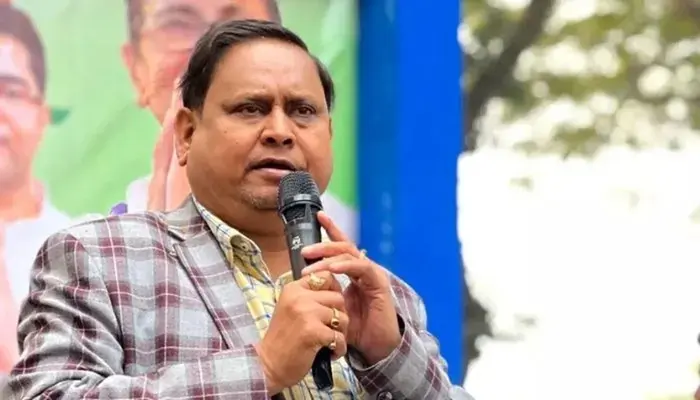
Case Summary
Ahead of Bakrid in West Bengal, Hindu sentiments were insulted after MLA Humayun Kabir made a series of inflammatory and confrontational remarks targeting Hindus and Hindu practices. Aam Janata Unnayan Party (AJUP) chief and MLA Humayun Kabir, who had earlier drawn controversy for laying the foundation stone for the Babri Masjid in Murshidabad, made derogatory remarks regarding cow sacrifice, openly challenging political opposition and warning of unrest if any restrictions were imposed on Islamic sacrificial practices. He claimed that cow sacrifice had been taking place for 1,400 years and would continue indefinitely. Rejecting any possibility of compromise, he declared that even if authorities attempted to prohibit such practices, Muslims would not stop carrying out sacrifices. He asserted that sacrifices involving cows, goats, and camels would continue as long as those animals remained legally permissible for slaughter. In his remarks, Kabir directly targeted BJP leader Suvendu Adhikari, warning him “not to play with fire” and stating that any attempt to ban sacrifice would create serious problems for the government. He emphasised that the Muslim community would never compromise on the issue of sacrifice and framed the matter as non-negotiable despite constitutional considerations. Kabir further argued that a significant section of Muslims consumed beef and questioned why slaughterhouses had not first been shut down if restrictions were genuinely intended. He also stated that the government should provide large grounds for Eid prayers and warned that if such arrangements were not made, Muslims would be compelled to offer prayers on public roads. The remarks were provocative and threatening in tone, particularly due to the warnings of unrest and the insistence that religious practices would continue regardless of political or administrative objections.
Why it is Hate Crime ?
The case has been added to the tracker under the primary category of - Hate speech against Hindus. Within it, the sub-category selected is - Violent threats. Violent threats, explicit, implicit or implied, is the most dangerous form of hate speech since it goes beyond discriminatory and prejudicial language to express the intent of causing harm to an individual or a group of people based on their religious identity and faith. There could be several different kinds of threats that are issued to Hindus based on religious animosity. An explicit threat would mean the direct threat of violence towards an individual Hindu, a group of Hindus or Hindus at large. Physical violence, death threats, threats of destruction of property belonging to Hindus and threats of genocide would mean explicit threats against Hindus for their religious identity. Implicit threats may not be a direct threat but implied through the use of symbols of actions – for example – in the Nupur Sharma case, other than explicit threats, there were also implicit threats when Islamists took to the streets to burn and beat her effigies. It implies that they want to do the same to Nupur Sharma – thereby is considered an implicit threat. Violent threats can be delivered in person, through letters, phone calls, graffiti, or increasingly through social media and other online platforms. It would be important to understand that a threat – explicit or implicit, online or offline – to an individual who happens to be a Hindu does not qualify as a religiously motivated threat. Such a threat, while vile and dangerous, could be owing to non-religious reasons and/or personal animosity. To qualify as a religiously motivated threat, it would need to exhibit an indication that the individual is being targeted for religious reasons and/or owing to his/her religious identity as a Hindu. This case has been added to the tracker because the statements made by Humayun Kabir regarding cow sacrifice and his warnings amounted to inflammatory religious rhetoric that targeted deeply held Hindu religious sentiments while simultaneously invoking communal intimidation. By claiming that cow sacrifice had continued for 1,400 years and would continue indefinitely regardless of objections, and by warning that attempts to restrict such practices would “create problems”, the accused framed the issue in an openly confrontational and threatening manner. His remarks were not confined to a defence of religious freedom but were intended to insult and mock Hindu religious sentiments, escalating into rhetoric that carried implicit warnings of communal unrest if Islamic sacrificial practices involving cows were challenged. In Hinduism, the cow occupies an exceptionally sacred position and is revered as a symbol of life, motherhood, compassion, purity, and non-violence. Millions of Hindus regard the cow as “Gau Mata” and consider its protection a religious and moral duty. Across centuries, cow protection has remained deeply intertwined with Hindu religious identity and cultural consciousness. Consequently, public declarations aggressively defending cow slaughter while dismissing Hindu objections directly strike at the religious sentiments of Hindus. In this instance, the repeated insistence that cow sacrifice would continue irrespective of protests or restrictions, coupled with warnings of repercussions if limitations were imposed, transformed the remarks from a political statement into an act of deliberate provocation aimed at a practice considered sacred by Hindus. The seriousness of the remarks was further heightened by the manner in which the accused directly warned BJP leader Suvendu Adhikari “not to play with fire”, claiming that any move to prevent sacrifice would create difficulties for the government. Such language carried an unmistakable undertone of intimidation and communal mobilisation. By declaring that the Muslim community would “never compromise” on the issue under any circumstances, the accused projected the matter in adversarial communal terms rather than as a constitutional or administrative debate. His statement that Muslims would be “forced” to pray on roads if grounds were not provided further contributed to an atmosphere of confrontation and pressure politics based on religious identity. The remarks also reflected a wider pattern wherein cow slaughter is invoked not merely as a religious practice but as a symbolic assertion of Islam against Hindu sensitivities. Historically, cow slaughter has often functioned as a flashpoint of communal hostility because of the sacred status accorded to the cow in Hinduism. Therefore, when public figures aggressively assert the continuation of cow sacrifice while warning of unrest if objections are raised, it reinforces perceptions of hostility towards Hindu beliefs and contributes to communal polarisation. The provocative framing of the statements, the invocation of religious identity in a threatening manner, and the explicit dismissal of Hindu sensitivities collectively established this as a case of inflammatory anti-Hindu rhetoric and religiously charged hate speech. The incident also formed part of a broader pattern of communal rhetoric in West Bengal, where religious symbolism and communal mobilisation have increasingly been used in political discourse. Statements that openly challenge and insult Hindu sentiments regarding the sanctity of the cow while framing any opposition as an attack on the Muslim community contribute to an atmosphere of fear, antagonism, and sectarian division. By combining assertions about cow sacrifice with warnings of consequences and communal resistance, the accused deepened existing tensions and normalised aggressive rhetoric surrounding a matter of profound religious significance to Hindus. Therefore, this case has been added to the hate crime database of the Hinduphobia Tracker.


Case Status
Unknown


Perpetrators Details
Perpetrators
Muslim Extremists
Perpetrators Range
One Person
Perpetrators Gender
male
 Sources




