Hindu women extorted and raped by Muslim man posing as Hindu tantrik in Muzaffarnagar, Uttar Pradesh
 Muzaffarnagar, Uttar Pradesh, India
  18 May, 2026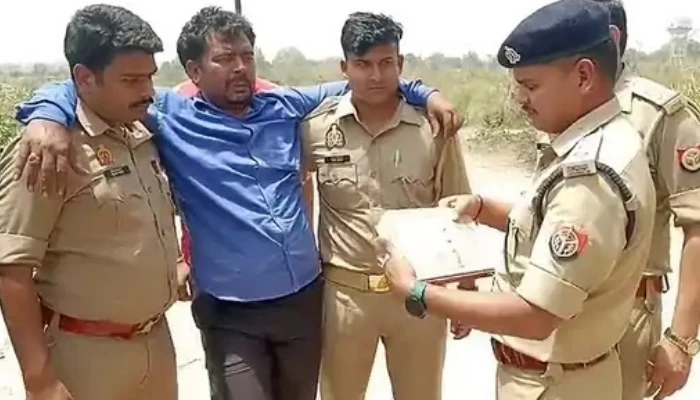
Case Summary
Hindu women in the Muzaffarnagar district of Uttar Pradesh were trapped, sexually exploited, and blackmailed by a Muslim man named Shehzad, who posed as a Hindu tantrik. He deceived victims through fake Hindu tantra-mantra rituals and fraudulent promises of solving personal and family problems. According to police, Shehzad specifically targeted Hindu women facing emotional, domestic, and health-related difficulties. Posing as a Hindu tantrik with supernatural powers, he convinced victims that he could resolve their problems through rituals and spiritual treatment. After gaining their trust, he sexually exploited them and trapped them through fear and intimidation. Police stated that the accused secretly recorded objectionable videos and photographs of the Hindu women during the exploitation and later used the material for blackmail. Victims were threatened and extorted for money after the recordings were made. The complaints regarding Shehzad’s activities had been received earlier as well. Following the investigation, police teams launched an operation to arrest him near the Delhi-Dehradun highway. During the operation, the accused attempted to flee and opened fire at the police team. In retaliatory firing by police, Shehzad sustained bullet injuries and was arrested. Police recovered an illegal pistol, cartridges, mobile phones, and other materials from the accused. Authorities stated that the accused had been carrying out fraudulent tantra-mantra activities and exploiting women for a long period. Police also began searching for another associate linked to the activities. On questioning, the accused told the police that he had chanted Hindu mantras, including 'Om Bhagavate Vasudevaya Namah', one of the most sacred and powerful mantras in Hinduism. It translates to, "I bow to Lord Vasudeva" (Lord Vishnu or Krishna), to trap the Hindu victims to make them believe that he was a Hindu tantrik, before exploiting them.
Why it is Hate Crime ?
This case was added to the tracker under the primary category - Attack not resulting in death. The subcategory selected is- Attacked for Hindu identity. In several cases, Hindus are attacked merely for their Hindu identity without any perceived provocation. A classic example of this category of religiously motivated hate crime is a murder in 2016. 7 ISIS terrorists were convicted for shooting a school principal in Kanpur because they got ‘triggered’ seeing the Kalava on his wrist and the tilak that he had put. In this, the Hindu victim had offered no provocation except for his Hindu religious identity. The motivation for the murder was purely religious, driven by religious supremacy. Such cases where Hindus are targeted merely for their religious identity would be documented as a hate crime. Under this category, cases where the attack led to the death of the Hindu victim/s would be documented. Another primary category selected is Hate speech against Hindus. Within it, the sub-category selected is - Anti-Hindu slurs, mocking faith. Anti-Hindu slurs and the deliberate mocking of the Hindu faith owing to religious animosity involve the usage of derogatory terms, stereotypes, or offensive references to religious practices, symbols, or figures. One of the common anti-Hindu slurs used against Hindus is “cow-worshipper” and “cow piss drinker”. The intention of using this term is to demean and mock Hindus as a group and their religious beliefs since Hindus consider the cow holy. Additionally, some symbols and the slurs attached to them have a historical context that exacerbates the insult, hate, stereotyping, dehumanisation and oppression against Hindus. Cow worship has been used for centuries to denigrate Hindus, insult their faith and oppress Hindus specifically as a religious group. There has been overwhelming documentation about how cow slaughter has been used to persecute Hindus, with cow meat being thrown in temples and places of worship. There has also been overwhelming documentation where cow meat (beef) has been force-fed to Hindus to either forcefully convert them to Islam or denigrate their faith. Apart from cow worship, the Swastika – which holds deep religious significance for the Hindus – has also been misinterpreted and distorted to use as a slur against Hindus. Similarly, the worship of the Shivling has been used by supremacist ideologies and religions to denigrate Hindus owing to religious animosity. Such slurs and denigration stem from inherent animosity and hate towards Hindus and their faith; therefore, it is categorised as hate speech targeted at Hindus specifically owing to their religious identity. At the outset, this case appeared to involve sexual exploitation and extortion carried out under the guise of occult practices. However, the religious dimension became evident from the manner in which the accused specifically posed as a Hindu tantrik and used Hindu tantra-mantra rituals and symbols to deceive Hindu women. The victims were not targeted randomly. Firstly, Hindu women were religiously profiled and specifically targeted. Secondly, Hindu spiritual traditions and ritual practices were misused to build trust, establish legitimacy, and facilitate exploitation. Tantra and mantra practices hold deep spiritual and religious significance within several Hindu traditions. Mantras are considered sacred invocations rooted in ancient Hindu scriptures and spiritual disciplines. Likewise, tantric practices in Hindu Dharma are associated with specific philosophical, ritualistic, and spiritual traditions developed over centuries. By falsely presenting himself as a Hindu tantrik and weaponising these sacred traditions for sexual exploitation and blackmail, the accused not only deceived the victims but also desecrated and mocked Hindu religious practices themselves. The manner in which the Muslim accused chose to carry out the deception is itself revealing. He could have projected himself as a Christian pastor or a faith healer within his own religion. Instead, he specifically disguised himself as a Hindu tantrik and selectively targeted Hindu women. This showed that the deception was not a random crime of opportunity, but a calculated strategy built around exploiting Hindu women specifically. The deliberate adoption of Hindu symbols, rituals, and spiritual language to entrap Hindu women reflected more than mere impersonation. It demonstrated disdain towards Hindu beliefs and traditions, which were treated not as sacred practices deserving respect, but as tools that could be manipulated and weaponised against Hindu victims themselves. The accused exploited the trust many Hindus place in religious practitioners and traditional spiritual systems in order to gain psychological control over the victims. The religious dimension becomes even more significant because the targeting was directed specifically at Hindu women. Within sections of supremacist Abrahamic theological thinking, non-believers or “kafirs” are viewed as spiritually inferior outsiders whose beliefs can be mocked, overridden, or manipulated. In this case, the accused’s conduct reflected that mindset through the calculated misuse of Hindu religious identity to exploit Hindu women while showing complete disregard for the sanctity of the traditions being imitated. Additionally, the pattern of conduct showed sustained targeting rather than an isolated act. Reports indicated that the accused had been engaging in similar activities for a prolonged period and that complaints regarding his conduct had surfaced earlier as well. This recurring pattern reinforced that Hindu women were repeatedly being trapped through the same fraudulent use of Hindu religious imagery and occult practices. By converting sacred Hindu spiritual practices into tools for sexual exploitation, extortion, and intimidation, the accused degraded and trivialised traditions that many Hindus regard as pious and spiritually significant. Such conduct contributed to the ridicule and distortion of Hindu beliefs by associating sacred practices with fraud and abuse. Taken together, the deliberate targeting of Hindu women, the repeated misuse of Hindu spiritual practices for deception and exploitation, and the degradation of sacred Hindu traditions established the religiously aggravating elements of the offence. The conduct directly attacked Hindu identity, weaponised Hindu religious symbolism, and mocked practices held sacred within Hindu Dharma, thereby bringing the case within the ambit of a religiously motivated hate crime.


Case Status
Arrested


Perpetrators Details
Perpetrators
Muslim Extremists
Perpetrators Range
One Person
Perpetrators Gender
male
 Sources




