Hindu community targeted: Muslim leader spreads false rhetoric to divide Hindus along caste lines; had earlier spread fake ‘Bhagwa Love Trap’ conspiracy theory
 Raigarh, Maharashtra, India
  17 May, 2026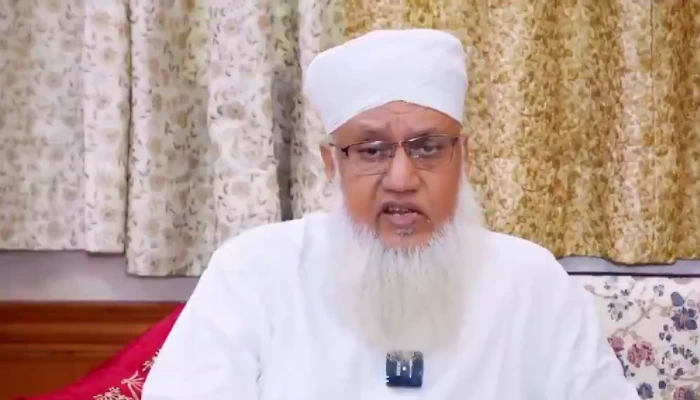
Case Summary
The Hindu community was targeted by Muslim leader and cleric Sajjad Nomani, spokesperson of the All India Muslim Personal Law Board. The accused spread false rhetoric in an attempt to create divisions among Hindus along caste lines by claiming that Jats, Gurjars, Dalits, OBCs, Lingayats, etc., are not originally Hindus. The radical cleric portrayed Hindu unity as a conspiracy orchestrated by the Rashtriya Swayamsevak Sangh (RSS), a Hindu organisation. In the past, the accused has endangered the lives of several Hindu men by propagating the fabricated ‘Bhagwa Love Trap’ theory, an anti-Hindu conspiracy theory that claims that Muslim women are targeted for predatory relationships and marriages by Hindu men. Several videos have emerged wherein Sajjad Nomani was heard reiterating the bogus claim of Hindu men 'entrapping' Muslim women and converting them to Hinduism. According to reports, during an interaction with the media, Sajjad Nomani spread fake narratives targeting certain castes within the Hindu community and attempted to sow division by claiming that they were not originally Hindus and had instead been made Hindus in RSS shakhas. He said, “Today, the people who consider themselves Hindus, are they really Hindus? No, they are made Hindus inside the shakhas of the RSS. Neither Sikhs, nor Buddhists, Other Backward Classes (OBCs), Dalits, Jaats, Gujjars, and Lingayats, none of them are Hindus. They are made Hindus by the RSS.” He further claimed that Muslims should create a political alliance with these communities to stand against Hindus and the Bharatiya Janata Party (BJP). He then went on to praise radical Islamic political parties such as the Social Democratic Party of India (SDPI), the political wing of the Popular Front of India (PFI), an Islamic terror organisation that was banned by the Government of India in September 2022. He stated that parties such as the SDPI were actively working to form alliances between Muslims and communities such as OBCs, Dalits, Jaats, Gujjars, and Lingayats in order to break Hindu unity. He also stated that the BJP's fall was imminent. He further stated that, within this political alliance, Muslims would hold power and carry out a new form of social engineering that would fracture the larger Hindu community along caste lines. Notably, this was not the first time that Nomani had made such anti-Hindu remarks. In the past, he propagated the false ‘Bhagwa Love Trap’ conspiracy theory, an anti-Hindu narrative that claims that Muslim women are being targeted for predatory relationships and marriages by Hindu men. This theory states that the ultimate goal of such relationships is sexual exploitation and religious conversion, despite there being no evidence to support such allegations. In his videos, he has accused RSS of "creating a team of Hindu youths who are trained in Islamic teachings and Urdu…They are then instructed to lure Muslim women into a love trap.” Sajjad Nomani claimed that such Hindu men are then rewarded with ₹2.5 lakhs, a house and a job, which is supposedly serving as an ‘incentive’ for the Hindu community at a time of high unemployment. In one of his videos, Nomani was heard saying, “800,000 Muslim women have turned infidel and left Islam after meeting their Hindu partners. The RSS has created a team of Hindu youths who are trained in Islamic teachings and Urdu. They are then instructed to lure Muslim women into a love trap.” Sajjad Nomani claimed that such Hindu men were then rewarded with ₹250,000, a house, and a job, which he described as an ‘incentive’ for the Hindu community at a time of high unemployment. “Several Hindu youths are fixated on this mission, but we are sleeping. Billions in funds have been allocated to take away our faith,” he said. The All India Muslim Personal Law Board (AIMPLB) member urged his followers to “wake up from their deep slumber and take action.” Although Sajjad Nomani did not coin the term ‘Bhagwa Love Trap’, he played a major role in mainstreaming the claim that Hindu men deliberately target Muslim women to take them away from Islam. The narrative was also used to counter documented cases of impersonation, identity fraud, and forced conversions to Islam, often referred to as Love Jihad. Soon, Muslim men began using the hashtag on social media to share videos and photos of Muslim women with Hindu men without their consent, often accompanied by emotional appeals seeking public identification of the couples. This triggered a wave of vigilantism, with Muslim mobs confronting interfaith couples in public spaces such as roads, restaurants, eateries, and hotels. Several videos from across India show Hindu men being abused, assaulted, and Muslim women being harassed under the pretext of stopping an alleged conspiracy to convert Muslim women to Hinduism through a so-called ‘Bhagwa Love Trap.’
Why it is Hate Crime ?
The primary category selected in this case is- Hate Speech against Hindus. The subcategory selected is- Anti-Hindu subversion and prejudice. The tertiary category selected is- Anti-Hindu fake news or downplaying. Hate speech is defined as any speech, gesture, conduct, writing, or display that is prejudicial against a specific individual and/or group of people, which is leading to or may lead to violence, prejudicial action or hate against that individual and/or group. Media plays a specific and overarching reach in perpetuating prejudicial attitudes towards a community owing to unfair, untrue coverage and/or misrepresentation/misinterpretation, selective coverage and/or omission of facts of/pertaining to issues affecting a specific religious group. This type of bias can dehumanise the victim group, making it easier for others to justify harmful actions against them, which aligns with the objectives of hate speech laws aimed at preventing such harm. It is often observed that the media takes a prejudicial stand against the Hindu community driven by their need to shield the aggressor community which happens to be a numeric minority, however, is the one perpetrating violence against Hindus. For example, the media is often quick to contextualise religiously motivated crimes against Hindus, omit or misrepresent facts that point towards religiously motivated hate crimes, justify and/or downplay religiously motivated hate crimes or simply present fake news to stereotype Hindus. Such media bias leads to the denial of persecution and is often used to dehumanise Hindus, leading to justification for violence against them. For example, the media covered several fake allegations of Hindus targeting Muslims and forcing them to chant Jai Shree Ram. Most of these cases were proved false and fabricated after police investigation. These fake news reports were subsequently never retracted or clarified. Such fake news led to the justification of violence and dehumanisation of Hindus based on the argument that since Hindus targeted Muslims and forced them to chant Jai Shree Ram, the dehumanisation of Hindus and violence against them was par for the course and merely a retaliation. Such media bias leads to prejudicial portrayal of Hindus and offers a justification for violence against them and therefore, is considered hate speech under this category. This case was a clear example of religiously motivated hate speech, as the accused, Sajjad Nomani, attempted to fabricate false rhetoric aimed at fracturing the Hindu community along caste lines. He falsely claimed that several communities within the Hindu fold were not genuinely Hindu and had instead been “made Hindus” by the Rashtriya Swayamsevak Sangh (RSS). He further called for the creation of a Muslim political alliance with these communities in order to break Hindu unity and establish a new socio-political order in which Muslims would hold power and socially engineer society in a different manner. Such statements did not merely constitute political commentary but amounted to a targeted attack on Hindu unity, identity, and religious cohesion. By attempting to portray Hindu identity as artificial and manufactured, while simultaneously mobilising religious blocs against Hindus as a collective, the accused engaged in rhetoric that was deeply rooted in hostility towards the Hindu community and faith, making this a clear case of religiously motivated hate speech. Firstly, the Hindu communities targeted by Nomani included Other Backwards Classes (OBCs), Dalits, Jats, Gujjars, and Lingayats. These communities are integral parts of the broader Hindu civilisational and religious framework and have historically identified themselves within the Hindu fold, despite differences in regional customs, social structures, and sectarian traditions. OBC communities and Dalit communities have for centuries participated in Hindu religious practices, temple traditions, festivals, pilgrimages, and local forms of worship tied to Sanatan Dharma. And, they have always identified themselves as Hindus. Similarly, Jats and Gujjars across several regions of India have historically followed Hindu traditions, worshipped Hindu deities, and formed part of the wider Hindu social structure. Lingayats, despite having distinct theological and philosophical traditions rooted in the teachings of Basavanna, have historically emerged from within the broader Hindu religious ecosystem and continue to maintain deep cultural, spiritual, and ritual links with Hindu society. They worship the Hindu deity Lord Shiva and regard him as the Supreme God and creator of the universe. This clearly demonstrates that all the communities targeted by Nomani are fundamentally part of the Hindu fold. Therefore, the attempt to portray these communities as “non-Hindu” was factually misleading and constituted a deliberate attempt to create artificial divisions within the Hindu community. The attempt to propagate the narrative that the RSS was “making” these communities Hindu demonstrated a malicious effort to spread caste-based rhetoric and manufacture insecurity within these Hindu communities regarding their own religious identity. The underlying objective of such rhetoric was to detach these communities from the broader Hindu fold and weaken Hindu unity by fostering suspicion and resentment between different sections of Hindu society. Such attempts to fragment the Hindu community on caste lines amounted to a hate-driven offence rooted in deep-seated religious animosity towards Hindus as a unified religious and civilisational entity. The rhetoric was not limited to criticism of an organisation or ideology, but instead targeted the very idea of Hindu unity by attempting to delegitimise the collective religious identity of millions of Hindus belonging to different castes and communities. Efforts aimed at dividing Hindus through malicious caste narratives directly attack the social and religious cohesion of the Hindu community and therefore constitute hate speech motivated by hostility towards the faith and its followers. The “upper caste versus lower caste” narrative has repeatedly been used by anti-Hindu forces as a means to fracture Hindu unity and delegitimise Hindu civilisation. Fake narratives and disinformation campaigns are often propagated to portray so-called “upper caste” Hindus as inherently oppressive towards disadvantaged sections of Hindu society. Such propaganda is anti-Hindu in nature because the intention behind spreading such misinformation is not genuine social reform, but the deliberate discrediting of Hindu society and Sanatan Dharma by branding it inherently tyrannical and discriminatory. The objective behind such propaganda is to attack the core legitimacy of the Hindu faith itself by portraying Hinduism as a religion meant only for a select “upper caste” groups while alienating other Hindu communities from their own religious identity. Such false narratives are perpetuated in order to delegitimise Hindu civilisation, dehumanise Hindus, and create social fragmentation within the community. The direct consequence of this form of rhetoric is not only the spread of hostility against particular sections of Hindus, but also the creation of pressure upon other Hindu communities to distance themselves from the faith altogether by convincing them that the religion itself discriminates against them. Since such rhetoric seeks to attack the very foundations of Hindu unity, identity, and religious continuity through delegitimisation, alienation, and manufactured caste hostility, it constitutes a form of hate speech directed against Hindus and the faith they profess. The fact that Nomani explicitly stated that Muslims should ally with these communities, separate them from the broader Hindu fold, and consolidate political power against Hindus demonstrated a clear malicious intent to weaken Hindu unity while increasing Muslim political dominance. His statements were not framed as calls for social harmony or democratic engagement, but rather as a strategic effort to politically isolate sections of the Hindu community from the larger Hindu identity and mobilise them against Hindus as a collective. He openly advocated for the creation of a new socio-political structure in which Muslims would hold power through what he described as “social engineering”. Such rhetoric clearly went beyond ordinary political discourse and entered the realm of religiously motivated hate speech, as it sought to divide Hindus on caste lines, create hostility within the Hindu community, and politically mobilise religious blocs against Hindus because of their religious identity. The deliberate attempt to fracture Hindu unity and portray Hindus as a community that needed to be politically weakened constituted a hate-driven attack motivated by animosity towards the Hindu faith and its followers. Nomani also praised radical Islamic political parties such as the Social Democratic Party of India (SDPI), the political wing associated with the Popular Front of India (PFI), an Islamic terrorist organisation that was banned by the Government of India in September 2022. Notably, the PFI’s leaked “India Vision 2047” document had similarly spoken about creating divisions between the Hindu community, Hindu organisations such as the Rashtriya Swayamsevak Sangh (RSS), and communities belonging to the Scheduled Castes (SCs), Scheduled Tribes (STs), and Other Backward Classes (OBCs). The broader objective outlined in such rhetoric was to detach these communities from the larger Hindu fold and consolidate political influence through religious bloc mobilisation. According to reports surrounding the document, the strategy involved weakening Hindu unity and increasing Muslim political power by fostering caste divisions and alienating vulnerable sections of Hindu society from their religious identity. The document also attracted widespread controversy because it envisioned the large-scale Islamisation of India and expressed hostility towards Hindu activists and Hindu organisations, including rhetoric advocating violence against them. In this context, the fact that Nomani echoed similar rhetoric about separating Hindu communities, breaking Hindu unity, and establishing Muslim political dominance strongly indicated deep-seated contempt towards the Hindu community and the faith they professed. His statements were not limited to criticism of political organisations or ideological disagreements, but instead targeted the collective religious and civilisational identity of Hindus by attempting to fracture them internally on caste lines. By encouraging Muslims to politically align against Hindus as a unified community and advocating the dismantling of Hindu social cohesion in order to create a new power structure dominated by Muslims, Nomani’s rhetoric reflected clear anti-Hindu hostility and religious bigotry. The repeated emphasis on weakening Hindu unity, alienating sections of Hindus from their own faith, and mobilising religious blocs against the Hindu community demonstrated an intent to undermine and destabilise Hindus as a collective religious group. Such rhetoric amounted to hate speech because it sought to delegitimise Hindu identity, create distrust and resentment within Hindu society, and politically weaponise caste divisions against the Hindu community on the basis of religion. This was not the first time that Nomani had propagated such anti-Hindu rhetoric. In the past, he had also spread the false “Bhagwa Love Trap” conspiracy theory, an anti-Hindu conspiracy narrative that claimed that Muslim women were being deliberately targeted by Hindu men for predatory relationships, forced conversion to Hinduism, and sexual exploitation. Nomani claimed that several Muslim women had become “heretics” or “infidels” after entering relationships with Hindu men and portrayed this as part of a larger conspiracy orchestrated by the Rashtriya Swayamsevak Sangh (RSS). Through such statements, Hindu men were collectively painted as predatory and manipulative, while Hindu organisations were portrayed as conspiratorial entities working to “target” Muslim women. Such rhetoric, despite being entirely unsupported by evidence, spread false narratives designed to generate fear, insecurity, and hostility within the Muslim community against Hindus. By portraying ordinary interfaith relationships involving Hindu men as part of an organised religious conspiracy, such propaganda demonised Hindu men and stigmatised Hindu organisations as existential threats to Muslims. This type of rhetoric amounted to hate speech and anti-Hindu propaganda because it deliberately vilified Hindus on the basis of their religious identity and portrayed Hindu men as dangerous predators solely because they belonged to the Hindu faith. Such narratives provoke hostility, vigilantism, and retaliatory violence against Hindu individuals and organisations by creating the perception that Hindus are collectively engaged in a malicious conspiracy against Muslims. The repeated propagation of fabricated claims about Hindu men “trapping” Muslim women not only dehumanised Hindu men but also encouraged communal suspicion and hatred against the wider Hindu community. By framing Hindus as a coordinated religious threat, Nomani’s rhetoric fostered religious polarisation and legitimised aggression against Hindus under the guise of protecting the Muslim community. Such attempts to spread fear and hostility against Hindus on the basis of fabricated conspiracy theories constituted a clear form of anti-Hindu hate speech. This form of rhetoric does not merely remain confined to speeches or propaganda, but percolates into real-world communal hostility and violence against Hindus. The Hinduphobia Tracker has previously documented 152 cases between 1 January 2023 and 21 May 2026 in which Hindu men were attacked or killed for being in relationships with Muslim women. In these cases, both the Muslim women and the Hindu men were aware of each other’s religious identities, and there was no evidence of coercion or pressure upon the Muslim women to convert to Hinduism. Despite this, the Hindu men were targeted, assaulted, and in several cases murdered for their religious identity and for transgressing perceived religious boundaries by being in relationships with Muslim women. Such conspiracy theories spread by Nomani and his ilk contribute towards the creation of an atmosphere where Hindu men are viewed with suspicion and hostility merely because of their religious identity. The repeated spread of narratives portraying Hindu men as predators, conspirators, or agents of organised Hindu groups increases the likelihood of vigilantism, mob violence, social ostracisation, and targeted communal attacks against Hindus. Rhetoric propagated by individuals such as Nomani fuels communal paranoia by portraying interfaith relationships involving Hindu men as deliberate acts of religious aggression against Muslims. This, in turn, legitimises hostility and violence against Hindu men in the minds of Muslim individuals who view such relationships as violations of religious boundaries. In this sense, such propaganda does not simply amount to inflammatory speech but carries the potential to directly incite hatred and violence against the Hindu community. Such anti-Hindu rhetoric, like the fabricated “Bhagwa Love Trap” conspiracy theory, is propagated by individuals like Nomani to delegitimise and downplay documented cases commonly referred to in public discourse as “Love Jihad”. The term is widely used to describe cases in which Hindu women are targeted by Muslim men through predatory interfaith relationships or marriages with the objective of forced religious conversion, sexual exploitation, coercion, or manipulation. In several such documented cases, Hindu women were lured through deception, including instances where Muslim men concealed their religious identity and posed as Hindus, while in other cases the relationships culminated in coercive conversion to Islam, pressure to abandon Hindu practices, forced consumption of beef, sexual exploitation, physical assault, or threats of violence. According to documentation by the Hinduphobia Tracker, nearly 1,165 such cases involving Hindu women were recorded between January 2023 and 21 May 2026, in which victims were subjected to deception, coercion, blackmail, forced conversion, sexual exploitation, or trafficking-related abuse. In several instances, victims who resisted conversion or exploitation were assaulted or killed. In this context, rhetoric such as the “Bhagwa Love Trap” conspiracy theory attempts to invert and trivialise concerns surrounding such cases by portraying Hindu men as the actual conspirators and predators, despite the absence of evidence supporting such claims. By spreading fabricated narratives that depict Hindu men and Hindu organisations as systematically targeting Muslim women, individuals like Nomani seek to create a false equivalence that undermines discussion surrounding documented cases involving Hindu victims. Such propaganda not only demonises Hindu men and organisations but also serves to delegitimise concerns raised by victims and their families regarding coercion, exploitation, and religiously motivated targeting of Hindu women. In doing so, this rhetoric further entrenches communal hostility and functions as a form of anti-Hindu propaganda aimed at portraying the Hindu community as inherently predatory and dangerous. Overall, in this recent incident, Nomani’s attempt to falsely portray Hindu communities such as Lingayats, OBCs, Dalits, Jats, and Gujjars as “non-Hindus” and artificially separated from the broader Hindu fold constituted a deliberate effort to fracture Hindu unity on caste lines. His rhetoric, combined with calls for Muslim political mobilisation against Hindus and the propagation of anti-Hindu conspiracy theories, reflected clear hostility towards the Hindu community and faith. Therefore, this case is being added to the Hinduphobia Tracker's hate crime database. Disclaimer: The Hinduphobia Tracker records incident dates based on when the crime occurs or when the accused makes the statements in question, rather than when the matter is reported in the media. However, in this case, since the exact date on which the accused made these statements remains unclear, the date on which the remarks first surfaced on social media, namely 18 May 2026, has been selected as the indicative incident date. This date has been recorded for documentation purposes only. As per the information currently available in the public domain, the accused resides in Nerul, a town in the Raigad district of Maharashtra. Hence, this location has been selected as the indicative place of the incident for documentation purposes.


Case Status
Unknown


Perpetrators Details
Perpetrators
Muslim Extremists
Perpetrators Range
One Person
Perpetrators Gender
male
 Sources




