Hindu women, including minor girls, religiously profiled, harassed, and intimidated by Muslim men in Kheda, Gujarat
 Kheda, Gujarat, India
  15 May, 2026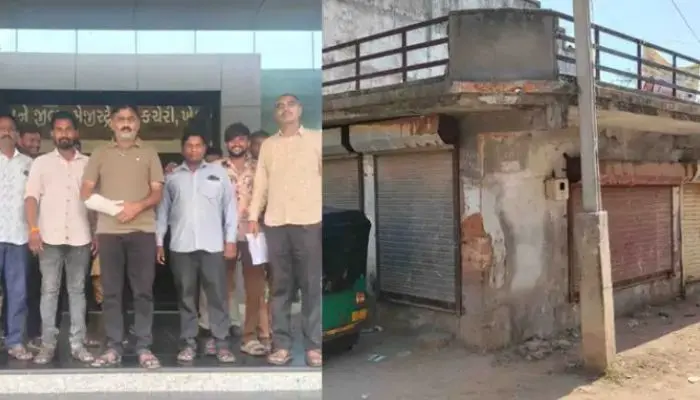
Case Summary
In Chandana village in Kheda district, Gujarat, Hindu women and girls faced targeted and sustained harassment and intimidation after Muslim locals illegally encroached upon village land. According to complaints submitted to the district administration, vacant land situated in the centre of the village had been occupied several years earlier by Muslim individuals, after which they built shops and other structures on the encroached land without permission. Hindu residents stated that the encroached area gradually became a gathering point where groups of Muslim men regularly loitered for long periods. They engaged in misconduct specifically targeting Hindu women and girls passing through the nearby road. Hindu women travelling to schools, temples, markets and other public places were subjected to obscene comments, abusive language, indecent gestures, staring, and stalking near the encroached area. Villagers further stated that the situation worsened during Hindu religious events such as Navratri Garba, Bhathiji Maharaj Garba, Ramdhun and Ramdevji Bhajans, which were organised near the disputed site due to the presence of temples and Chabutri Chowk in the locality. During these events, some Muslim shopkeepers kept their establishments open late into the night and passed offensive and sarcastic remarks towards participants attending the Hindu programmes. Residents also recalled earlier incidents during Navratri celebrations in which photographs and videos of Hindu women and girls participating in Garba were secretly recorded, resulting in tensions and clashes in the village. Local Hindu residents stated that the repeated incidents had created an atmosphere of fear and insecurity in the area. The Hindu community subsequently submitted a petition to the district collector demanding immediate removal of the encroachments, demolition of the illegal structures, and adequate security arrangements for residents, particularly women and girls. The petition stated that the land belonged to the village and that the structures had been erected unlawfully without official permission. Dhavalsinh Zala, an office bearer of a local Hindu organisation, stated that Hindu women and girls had been facing harassment in the area for nearly three years and that tensions connected to the encroachment issue had previously resulted in clashes during Navratri celebrations. He further stated that during the latest Navratri festivities, some Muslim youths rode motorcycles loudly through Garba venues and behaved indecently, despite repeated complaints from villagers. Following growing public anger, particularly after a gangrape case involving a minor Hindu girl from the same village at the hands of Muslim men, local residents began examining land records related to the disputed area and concluded that the structures had been constructed on surplus village land. The district administration later initiated action by issuing notices to several shop owners and demanding documents proving ownership and legality of construction, while warning of strict action if valid records were not produced.
Why it is Hate Crime ?
This case has been added to the tracker under the primary category of - Attack not resulting in death. Within it, the sub-category selected is - Attacked for crossing 'Muslim area'. One of the reasons that Hindus get attacked unprovoked specifically by Islamists is for crossing ‘Muslim areas’. Essentially, Muslim mobs often attack Hindus crossing or present in certain areas which have a majority Muslim population. It has often been cited as one of the reasons to blame Hindus for attacks against themselves, signalling that Hindus displaying religious symbols, taking our religious processions or crossing any area which is dominated by Muslim residents is a provocation in and of itself. These areas are mostly ghettoized areas where mobs mobilize quickly to attack Hindus for a variety of reasons like playing music during a religious procession, crossing a mosque, wearing a tilak or any other religious symbol in a Muslim-dominated area, praying at a local temple in that area etc. There have been cases where the few local Hindus of that area have been attacked on their way to the Temple for prayers as well, simply because the area is considered a Muslim-dominated area. Several times, it is entirely possible that the immediate trigger for the violence against Hindus was non-religious in nature, however, the violence became religiously motivated in nature because the area was Muslim dominated and the residents on the whole harboured animosity towards Hindus, evidenced from the actions of the mob, the slogans, and the nature of the attack. Such crimes are motivated by the religious identity of the victims and are therefore classified as hate crimes under this category. The other sub-category selected is - Attacked for Hindu identity. In several cases, Hindus are attacked merely for their Hindu identity without any perceived provocation. A classic example of this category of religiously motivated hate crime is a murder in 2016. 7 ISIS terrorists were convicted for shooting a school principal in Kanpur because they got ‘triggered’ seeing the Kalava on his wrist and tilak that he had put. In this, the Hindu victim had offered no provocation except for his Hindu religious identity. The motivation for the murder was purely religious, driven by religious supremacy. Such cases where Hindus are targeted merely for their religious identity would be documented as a hate crime under this category. This case has been added to the hate crime because the harassment and intimidation in the village were not isolated acts of general misconduct, but formed part of a sustained pattern of behaviour directed specifically at Hindu women and girls at the hands of Muslim individuals. The targeting and harassment was specifically linked to religious identity, the control of public spaces surrounding Hindu localities and festivals, and the creation of fear and insecurity among members of the Hindu community. The incidents occurred after Muslim locals encroached upon centrally located village land and established shops and gathering points in close proximity to temples, Chabutri Chowk, and areas where Hindu religious and cultural programmes were regularly conducted. The encroached area subsequently became a focal point for repeated harassment aimed specifically at Hindu females travelling through the locality. The circumstances surrounding the encroachment also indicated a broader pattern of territorial assertion and communal intimidation. Muslim individuals first occupied centrally located village land and subsequently established shops and gathering spaces there, after which Hindu women and girls in the vicinity began facing sustained harassment and intimidation. Groups of Muslim men routinely gathered in the encroached area, passed obscene remarks, intimidated Hindu passers-by, and created an atmosphere of fear around spaces frequently used by the Hindu community. The misconduct was aimed not merely at individual victims, but at asserting social dominance over a strategically important public space situated near Hindu temples and religious gathering points. The continued harassment around Hindu religious events and community activities demonstrated an attempt to exercise control over the locality and alter its social character through intimidation and communal pressure. This targeting of Hindus in and around the encroached area by Muslim individuals, was an effort to discourage Hindu presence and gradually transform the locality into an exclusive Muslim-dominated zone where Hindu residents, particularly women and girls, were not welcome. The communal nature of the incidents was reflected in the fact that the misconduct was repeatedly associated with Hindu religious gatherings and spaces. Hindu residents stated that women and girls attending Navratri Garba events, Ramdhun programmes, Bhathiji Maharaj Garba celebrations, and Ramdevji Bhajans were subjected to obscene comments, indecent gestures, abusive language, and intimidation by groups of Muslim men gathered near the disputed site. Residents also stated that photographs and videos of Hindu women participating in Garba were secretly recorded during Navratri celebrations, leading to tensions and clashes in the village. Such acts indicated an attempt to intimidate Hindu women specifically within the context of visible Hindu religious and cultural expression. The repeated targeting of women participating in Hindu festivals demonstrated that the hostility was not random, but connected to the victims’ religious identity and participation in Hindu community life. The sustained nature of the incidents further strengthened the hate crime dimension of the case. The persistence of the misconduct over an extended period contributed to an atmosphere of fear and insecurity among Hindu residents, particularly women. The deliberate use of intimidation in shared public spaces effectively restricted the sense of safety and freedom of movement of Hindu women within their own locality, thereby affecting the broader Hindu community collectively rather than only individual victims. The case was therefore considered a hate crime because the victims were targeted in connection with their Hindu identity, because the harassment repeatedly occurred around Hindu religious spaces and festivals, because the intimidation created fear within the wider Hindu community, and because the acts collectively reflected a pattern of hostility and communal targeting rather than isolated interpersonal misconduct. Disclaimer: The Hinduphobia Tracker records incidents based on when an event occurred or when the victim's ordeal began. It is important to clarify that none of the media sources covering this case has specified the exact date when the Muslim individuals began harassing Hindu women. Therefore, for documentation purposes, we have recorded the date based on when the incident was reported in the media, 16 May 2026.


Case Status
Complaint filed


Perpetrators Details
Perpetrators
Muslim Extremists
Perpetrators Range
Unknown
Perpetrators Gender
unknown
 Sources




