Hindu sentiments hurt as woman makes derogatory remarks about Hindu gods and goddesses inside temple
 Thane, Maharashtra, India
  13 May, 2026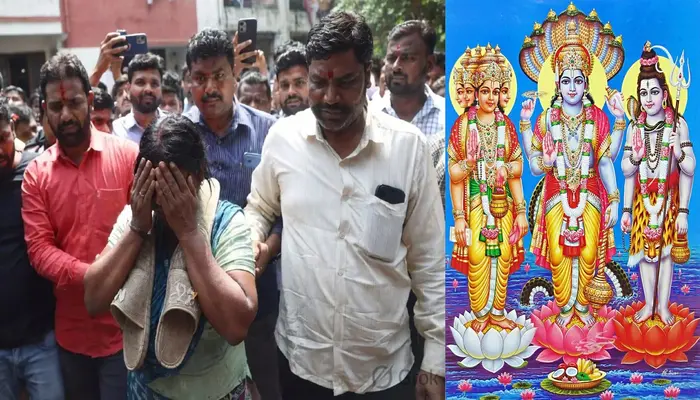
Case Summary
In the Ulhasnagar area of Thane district, Maharashtra, Hindu sentiments were insulted after a woman made objectionable and derogatory remarks about Hindu gods and goddesses during a visit to a temple. The incident took place on 14 May 2026, when the woman made objectionable remarks about Hindu gods and goddesses inside the temple, hurting the religious sentiments of devotees and locals present at the site. The comments were deeply offensive to Hindu beliefs and sacred deities, leading to outrage among those gathered there. Following the remarks, tensions escalated rapidly, and members of the crowd confronted and assaulted the woman. She was publicly humiliated and paraded through the locality wearing a garland of slippers. Videos of the incident were recorded by bystanders and later circulated widely on social media, drawing significant public attention and debate over religious sentiments, vigilantism, and law and order. Police initiated an investigation soon after the incident and examined CCTV footage from the locality. Three accused persons involved in the assault were arrested, while four others absconded and were being searched for by the authorities. A case was registered under provisions related to voluntarily causing hurt, criminal intimidation, intentional insult intended to provoke breach of peace, and other relevant sections of the Indian Penal Code.
Why it is Hate Crime ?
The case has been added to the tracker under the primary category of - Hate speech against Hindus. Within it, the sub-category selected is - Anti-Hindu slurs, mocking faith. Anti-Hindu slurs and the deliberate mocking of the Hindu faith owing to religious animosity involve the usage of derogatory terms, stereotypes, or offensive references to religious practices, symbols, or figures. One of the common anti-Hindu slurs used against Hindus is “cow-worshipper” and “cow piss drinker”. The intention of using this term is to demean and mock Hindus as a group and their religious beliefs since Hindus consider the cow holy. Additionally, some symbols and the slurs attached to them have a historical context that exacerbates the insult, hate, stereotyping, dehumanisation and oppression against Hindus. Cow worship has been used for centuries to denigrate Hindus, insult their faith and oppress Hindus specifically as a religious group. There has been overwhelming documentation about how cow slaughter has been used to persecute Hindus with cow meat being thrown in temples and places of worship. There has also been overwhelming documentation where cow meat (beef) has been force-fed to Hindus to either forcefully convert them to Islam or denigrate their faith. Apart from cow worship, the Swastika – which holds deep religious significance for the Hindus – has also been misinterpreted and distorted to use as a slur against Hindus. Similarly, the worship of the Shivling has been used by supremacist ideologies and religions to denigrate Hindus owing to religious animosity. Such slurs and denigration stem out of inherent animosity and hate towards Hindus and their faith, therefore, it is categorised as hate speech targeted at Hindus specifically owing to their religious identity. This case has been added to the hate crime database because it involved objectionable and derogatory remarks directed at Hindu gods and goddesses, which deeply hurt the religious sentiments of the Hindu community. The incident occurred at a temple, a place regarded as sacred within Hinduism, where the woman made comments insulting deities revered by millions of Hindus. Hindu gods and goddesses occupy a central and sacred position within Hindu religious belief and devotional practice, and insulting them constitutes an attack on the faith itself. Such remarks are not viewed merely as casual statements or personal opinions, but as acts of contempt directed towards the religious identity, beliefs, and sacred traditions of Hindus. In Hinduism, deities are worshipped with deep reverence and are integral to the spiritual and cultural life of Hindu society. Temples serve as spaces of devotion, prayer, and religious sanctity. Making offensive remarks about Hindu deities within such a setting aggravated the provocative and inflammatory nature of the act, as it directly targeted sacred beliefs in a religious environment. The comments triggered outrage among those present because they were perceived as deliberate insults aimed at humiliating and mocking Hindu faith and devotional practices. Such conduct contributes to a hostile atmosphere where disrespect towards Hindu religious symbols and beliefs is normalised or trivialised. At the same time, the violent response by the mob, including the public humiliation and assault of the woman, was unlawful and unacceptable. The police registered criminal cases against those involved in the assault and initiated action against the accused persons seen in the viral videos. Nevertheless, the triggering factor behind the incident remained the objectionable remarks directed at Hindu gods and goddesses, which caused widespread anger and hurt religious sentiments among members of the Hindu community. Due to the deliberate targeting of revered Hindu deities and the communal tensions arising from the incident, the case has been categorised under the hate crime database of the Hinduphobia Tracker.


Case Status
Unknown


Perpetrators Details
Perpetrators
Unknown
Perpetrators Range
One Person
Perpetrators Gender
male
 Sources




