Hindu religious sentiments insulted as bike driver makes derogatory remarks against Brahmin community and temples
 India
India  14 May, 2026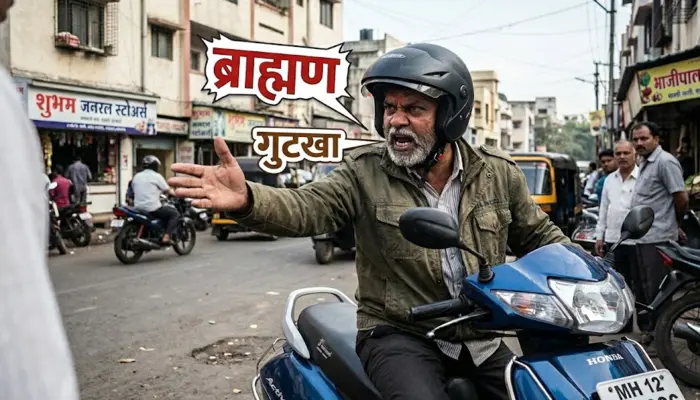
Case Summary
Hindu religious sentiments were insulted after a caste-based derogatory remark was made against the Brahmin Hindu community by a Rapido driver. A video of the incident went viral on social media, showing the accused driver initiating a conversation about caste with his female passenger, asking whether she was a Brahmin. During the interaction, he made disparaging comments about Brahmins, claiming that Brahmins consumed gutkha inside temples and attempting to generalise such behaviour to the entire community. The female passenger strongly objected to these remarks and confronted the driver for speaking negatively about Brahmins in front of her, despite knowing that she was a Brahmin. She criticised his mindset, stated that she would give him a poor rating for his conduct, and told him not to make such comments to others. When she asked the driver about his own caste identity, he avoided answering directly and instead claimed that he himself was a Hindu. The girl further responded that wrongdoing was committed by individuals and not by any particular caste, pointing out that no caste community could be stereotyped on the basis of the actions of a few people. The driver continued attempting to justify his remarks by giving hypothetical examples involving temple visits and gutkha consumption, but the girl interrupted him and reiterated that his comments unfairly targeted Brahmins as a community. The interaction ended with the girl condemning his mindset before the driver left. The incident gained traction online as an example of caste-based stereotyping and verbal hostility directed at Brahmins in a public setting.
Why it is Hate Crime ?
This case is added to the tracker under the primary category- Hate Speech against Hindus. The subcategory selected is- Anti-Hindu slurs, mocking faith. Anti-Hindu slurs and the deliberate mocking of the Hindu faith owing to religious animosity involve the usage of derogatory terms, stereotypes, or offensive references to religious practices, symbols, or figures. One of the common anti-Hindu slurs used against Hindus is “cow-worshipper” and “cow piss drinker”. The intention of using this term is to demean and mock Hindus as a group and their religious beliefs since Hindus consider the cow holy. Additionally, some symbols and the slurs attached to them have a historical context that exacerbates the insult, hate, stereotyping, dehumanisation and oppression against Hindus. Cow worship has been used for centuries to denigrate Hindus, insult their faith and oppress Hindus specifically as a religious group. There has been overwhelming documentation about how cow slaughter has been used to persecute Hindus, with cow meat being thrown in temples and places of worship. There has also been overwhelming documentation where cow meat (beef) has been force-fed to Hindus to either forcefully convert them to Islam or denigrate their faith. Apart from cow worship, the Swastika – which holds deep religious significance for the Hindus – has also been misinterpreted and distorted to use as a slur against Hindus. Similarly, the worship of the Shivling has been used by supremacist ideologies and religions to denigrate Hindus owing to religious animosity. Such slurs and denigration stem from inherent animosity and hate towards Hindus and their faith; therefore, it is categorised as hate speech targeted at Hindus specifically owing to their religious identity. The other sub-category selected here is - Anti Hindu subversion and prejudice. Hate speech is defined as any speech, gesture, conduct, writing, or display that is prejudicial against a specific individual and/or group of people, which is leading to or may lead to violence, prejudicial action or hate against that individual and/or group. Media plays a specific and overarching reach in perpetuating prejudicial attitudes towards a community owing to unfair, untrue coverage and/or misrepresentation/misinterpretation, selective coverage and/or omission of facts of/pertaining to issues affecting a specific religious group. This type of bias can dehumanise the victim group, making it easier for others to justify harmful actions against them, which aligns with the objectives of hate speech laws aimed at preventing such harm. It is often observed that the media takes a prejudicial stand against the Hindu community driven by their need to shield the aggressor community which happens to be a numeric minority, however, is the one perpetrating violence against Hindus. For example, the media is often quick to contextualise religiously motivated crimes against Hindus, omit or misrepresent facts that point towards religiously motivated hate crimes, justify and/or downplay religiously motivated hate crimes or simply present fake news to stereotype Hindus. Such media bias leads to the denial of persecution and is often used to dehumanise Hindus, leading to justification for violence against them. For example, the media covered several fake allegations of Hindus targeting Muslims and forcing them to chant Jai Shree Ram. Most of these cases were proved false and fabricated after police investigation. These fake news reports were subsequently never retracted or clarified. Such fake news led to the justification of violence and dehumanisation of Hindus based on the argument that since Hindus targeted Muslims and forced them to chant Jai Shree Ram, the dehumanisation of Hindus and violence against them was par for the course and merely a retaliation. Such media bias leads to prejudicial portrayal of Hindus and offers a justification for violence against them and therefore, is considered hate speech under this category. This case has been added to the tracker as a hate incident rooted in religious animosity because the Rapido driver singled out the Brahmin Hindu community and made sweeping derogatory remarks about them during his interaction with the passenger. The conversation did not revolve around the conduct of any specific individual; rather, the driver attributed negative behaviour to Brahmins collectively, thereby reducing an entire caste group to a harmful stereotype. His comments implied that Brahmins as a community engaged in disrespectful conduct inside temples, and he attempted to normalise this generalisation even after learning that the passenger herself belonged to the Brahmin community. The targeting was therefore not directed at any individual action or personal dispute but was rooted in hatred against the Brahmin Hindu community. The discriminatory nature of the incident became clearer from the manner in which the driver initiated the conversation. He first asked the female passenger whether she was a Brahmin and then proceeded to make disparaging remarks specifically about Brahmins. This sequence demonstrated that both caste and religious identity were central to the interaction. The remarks were not random observations, but statements tied directly to the passenger’s Brahmin Hindu background. Such conduct reflected prejudice against the Brahmin Hindu community and created a hostile environment for the passenger on the basis of her caste and religious identity. Brahmins occupy an important place in Hindu civilisation and religious tradition. Historically, they have served as priests, scholars, teachers, custodians of scriptures, and caretakers of sacred rituals and temple practices. They are closely associated with the preservation and transmission of Hindu philosophy, Vedic learning, and spiritual customs across generations. Consequently, derogatory attacks directed specifically at Brahmins often carry a deeper religious dimension because they target a community intrinsically connected with Hindu religious identity and institutions. In this case, the driver’s comments sought to undermine the dignity and image of a community that occupies a respected place within Hindu society. The remarks about temples and gutkha were especially significant because they were designed to portray Brahmins as people who intentionally defiled or disrespected Hindu places of worship. Temples hold immense sacred value in Hinduism, and Brahmins have historically been associated with preserving temple traditions, conducting rituals, and maintaining religious practices. By associating Brahmins with consuming gutkha inside temples and speaking in a manner suggesting that such conduct was characteristic of the community, the driver attempted to attach impurity, disrespect, and moral degradation to a group closely linked with Hindu religious life. This was not merely a casual insult but an attempt to demean the religious and social standing of Brahmins within Hindu society. The incident also carried broader social implications because caste identity in India is deeply connected to personal dignity, family heritage, community belonging, and religious tradition. Publicly making derogatory generalisations about a caste group contributes to social hostility and reinforces prejudicial attitudes against members of that community. In this case, the driver’s remarks portrayed Brahmins in a degrading and stereotypical manner in the context of religious spaces, which further intensified the hateful and discriminatory aspect of the comments. Associating Brahmins with the desecration of temples was not merely an insult against individuals but an attack on the collective social and religious image of the community. Even though the exchange did not escalate into physical violence, hate incidents are not limited to physical attacks alone. Verbal targeting, humiliation, stereotyping, and hostility directed at a person because of their caste and religious identity also constitute forms of hate-driven conduct, especially when the comments seek to demean an entire community and portray it as morally or religiously corrupt. For these reasons, the case can reasonably be categorised as a hate incident involving derogatory stereotyping, caste-based hostility, and religious animosity towards the Brahmin Hindu community. The central issue was not disagreement or personal conflict, but the driver’s decision to associate negative and degrading traits with Brahmins as a collective Hindu community and continue doing so even after being challenged by the passenger. Disclaimer: The Hinduphobia Tracker records incidents based on when an event occurred or when the victim's ordeal began. It is important to clarify that none of the media sources covering this case has specified the exact date when the incident occurred. Therefore, for documentation purposes, we have recorded the date based on when the incident was reported in the media, 15 May 2026.


Case Status
Unknown


Perpetrators Details
Perpetrators
Unknown
Perpetrators Range
One Person
Perpetrators Gender
male
 Sources




