Minor Hindu boy driven to suicide after pressure to convert by Muslim girlfriend and her family; victim also forcibly circumcised
 Tonk, Rajasthan, India
  13 May, 2024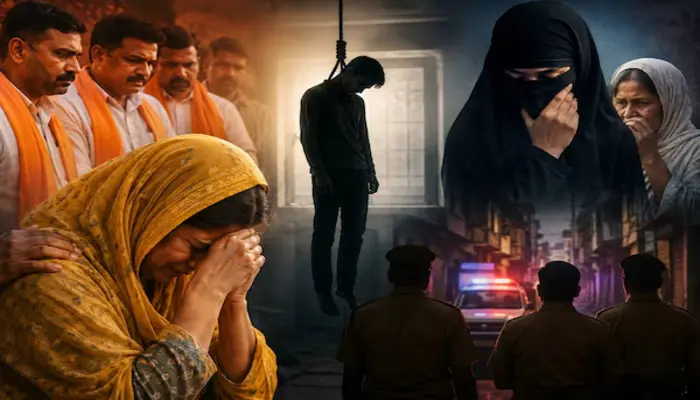
Case Summary
In Tonk, Rajasthan, a 17-year-old minor Hindu boy died by suicide after prolonged emotional distress linked to an interfaith relationship with a Muslim girl. The victim's mother revealed that her son was forcibly circumcised and pressured for religious conversion. According to reports, the victim, originally from Jaipur, had been living in a rented accommodation in Tonk with his mother, Deepika Gurjar, and younger brother for the past five years following the death of his father. According to the family, the boy had been in a relationship with a minor Muslim girl for nearly two years. Over time, the relationship became a source of severe mental stress, with frequent disputes and growing isolation. Family members and classmates stated that the victim had stopped focusing on his studies, reduced communication with relatives, spent long hours on the phone, and often skipped meals during the last few months preceding his death. On the morning of 14 May 2026, the victim's mother found his room locked from the inside. After repeated calls and receiving no response, she looked through the window and discovered him hanging from the ceiling fan. Neighbours were called to help bring him down, following which he was rushed to Saadat Hospital, where doctors declared him dead. Police later confirmed that no suicide note was recovered from the scene. Following the incident, the victim's mother lodged a complaint stating that the Muslim girl, her family members, and several associated individuals had subjected her son to continuous pressure to convert to Islam. The victim's family further stated that the victim had been threatened for several months and was coerced into undergoing circumcision, for which he was receiving medical treatment. The victim's mother, who worked at Tonk Jail, stated that her son had come into close contact with Muslim youths during the last two years (2024-2026), during which he developed a relationship with a Muslim girl. According to her, the family had learned about the situation nearly eight months earlier and had attempted to counsel the victim and distance him from the environment causing distress. The mother also stated that tensions arising from the conversion pressure had repeatedly created conflict within the household and deeply affected her son’s mental condition. Furthermore, she revealed that the Muslim girl's mother was a government school teacher, while her father had previously been jailed in two murder cases. She recounted that despite securing satisfactory Class 12 examination results shortly before his death, the teenager remained emotionally disturbed. The family stated that they possessed evidence relating to the pressure and harassment faced by the victim. Police registered a case under Section 306 of the Bharatiya Nyaya Sanhita and began examining mobile phones, chats, call recordings, and other electronic evidence to establish the sequence of events leading to the suicide. Officials stated that all aspects related to harassment, coercion, religious conversion pressure, and circumcision were being investigated. BJP leaders also visited the bereaved family and assured them that strict action would be pursued against those found responsible.
Why it is Hate Crime ?
This case has been added to the tracker under the primary category of - Predatory Proselytisation. Within it, the sub-category selected here is - Proselytisation by grooming, brainwashing, manipulation or subtle indoctrination. Within it, the tertiary category selected here is - Conversion of minor and Family/Friends of deceased victim says was brainwashed/groomed. Religious brainwashing essentially means the often subtle and forcible indoctrination to induce someone to give up their religious beliefs to accept contrasting regimented ideas. Religious grooming or brainwashing also involves propaganda and manipulation. It involves the systematic effort, driven by religious malice and indoctrination, to persuade “non-believers’ to accept allegiance, command, or doctrine to and of a contrasting faith. Cases of such grooming or brainwashing are far more nuanced than direct threats, coercion, inducement and violence. In such cases, it is often seen that there is repeated, subtle and continual manipulation of the victim to induce disaffection towards their own faith and acceptance of the contrasting faith of the perpetrator. While subtle indoctrination is widely acknowledged as predatory, an element which is often understated in such conversions or the attempts of such conversion is the role of loyalty and trust which might develop between the perpetrator and the victim. Fiduciary relationships are often abused to affect such religious conversion. For example, an educator transmitting religious doctrine of a competing faith to a Hindu student. The Hindu student is likely to accept what the teacher is transmitting owing to existence of the fiduciary relationship. The exploitation of the fiduciary relationship to religiously indoctrinate victims would also be included in this category. Since the underlying animosity towards the victim’s faith forms the basis of predatory proselytization, such cases are considered religiously motivated hate crimes. The other sub-category selected here is - Harassment, threats, coercion for conversion. Harassment covers a wide range of behaviours of an offensive nature. It is commonly understood as behaviour that demeans, humiliates, and intimidates a person, including threats and coercion. Harassment and threats, in this case, find their root on discriminatory grounds which has the effect of nullifying a person’s rights or infringing upon his freedom to exercise his right specifically owing to the victim’s religious identity. Verbal and physical threats and psychological or physical harassment are often used against Hindu victims because they choose to practice their professed religion. Religious harassment also includes forced and involuntary conversions by harassment, threats or coercion. Coercion includes intimidatory tactics like force-feeding a Hindu victim beef to convert to another religion, forceful circumcision etc. In several cases documented, non-Hindu perpetrators or those who harbour specific animosity towards Hinduism, harass victims simply based on their religious identity. Such cases often also include harassment to ensure the Hindu victim abandons his/her professed religion and adopts the religion of the perpetrator. Such cases where Hindu victims are harassed to convert to the perpetrator’s religion are rooted in animosity towards the victim’s religious identity and are therefore documented as religiously motivated hate crimes. The other sub-category selected here is - Suicide after pressure to convert. When there is pressure, threat or coercion employed upon the Hindu victim to convert to a different religion, in several cases, owing to the humiliation or pressure/threat, the victim commits suicide. In such cases, the pressure/threat/intimidation/coercion/violence itself is driven by animosity towards the victim’s Hindu faith. The pressure/threat that is employed leads to the Hindu victim taking his own life. Since the victim’s faith is at the heart of the pressure to convert and the ensuing suicide by the victim, such cases are considered religiously motivated hate crimes. The second primary category selected here is - Men attacked for being associated with non-Hindu women. Within it, the sub-category selected here is - Suicide upon being forced to convert. When Hindu men are in a relationship with non-Hindu women, there are cases where the Hindu man faces pressure/threats/violence to convert and change his religious identity by the non-Hindu spouse or her family or/and religious leaders. Such relationships may be consensual with the religious identity of the non-Hindu spouse known to the victim. Somewhere along the relationship, the non-Hindu spouse starts forcing/pressurizing the Hindu man to convert. In some of these cases, unable to bear the pressure/threat/violence being mounted by the non-Hindu partner or her family to convert, the Hindu man commits suicide. In such cases, often, threats are also given to the family members of the Hindu man. Since such cases are driven by specific religious motivations and against the religious identity of the victim, leading to the Hindu spouse committing suicide, these cases are categorized as a hate crime. The other sub-category selected is - Brainwashed and/or groomed, with the tertiary category being - Family/Friends of deceased victim say he was brainwashed/groomed. In our database, we have not added incidents where men have converted to another religion of their free will and no allegations of forced/involuntary conversion have been made. However, there are certain cases of conversion where the consent itself is a result of the brainwashing or grooming of a minor by the non-Hindu perpetrator trying to victimise a man for his Hindu religious identity. The phenomenon of grooming points to non-Hindu perpetrators identifying their Hindu victims’ vulnerabilities and exploiting them over months and sometimes years, to extract the supposed ‘consent’ in order to convert their religion. In most cases of grooming, the victims are minors or the grooming started when the victim was a minor. In other cases of grooming, the non-Hindu perpetrator brainwashes and grooms a minor victim to extract their trust and then proceeds to rape them repeatedly with the intent of converting them to their faith. It is pertinent to understand here that when the victim is a minor, the ‘consent’ to convert or enter into a romantic relationship with an adult itself is redundant – addressed by POCSO. While every case of conversion of a minor and incident of establishing a physical relationship with a minor by an adult is a crime, for the purpose of this database, a case would be considered a hate crime only if there is a distinct religious angle to the grooming. For example, in the UK, if a Hindu minor is targeted by Pakistani grooming gangs, it would be considered a hate crime because the victims are specifically targeted owing to their non-Muslim religious identity with the perpetrators being Muslim. In other cases, if a Hindu minor is brainwashed into entering a physical relationship with the non-Hindu adult perpetrator and the family alleges grooming/brainwashing of the minor to convert her religion, it would form a part of this database. If the victim is a Hindu adult, the case would form a part of this database only if the victim himself says that he was brainwashed/groomed to convert his religion. However, if the victim is deceased (murdered or otherwise), the case would form a part of this database if his family/friends provided testimony that the victim was brainwashed/groomed to convert his religion. Since these crimes have a distinct religious angle where the victim is being targeted owing to his Hindu religious identity, these cases are considered hate crimes. This case has been added to the tracker because a 17-year-old Hindu minor died by suicide following prolonged emotional distress linked to an interfaith relationship and sustained pressure for religious conversion. According to the victim’s mother, her son was subjected to continuous coercion to convert to Islam and was forcibly circumcised. The circumstances described by the family, combined with the ongoing police investigation demonstrated that the victim was targeted on the basis of his religious identity, making this a case of religiously motivated abuse and hostility against a Hindu minor. Firstly, it is important to note here that the victim was a minor, which means the element of consent and genuine change of conscience was missing ab initio. Minors, due to their young age and lack of maturity, are particularly vulnerable to manipulation and coercion. They may not have the ability to fully understand the implications of converting to another religion, and the Muslim perpetrators purposely targeted and exploited this vulnerability of the victim. In this case, the relationship itself became the primary mechanism through which emotional dependence and psychological influence were established over the minor Hindu boy. What initially appeared to be a romantic relationship gradually transformed into a coercive environment where the victim was allegedly pressured to abandon his Hindu faith and embrace Islam. Since this case exemplifies the use of coercion and manipulation to achieve religious conversion, it is a blatant act of religious hate. Such acts are not merely criminal in nature; they are ideologically charged, revealing religious prejudice and a calculated intent to alter the religious identity of a minor without his volition. Secondly, the victim’s mother stated that her son was repeatedly pressured to abandon his Hindu faith and convert to Islam. Pressuring a Hindu individual to discard his religious faith and embrace another was a direct attack on his religious identity and dignity. It was not a matter of personal choice; it was coercion rooted in hostility towards the victim's Hindu identity. Importantly, the sustained pressure for conversion emerged within the context of the victim’s relationship with the minor Muslim girl, indicating that the relationship itself was used as a means to emotionally influence and gradually isolate the victim. The family stated that the boy became increasingly withdrawn, remained constantly engaged on the phone, and distanced himself from relatives over time, suggesting that the emotional bond was manipulated in a manner that deepened his dependence while simultaneously exposing him to conversion pressure. In this case, the conversion pressure caused severe emotional distress to the minor victim, contributing to his mental deterioration in the months preceding his death. The targeting of the victim specifically for religious conversion demonstrates that his Hindu identity was central to the abuse he faced. Thirdly, the victim was also forcibly circumcised by the Muslim family. Though circumcision is not a prerequisite to converting to Islam, however, it is often seen that it is used as an intimidatory tactic to make the Hindu victim abandon his/her professed religion and adopt the religion of the perpetrator. Circumcision is irreversible. For a Hindu boy, it is not a cultural or religious practice, and carrying it out without his consent is a direct attack on his religious identity. By doing so, the perpetrators ensured that the child bears the lifelong physical and symbolic marker of forced Islamic conversion. This is not only an assault on his bodily autonomy but also on his Hindu faith, demonstrating a targeted act of hatred against his religion, Hinduism. Furthermore, minors lack the conscience or maturity to make decisions about faith, and in this case, the innocence of the child was brutally exploited. He was denied any choice, stripped of his Hindu identity, and made to carry the body-mark of religious conversion for life. Circumcision, being irreversible, will remain with him forever, an act of permanent mutilation that reflects the fanatical drive of the perpetrators. For them, altering the child’s body was not enough; it was about permanently stamping him with a religious identity against his will. This was not only an abuse of the child’s vulnerability but also an assertion of religious dominance carried out through force and violence. Fourth, the suicide of the victim further underscored the devastating psychological impact of the sustained pressure, coercion, and identity-based abuse he endured. According to the family, the victim had become emotionally withdrawn, stopped focusing on his studies, reduced communication with relatives, and remained under severe mental distress in the months leading up to his death. The continuous pressure to convert to Islam, coupled with the trauma of forced circumcision, left the minor feeling trapped, isolated, and psychologically overwhelmed. For a Hindu minor, being compelled to undergo an irreversible religiously associated procedure and facing persistent pressure to abandon his faith constituted a profound assault on personal dignity, bodily autonomy, and religious identity. The victim’s eventual suicide reflected the extreme emotional and psychological burden created by the coercive environment he was allegedly subjected to, making the incident not only a case of harassment but also one involving severe religiously motivated psychological abuse. Furthermore, since the victim was a minor, the statements made by his mother and family assume particular importance in understanding the nature and extent of the abuse he faced. Minors often remain emotionally dependent on their families, and family members are usually the first to observe behavioural changes, psychological distress, social withdrawal, and signs of coercion. In this case, the victim’s mother consistently stated that her son was being pressured to convert to Islam and that he had undergone circumcision under such pressure. The family further stated that they had become aware of the situation months earlier, had attempted to counsel the victim, and had witnessed his deteriorating mental condition during this period. Since the victim is no longer alive to narrate his ordeal, the testimony of his immediate family becomes a crucial account regarding the coercion, identity-based pressure, and religious targeting he allegedly endured prior to his death. Another disturbing aspect of this case is that one of the primary accused was herself a minor. This highlights the deeply concerning reality that hostility towards Hindus and attempts to normalise coercive religious conversion can begin at a very young age. In this case, the minor Hindu victim was drawn into an emotionally manipulative relationship where sustained pressure was exerted upon him by the minor Muslim girl and her family to abandon his Hindu faith and convert to Islam. The involvement of the Muslim girl and the active role played by her family indicate that the pressure for conversion was not an isolated personal matter, but part of a broader ideological mindset that viewed the erasure of the victim’s Hindu identity as acceptable or desirable. The fact that a minor Hindu boy was subjected to conversion pressure, forced circumcision, and sustained psychological distress demonstrates how deeply ingrained religious hostility and supremacist attitudes can manifest even among minor individuals. The targeting of the victim specifically because of his Hindu identity reflects a pattern of religious prejudice that ultimately contributed to severe emotional trauma and his eventual suicide. This highlights the Muslim radicals' ingrained animosity against Hinduism, which catalyses these kinds of horrific acts. Such actions stem from inherent hostility towards the victim's professed faith since Abrahamic faiths believe that any non-adherent to the faith is subject to being dehumanised till they convert. Therefore, religious conversions, even of minors, are often seen as a badge of honour, totally disregarding the methods used to achieve it. Since such predatory actions stem from doctrinal animosity towards the Hindu faith and its adherents, this case is being documented as a religiously motivated hate crime. Disclaimer: The Hinduphobia Tracker records the date of the incident based on when the crime occurred. It is important to clarify that none of the media sources covering this case has specified the exact date when the victim's ordeal began, though it is mentioned that the victim was in contact with Muslims youths since 2024. Furthermore, the victim's body was discovered on 14 May 2026. Considering these two pieces of information, we are using an indicative date of 14 May 2024 as the date of the incident. This date is used for documentation purposes only and represents the estimated beginning of his ordeal. Disclaimer: The Hinduphobia Tracker acknowledges that multiple Muslim individuals were involved in the coercion, harassment, and forcible religious conversion of the minor Hindu boy. However, media reports and the family complaint explicitly identified only the minor Muslim girl and her parents. Since the identities and exact number of the remaining individuals were not clearly specified in the available sources, the perpetrator count has been conservatively recorded as 3 for documentation purposes.
Victim Details
Total Victim
1
Deceased
1
Gender
- Male 1
- Female 0
- Third Gender 0
- Unknown 0
Caste
- SC/ST 0
- OBC 0
- General 0
- Unknown 1
Age Group
- Minor 1
- Adult 0
- Senior Citizen 0
- Unknown 0


Case Status
Complaint registered


Perpetrators Details
Perpetrators
Muslim Extremists
Perpetrators Range
From 2 To 5
Perpetrators Gender
both
 Sources




