Hindu religious sentiments outraged after youth burnt pictures of Hindu gods and made objectionable remarks against Hindu deities
 Saran, Bihar, India
  11 May, 2026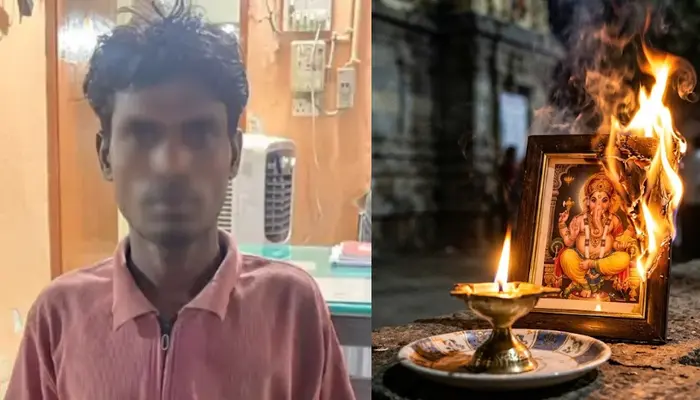
Case Summary
In the Dariyapur police station area of Saran district, Bihar, Hindu religious sentiments were insulted after a youth identified as Rahul Jatav posted objectionable content targeting Hindu deities on burnt pictures of Hindu gods. According to reports, the accused, Rahul Jatav alias Rahul Ramd, son of Arjun Ram and a resident of Akbarpur Sitalpur village, recorded and uploaded an Instagram reel on 12 May 2026, in which he tore and burnt pictures of Hindu gods and goddesses. Simultaneously, he also made objectionable remarks against Hindu deities with the intention to provoke Hindu religious sentiments. The video was circulated widely on social media and sparked public outrage, following which complaints were lodged with the police. Acting on the matter, the Saran police, under the direction of Senior Superintendent of Police Vineet Kumar, initiated an investigation through the Cyber Police Station and Dariyapur Police Station. Through technical surveillance and local verification, the accused was identified and taken into custody. Police stated that the incident amounted to an attempt to disturb communal harmony through inflammatory social media content. An FIR was registered at Dariyapur Police Station under Sections 298 and 299 of the Bharatiya Nyaya Sanhita along with provisions of the Information Technology Act. After interrogation, the accused was sent to judicial custody, and further legal proceedings were initiated. The police administration also issued a warning to social media users, influencers, and content creators to refrain from posting content that hurts the religious sentiments of any community or disrupts social harmony, stating that strict legal action would be taken against such acts.
Why it is Hate Crime ?
This case has been added to the tracker under the primary category of - Attack on Hindu religious representations. Within it, the sub-category selected is - Desecration of Hindu religious symbols. Icons and symbols or a religious representation of a spiritual ideal are widely revered in Hinduism. Iconography is of vital significance in the Hindu milieu. It helps connect people’s spiritual beliefs with the real world. Iconography within the Hindu faith takes several shapes and forms. Murtis are of most significance to Hindus, to which daily rituals, prayers and offerings are done. Besides the murtis, there are several other symbols which have deep significance in the Hindu faith – the Om and Swastika for example. Since these Hindu religious symbols hold paramount importance in Hinduism, any desecration of symbols, icons, murtis, religious representations and manifestations, is driven by animosity towards the faith itself which manifests itself through these murtis, icons and symbols. Therefore, any desecration of these Hindu religious symbols and representations is considered religiously motivated hate crimes under this category. The second primary category selected here is - Hate speech against Hindus. Within it, the sub-category selected is - Anti-Hindu slurs, mocking faith. Anti-Hindu slurs and the deliberate mocking of the Hindu faith owing to religious animosity involve the usage of derogatory terms, stereotypes, or offensive references to religious practices, symbols, or figures. One of the common anti-Hindu slurs used against Hindus is “cow-worshipper” and “cow piss drinker”. The intention of using this term is to demean and mock Hindus as a group and their religious beliefs since Hindus consider the cow holy. Additionally, some symbols and the slurs attached to them have a historical context that exacerbates the insult, hate, stereotyping, dehumanisation and oppression against Hindus. Cow worship has been used for centuries to denigrate Hindus, insult their faith and oppress Hindus specifically as a religious group. There has been overwhelming documentation about how cow slaughter has been used to persecute Hindus with cow meat being thrown in temples and places of worship. There has also been overwhelming documentation where cow meat (beef) has been force-fed to Hindus to either forcefully convert them to Islam or denigrate their faith. Apart from cow worship, the Swastika – which holds deep religious significance for the Hindus – has also been misinterpreted and distorted to use as a slur against Hindus. Similarly, the worship of the Shivling has been used by supremacist ideologies and religions to denigrate Hindus owing to religious animosity. Such slurs and denigration stem out of inherent animosity and hate towards Hindus and their faith, therefore, it is categorised as hate speech targeted at Hindus specifically owing to their religious identity. This case constituted a targeted act of hate against the Hindu community because the accused deliberately made objectionable and inflammatory remarks about Hindu gods and goddesses in a public social media video. The act of tearing and burning pictures of Hindu gods and goddesses further intensified the hateful nature of the incident. In Hinduism, images and representations of deities are treated with reverence and are often worshipped as sacred embodiments of the divine. Deliberately desecrating and setting fire to such images constituted an intentional act of symbolic humiliation directed at the Hindu faith and its followers. The act was not carried out privately but was recorded and uploaded publicly in the form of a social media reel, indicating a conscious effort to display the desecration before an audience. Such actions deeply offend practising Hindus, inflame communal tensions, and foster an atmosphere where attacks on Hindu religious identity are trivialised or encouraged. The police themselves recognised the communal and inflammatory implications of the incident by registering a case under provisions related to outraging religious feelings, disturbing social harmony, and circulating objectionable content online Furthermore, Hindu deities hold profound spiritual, cultural, and religious significance for Hindus, and insulting or mocking them is considered an attack on the faith itself. By making derogatory comments about revered Hindu deities and sharing those remarks online, the accused intentionally provoked outrage and hurt the religious sentiments of Hindus. By using offensive language against the faith, the accused displayed clear religious hostility towards Hinduism and its followers. By publicly maligning Hinduism, the accused not only disrespected the faith but also incited hostility, making this a clear example of a religiously motivated crime. The fact that the accused recorded the act as an Instagram reel and uploaded it online amplified the targeted nature of the offence. Social media enabled the content to spread rapidly and exposed a large number of Hindus to material mocking and insulting their faith. Such actions have the potential to inflame communal tensions, normalise hostility towards Hindu beliefs, and create an atmosphere where attacks on Hindu religious identity are trivialised or encouraged for online attention and provocation. In recent times, social media has increasingly become a platform for anti-Hindu hate, with derogatory memes, videos, and messages targeting Hindu religious symbols, practices, and deities. Such content is recognised as part of a broader pattern of Hinduphobia and religious hate crimes online. This deliberate targeting of revered deities firmly establishes this act as a religiously motivated hate crime; therefore, it is being categorised under the hate crime database of the Hinduphobia Tracker.


Case Status
Arrested


Perpetrators Details
Perpetrators
Others
Perpetrators Range
One Person
Perpetrators Gender
male
 Sources




