Hindu religious symbol desecrated in Ayodhya; Muslim man climbs on top of Lord Ram’s statue and attempts to behead it
 Ayodhya, Uttar Pradesh, India
  19 January, 2024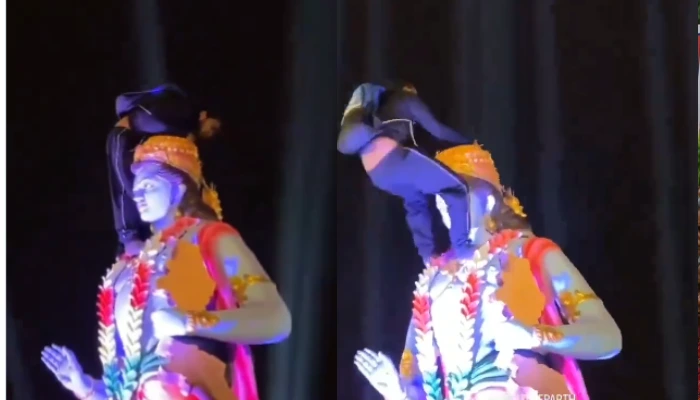
Case Summary
In Ayodhya, a revered statue of Lord Ram was attacked and desecrated by a Muslim man. The accused was identified as Mukhtar Ali Mandal, who climbed on top of the statue and tried to behead it. The incident occurred on 20 January 2024. The incident came to light after a video of the said desecration went viral on social media. The scene took place at a theme park based on the Ramcharitmanas that had been set up during the Amrit Mahotsav celebrations organised on the occasion of Jagadguru Rambhadracharya’s 75th birth anniversary in Ayodhya. In the video, the accused climbed onto the statue of Lord Ram and attempted to damage it by beheading the statue. During the act, a portion of Lord Ram’s bow broke and fell. Videos of the incident circulated widely on social media, showing the man standing on the statue and attempting to vandalise it. Following the incident, the Ayodhya Police registered a case against the accused and arrested him.
Why it is Hate Crime ?
The primary category selected in this case is: Attack on Hindu religious representation. The subcategory selected is- "Desecration of Hindu religious symbols." Icons and symbols, or a religious representation of a spiritual ideal, are widely revered in Hinduism. Iconography is of vital significance in the Hindu milieu. It helps connect people’s spiritual beliefs with the real world. Iconography within the Hindu faith takes several shapes and forms. Murtis are of most significance to Hindus, to which daily rituals, prayers and offerings are done. Besides the murtis, there are several other symbols which have deep significance in the Hindu faith – the Om and Swastika, for example. Since these Hindu religious symbols hold paramount importance in Hinduism, any desecration of symbols, icons, murtis, religious representations and manifestations, is driven by animosity towards the faith itself, which manifests itself through these murtis, icons and symbols. Therefore, any desecration of these Hindu religious symbols and representations is considered a religiously motivated hate crime under this category. This incident involved the desecration of a revered public statue of Lord Ram in Ayodhya, where the accused, Mukhtar Ali Mandal, climbed onto the statue and attempted to damage it by trying to behead it. During the act, the statue’s bow and arrow broke and fell due to the impact of the vandalism. These actions resulted in clear physical damage to a Hindu religious symbol, amounting to a hate crime rooted in animosity towards Hinduism. Unlike murtis (sacred idols) used for ritual worship within temples, this was a public statue installed at a Ramcharitmanas-themed park created during the Amrit Mahotsav celebrations marking Jagadguru Rambhadracharya’s 75th birth anniversary. In Hindu tradition, Lord Ram is regarded as Maryada Purushottama, the ideal person, representing dharma, righteousness, and the triumph of good over evil as depicted in the epic Ramayana. Public statues of Lord Ram in places such as Ayodhya carry religious, cultural and devotional significance, reflecting the collective reverence and religious identity of Hindu devotees. The act of climbing onto the revered statue of Lord Ram and attempting to behead it blatantly showcases religious animosity, as it constitutes a deliberate and vicious desecration in Hindu tradition, where sacred representations demand utmost reverence. This brazen conduct, targeting a public symbol of Hindu devotion in Ayodhya, signals profound contempt for Lord Ram's divine embodiment and the broader Hindu faith, inflaming religious sentiments in a space meant for collective cultural pride. Given that this case meets the parameters of a religiously motivated offence, it is being added to the hate crime database of the tracker.


Case Status
Arrested


Perpetrators Details
Perpetrators
Muslim Extremists
Perpetrators Range
One Person
Perpetrators Gender
male
 Sources




