Hindu deities mocked as man kills snake on video while comparing it to Hindu gods and goddesses
 Rajaori, Jammu and Kashmir, India
  13 May, 2026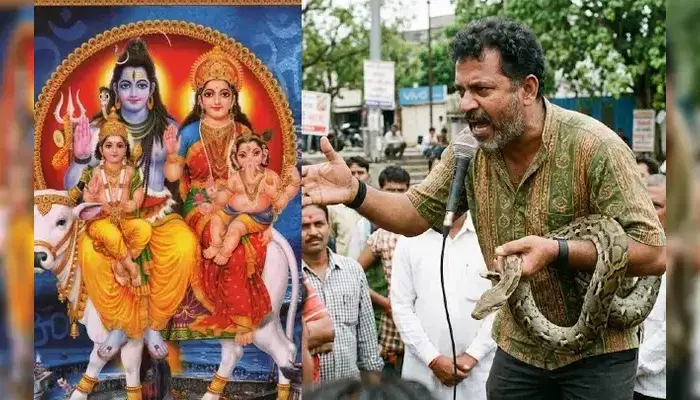
Case Summary
In Dassal village of Rajouri district in Jammu and Kashmir, Hindu religious sentiments were insulted after a man recorded a video killing a snake, while making objectionable remarks directed at Hindu deities. The incident came to light after the video, which was later deleted, circulated widely online, triggering outrage among members of the Hindu community and prompting intervention by the Vishwa Hindu Parishad (VHP). According to reports, the accused shared the video through his personal Facebook account, where he was heard referring to the snake as a “Hindu god” and “Hindu goddess” while making derogatory remarks. The incident was viewed as deeply offensive by Hindu organisations and residents because snakes hold religious significance in Hinduism and are associated with several Hindu deities and traditions. The public display of the killing, combined with the derogatory commentary, was as an act intended to insult and mock Hindu religious beliefs and symbols. Following the circulation of the video, the VHP filed a complaint before the Wildlife Protection Department seeking legal action against the accused. The organisation stated that the snake shown in the video was a rat snake, which falls under the protected wildlife category, and said that its killing amounted to a violation of wildlife protection laws. The VHP also expressed concern over the lack of immediate action by officials and accused the authorities of delaying proceedings against the accused. Officials stated that the matter was under examination at the time of reporting.
Why it is Hate Crime ?
The case has been added to the tracker under the primary category of - Hate speech against Hindus. Within it, the sub-category selected is - Anti-Hindu slurs, mocking faith. Anti-Hindu slurs and the deliberate mocking of the Hindu faith owing to religious animosity involve the usage of derogatory terms, stereotypes, or offensive references to religious practices, symbols, or figures. One of the common anti-Hindu slurs used against Hindus is “cow-worshipper” and “cow piss drinker”. The intention of using this term is to demean and mock Hindus as a group and their religious beliefs since Hindus consider the cow holy. Additionally, some symbols and the slurs attached to them have a historical context that exacerbates the insult, hate, stereotyping, dehumanisation and oppression against Hindus. Cow worship has been used for centuries to denigrate Hindus, insult their faith and oppress Hindus specifically as a religious group. There has been overwhelming documentation about how cow slaughter has been used to persecute Hindus with cow meat being thrown in temples and places of worship. There has also been overwhelming documentation where cow meat (beef) has been force-fed to Hindus to either forcefully convert them to Islam or denigrate their faith. Apart from cow worship, the Swastika – which holds deep religious significance for the Hindus – has also been misinterpreted and distorted to use as a slur against Hindus. Similarly, the worship of the Shivling has been used by supremacist ideologies and religions to denigrate Hindus owing to religious animosity. Such slurs and denigration stem out of inherent animosity and hate towards Hindus and their faith, therefore, it is categorised as hate speech targeted at Hindus specifically owing to their religious identity. This case has been added to the hate crime database because the accused made derogatory remarks directed at Hindu deities and sacred beliefs associated with Hinduism. The act was recorded on video and circulated through social media, thereby transforming what could have remained a local act of cruelty into a public spectacle targeting Hindu religious sentiments. The accused referred to the snake in mocking terms associated with “Hindu gods and goddesses”, using the religious symbolism attached to snakes in Hinduism as a means to insult and demean the faith before a wider audience online. In Hinduism, snakes hold deep religious and cultural significance and are closely associated with several revered deities and sacred traditions. Serpents are linked to Lord Shiva, Lord Vishnu, and various forms of divine symbolism within Hindu belief systems. They are worshipped during religious observances such as Nag Panchami and are regarded with reverence by millions of Hindus. By killing the snake while making mocking references to Hindu deities, the accused deliberately exploited these sacred associations in order to ridicule and provoke the Hindu community. The act therefore extended far beyond animal cruelty and became an act of religious insult directed at Hindu beliefs and devotional practices. The deliberate filming and online dissemination of the act further intensified the communal dimension of the incident. The accused did not commit the act privately or in isolation. He recorded the killing, uploaded it to social media, and used the platform to publicly broadcast insulting remarks connected to Hindu religious identity. This demonstrated a conscious effort to maximise the visibility and impact of the offensive content. Social media functions as a force multiplier for hate speech, enabling inflammatory material to spread rapidly and provoke outrage, humiliation, and hostility on a large scale. The viral circulation of the video amplified the psychological and emotional harm caused to Hindu viewers who encountered content mocking symbols they consider sacred. The incident also reflected a broader pattern in which Hindu religious symbols, deities, and practices are increasingly targeted through provocative online content designed to attract attention through outrage and sacrilege. Such acts contribute to the normalisation of anti-Hindu hostility in digital spaces by portraying insults against Hindu beliefs as entertainment or provocation. The accused’s conduct displayed clear contempt towards Hindu religious sentiments and constituted a deliberate attempt to offend and demean a religious community through public mockery of its sacred associations. For these reasons, the case has been categorised under the hate crime database of the Hinduphobia Tracker. Disclaimer: The Hinduphobia Tracker records incidents based on when an event occurred or when the victim's ordeal began. It is important to clarify that the report does not specify the exact date when the accused posted the offensive content. Therefore, for documentation purposes, we have recorded the date based on when the incident was reported in the media, 13 May 2026.


Case Status
Complaint filed


Perpetrators Details
Perpetrators
Unknown
Perpetrators Range
One Person
Perpetrators Gender
male
 Sources




