Bangladeshi Hindu minorities threatened with violence and extermination by Muslim clerics after West Bengal election results
 Bangladesh
  12 May, 2026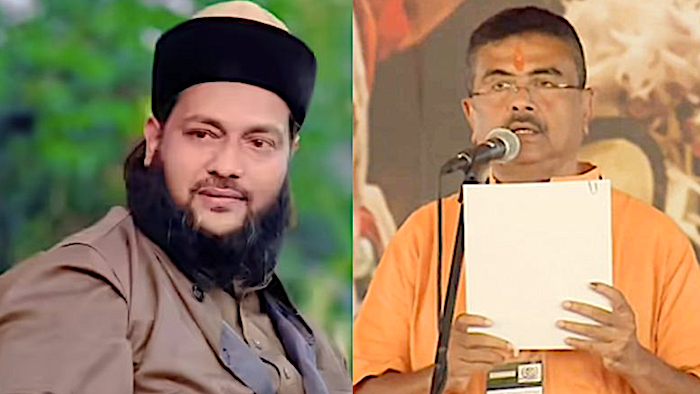
Case Summary
Hindu minorities in Bangladesh were threatened with brutal violence following the political climate in neighbouring West Bengal, India. Public statements circulated by Bangladeshi Muslim cleric Inayatullah Abbasi warned that Hindus in Bangladesh would not be allowed to live safely if Muslims were “unsafe” in West Bengal. The speeches openly linked the safety of Bangladeshi Hindus to political events across the border and framed the Hindu minority as targets for collective punishment. The threats emerged in the aftermath of the 2026 West Bengal Assembly elections in India, where the Bharatiya Janata Party achieved a historic landslide victory on 4th May 2026, winning over 200 seats in the 294-member assembly and ending the Trinamool Congress’s 15-year rule under Mamata Banerjee. The elections were held in multiple phases during late April 2026, with the Bharatiya Janata Party consolidating Hindu votes, performing strongly in urban regions, and benefiting from anti-incumbency sentiment and welfare outreach. Following the victory, Bharatiya Janata Party workers and Hindu supporters celebrated publicly by raising party flags, chanting “Jai Shri Ram”, and applying saffron gulal on each other. In the aftermath of the election result, several Bangladeshi Muslim clerics and radical speakers began delivering inflammatory speeches targeting India, the Bharatiya Janata Party, and Hindus. Their rhetoric repeatedly warned that Hindus in Bangladesh would face retaliation if Muslims in West Bengal were not considered safe. During one such speech, Inayatullah Abbasi declared that Hindus in India would not be able to establish what he described as a “Hindu-centric system”. He accused the Bharatiya Janata Party government in West Bengal of oppressing Muslims and stated that the situation “must be opposed at all costs”. He then openly warned that if Muslims were unsafe in West Bengal, Hindus would not be allowed to live safely in Bangladesh either. By 12th May 2026, multiple speeches and videos issued by Bangladeshi Muslim clerics had circulated widely online. The statements openly invoked religious identity and portrayed Hindus as enemies tied to political developments in India. The threats specifically targeted Hindu minorities inside Bangladesh despite the political developments taking place in another country. The rhetoric framed Bangladeshi Hindus as a vulnerable community that could be punished in response to electoral outcomes and political decisions in West Bengal. Another video circulated online contained direct death threats against newly elected West Bengal Chief Minister Suvendu Adhikari. In the video, a Bangladeshi Muslim man threatened to bury him at the border and openly called for violence against him. The video was circulated through social media pages alongside inflammatory anti-India rhetoric. The speeches also included statements about raising Islamic flags in Delhi and transforming madrassas into armed camps, further escalating fears of communal intimidation and radical mobilisation. The speeches and videos spread rapidly across social media platforms, generating concern among Hindus in Bangladesh and India. The rhetoric intensified fears among Hindu minorities already facing repeated communal targeting and hostility in Bangladesh. Police initiated an investigation into the circulating videos and speeches and began examining the identities of those involved. No arrests were confirmed at the time the incident entered public circulation, and the investigation remained ongoing.
Why it is Hate Crime ?
This case has been added to the tracker under the primary category - Hate speech against Hindus. Within this, the subcategory selected is - Violent threats. Violent threats, explicit, implicit or implied, is the most dangerous form of hate speech since it goes beyond discriminatory and prejudicial language to express the intent of causing harm to an individual or a group of people based on their religious identity and faith. There could be several different kinds of threats that are issued to Hindus based on religious animosity. An explicit threat would mean the direct threat of violence towards an individual Hindu, a group of Hindus or Hindus at large. Physical violence, death threats, threats of destruction of property belonging to Hindus and threats of genocide would mean explicit threats against Hindus for their religious identity. Implicit threats may not be a direct threat but implied through the use of symbols of actions – for example – in the Nupur Sharma case, other than explicit threats, there were also implicit threats when Islamists took to the streets to burn and beat her effigies. It implies that they want to do the same to Nupur Sharma – thereby is considered an implicit threat. Violent threats can be delivered in person, through letters, phone calls, graffiti, or increasingly through social media and other online platforms. It would be important to understand that a threat – explicit or implicit, online or offline – to an individual who happens to be a Hindu does not qualify as a religiously motivated threat. Such a threat, while vile and dangerous, could be owing to non-religious reasons and/or personal animosity. To qualify as a religiously motivated threat, it would need to exhibit an indication that the individual is being targeted for religious reasons and/or owing to his/her religious identity as a Hindu. The threats issued against Hindu minorities in Bangladesh carry clear religious markers because they explicitly singled out Hindus as a community to be collectively punished in response to political developments in neighbouring India. The speeches did not target specific political actors alone, but openly framed ordinary Bangladeshi Hindus as legitimate targets if Muslims in West Bengal were perceived to be politically weakened or unsafe after the Bharatiya Janata Party’s electoral victory. A key religious marker in this case is the repeated invocation of Hindu and Muslim identity as opposing political blocs. The speeches openly warned that Hindus in Bangladesh would not be allowed to live safely if Muslims in West Bengal were not “safe.” This framing treated Bangladeshi Hindus, who had no connection to the electoral process in India, as collectively responsible for the political rise of a Hindu-supported party across the border. The rhetoric, therefore, transformed a democratic election outcome into a justification for threatening a vulnerable religious minority. The hostility was also rooted in the perception among Islamist and radical Muslim groups that the Bharatiya Janata Party represents Hindu political assertion and is inherently anti-Muslim. The BJP’s political rise in West Bengal has often been accompanied by slogans such as “Jai Shri Ram,” open Hindu mobilisation, and criticism of minority appeasement under the All India Trinamool Congress government. Conversely, the Trinamool Congress under Mamata Banerjee has openly pursued overtly pro-Muslim policies and identity-based appeasement politics, evidenced by several incidents where TMC supremo Mamata Banerjee, along with her party leaders and cadres, have been seen going to the extent of slapping, getting people arrested and resorting to violence for chanting the 'Jai Shri Ram' slogan in West Bengal. In January 2021, Mamata Banerjee was seen walking off the stage, refusing to address the public gathered at Kolkata’s Victoria Memorial for Netaji's birth anniversary celebrations, when she heard ‘Jai Shri Ram’ slogans. Likewise, in 2019, Mamata Banerjee took to the social networking site Facebook to let the world know that she will continue to oppose ‘Jai Shri Ram’ slogans as they are a deliberate attempt to 'sell hatred ideology'. Other examples are restrictions or objections surrounding Hindu festivals and processions, public outreach specifically directed towards Muslim clerics and institutions, state stipends for imams, and repeated political messaging centred around protecting Muslim interests. This political environment contributed to a perception among sections of the Muslim community, both in West Bengal and Bangladesh, that the BJP’s rise represented a threat to Muslim political dominance and communal influence. It was within this mindset that radical clerics and speakers began portraying Muslims as being under existential threat in West Bengal following the BJP victory. Instead of viewing the election as a democratic transfer of power, the speeches framed Hindu political consolidation itself as dangerous and illegitimate. The resulting rhetoric openly called for retaliation against Hindus living in Bangladesh, revealing how deeply religious identity shaped the response. The speeches repeatedly invoked communal solidarity and suggested that Muslims across borders were obligated to respond collectively to the electoral defeat of a Muslim-aligned political environment in West Bengal. The threats were particularly dangerous because they framed Hindu minorities in Bangladesh as hostages whose safety depended upon continued Muslim political dominance in West Bengal. This is significant because Bangladeshi Hindus are already a vulnerable minority community that has repeatedly faced communal violence, mob attacks, land grabbing, temple desecration, and intimidation during periods of political and religious tension. By declaring that Hindus would not be allowed to live safely if Muslims lost political ground elsewhere, the speeches reinforced the idea that Hindu minorities could be collectively punished merely for sharing a religious identity with political developments in India. Another important religious marker is the broader radical rhetoric accompanying these speeches. Statements about raising Islamic flags in Delhi, transforming madrassas into armed camps, and openly threatening elected Indian political leaders reflected an extremist and supremacist mindset rooted in religious mobilisation rather than ordinary political disagreement. The repeated references to Islamic solidarity and communal retaliation demonstrated that the issue was framed through a transnational religious lens tied to the concept of the Ummah, where religious identity overrides national boundaries and local citizenship. Such rhetoric ultimately stems from deep-rooted hostility towards Hindus and Hindu political assertion. The speeches portrayed the rise of a Hindu-backed political force not merely as an electoral development but as something that justified threats, retaliation, and collective punishment against Hindus elsewhere. This reflects an ideological mindset in which Hindus are viewed not as equal citizens with legitimate political rights, but as adversaries whose empowerment must be resisted through fear and intimidation. The targeting of Hindus purely because they were Hindu demonstrated direct religious hostility and an intention to terrorise a vulnerable minority community through threats of communal violence. Further, attempts to frame such threats merely as political reactions while ignoring their explicit anti-Hindu nature contribute to the systematic downplaying of religiously motivated hostility faced by Hindus. The speeches repeatedly invoked Hindu identity, openly threatened Hindu minorities with violence, and conditioned their safety on Muslim political dominance in another country. The failure to recognise the communal and religious nature of such rhetoric reflects an underlying bias that normalises threats against Hindus and minimises the seriousness of anti-Hindu intimidation. Since this hostility was directed specifically at Hindus and their continued security as a minority community, this case has been added to the tracker as a religiously motivated hate incident. Disclaimer: The Hinduphobia Tracker records incident dates based on when the crime occurred, rather than when it was reported by the media. In this case, the exact date of the threats and speeches was not specified in the available reports. The reports only confirmed that the incident occurred after the West Bengal election results were announced on 4th May 2026. Therefore, 12th May 2026, the date on which the article documenting the threats was published, has been used as the indicative incident date for documentation purposes only.


Case Status
Unknown


Perpetrators Details
Perpetrators
Muslim Extremists
Perpetrators Range
One Person
Perpetrators Gender
male
 Sources




