Hindu sentiments hurt after derogatory comments targeting revered Lord Gopinath posted on social media in Sikar, Rajasthan
 Sikar, Rajasthan, India
  18 April, 2026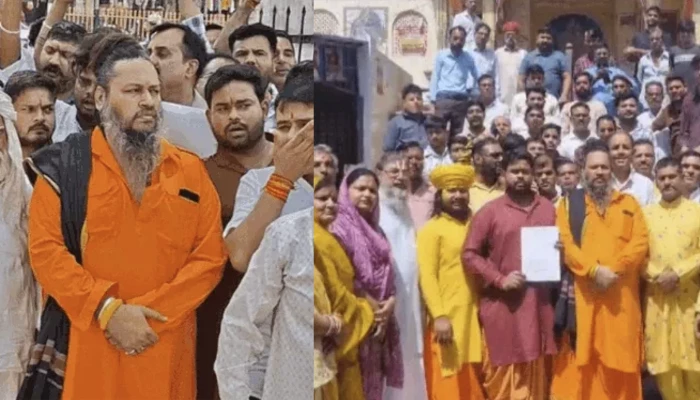
Case Summary
In Sikar, Rajasthan, Hindu religious sentiments were hurt after objectionable remarks were made on social media against Lord Gopinath Ji, a revered Hindu deity worshipped at the historic Gopinath Temple. According to reports, on the occasion of Akshaya Tritiya, 19 April, 2026, the idol of Lord Gopinath Ji had been specially adorned with sandalwood paste and traditional decorations as part of religious rituals at the temple. During this time, a man identified as Suresh Thalod posted an objectionable and derogatory comment on Facebook regarding the sacred form of the deity. Following the incident, a complaint was lodged at Kotwali Police Station on 1 May 2026 for hurting Hindu religious sentiments. As no immediate action was taken despite the complaint, mahants, priests, and residents organised protests against both the derogatory remarks and the delay in police action. A large rally was taken out from the Gopinath Temple to the office of the Superintendent of Police, where demonstrators raised slogans against the police administration and submitted a memorandum demanding the immediate arrest of the accused. Mahant Tarun Goswami of the Gopinath Temple stated that a memorandum had also been submitted to SP Praveen Nayak demanding strict action against the accused. He further stated that the accused should be brought to the temple and made to publicly apologise for insulting Hindu religious sentiments. Temple representatives warned that if no action was taken, all temples in Sikar would remain closed indefinitely from 11 May 2026 in protest, and that responsibility for the situation would rest with the police administration. Mahant Surendra Goswami stated that saints and religious leaders always worked for public welfare and never wished harm upon anyone, but individuals who deliberately hurt religious sentiments should face strict legal punishment. Following sustained protests and public outrage, the police later arrested the accused under charges related to breach of peace, around 21 days after the initial complaint had been filed. After the arrest, the earlier announcement regarding the indefinite closure of temples in Sikar was withdrawn.
Why it is Hate Crime ?
This case has been added to the tracker under the primary category- Hate Speech against Hindus. The subcategory selected is- Anti-Hindu slurs, mocking faith. Anti-Hindu slurs and the deliberate mocking of the Hindu faith owing to religious animosity involve the usage of derogatory terms, stereotypes, or offensive references to religious practices, symbols, or figures. One of the common anti-Hindu slurs used against Hindus is “cow-worshipper” and “cow piss drinker”. The intention of using this term is to demean and mock Hindus as a group and their religious beliefs since Hindus consider the cow holy. Additionally, some symbols and the slurs attached to them have a historical context that exacerbates the insult, hate, stereotyping, dehumanisation and oppression against Hindus. Cow worship has been used for centuries to denigrate Hindus, insult their faith and oppress Hindus specifically as a religious group. There has been overwhelming documentation about how cow slaughter has been used to persecute Hindus, with cow meat being thrown in temples and places of worship. There has also been overwhelming documentation where cow meat (beef) has been force-fed to Hindus to either forcefully convert them to Islam or denigrate their faith. Apart from cow worship, the Swastika – which holds deep religious significance for the Hindus – has also been misinterpreted and distorted to use as a slur against Hindus. Similarly, the worship of the Shivling has been used by supremacist ideologies and religions to denigrate Hindus owing to religious animosity. Such slurs and denigration stem from inherent animosity and hate towards Hindus and their faith; therefore, it is categorised as hate speech targeted at Hindus specifically owing to their religious identity. This case qualified as a religiously motivated hate incident because objectionable and derogatory remarks were made against Lord Gopinath Ji, a revered Hindu deity deeply worshipped by devotees in Sikar and across Rajasthan. Hindu deities are not symbolic figures alone but are regarded as sacred manifestations of divinity within Hinduism. Insulting or mocking such deities directly attacked the religious sentiments, beliefs, and spiritual identity of Hindus. The comments made against Lord Gopinath Ji, therefore, amounted to more than offensive speech; they constituted a deliberate affront to a sacred figure central to Hindu worship and devotion. The timing of the remarks further aggravated the seriousness of the incident. The objectionable comments were made during the sacred occasion of Akshaya Tritiya, when the deity had been specially adorned as part of important religious rituals and celebrations. Such timing reflected disregard towards a moment of religious sanctity and devotion for Hindus. Targeting a deity during an important religious observance intensified the emotional and religious injury caused to devotees and demonstrated insensitivity towards Hindu customs and traditions. Another significant aspect of this case was the use of social media as a platform to spread derogatory remarks against a Hindu deity. Social media increasingly functions as a public space where anti-Hindu content can rapidly circulate, amplify hostility, and normalise contempt towards Hindu beliefs. Publicly posting objectionable content about a revered Hindu deity transformed the insult from a private act into a broader act of public humiliation directed at the Hindu community. Such acts contribute to an atmosphere where mocking Hindu faith and sacred symbols becomes socially normalised and publicly disseminated without restraint. For devotees, temples are sacred spiritual centres and deities are objects of profound reverence, emotional attachment, and lifelong devotion. Insulting a deity worshipped by thousands of Hindus, therefore, amounted to an attack on the collective religious identity and dignity of the community itself. In recent years, derogatory online content targeting Hindu gods, religious symbols, temples, and spiritual traditions has increasingly emerged as part of a broader pattern of anti-Hindu hostility on digital platforms. Such incidents are not viewed merely as isolated acts of offensive expression but as manifestations of contempt directed towards Hinduism and its adherents. The deliberate targeting of Lord Gopinath Ji through objectionable social media remarks, therefore, established this incident as a religiously motivated hate incident against the Hindu community. Given that this case met the parameters of a religiously motivated hate incident, it was added to the hate crime database of the Hinduphobia Tracker.


Case Status
Arrested


Perpetrators Details
Perpetrators
Others
Perpetrators Range
One Person
Perpetrators Gender
male
 Sources




